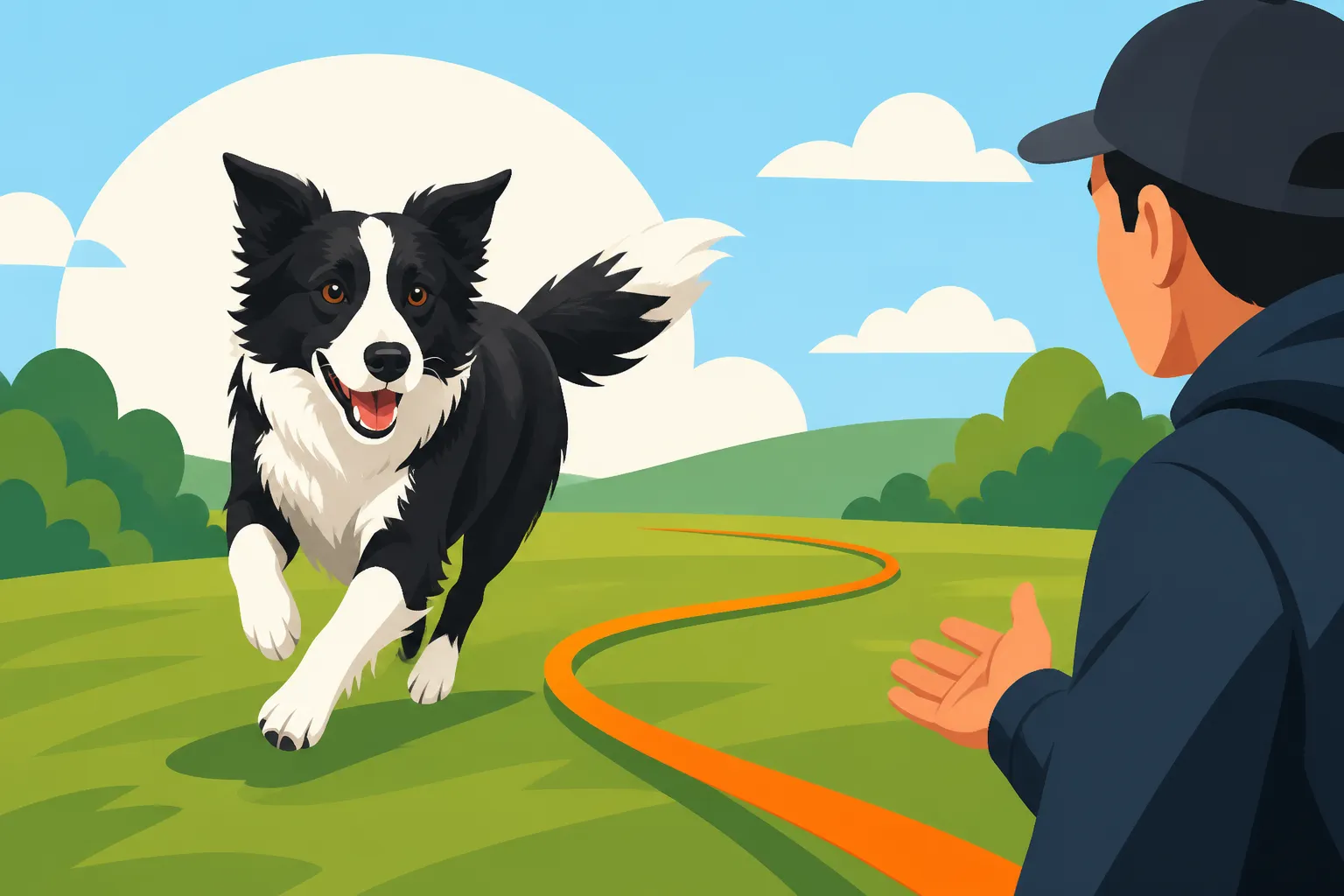
The Thirty-Foot Line a Border Collie Recall Needs
The moment your Border Collie locks eyes on a squirrel, a distant sheep, or even a leaf blowing just right, that powerful instinct kicks in, and suddenly, your voice seems to vanish into the wind. It's incredibly frustrating to feel that loss of connection, that sudden deaf ear when you need them to come back, and it often leads to feeling like you can never truly trust them off-leash. This guide is all about mastering that crucial recall, specifically through the invaluable tool of a thirty-foot training line, helping you build a bond of trust and safety for your intelligent companion.
Why a Thirty-Foot Line Isn't Just "More Leash" for Your Border Collie
It's easy to dismiss a long line as just an extended version of your everyday leash, but for a Border Collie owner, it's so much more than that. This isn't about giving them a bit more room to sniff; it's about fundamentally changing how you communicate and build trust, especially with a dog whose instincts are so incredibly strong.
The Unique Challenges of Border Collie Recall
Let's be honest, Border Collies are bred for a job, and that job involves independent thought, incredible focus, and covering large distances. When they "lock on" to something, whether it's a flock of sheep, a rabbit darting across a field, or even just a compelling scent, their world narrows to that single stimulus. Their genetic blueprint tells them to pursue, gather, and control, and that drive can be almost impossible to override with a simple "come." A standard six-foot leash doesn't give them any opportunity to engage this drive, which means you never get to practice recalling them from a truly engaging scenario. You need space, but you also need control. When that intense focus takes over, you'll understand why it feels impossible to get them to come back when you're simply walking them on a short leash. You're not mimicking real-world conditions. Recall on a Border Collie That Has Locked On goes into more detail about this intense focus.
Bridging the Gap Between Leash and Freedom
This is where the thirty-foot line shines as a bridge. It offers your Border Collie a taste of freedom, enough room to explore, chase a scent, or even start that signature Border Collie stalk, but with a critical difference: you still have a physical connection. This connection is vital because it allows you to interrupt unwanted behaviors before your dog gets to self-reward. If your Border Collie successfully chases a squirrel every time they ignore your recall, they learn that chasing squirrels is more rewarding than coming to you. The long line allows you to gently, but firmly, reel them in the moment they start to ignore you, ensuring that coming back is always reinforced and more rewarding than whatever distraction presented itself. This isn't about punishment; it's about consistently guiding them to the correct choice.
Safety First: Preventing Dangerous Situations
The reality of owning a Border Collie is that their drive can put them in harm's way. A strong prey drive near a road, or an intense focus on another dog in an unfamiliar park, can quickly turn into a dangerous situation. A thirty-foot line offers a crucial safety net. It allows your dog to experience a wider world – the smells of the forest, the textures of a new field – without you having to constantly worry about them bolting into traffic or disappearing over a ridge. It’s about practicing responsible off-leash activity in a controlled way, ensuring that if that sheepdog instinct flares up or they simply get a bit too enthusiastic, you can intervene immediately. This peace of mind is priceless, allowing both of you to enjoy your outings more fully.
Choosing the Right Thirty-Foot Line for Your Herding Partner
Selecting the right long line for your Border Collie isn't just about picking the first one you see. Given their strength, speed, and intelligence, the material, hardware, and even the length beyond the standard can make a huge difference in your training success and safety.
Materials Matter: Webbing, Rope, and Biothane
When it comes to long lines, the material is key. You need something durable, easy to handle, and able to withstand the elements and your Border Collie's enthusiasm.
- Nylon Webbing: This is a popular choice for good reason. It’s strong, relatively lightweight, and offers a decent grip, even when wet. However, it can absorb water and get heavy, and if it's dragged through mud, it can be a bit of a pain to clean. It also has a tendency to get tangled if not managed carefully. Brands like those found on Chewy often offer a variety of nylon webbing lines in different widths and colors.
- Rope Lines: Some trainers prefer rope for its traditional feel and durability. Rope can be very strong, but it might be heavier and bulkier than webbing. It can also cause rope burn if it slides through your hand too quickly, so gloves are often recommended.
- Biothane: This is a fantastic synthetic material that feels a bit like leather but is incredibly durable, waterproof, and super easy to clean. Mud, water, grime – it wipes right off. Biothane also tends to be less prone to tangling than nylon webbing. The downside is that it can be a bit more expensive upfront, but many owners find the investment worthwhile for its longevity and low maintenance. It can also be a bit slick to hold without a good grip.
| Material | Pros | Cons | Ideal Use Case |
|---|---|---|---|
| Nylon Webbing | Affordable, good grip (when dry), common | Absorbs water, can tangle, harder to clean | General training, varied weather (if cleaned well) |
| Biothane | Waterproof, easy to clean, durable | Higher cost, can be slick when wet | All-weather training, muddy environments, frequent use |
| Rope (braided) | Strong, traditional feel | Heavy, can cause rope burn, bulky | Very strong dogs, specific handling preferences |
Always consider the width of the line too. A narrower line might be lighter, but a wider one (¾ inch to 1 inch) can be easier to grip and less likely to cut into your hand if your Border Collie lunges.
Handle and Hardware Considerations
Beyond the material, the components of the long line are equally important.
- The Handle: Some long lines come with a looped handle, similar to a regular leash. This can be comfortable, but if you're working in an area where the line might snag on brush, a handle-less line is often safer as it won't get caught and yank your hand. If you do use a handle, ensure it’s sturdy and comfortable for your grip. For those who prefer a hands-free approach, you might look for lines designed to be attached to a hands-free belt.
- The Clasp/Snap: This is where the line connects to your Border Collie's collar or harness. You need a robust, high-quality clasp that won't break or come undone under pressure. A swivel clasp is ideal, as it prevents the line from twisting and tangling as your dog moves. Ensure the clasp is an appropriate size for your dog's D-ring – too small, and it might be fiddly; too large, and it could be cumbersome. Many trainers prefer solid brass or stainless steel hardware for durability and corrosion resistance.
- Reflective Stitching: For those early morning or late evening training sessions, reflective stitching can be a lifesaver, increasing visibility for both you and your dog, especially if you're near roads or other people.
Length Beyond Thirty: When and Why You Might Go Longer (or Shorter)
While thirty feet is an excellent starting point, the ideal length can sometimes vary.
- Longer Lines (50-100 feet): These are typically for advanced training, once your Border Collie has a rock-solid recall on a thirty-foot line. They are used in vast, open spaces to practice extreme distance recalls or to give your dog an even greater sense of freedom in very safe, controlled environments, perhaps when working Building a Border Collie Recall Against Moving Things. Be warned, managing a 50-foot or 100-foot line can be significantly more challenging, requiring excellent line handling skills to avoid tangles and injury.
- Shorter Lines (15-20 feet): These can be useful for initial introduction to long-line training if your dog is particularly prone to getting tangled, or if you're working in a slightly smaller, more confined "long-line friendly" area. They still offer more freedom than a standard leash but are a bit easier to manage while you get the hang of line handling.
For most Border Collie owners looking to build a reliable recall, a well-chosen thirty-foot line will provide the perfect balance of freedom and control.
Practical Training with Your Thirty-Foot Recall Line
Having the right equipment is only half the battle. Knowing how to effectively use that thirty-foot line is crucial for transforming your Border Collie's unreliable recall into a consistent, dependable response, even when distractions are high.
Starting in a Controlled Environment
The absolute first step to successful long-line training is choosing the right location. You wouldn't throw a beginner swimmer into the deep end, and you shouldn't expect your Border Collie to master recall in a bustling dog park on day one. Start in a large, secure, and low-distraction environment. This could be your own fenced backyard, a quiet community baseball field during off-hours, or a friend's empty paddock. The goal here is to set your dog up for success. You want them to have enough space to feel like they are "off-leash" and to allow their instincts to kick in, but not so many distractions that they are immediately overwhelmed and fail. This management of the environment ensures that the early lessons are positive and successful, building a strong foundation of understanding before layering on challenges.
The "Come" Command: Building Positive Associations
Now for the actual training! Your goal is to make "Come" (or "Here," or whatever cue you choose – just stick to one!) the most exciting and rewarding word your Border Collie knows.
- Release and Engage: Let your Border Collie wander to the end of the thirty-foot line. Allow them to sniff, explore, and get a little bit absorbed in their surroundings. This simulates real-world conditions where they might be distracted.
- Give the Cue and Reel In: When you give your recall cue ("Fido, Come!"), immediately start moving backward to create space and make yourself more inviting. If your dog doesn't immediately turn to you, gently but consistently start reeling in the line. The long line is there to guide, not yank. You're simply making it physically impossible for them to ignore the command.
- Party Time! The instant your Border Collie reaches you, even if you had to reel them in completely, make it a massive celebration. Shower them with enthusiastic praise, petting, and immediate, high-value treats. I'm talking about delicious, smelly treats that your Border Collie absolutely adores – think small pieces of cooked chicken, cheese, or even some of that fresh food from Ollie they go crazy for. The reward needs to be incredibly motivating, making the act of coming back superior to whatever they were doing.
- Repeat and Release: Don't make the mistake of calling your dog, rewarding them, and then immediately putting them back on a short leash and leaving. That punishes the recall! After the big reward, release them to go explore again. Repeat this process several times in a session, always ending on a positive note.
Consistency is paramount. Every time you call, they must come, even if you have to use the line to ensure it. This teaches them that the command is non-negotiable and always leads to good things.
Increasing Distractions and Generalization
Once your Border Collie is consistently recalling on the thirty-foot line in a low-distraction environment, it's time to gradually increase the challenge.
- Mild Distractions: Introduce known, calm distractions first. Maybe a friend walking by at a distance, or another very calm dog playing quietly. Watch your dog's body language. If they are starting to get distracted but still respond to your cue with a little help from the line, you're at the right level. If they completely blow you off and you have to drag them in, the distraction is too high, and you need to step back.
- Varying Locations: Practice in different types of environments: a grassy field, a wooded trail, a quiet park. Each new location presents new scents, sounds, and sights, helping your Border Collie generalize the "come" command to various real-world scenarios.
- The Emergency Word: Consider teaching an "emergency recall" word that is only used for true emergencies. This word should be incredibly high-value, reserved only for critical situations, and practiced separately with extreme rewards. Think something distinct like "NOW!" or "Hurry!" This is a topic explored further in The Emergency Word a Border Collie Must Know.
Remember to always have that thirty-foot line attached, even when you introduce distractions. It’s your safety net and training aid.
Avoiding Common Long-Line Mistakes
Using a long line effectively requires a bit of finesse. Avoid these common pitfalls:
- Using it for Punishment: Never yank or punish your dog with the long line. It's a tool for guidance and safety, not correction. A harsh tug can create a negative association with coming to you.
- Letting it Tangle: Be mindful of where the line is. It can easily get tangled around your dog's legs, your legs, trees, or other obstacles, leading to potential injury. Practice good line management, keeping excess line coiled or draped safely.
- Lack of Supervision: Never leave your Border Collie unattended on a long line. It can get snagged, causing injury, or your dog could become entangled.
- As a Permanent Crutch: The goal is to build a reliable recall so you can eventually trust your dog off-leash (where legal and safe). The long line is a stepping stone, not a substitute for training. If you find yourself consistently relying on it without seeing progress, reassess your training approach or seek guidance from a professional. Regularly check the condition of your long line and clasp. If it's starting to fray or the hardware is stiff, it might be time for a replacement from a place like Chewy.
Integrating the Long Line into Your Border Collie's Lifestyle
The journey to a reliable recall isn't always linear, and for some Border Collies, the long line might remain a tool throughout their lives. Understanding when to transition and when to maintain its use is crucial for their safety and your peace of mind.
Transitioning to Off-Leash Freedom When Appropriate
The dream for many Border Collie owners is to be able to let their dogs run freely, enjoying expansive spaces without the constraint of a physical line. The thirty-foot line is your bridge to this freedom. You’ll know you’re ready to consider off-leash work when your Border Collie consistently and joyfully responds to your recall cue, even with moderate distractions, and does so without you needing to apply any pressure on the line.
Look for these signs:
- Instantaneous Response: Your dog turns to you the moment they hear their cue, regardless of what they were doing.
- Engagement: They happily run back to you, showing clear intent to connect, not just a reluctant return.
- Focus on You: Even with distractions, they can break their intense focus on something else to come to you.
- Self-Correction: If they start to get too focused on a distraction, a light cue from you (before they've gone too far) is enough to redirect their attention.
When these indicators are present, you can begin introducing very short periods of off-leash time in the safest, most controlled environment imaginable. Think a fully enclosed, distraction-free field where there is absolutely no risk of them encountering roads, unknown dogs, or livestock. Gradually increase the duration and the level of distraction, always being ready to step back to the long line if consistency wanes. Remember, even with a perfect recall, certain environments or situations may always warrant a long line for safety.
When the Long Line Remains a Permanent Tool
It's a tough pill to swallow for some, but for certain Border Collies, or in particular environments, the thirty-foot line might remain a permanent fixture for outdoor excursions. This isn't a failure on your part or your dog's; it's a realistic acknowledgment of their powerful instincts and the world around them.
Some Border Collies possess an incredibly high prey drive that, despite extensive training, simply cannot be reliably managed off-leash in all situations. They might be wonderful in a park, but the moment a deer bounds into view, their genetic programming takes over. Similarly, if you live near busy roads, in an area with abundant wildlife, or where livestock is present, keeping your Border Collie on a long line is the responsible and safest choice. This allows them to still enjoy substantial exercise and mental stimulation, like exploring scents or engaging in active play, while eliminating the risk. There’s no shame in prioritizing safety and understanding your dog’s innate tendencies.
Health Considerations and the Active Border Collie
An active lifestyle with a long line means your Border Collie is getting plenty of exercise, which is fantastic for their physical and mental well-being. However, this also means they're putting more strain on their bodies. Always ensure your Border Collie is in peak physical condition for this level of activity. Regularly check their paws for cuts or wear, especially if training on varied terrain. Watch for any signs of lameness or discomfort after sessions. Sport Injuries a Border Collie Picks Up can offer more insight into potential issues.
Just like human athletes, Border Collies benefit from good nutrition. Make sure their food supports their energy output – quality ingredients are key. You might consider performance-oriented foods, and discussing your dog's dietary needs with your vet is always a good idea, especially if you're exploring fresh food options like Ollie, which can offer tailored nutrition.
Furthermore, with an active dog, unexpected injuries or illnesses can occur. From a sudden limp from an unseen hole to something more serious like a cruciate tear, vet bills can add up quickly. This is where pet insurance can offer immense peace of mind. Companies like Healthy Paws can help cover a significant portion of eligible veterinary expenses, allowing you to focus on your Border Collie's recovery without the added financial stress. It’s a proactive step many active dog owners take to safeguard their companion's health throughout their working life and into their golden years.
Disclaimer
This article is for general informational purposes only and does not constitute professional advice. Laws, prices and regulations vary by location and change over time. Consult a qualified professional for guidance on your specific situation.