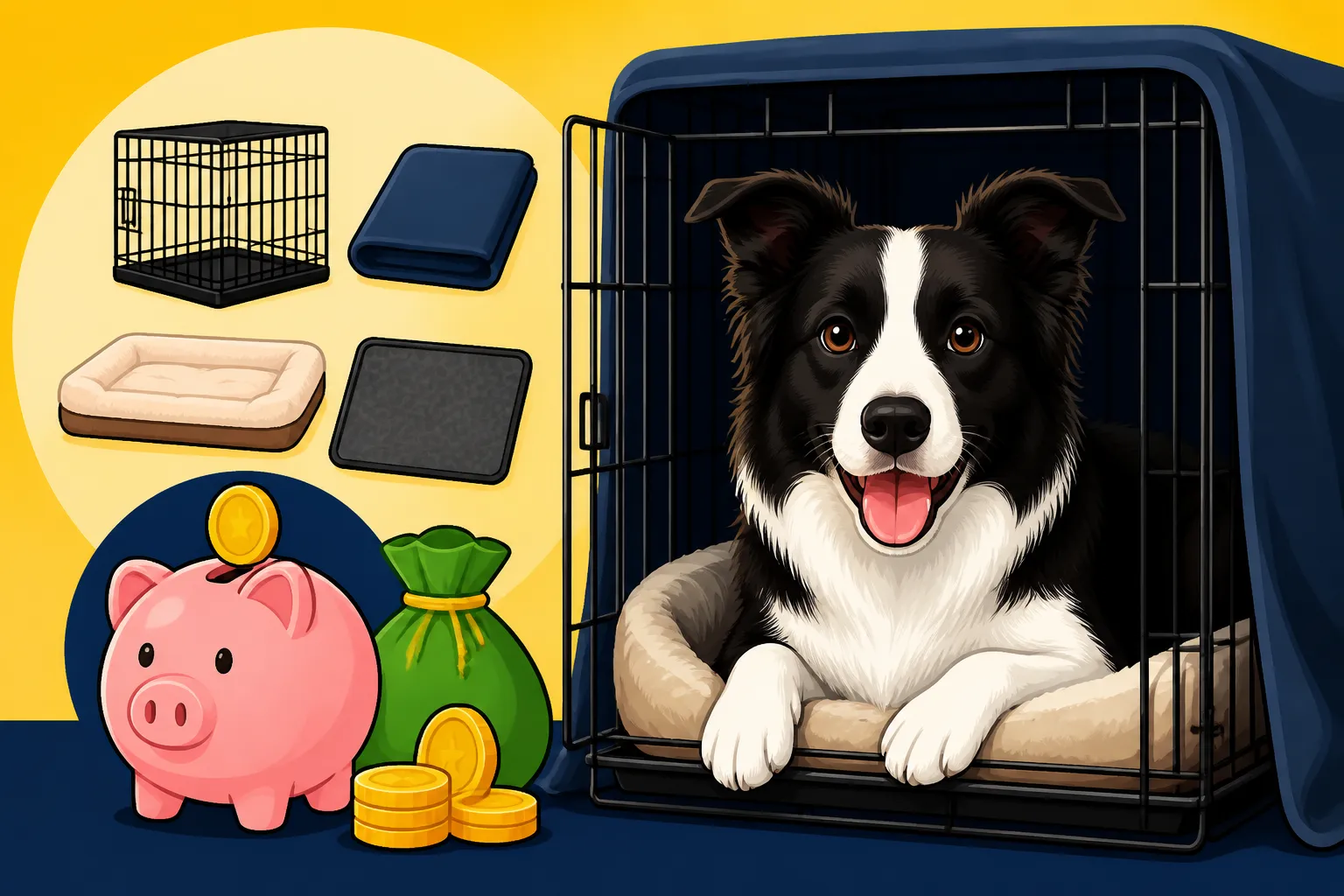
What a Border Collie’s Off-Switch Crate Setup Costs
One of the biggest struggles Border Collie owners face is finding that elusive "off-switch" for their highly driven, intelligent dogs. It's a common frustration to have a dog that's constantly on alert, seeking stimulation, or struggling to settle down. This guide is here to walk you through the various costs involved in setting up an effective crate, not just as a place for your dog to be, but as a dedicated sanctuary where they can truly relax and find their much-needed calm.
Why an "Off-Switch" Crate is Essential for a Border Collie
Living with a Border Collie often means living with a dog that has boundless energy and a mind that's always whirring. They are phenomenal creatures, but their intense drive, bred over generations for demanding work, means they don't always know how to simply be. This constant state of 'on' can be exhausting for both the dog and the owner, leading to overstimulation, anxiety, and even destructive behaviors. That's where a well-implemented "off-switch" crate setup comes into its own.
Understanding the Border Collie's Drive and Energy
Border Collies were specifically developed to work livestock, often for hours on end, across vast distances and challenging terrain. This isn't just physical energy; it's a deep-seated mental drive, a constant desire to observe, react, and do. This inherent need means that many Border Collies struggle immensely with self-regulation when they're not actively engaged in a task. You might see it in the form of incessant pacing, shadow chasing, attention-seeking barking, or even just a failure to settle when the household is quiet. It's not bad behavior, it's just their innate programming running at full throttle, and it can be incredibly frustrating for owners who want their dog to relax in the home.
The concept of an "off-switch" isn't about shutting down their personality or their drive, but rather teaching them to modulate it, to understand that there are times for intense focus and times for peaceful rest. Without this guidance, many Border Collies become stressed, perpetually waiting for the next command or opportunity to work. This can manifest as anxiety, hyper-vigilance, and an inability to truly relax, even when they're physically tired. It's a common misconception that simply walking a Border Collie for hours will completely tire them out; often, it just makes them fitter and more intense! Why a Border Collie Cannot Stop on Its Own delves deeper into this fascinating aspect of their temperament.
The Role of a Crate in Training and Management
A crate, when introduced and used correctly, becomes far more than just a cage. For a Border Collie, it transforms into a personal den, a safe haven where they can decompress from the day's stimuli. It's a place they learn to associate with quiet, calm, and rest. This is particularly vital in busy households or when guests are over, offering your Border Collie a predictable, low-stress environment away from the hustle and bustle. It's a powerful management tool for preventing unwanted behaviors like counter-surfing, nuisance barking at passersby, or patrolling the house while you're away.
Beyond simply providing a quiet space, a crate is an invaluable tool for house-training puppies and can significantly aid in managing adolescent Border Collies who might otherwise get into trouble. It teaches them bladder and bowel control and gives them a secure space to be when you can't actively supervise them. For dogs that travel with their owners, a crate is also a safety device, ensuring they are secure in the car and have a familiar resting place in new environments. Think of it as their own little apartment within your home, a place where they can confidently retreat and switch off, even if just for a few hours. The Eight Hours a Border Collie Spends Alone highlights the challenges and strategies for managing their time when you're not around.
Breaking Down the Costs of the Crate Itself
When you're looking to establish that crucial "off-switch" for your Border Collie, the crate itself is your foundational investment. But it's not a one-size-fits-all purchase; the type of crate you choose and its size will significantly influence the initial outlay. It's important to consider your dog's personality, their chewing habits, and your lifestyle when making this decision, as what works for one Border Collie might be completely ineffective for another.
Different Types of Crates and Their Price Points
There's a wide range of crates available, each with its own benefits and drawbacks, and naturally, varying price tags.
- Wire Crates: These are perhaps the most common and often the most budget-friendly option. They offer excellent ventilation and visibility, which can be a pro or con depending on your dog. Many are collapsible, making them convenient for transport or storage. However, some Border Collies, especially those prone to anxiety or strong chewers, can bend the wire or feel exposed. You'll find these easily on sites like Chewy, offering various sizes and brands.
- Plastic (Airline) Crates: These crates provide more of a "den-like" feel, which can be very comforting for a Border Collie trying to settle. They are often more durable than wire crates against chewing and are required for air travel. They're also generally easier to clean. The main downsides are their bulkiness, making them less portable or collapsible, and less direct visibility for your dog.
- Furniture-Style Crates: These are designed to blend seamlessly into your home decor, often doubling as end tables or console tables. They're definitely the most aesthetically pleasing option and can be a great choice for owners who want their dog's space to integrate with their living area. However, they come with a significantly higher price tag and are typically less portable, meant for a permanent spot in the home.
- Soft-Sided Crates: Lightweight and highly portable, soft-sided crates are great for travel, shows, or temporary setups. They're not suitable for determined chewers or dogs prone to separation anxiety, as they offer little resistance to escape attempts. They're generally on the lower to mid-range of pricing.
The key is to select a crate that is robust enough for a Border Collie, a breed known for its strength and sometimes its Houdini-like tendencies if not properly contained.
Sizing Your Border Collie's Crate Correctly
Getting the right size crate is paramount for its effectiveness as an "off-switch" tool. A crate that's too large can allow your Border Collie to soil one end and sleep in the other, undermining house-training efforts. Conversely, a crate that's too small will be uncomfortable, cramped, and quickly become a place of stress rather than sanctuary. The general rule of thumb is that your Border Collie should be able to stand up comfortably, turn around easily, and lie down in a natural position. Their head shouldn't touch the top when standing, and they shouldn't have to hunch to turn.
For a Border Collie, this typically means a crate in the 36-inch to 42-inch range, but always measure your individual dog. If you're getting a puppy, many wire crates come with adjustable dividers. This allows you to section off a smaller area for the puppy, expanding it as they grow, saving you the cost of buying multiple crates. While that initial cost might seem like a lot, remember this is an investment in your Border Collie's comfort, security, and ultimately, their ability to find peace and an "off-switch" in a busy world.
Essential Accessories and Their Associated Costs
Once you've picked out the perfect crate for your Border Collie, the next step is to make it a comfortable, inviting den. The bare crate, no matter how well-chosen, isn't enough to create that crucial "off-switch" environment. A few key accessories can transform a cold, metal box into a warm, private sanctuary where your intelligent companion feels safe and content.
Bedding and Comfort Items
A comfortable bed or mat is non-negotiable for making the crate a desirable place. For a Border Collie, you'll need something durable. While a fluffy, plush bed might seem lovely, many Border Collies, especially when bored or anxious, can be prolific chewers. I've seen countless beds shredded into confetti by a determined Border Collie seeking stimulation. So, you'll be looking at options ranging from simple, flat crate mats made of tougher, chew-resistant materials to more robust, elevated dog beds designed to withstand some gnawing.
Expect to spend more on bedding that is truly durable. Budget-friendly options might be torn apart in a day, leading to repeated purchases and more frustration. Brands that focus on "tough" or "indestructible" beds will save you money in the long run. Alternatively, a thick, old blanket or towel, if your Border Collie isn't a destroyer, can provide comfort for minimal cost. The goal is to make the crate appealing, not punishing. You can find a vast array of options on platforms like Chewy, offering choices from basic mats to high-end orthopedic beds. Remember, the softer and more inviting the bed, the more likely your Border Collie will choose it for their downtime.
Crate Covers and Privacy
For many Border Collies, particularly those prone to overstimulation or reactivity, a crate cover is a game-changer. Imagine trying to relax in a glass room with everything going on around you; that's often how an uncovered wire crate feels to a highly observant dog. A cover creates that vital den-like atmosphere, reducing visual distractions and helping your dog feel more secure and private. This helps them truly switch off, rather than constantly monitoring the movement of people, other pets, or even shadows.
Crate covers range from simple blankets draped over the top (which can be pulled off by clever dogs) to custom-fit fabric covers that are more secure and can look quite smart. Some covers even have roll-up panels for adjustable ventilation or visibility. The cost can vary widely, from practically nothing if you use an old sheet, to a significant investment for a heavy-duty, custom-made cover. But for a Border Collie who struggles to settle, the investment in a good quality, opaque cover can pay dividends in peace and quiet for both of you.
Enrichment Toys and Chews for Alone Time
Even in their "off-switch" space, a Border Collie's mind needs appropriate engagement, especially when you can't be there. This is where enrichment toys and long-lasting chews become essential. These aren't just for entertainment; they serve a crucial purpose in redirecting potential destructive behaviors and promoting calm. A stuffed KONG or a puzzle feeder filled with a portion of their meal or a delicious treat can keep them occupied and mentally stimulated for a significant period. This provides a positive association with their crate and helps them relax.
You'll want to invest in durable toys that won't be quickly demolished and ingested. For instance, some companies offer durable rubber toys designed for power chewers. Brands like Ollie, known for their focus on natural ingredients, might also offer long-lasting, healthy chews that are safe and engaging for your dog. Avoid anything that could be easily broken into small pieces or that presents a choking hazard. The cost here is ongoing, as toys wear out or need refilling, but it's an investment in your dog's mental well-being and the longevity of your furniture! Toys a Border Collie Destroys and Replaces explores this in more detail.
Ongoing and Hidden Costs to Consider
Setting up the initial crate and accessories is one thing, but truly creating and maintaining an effective "off-switch" environment for a Border Collie often involves ongoing and sometimes unexpected expenses. These aren't always immediately obvious when you're first planning, but they're critical for long-term success and your dog's well-being.
Replacement Costs Due to Wear and Tear
Let's be realistic: Border Collies are not delicate creatures. Their intelligence and drive often come with a side of determination, and sometimes, a tendency to chew, dig, or "redecorate" their space. Even with the most durable items, wear and tear is inevitable. Bedding, especially, can fall victim to playful gnawing, nervous digging, or simply the rigors of frequent washing. I've personally gone through countless crate pads and blankets, always trying to find that perfect balance between comfort and chew-proof durability. This means you should factor in a budget for replacing bedding every so often, and potentially even the crate itself if it's a wire model and your Border Collie decides to try and "expand" their living quarters.
Investing in high-quality, durable items upfront from retailers like Chewy can mitigate some of these costs, but nothing is truly indestructible to a determined Border Collie. Consider a spare bed or two so you always have a clean one ready, especially if your dog is prone to accidents or if you're regularly washing them to keep things fresh. This isn't just about aesthetics; a clean, comfortable crate is more likely to be used willingly by your dog as their peaceful retreat.
Training Aids and Professional Guidance
While the concept of an "off-switch" crate sounds straightforward, actually getting a high-drive Border Collie to embrace it isn't always a walk in the park. Some dogs take to it immediately, viewing it as their natural den. Others, particularly those with existing anxiety or a history of never being allowed to just be, might resist. This is where the cost of training aids and potentially professional guidance can come in. You might invest in special high-value treats to make the crate a positive place, training books, or online courses that specialize in crate training or impulse control for working breeds.
For more significant challenges, such as separation anxiety that manifests in destructive crate behavior or intense resistance to entering the crate, a certified professional dog trainer or behaviorist can be invaluable. Their expertise can help you identify underlying issues and develop a tailored plan to help your Border Collie feel secure and calm in their space. These services come with a cost, but consider it an investment in your dog's mental health and your own peace of mind. A well-adjusted Border Collie is worth every penny. The Cost of Retraining a Rescued Border Collie speaks to similar investments needed for behavioral support.
Unexpected Veterinary Bills Related to Crate Misuse
While not a direct cost of the crate setup itself, it's crucial to consider potential veterinary bills that can arise from improper crate use or accidents within the crate. If your Border Collie manages to destroy and ingest part of their bedding or a toy, this can lead to gastrointestinal upset, blockages, or other serious health issues requiring emergency vet visits. Similarly, if a crate is too small or poorly constructed, your dog could injure themselves trying to escape.
These scenarios highlight the importance of careful selection of crate materials and accessories, ensuring they are safe and appropriate for your dog's habits. It also underscores the value of proper crate training, teaching your Border Collie to be calm and relaxed in their space, rather than stressed and destructive. While we all hope to avoid such emergencies, it's a stark reminder that cheaper isn't always better when it comes to your dog's safety and comfort. Having a good pet insurance plan, even if it's not a direct cost of the crate itself, can provide peace of mind for these kinds of unexpected expenses. You could look into options from providers like Healthy Paws for comprehensive coverage, although specific policy details and what they cover for accidents will vary, so always check directly with them. Insuring a Border Collie Against Epilepsy and Joints emphasizes the importance of insurance for their health generally.
Crate Type Comparison and Cost Overview
To give you a clearer picture of the initial investment for the crate itself, here's a general overview of the different types, their typical characteristics, and what you might expect in terms of cost. Remember that these are general ranges, and prices can fluctuate based on brand, size, features, and where you purchase them (e.g., Chewy often has competitive pricing).
| Crate Type | Pros | Cons | General Cost Range (for Border Collie size) |
|---|---|---|---|
| Wire Crate | Good ventilation, visibility, collapsible, often include dividers | Less den-like, can be escaped/damaged by determined chewers, feels open | Low to Mid-Range |
| Plastic/Airline | Den-like, durable, secure for travel, easier to clean | Bulky, less collapsible, heavier, less visibility | Mid-Range |
| Furniture-Style | Aesthetically pleasing, blends with decor, doubles as furniture | Expensive, not portable, often heavier | High-End |
| Soft-Sided | Lightweight, highly portable, good for temporary use | Not suitable for chewers or anxious dogs, less durable | Low to Mid-Range |
Note: These ranges are illustrative and do not represent actual current market prices. Always check current pricing from retailers.
Setting up a dedicated "off-switch" crate for your Border Collie is more than just buying a piece of equipment; it's investing in their mental well-being, their ability to self-regulate, and ultimately, a calmer, happier household. From the initial cost of the crate and comfortable bedding to the ongoing need for durable toys and potential training support, the expenses add up, but the benefits for your highly intelligent and driven companion are immeasurable.
Disclaimer
This article is for general informational purposes only and does not constitute professional advice. Laws, prices and regulations vary by location and change over time. Consult a qualified professional for guidance on your specific situation.