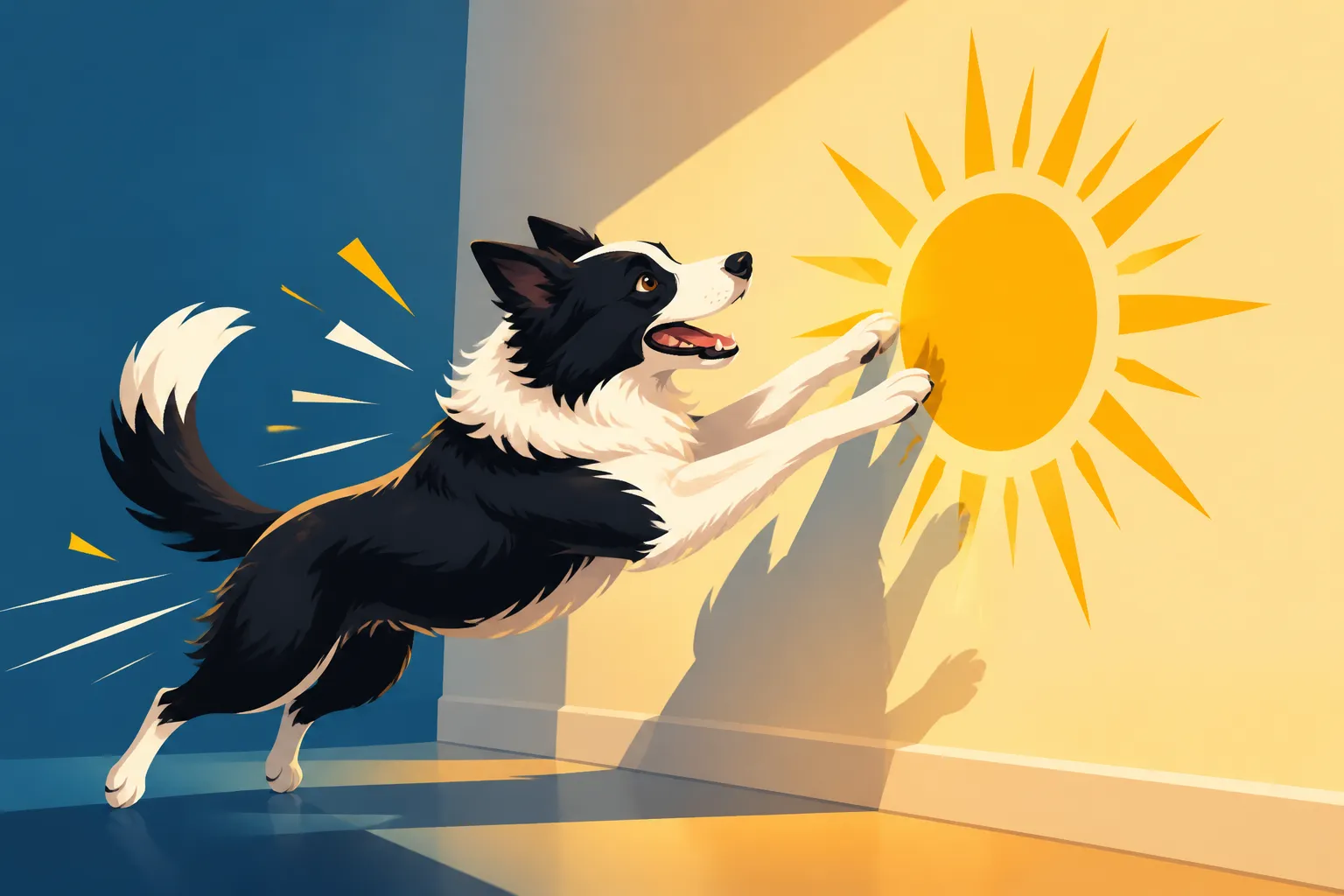
The Border Collie That Chases the Sun Off Walls
It's a common, if bewildering, sight for many Border Collie owners: your brilliant, high-drive dog fixated on a sunbeam dancing across the wall, frantically chasing an elusive spot of light. This isn't just a cute quirk; it can quickly escalate into a frustrating and even harmful obsessive behavior. This comprehensive guide will delve into why Border Collies develop this fixation and, more importantly, equip you with actionable strategies to understand, manage, and prevent your dog from chasing the sun off walls.
Understanding the Allure: Why Border Collies Fixate on Light and Shadows
For a breed renowned for its intense focus and insatiable drive, the allure of a dancing light or shadow can be almost irresistible. It taps into the very core of what makes a Border Collie a Border Collie. Understanding these fundamental instincts is the first step toward addressing the behavior.
The Deep-Rooted Prey Drive
Border Collies were selectively bred over generations to gather and control livestock. Their working style relies heavily on "the eye" – that intense, focused stare they use to influence sheep. This eye is a refined form of predatory sequence: stalk, chase, herd, but ideally, not bite or kill. When a sunbeam or shadow flickers across a surface, it mimics the erratic movement of small prey. For a dog hardwired to respond to movement, particularly subtle shifts, this visual stimulus is a powerful trigger.
This is why even a dog with no access to actual livestock can exhibit such strong herding behaviors. The instinct is so ingrained that almost anything that moves unpredictably can activate it. A laser pointer, a car passing by, or indeed, a shimmering reflection, all become surrogates for the sheep they were born to work. The problem is, unlike a sheep, a patch of light has no substance, offers no resolution, and can never be "caught" or controlled, leaving the dog in a perpetual state of frustrated arousal.
Imagine being a highly skilled hunter, born with an instinct to pursue, and then presented with a ghost prey you can never quite corner. That's essentially what a Border Collie experiences when chasing light. Their genetic blueprint tells them to go, to fixate, to do something, but the target is intangible, offering no satisfying conclusion to the chase sequence. This lack of resolution is a key factor in how the behavior can become obsessive.
Heightened Visual Sensitivity
Border Collies possess incredibly acute vision, especially for movement. Their eyes are designed to pick up the slightest shift in a flock of sheep, even at a distance. This sensitivity, which is a tremendous asset in the field, can become a liability in a domestic environment filled with reflections, shadows, and artificial lights. They see things that might be invisible or completely ignored by other breeds, or even by us, their human companions.
Consider a sunny day with light filtering through a window, perhaps bouncing off a watch, a phone screen, or even a water bowl. These seemingly innocuous events can create fleeting, dancing patterns that a Border Collie's keen eyes immediately register. What we perceive as a momentary flicker, they interpret as something significant, something demanding their attention and action. This constant bombardment of visual stimuli can be overwhelming for some dogs, especially those without adequate outlets for their mental energy.
Their visual world is often far more dynamic and stimulating than ours, and their brain is constantly processing these quick, darting movements. This heightened perception means that they are more likely to notice and respond to the fleeting lights and shadows that other dogs (and humans) might simply overlook. This makes managing the environment crucial, as we'll discuss later, because what seems like nothing to us can be a huge trigger for them.
The Slippery Slope to Compulsion: When Play Becomes a Problem
What starts as an innocent chase can quickly spiral into a deep-seated, often distressing, compulsive behavior. It's not just about stopping a "naughty" habit; it's about addressing a potential welfare issue for your highly intelligent and sensitive companion.
Understanding Compulsive Behaviors
A compulsive disorder in dogs is characterized by repetitive, exaggerated, and often out-of-context behaviors that seem to have no obvious goal or function. They can interfere with normal activities and often appear to be performed without conscious control. Chasing lights and shadows fits this description perfectly when it moves beyond occasional play. It becomes an insistent, relentless pursuit that the dog seems unable to stop, even when exhausted or distressed.
The behavior offers a kind of self-reinforcement. Each chase, each frantic lunge, releases chemicals in the dog's brain that create a temporary sense of reward or relief, similar to an addiction. This is why simply trying to physically stop the dog without addressing the underlying drive is rarely effective in the long term; the internal reward mechanism is too powerful. The dog learns that the behavior itself provides a release, even if the "prey" is never truly caught. This can lead to a vicious cycle where the dog seeks out the stimulus more and more frequently.
When a Border Collie is driven to chase lights, it's often a sign that their innate needs for mental and physical stimulation are not being adequately met, or that they are experiencing underlying anxiety or stress. The frantic chasing acts as an outlet, albeit an unhealthy one. Dogs that lack sufficient structured work, diverse mental challenges, or consistent routines are more prone to developing these kinds of displacement activities. For more on this, check out Why a Border Collie Cannot Stop on Its Own or Whether a Border Collie's Habits Are Compulsive.
Physical and Mental Toll
The relentless pursuit of fleeting light takes a significant toll on a Border Collie. Physically, it can lead to exhaustion, injury from crashing into objects or repetitive strain, and even damaged paws from skidding. But the mental and emotional impact is often far more severe. These dogs live in a constant state of arousal and frustration, never truly satisfying their drive.
Imagine living in a state of perpetual high alert, always on the lookout for an elusive target that promises satisfaction but never delivers. This stress can manifest in other behavioral problems, such as increased anxiety, destructiveness, or reactivity in other situations. Their brain is always "on," constantly searching, which prevents them from truly relaxing and enjoying downtime. This can degrade their quality of life, transforming a joyful, active companion into a restless, agitated animal.
This persistent mental strain can lead to a cycle of overstimulation and exhaustion, leaving your dog chronically stressed and prone to other issues. It can also make them less responsive to training cues and more difficult to manage in everyday situations, as their focus is constantly being hijacked by visual stimuli. Over time, this can even affect their physical health, as chronic stress impacts the immune system and overall well-being.
Breaking the Cycle: Practical Strategies for Intervention
Once you understand why your Border Collie is chasing lights and shadows, the next step is to implement practical strategies to manage and redirect this behavior. It requires consistency, patience, and a multi-faceted approach.
Environmental Management is Key
The first and most immediate step is to minimize exposure to the triggers. If your dog is chasing sunbeams off the walls, identify where and when these occur. This might mean adjusting curtains or blinds during certain times of the day, using window film on particularly problematic windows, or even rearranging furniture to block reflective surfaces. Removing the opportunity to practice the behavior is crucial to breaking the habit.
Consider objects that might be creating reflections: shiny pet bowls, mirrors, framed pictures with glass, even the screen of your phone or tablet. Be mindful of these, especially during sunny hours. Some owners even find success with using non-reflective paint or matte finishes on walls in areas where the dog frequently fixates. While you can't eliminate every single reflection, significantly reducing the most common triggers makes a big difference.
It's also important to be aware of artificial light sources. Some dogs become equally fixated on the beams from flashlights, laser pointers, or even reflections from digital screens. For this reason, it's best to avoid using laser pointers with Border Collies entirely, as they are notorious for triggering obsessive light-chasing behaviors. See Stopping Laser Pointer Games With a Border Collie for more insights on this specific issue.
Redirect and Reinforce Desired Behaviors
Instead of simply telling your dog "no" when they start chasing a light, which offers no alternative, actively redirect their attention to appropriate behaviors and reward those heavily. Keep high-value treats or favorite toys handy. As soon as you see the beginnings of fixation, or even better, before it starts, immediately interrupt and engage your dog in a different activity.
This could be a quick session of obedience commands like "sit," "stay," or "down," followed by a reward. Or it could be tossing a designated, non-reflective toy that they enjoy chasing and retrieving. The key is to make the alternative activity more rewarding and engaging than the frustrating chase. This teaches your dog that paying attention to you and engaging in appropriate activities yields positive results, while fixating on light does not.
Consistency is paramount here. Every time you redirect successfully, you are building a new, healthier neural pathway in your dog's brain. You're teaching them a new coping mechanism. If you let them chase sometimes, it reinforces the old, undesirable behavior. Patience is also critical; it takes time to unravel deeply ingrained habits, so don't get discouraged if progress isn't immediate. For more on redirecting similar behaviors, you might find The Border Collie That Will Not Drop the Ball helpful.
Beyond the Beam: Long-Term Solutions and a Balanced Life
Managing the immediate behavior is important, but true success comes from implementing long-term strategies that address your Border Collie's fundamental needs, providing a richer, more balanced life.
Structured Mental and Physical Exercise
Border Collies are not content with just a stroll around the block or endless games of fetch. They need work. This doesn't necessarily mean herding sheep, but it does mean engaging their brilliant minds and athletic bodies in structured, purposeful activities. Without this, their energy and intelligence can easily be channeled into problematic behaviors like light chasing.
Incorporate activities that require problem-solving and focus. Agility training, nose work, obedience trials, or even advanced trick training can be excellent outlets. These activities provide mental challenge, physical exertion, and a sense of purpose. Think about enriching their daily routine with varied exercises that don't rely solely on visual stimulation. A platform like BAXTER & Bella offers structured online training programs that can guide you through teaching a variety of skills and behaviors, helping to channel your dog's intelligence productively.
Diversify their physical exercise beyond just running. Incorporate hikes, swimming, or long walks in new environments where they can explore different scents and textures. The goal is to tire them out both physically and mentally in a healthy way, reducing the pent-up energy that might otherwise fuel obsessive behaviors. If you're looking for new ideas, consider Mental Work That Tires a Border Collie Faster or Exercise, Work and What Actually Settles a Border Collie.
Enrichment and Engagement
Beyond formal training, a Border Collie benefits immensely from daily enrichment that stimulates their natural instincts in appropriate ways. Puzzle toys are a fantastic way to engage their minds during meal times or when you need them to settle independently. Look for interactive feeders that require your dog to manipulate parts to get their food. These turn mealtime into a mental game, burning energy and providing a sense of accomplishment. You can find a wide variety of these on platforms like Amazon.
Scent work is another incredible tool. Hiding treats around the house or yard and encouraging your dog to sniff them out uses their powerful nose, a sense often underutilized in pet dogs. This is a naturally calming activity that requires focus and doesn't rely on visual triggers. Teaching them to find specific toys or even people can be incredibly rewarding. For more ideas on how to engage your Border Collie, consider Puzzle Feeders That Hold a Border Collie and Trick Training a Border Collie Indoors.
Finally, ensure your Border Collie has plenty of appropriate chew toys. Chewing is a natural, stress-relieving behavior for dogs, and providing durable, safe options can help redirect any oral fixation or nervous energy. Rotating toys keeps things fresh and interesting, preventing boredom which can often lead to undesirable behaviors. A well-exercised and mentally stimulated Border Collie is a happy Border Collie, much less likely to seek out compulsive habits.
Here's a quick comparison of enrichment activities that can help redirect a light-chasing Border Collie:
| Activity Type | Description | Key Benefits | Considerations |
|---|---|---|---|
| Scent Work | Hiding treats or specific objects for your dog to find using their nose. | Engages a primary sense (smell), mentally fatiguing, low visual input. | Can be done indoors or outdoors, minimal equipment needed. |
| Interactive Puzzle Feeders | Toys that dispense food/treats as the dog manipulates them. | Mental stimulation, problem-solving, makes mealtime a game. | Choose durable toys; supervision initially may be needed. |
| Advanced Obedience/Tricks | Teaching complex command sequences or new, challenging tricks. | Boosts confidence, strengthens bond, builds self-control. | Requires consistent training sessions; can be done indoors. |
| Agility/Canine Sports | Structured courses involving jumps, tunnels, weaves. | High physical and mental output, builds focus and body awareness. | Requires specialized equipment/classes; consult vet for young dogs. |
| "Find It" Games | Teaching your dog to find a specific person or object on cue. | Engages scent and problem-solving, builds communication. | Start in low-distraction environments; gradually increase difficulty. |
| Durable Chew Toys | Providing appropriate, long-lasting items for chewing. | Stress relief, oral fulfillment, prevents destructive chewing. | Choose size/durability appropriate for your dog; supervise new toys. |
Building an "Off Switch"
Teaching your Border Collie a reliable "off switch" is incredibly valuable. This involves training them to settle calmly on a mat or in a designated quiet space, regardless of what's happening around them. This skill teaches self-control and helps them regulate their arousal levels, which is vital for dogs prone to obsessive behaviors.
Start by rewarding them heavily for simply lying down on their mat. Gradually increase the duration and introduce mild distractions. The goal is for them to understand that "mat" or "place" means calm, quiet relaxation. This provides a safe haven and a mental break from their high-drive nature, preventing them from constantly scanning for things to chase.
This "off switch" can be a lifesaver in environments where reflections are unavoidable, or during times when you simply need your dog to relax. It's a fundamental skill that empowers your Border Collie to manage their own impulses, rather than being constantly driven by them. A well-trained "place" command is much more than just a trick; it's a crucial tool for mental well-being for a Border Collie.
Disclaimer
This article is for general informational purposes only and does not constitute professional advice. Laws, prices and regulations vary by location and change over time. Consult a qualified professional for guidance on your specific situation.