A Border Collie Circling Children in the Yard
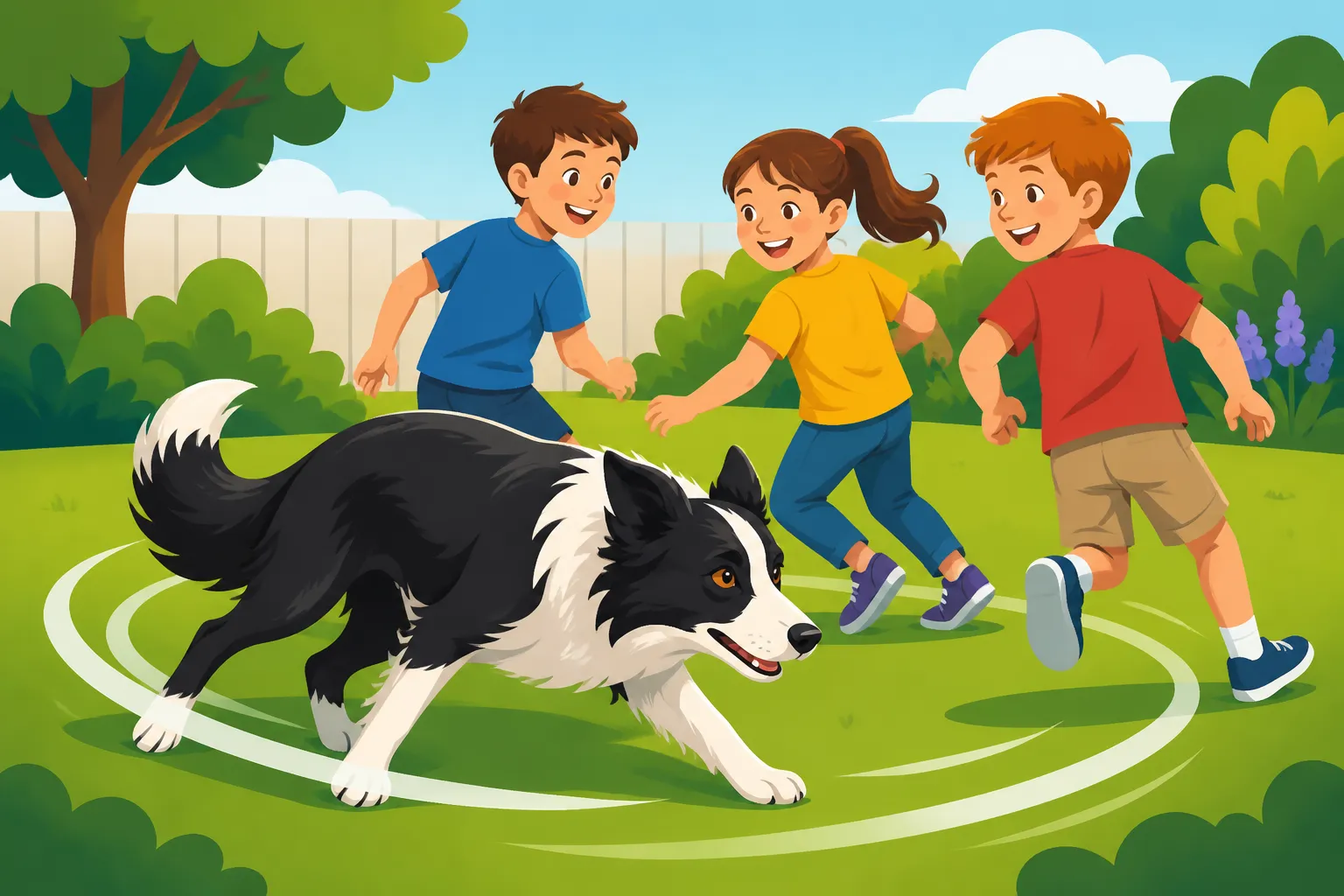
It’s a scene many Border Collie owners know all too well: the kids are running around the yard, laughing, playing tag, maybe tossing a frisbee, and suddenly, your super-smart, highly driven Border Collie is right there, trying to "manage" them. This isn't aggressive behavior in the traditional sense, but a deep-seated instinct to gather and control movement, which can quickly turn frustrating or even a little scary when it's directed at your own children. This guide will help you understand why your Border Collie acts this way and, more importantly, how to redirect that powerful instinct into appropriate, safe, and fun channels.
Understanding the Herding Instinct in Border Collies
Let's face it, Border Collies were quite literally bred for this. Their entire being is hardwired for herding, and that instinct doesn't just disappear because they live in a suburban home instead of on a vast farm. When you see your Border Collie circling children, pushing them, or even nipping at their heels, it's not malice; it's a genetic blueprint kicking into action.
Why the Drive to Gather is So Strong
The Border Collie's ancestors were developed over centuries to work livestock, primarily sheep, in the rugged borderlands between Scotland and England. These dogs needed to be incredibly intelligent, agile, and possess a powerful drive to gather and control a flock. They were selected for their ability to read stock, anticipate movement, and use their body and "eye" to direct animals without needing to bite or physically overpower them. This means that anything that moves in an erratic or uncontrolled way can trigger this instinct. Children, with their joyful, unpredictable sprints and sudden changes in direction, are essentially small, human sheep to a Border Collie.
It's a deeply rewarding experience for the dog when they feel like they are successfully "gathering" something. This inherent satisfaction reinforces the behavior, making it more likely to happen again. Think of it from your dog's perspective: the kids are running, your dog "herds" them back together or stops their movement, and voilà, mission accomplished! It can be challenging for us to see it this way because we perceive our children as distinct from livestock, but to a Border Collie, the primary driver is the movement itself. Trying to punish this natural behavior often backfires, creating confusion and anxiety for your dog, or even escalating the behavior as they become more frantic in their attempts to control the "flock."
How "Eye" Plays a Role
One of the most defining characteristics of a Border Collie's herding style is their intense "eye." This refers to their ability to fixate on an animal, using their gaze and low, stalking posture to exert pressure and control movement. When your Border Collie is circling children in the yard, you might notice this intense stare, a focused concentration that seems to lock onto their target. What Strong Eye Means in a Border Collie explains this phenomenon in more detail. This "eye" is a crucial part of their herding toolkit.
When a Border Collie uses its "eye" on children, it's not necessarily aggressive, but it can be unnerving for a child and can precede physical actions like circling or nudging. The dog is trying to communicate, in its own instinctual language, "I see you, I'm watching you, and I intend to move you." This silent communication, combined with a low, predatory-like crouch, is incredibly effective on sheep, but it can make children feel uncomfortable or even scared. Understanding that this is part of their natural communication style, rather than a sign of aggression, is the first step toward managing it effectively. However, it's vital to teach your dog that humans, especially children, are not livestock to be worked.
Recognizing the Behavior: What "Circling Children" Looks Like
It's easy to dismiss early signs as playful antics, especially when your Border Collie is still a puppy. However, recognizing the subtle cues that precede full-blown herding behavior is key to nipping the problem in the bud before it becomes ingrained.
Subtle Signs Before Full-Blown Herding
Before your Border Collie is in full herding mode, you might observe a series of smaller, more subtle indicators. They might start by simply watching the children with an intense, unblinking stare, adopting that characteristic low crouch or "getting down" posture. Their tail might be low, but not tucked in fear, rather held stiffly as they concentrate. They might position themselves between a running child and a perceived "boundary" (like a fence or the edge of the yard), as if trying to prevent escape. Sometimes, they'll even emit a low whine or a soft bark, signaling their readiness to "work." Why a Border Collie Crouches and Stares details these postures.
Another common early sign is the "collecting" behavior, where your Border Collie tries to gather not just people, but also toys or other objects into one pile. If your children are playing with balls or frisbees, your dog might try to gather them, and by extension, the children who are interacting with them. These actions, while seemingly harmless, are precursors to more intense herding attempts. It's crucial for parents and guardians to be vigilant and interpret these behaviors correctly, not as playful nudges, but as the activation of a powerful instinct that needs redirection. Ignoring these early signs can lead to more problematic behaviors later on.
The Nipping and Pushing Predicament
When the herding instinct escalates, it often moves beyond just circling and staring. Your Border Collie might start nudging children with their nose, pushing them from behind, or even nipping at their ankles or legs. This isn't usually meant to harm, but to redirect movement, much like a working dog might do with a stubborn sheep. However, even a soft nip can break the skin on a child, cause bruising, or simply be terrifying for them. Whether a Border Collie Nips Ankles explores this specific behavior in depth.
This nipping and pushing is particularly prevalent when children are running, screaming, or exhibiting other high-energy behaviors that mimic the unpredictable movements of a flock. Why Running Children Set a Border Collie Working highlights how these natural child behaviors can inadvertently trigger your dog's instincts. It's a tricky situation because you don't want to stifle your children's joy, but you also need to ensure their safety and teach your dog appropriate boundaries. The key is to understand that your dog isn't being "naughty" in the human sense; it's simply following its deepest instincts. Therefore, scolding or punishment is unlikely to be effective and could damage your relationship with your dog. Instead, proactive management and consistent training are essential.
Proactive Management and Training Strategies
Managing a Border Collie's herding instinct around children requires a multi-faceted approach that combines smart environmental management with consistent, positive reinforcement training. It's about setting your dog and your children up for success.
Creating a Safe Space for Both Dog and Children
One of the most immediate and effective strategies is to create clear boundaries and safe zones. This might involve setting up a physical barrier, like a baby gate or a sturdy ex-pen, to separate your Border Collie from children during high-energy playtimes. This isn't a punishment for your dog; it's a management tool that prevents the instinct from being triggered. Consider a dedicated "dog zone" in the yard or a specific room indoors where your Border Collie can retreat and relax, away from the hustle and bustle of children's play.
Supervision is absolutely paramount. Never leave a Border Collie unsupervised with children, especially if you're working on mitigating herding behaviors. When children are playing in the yard, your Border Collie should either be engaged in a structured activity with an adult, in their designated safe space, or on a leash with an adult handler. This not only protects your children but also prevents your dog from practicing the unwanted behavior, which would only reinforce it. It might sound like a lot of work, but consistent management in the early stages can prevent bigger problems down the line. Investing in good quality gates or a robust long line, perhaps from a trusted retailer like Amazon, can make this management much easier.
Redirection Through Appropriate Outlets
Since the herding drive is so powerful, the goal isn't to suppress it entirely, but to redirect it into acceptable channels. Provide your Border Collie with plenty of opportunities for appropriate mental and physical exercise that taps into their natural instincts. This might include structured fetch games (with rules!), agility training, flyball, or even "big-ball herding" with an exercise ball too large for them to grab with their mouth. Giving a Border Collie Something to Gather discusses these alternative activities.
Puzzle toys and scent work are also fantastic for mental stimulation, tiring out that brilliant Border Collie brain without necessarily requiring intense physical exertion. A sturdy snuffle mat or a KONG filled with treats, available from places like Amazon, can keep them engaged. Regular, dedicated training sessions, even short ones, can fulfill their need to work and learn. Think about providing a flirt pole, which allows them to chase and "catch" a lure on a string, mimicking the chase and control aspects of herding in a safe, directed way. The key is to give them a job, a purpose, something to focus their incredible energy on, so they're less inclined to invent their own "jobs" like herding the children.
Foundation Training and Impulse Control
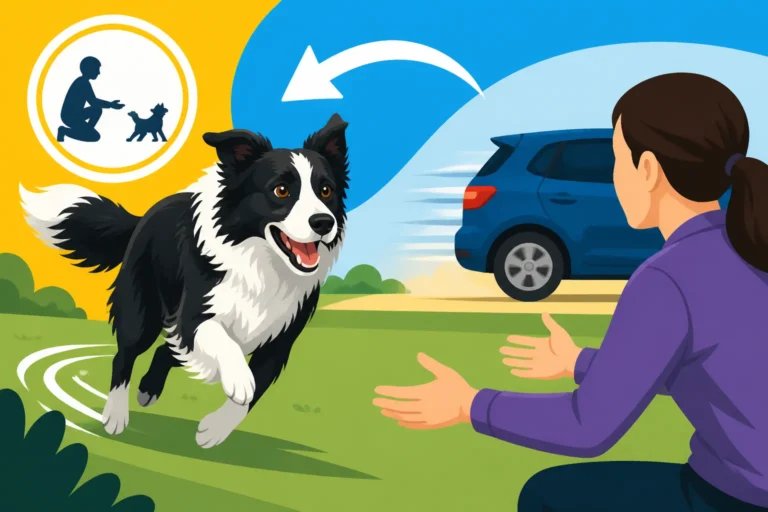
Solid obedience training is the bedrock of managing a high-drive dog. Commands like "sit," "stay," "down," and a reliable "come" are essential. An emergency recall is particularly vital for a Border Collie who might lock onto a running child. Recall on a Border Collie That Has Locked On provides guidance on building this life-saving command. Teach your dog a strong "leave it" cue, so they can disengage from a moving target when asked.
Focus on impulse control exercises. This means teaching your dog to wait patiently for food, toys, or access to certain areas, rather than barging in or snatching things. Games like "It's Your Choice" (where the dog only gets a treat or toy if they don't lunge for it) are excellent. Consider enrolling in an online puppy school or a comprehensive training program, such as those offered by BAXTER & Bella, even if your dog isn't a puppy anymore. These programs often provide structured lessons and support that can be invaluable for teaching complex behaviors and building a strong foundation of impulse control. Rewarding calm behavior around children, even if it's just your dog lying quietly on their mat while the kids play nearby, is incredibly powerful. Always use high-value treats and praise for successful disengagement or calm interaction.
When to Seek Professional Help
While management and consistent training can go a long way, there are times when the situation requires the expertise of a professional. Don't feel ashamed or defeated if you reach this point; it means you're being a responsible owner.
Identifying Escalating Behaviors
It's important to recognize when herding behavior is escalating beyond what you can safely manage on your own. If your Border Collie's nips become harder or more frequent, if they are making direct eye contact with children in a challenging way, or if their attempts to control movement are becoming frantic or aggressive, it's time to call in a professional. Any incident that causes a child to be injured, even superficially, is a clear sign that you need expert intervention.
Another red flag is if the behavior starts to generalize to other situations, such as your dog attempting to herd adults, other pets, or even inanimate objects with increased intensity and frustration. If your attempts at redirection and training are met with resistance, or if your dog seems overly stressed or anxious when trying to control their instincts, a professional can help assess the underlying cause and develop a tailored plan. Remember, unchecked herding can lead to serious incidents, and early intervention is always better than waiting for a more severe problem to develop.
The Value of a Certified Professional Dog Trainer
A certified professional dog trainer (CPDT) or a veterinary behaviorist can provide invaluable assistance. They have the experience and knowledge to accurately assess your Border Collie's specific behaviors, understand the root causes, and develop a safe, effective training plan that works for your family. Look for trainers who specialize in working breeds and use positive reinforcement methods. They can help you fine-tune your management strategies, teach you advanced impulse control exercises, and show you how to redirect your dog's herding drive into appropriate activities.
A good trainer will not only work with your dog but also teach you the skills to continue the training effectively. They can observe the interactions between your Border Collie and your children in your home environment, offering personalized advice and strategies. Sometimes, what seems like a daunting problem to us can be broken down into manageable steps by someone with a trained eye. Don't hesitate to reach out for help; it's an investment in the safety and well-being of both your children and your beloved Border Collie.
Here's a quick comparison of management versus training strategies:
| Strategy Type | Goal | Immediate Impact | Long-Term Impact | Example Techniques |
|---|---|---|---|---|
| Management | Prevent unwanted behavior from occurring | Stops incidents right away | Prevents reinforcement of unwanted behavior; buys time for training | Physical barriers (gates, leashes), close supervision, separate play areas, crating during high-energy times |
| Training | Teach alternative, appropriate behaviors | Builds new skills and understanding | Creates lasting behavioral change; fulfills dog's natural needs | Impulse control exercises (wait, leave it), strong recall, redirection to approved toys/activities, formal obedience, "that'll do" |
Circling children is a challenging behavior, but it's not insurmountable. It requires understanding, patience, and consistency. By implementing smart management strategies and investing in consistent positive reinforcement training, you can teach your Border Collie appropriate ways to express their powerful herding instinct, ensuring a safe and happy home for everyone, two-legged and four-legged alike.
Disclaimer
This article is for general informational purposes only and does not constitute professional advice. Laws, prices and regulations vary by location and change over time. Consult a qualified professional for guidance on your specific situation.