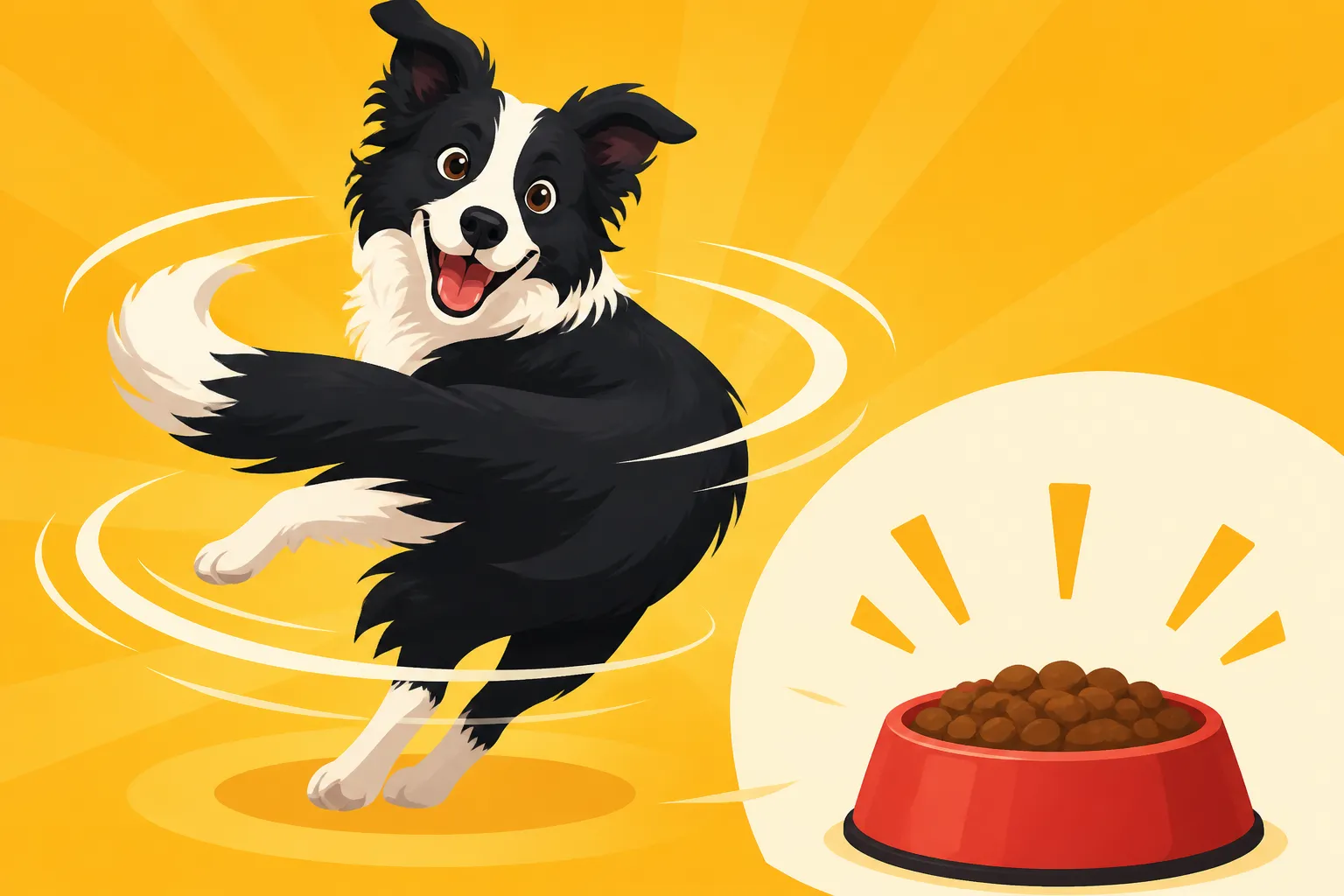
A Border Collie That Spins Before Meals
It's a scene many of us know all too well: you grab the food bag, and suddenly your usually calm Border Collie transforms into a whirling dervish, spinning in frantic circles, barking, and nudging. This guide is here to help you understand why your intelligent companion might be doing the pre-mealtime dance, differentiate between normal excitement and something more concerning, and offer practical, empathetic strategies to bring some calm back to your kitchen.
Understanding Why Your Border Collie Spins Before Meals
That whirlwind of excitement before mealtime isn't just a random act; for a Border Collie, it often stems from a deeply ingrained combination of instinct, learned behaviors, and sheer anticipation. These are highly intelligent, highly driven dogs, and their world is often interpreted through a lens of cues and patterns. When those cues lead to something as rewarding as food, their response can be quite intense.
The Instinctual Roots of the Spin
Border Collies were bred for generations to work stock, to be constantly aware of their environment, to anticipate movement, and to control what's happening around them. This intense focus, often referred to as "eye," doesn't just switch off when they're off the sheep. It translates into all sorts of daily behaviors, including how they react to high-value resources like food. The spinning itself can be a manifestation of this herding instinct – a way to "gather" or "control" the situation, even if the "situation" is just you preparing their dinner. They're trying to influence the outcome, to speed up the process, or to direct your attention.
Think about a Border Collie working sheep; they move in arcs, circle, and often spin quickly to change direction. It’s a natural, efficient movement for them. In the context of mealtime, this movement gets redirected. They're not herding sheep, but they are absolutely trying to "herd" that food bowl into their possession, or to "herd" you to deliver it faster. It's a primal, energy-releasing burst that feels natural to them in a moment of high arousal and anticipation.
This strong drive also means they often struggle with stillness when highly stimulated. Their brains are wired to do, to move, to react. Waiting patiently for food, while a desirable trait for us, goes against centuries of selective breeding that encouraged quick, decisive action. Therefore, the spinning can be a default "action" when they're in a state of eager readiness, a physical outlet for their mental energy.
Learned Behavior and Anticipation
Beyond instinct, a significant part of the mealtime spin is a learned behavior. Dogs are masters of association. If every time you approach the food bin or open the pantry, your Border Collie starts spinning and then immediately gets fed, they've learned that spinning is an effective precursor to food delivery. You might not even realize you've taught them this! The sounds of the kibble rattling, the clink of the bowl, the smell of their food – these all become powerful cues that trigger the routine.
This is a classic example of classical conditioning, much like Pavlov's dogs. The neutral stimulus (you preparing food) becomes a conditioned stimulus, eliciting a conditioned response (spinning). For a highly intelligent breed like the Border Collie, these associations are formed quickly and strongly. They aren't spinning to annoy you; they're doing what they believe works to get that delicious meal in front of them. They’ve experimented, and the spinning has, in their experience, consistently led to the desired outcome.
Moreover, if you've ever, even inadvertently, given attention to the spinning – perhaps by saying "calm down" or "no" while they're doing it, or by waiting for a momentary lull before placing the bowl down – you might actually be reinforcing the behavior. Any attention, positive or negative, can be a reward for a dog seeking interaction and a response. For a Border Collie, engagement with their human is often a reward in itself, even if that engagement is a frustrated sigh.
When the Spin Becomes a Habit
Over time, this combination of instinctual release and learned association solidifies into a powerful habit. What might have started as a few excited turns can escalate into a full-blown ritual, involving barking, jumping, pawing, and relentless spinning. It becomes so ingrained that it feels almost involuntary for the dog – an unbreakable part of their mealtime routine. This habit is often self-reinforcing because the act of eating immediately follows, validating the spinning as a successful strategy.
For some Border Collies, this habit can cross the line from enthusiastic anticipation into something that verges on obsessive or compulsive. If the spinning is intense, difficult to interrupt, or seems to escalate despite your best efforts to ignore it, it's moved beyond simple excitement. It's become a deeply grooved pathway in their brain, a hardwired response that they find difficult to disengage from, even if it causes them stress or takes over their focus entirely.
This habitual spinning can also be a way for them to cope with high levels of arousal or frustration. They know food is coming, they want it, but they can't control the timing. The physical act of spinning releases some of that pent-up energy and emotional tension. Without clear guidance on what to do instead in those high-anticipation moments, the spinning becomes the default coping mechanism, a reliable (for them) way to manage their intense feelings about dinner.
Differentiating Between Normal Excitement and Obsessive Behavior
It's one thing for a Border Collie to do a happy dance; it's another for them to be in a frantic, unmanageable state every time the food bag comes out. Understanding the difference is crucial for addressing the behavior effectively and ensuring your dog's overall well-being. Border Collies are renowned for their intensity, but even for them, there's a line between enthusiastic and obsessive.
Healthy Enthusiasm vs. Compulsive Habits
Healthy enthusiasm before meals typically involves some excited tail wags, a few happy barks, perhaps a bounce or two, and maybe even a brief, contained spin. The key here is containment and interruptibility. A dog displaying healthy enthusiasm can usually be asked to sit, lie down, or make eye contact, and they will momentarily comply, perhaps still wiggling, but not in a frantic, unstoppable manner. Their body language might be loose and fluid, and while excited, they don't appear stressed or overwhelmed.
On the other hand, a compulsive habit often manifests as rigid, repetitive, difficult-to-interrupt behavior. The spinning might be tight, fast, and continuous, sometimes accompanied by frantic barking, whining, or even nipping. The dog might seem "tuned out" to your commands, almost in a trance. Their body language can appear tense, with dilated pupils, stiff movements, or excessive panting that goes beyond normal excitement. This kind of spinning isn't just a release of energy; it can indicate underlying stress, anxiety, or a lack of impulse control that has become pathological. You might notice similar compulsive behaviors in other contexts, like The Border Collie That Chases the Sun Off Walls or Spinning and Tail Chasing in a Border Collie.
A helpful way to gauge the difference is to observe your dog's overall demeanor. Is this the only time they exhibit such intense, repetitive behavior? Or do they also obsess over toys, shadows, or other activities? If it's a pattern across multiple situations, it's more likely to be a compulsive tendency rather than just simple excitement. Normal excitement dissipates once the event occurs; compulsive behavior can sometimes persist even after the food is down, or quickly escalate again if there's any perceived delay.
Identifying Potential Underlying Anxieties
For some Border Collies, excessive mealtime spinning isn't just about food; it can be a symptom of underlying anxiety or stress. If your dog is feeling anxious about resources, even something as basic as food, they might exhibit behaviors that seem frantic. This can stem from past experiences (e.g., food insecurity in a rescue dog), or it could be a manifestation of general anxiety that expresses itself during high-arousal moments. The spinning, in these cases, becomes a self-soothing or anxiety-releasing mechanism.
Consider other aspects of your dog's daily life. Do they show signs of separation anxiety when you leave? Are they generally worried or hyper-vigilant in new environments? Do they exhibit other stress signals like lip licking, yawning, or excessive panting even when not hot or exercising? If so, the mealtime spinning could be just one piece of a larger anxiety puzzle. A Border Collie's high intelligence and sensitivity can make them prone to anxiety if not given sufficient structure, mental stimulation, and a sense of security.
Sometimes, the anxiety isn't about the food itself, but about the process of getting the food. Perhaps the waiting is too frustrating, or they feel a lack of control over a highly desirable event. This can lead to an outburst of energy that manifests as spinning. It's like a child who is so excited for a birthday present that they can't sit still – but for a dog, without intervention, this can escalate into a much more intense, hard-to-manage behavior. Addressing generalized anxiety, if present, is often key to resolving specific anxious behaviors like frantic spinning.
The Role of Routine in Reinforcing Behavior
A predictable routine is a double-edged sword when it comes to dog behavior. On the one hand, a good routine provides security and helps dogs understand expectations. On the other, if the routine includes the spinning as an integral, successful part of getting fed, it strongly reinforces the behavior. Every time your dog spins and then receives food, that neural pathway that connects "spinning" to "getting food" gets deeper and stronger.
| Behavior Type | Characteristics of "Normal" Mealtime Excitement | Characteristics of Potentially "Obsessive/Compulsive" Spinning |
|---|---|---|
| Intensity | Moderate, easily calmed with a cue, wags tail loosely, eager to please. | High, frantic, difficult to interrupt, sometimes ignores cues. |
| Duration | Brief, usually stops once food is acknowledged or a command is given. | Prolonged, continuous, may escalate despite attempts to calm. |
| Body Language | Loose, fluid body, happy panting, bright eyes, engaged with handler. | Tense, rigid body, excessive panting, dilated pupils, "zoned out" look. |
| Vocalization | Happy barks, whines (manageable volume), easily redirected. | Loud, persistent barking/whining, often difficult to quiet. |
| Interruptibility | Responds to "sit," "stay," or name, even if still wiggly. | May not respond to commands, seems unaware of surroundings beyond food. |
| Associated Behaviors | Nips/jumps are rare or accidental, easily corrected. | Nipping, pawing, jumping that seems uncontrollable or aggressive. |
| Underlying Emotion | Joy, anticipation, eagerness. | Frustration, anxiety, stress, strong compulsion. |
It's not just the spinning itself that becomes routine, but the entire sequence of events surrounding mealtime. The time of day, the person feeding them, the specific location of the food, the bowls used – all these details become part of the ritual. If any part of that routine is disrupted, or if the dog perceives a delay, the spinning might intensify as they try to "force" the routine back on track. This demonstrates just how sensitive Border Collies are to patterns and how strongly they can react when those patterns are either confirmed or challenged.
Breaking this cycle requires conscious effort to change the established routine, replacing the spinning-to-food connection with a calm-to-food connection. It's about teaching them that patience and stillness are the new keys to unlocking dinner. This requires consistency and a clear understanding of what you want them to do instead of spinning. For instance, using a "place" command or a solid "sit-stay" before they get the bowl.
Strategies to Manage and Redirect Mealtime Spinning
The good news is that with consistency, patience, and a clear plan, you can absolutely help your Border Collie learn calmer mealtime manners. It's about reshaping expectations and teaching them alternative, more appropriate behaviors. Remember, Border Collies thrive on structure and understanding what's expected of them.
Establishing Clear Mealtime Rituals
The first step is to create a new, predictable ritual around mealtime that doesn't involve spinning. The goal is to make it crystal clear to your Border Collie that calm behavior is the only thing that unlocks the food bowl. This routine should be consistent, every single time, with every person who feeds the dog. Inconsistency is your enemy here.
Start by choosing a specific "pre-meal" spot where your dog should go. This could be their mat, their bed, or even just a designated spot on the floor a few feet away from where you prepare the food. Practice having them go to this spot and stay there before any food preparation even begins. Use a clear command like "place" or "bed." Reward generously with high-value treats when they are calm in that spot, long before the food bowl comes into play. You might find resources like those from BAXTER & Bella helpful for structured "place" training.
Once they can reliably stay in their spot, begin the food preparation. If they break from their spot or start to spin, immediately stop what you're doing, turn your back, or even leave the room. Only resume when they are back in their calm spot. Repeat this as many times as necessary. It will feel tedious at first, but this immediate consequence (no food prep while spinning) is powerful. When the food is ready, and they are still calmly in their spot, approach with the bowl. Place the bowl down, but don't release them yet. Ask for a "sit" or "down" by the bowl. Once they're calm, give a clear release cue like "free" or "okay" to eat. This entire sequence teaches them impulse control.
Incorporating Impulse Control Exercises
Beyond the immediate mealtime ritual, integrating impulse control exercises throughout your Border Collie's day can significantly improve their ability to remain calm when excited. These dogs are incredibly smart, and they relish the mental challenge of learning new things. Working on "leave it," "stay," and "wait" in various contexts can generalize to mealtime.
For example, practice "leave it" with tempting toys or treats on the floor. Start in a low-distraction environment and gradually increase the challenge. Practice "stay" for longer and longer durations, and at increasing distances from you. The stronger their foundation in these basic commands, the easier it will be for them to apply them when their excitement levels are high. Think of these as building blocks for a calmer, more controlled Border Collie.
Another excellent tool for impulse control and mental enrichment are puzzle feeders or slow-feeder bowls. Instead of simply dumping food into a bowl, make your dog work for it. This engages their brain, slows down their eating, and channels their energy into problem-solving rather than frantic spinning. You can find a wide variety of these on Amazon, from simple mazes to more complex dispensers that require paw or nose manipulation. Puzzle Feeders That Hold a Border Collie can turn mealtime from a quick gulp into a rewarding mental exercise, burning off some of that intense Border Collie brainpower.
Enriching Their Day Beyond Mealtime
Often, excessive mealtime excitement is a symptom of a Border Collie who isn't getting enough appropriate mental and physical stimulation throughout their day. These dogs need a job, and if they don't have one, they'll invent their own, which often includes less-than-desirable behaviors. Spinning before meals can be a way to express pent-up energy and a lack of fulfillment.
While physical exercise is crucial for a Border Collie, it's not the only answer. Exercise, Work and What Actually Settles a Border Collie highlights the need for mental stimulation. Incorporate daily brain games:
- Scent Work: Hide treats around the house or yard and have your dog "find it." This taps into their natural scenting abilities and is incredibly tiring for their brains.
- Trick Training: Teach them new tricks! Border Collies are brilliant and love to learn. How Many Words a Border Collie Can Learn or Trick Training a Border Collie Indoors can give you ideas. It's an excellent way to bond and provide mental exercise.
- Structured Play: Instead of endless fetch, incorporate command-and-release into play sessions. Ask for a "sit" before throwing the ball, or a "drop it" and "stay" before picking it up. This teaches them control even during high-arousal activities.
- Regular Training Sessions: Short, engaging training sessions (5-10 minutes, several times a day) can burn mental energy more effectively than a long, unstructured walk. Working on obedience, new skills, or even just reviewing known commands with enthusiasm can make a huge difference.
By providing ample mental and physical outlets, you're reducing the overall "pressure cooker" effect that can lead to explosive mealtime behaviors. A Border Collie whose mind has been challenged and whose body has been appropriately worked is generally a calmer dog, less prone to frantic displays of excitement.
Seeking Professional Guidance for Persistent Spinning
While many Border Collies can benefit from the strategies above, there are times when persistent spinning or other obsessive behaviors warrant the help of a professional. Don't feel like you've failed if you need to reach out; some behaviors are deeply ingrained and require expert intervention.
When to Consider a Behavioral Consultation
If you've consistently applied the training strategies outlined above for several weeks or months, and the spinning shows little improvement, or even worsens, it's time to consider a professional. Look for a certified professional dog trainer or a veterinary behaviorist. These professionals can assess your dog's specific situation, identify potential underlying causes (like anxiety or a true compulsive disorder), and develop a tailored behavior modification plan.
You should also seek professional help if the spinning is accompanied by other concerning behaviors, such as aggression (snapping, biting, growling) around food, severe destructive behavior, excessive vocalization that doesn't subside, or self-mutilation. If the spinning appears to be taking over your dog's life, preventing them from settling or engaging in other activities, it's definitely a sign that specialized help is needed. A qualified professional can help rule out any medical conditions that might be contributing to the behavior, as some neurological issues can manifest as repetitive movements.
It's particularly important to involve a professional if you suspect the spinning has crossed into a genuine compulsive disorder. These aren't just bad habits; they are recognized conditions that often benefit from a multi-faceted approach, which might include environmental management, behavior modification, and sometimes even medication prescribed by a veterinary behaviorist to help lower anxiety thresholds.
The Role of a Certified Professional Dog Trainer or Veterinary Behaviorist
A certified professional dog trainer (CPDT-KA or similar) can provide invaluable hands-on guidance. They can observe your dog's behavior in person, help you fine-tune your timing and technique, and introduce advanced impulse control exercises. They often have a deeper understanding of learning theory and how to effectively interrupt and redirect established behaviors in a positive reinforcement framework. They can also help ensure you're setting realistic expectations for your Border Collie's learning curve and providing the right level of mental and physical engagement for your specific dog.
For more complex cases, especially those with suspected underlying anxiety or a true compulsive disorder, a veterinary behaviorist (DACVB) is the most appropriate expert. A veterinary behaviorist is a veterinarian who has undergone extensive additional training and certification in animal behavior. They can diagnose behavioral conditions, prescribe medication if necessary (which a regular dog trainer cannot), and integrate behavior modification with medical management. They can also help differentiate between normal breed-specific intensity and a clinical behavioral issue. They will take a holistic view of your dog's health, history, and environment.
Both types of professionals offer different but equally valuable expertise. When choosing, look for someone who uses positive, force-free training methods, has experience with Border Collies or high-drive working breeds, and provides ongoing support. Investing in professional help can save you a lot of frustration and significantly improve your Border Collie's quality of life, leading to a much calmer and happier mealtime for everyone.
Disclaimer
This article is for general informational purposes only and does not constitute professional advice. Laws, prices and regulations vary by location and change over time. Consult a qualified professional for guidance on your specific situation.