A Border Collie Living With Chickens
Bringing chickens onto your property when you share your life with a Border Collie can feel like inviting a fox into the hen house. It's a common worry for many of us who love both our highly intelligent dogs and the idea of fresh eggs. The truth is, that incredible herding instinct that makes our Border Collies so special can be a real challenge when it comes to small, flighty backyard fowl, leading to frustration for both you and your dog. This guide will walk you through understanding your Border Collie's natural drives, implementing effective training strategies, and creating a safe environment so that your Border Collie and your chickens can coexist peacefully.
Understanding the Border Collie's Natural Instincts Around Fowl
Before you even think about introducing your Border Collie to chickens, it's vital to truly grasp the deep-seated instincts that govern their behavior. Border Collies were bred for centuries to control livestock, and that translates into an intense desire to gather, chase, and exert influence over moving things. Chickens, with their sudden movements, clucking, and flapping, are practically custom-made to trigger these instincts.
Herding Versus Prey Drive: A Fine Line
Many people confuse a Border Collie's herding instinct with a general prey drive, but there's a crucial distinction, especially when it comes to something as delicate as a chicken. Herding is about control, gathering, and moving animals in a specific direction, often with a "soft mouth" (or no mouth contact at all) and intense eye-contact, known as "the eye." Prey drive, on the other hand, is about capture, kill, and consume. While a Border Collie's primary instinct is herding, a strong, uncontrolled herding drive can quickly escalate into a predatory chase if not managed properly.
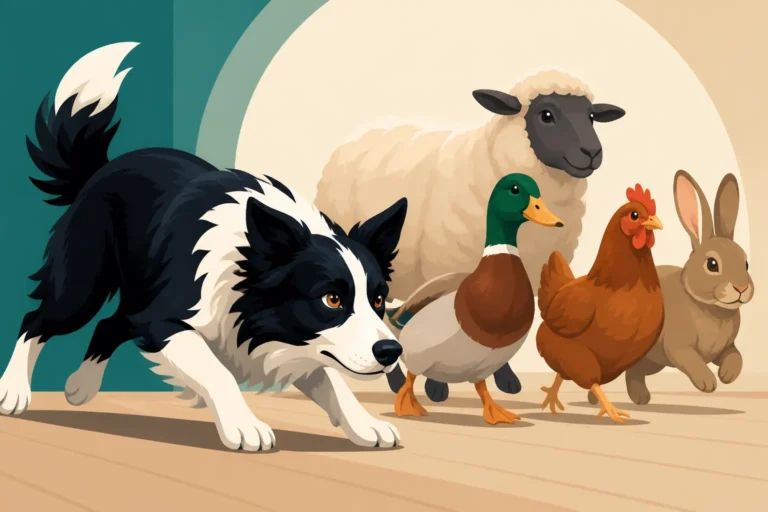
Imagine your Border Collie seeing a chicken dart across the yard. Their brain is wired to respond to that movement. They might drop into a low crouch, fixate with The Border Collie Stare and Where It Comes From, and start to circle. This is classic herding behavior. However, if the chicken panics and runs frantically, the speed and chaotic movement can flip a switch in some dogs, turning the herding focus into a high-octane chase. A Border Collie that herds its flock calmly might still struggle with a chicken because chickens don't respect the "pressure" a dog applies in the same way sheep do. Sheep are generally larger, slower, and have evolved to respond to canine pressure. Chickens? Not so much. They scatter, flap, and squawk, which can actually intensify the dog's drive rather than settle it.
Why Chickens are Different from Sheep
If your Border Collie is already experienced with sheep, you might assume they'll be fine with chickens. That's a brave thought, but often not the reality. Sheep are herd animals; they move as a unit and respond to direction. They have a certain flight zone, and a skilled Border Collie learns how to work that zone effectively. Chickens are, frankly, a lot less predictable and far more vulnerable.
A single chase from a Border Collie, even if it's purely "herding" in intent, can easily injure or kill a chicken due to their fragile bones and delicate bodies. The sheer speed and agility of a Border Collie are simply too much for a chicken to handle. Furthermore, the reward for a Border Collie chasing a chicken might not be the same as herding sheep. With sheep, the reward is often the successful movement of the flock and the handler's praise. With chickens, the chaotic flapping and running can be intrinsically rewarding to the dog, making it a very hard habit to break once it starts. It’s also important to remember that most pet Border Collies aren’t working sheepdogs. Their herding drive is often less refined, more generalized, and lacking the nuanced control that an experienced working dog would have.
Implementing Training Strategies for Peaceful Coexistence
The key to a Border Collie living peacefully with chickens lies in thorough, consistent training and management. This isn't a quick fix; it requires patience, understanding, and a rock-solid foundation of obedience.
Foundation Training First
Before your Border Collie ever lays eyes on a chicken, they need to have impeccable basic obedience. We're talking about a recall that is absolute, a "stay" that holds no matter the distraction, and a "leave it" command that means leave it, full stop. Your dog needs to understand impulse control in every other aspect of their life before you introduce the ultimate distraction.
Start by working on these commands in increasingly distracting environments. Practice your Recall on a Border Collie That Has Locked On in a park with squirrels, then near children playing, then perhaps a public space with other dogs. A reliable "come" or "here" should be your dog's default response, even when their instincts are screaming otherwise. For many new owners, an online puppy school, such as BAXTER & Bella, can provide structured lessons and support to build this crucial foundation, making sure your dog understands what you're asking of them long before you introduce livestock. Without this strong foundation, you're setting yourself and your Border Collie up for failure, and potentially putting your chickens at risk.
Controlled Introductions and Desensitization
Once your Border Collie has a solid grip on basic obedience, you can begin the introduction process. This must be done with extreme care and control. Never, ever, just let your Border Collie loose with the chickens to "see what happens."
- Barrier Method: Start by having the chickens securely penned, perhaps in a large run, while your Border Collie is on a long lead (say, a 30-foot line you can find on Amazon) and wearing a well-fitting harness or flat collar. Keep a safe distance, allowing your dog to observe the chickens from afar. Reward calm behavior. Any lunging, barking, or intense staring should result in a quiet but firm redirection and increasing the distance. You want your dog to see the chickens and not react. This is about teaching neutrality.
- Short, Supervised Sessions: Gradually decrease the distance over many sessions, always with the secure barrier between them. Your focus is on rewarding calm observation. If your dog gets too excited, you know you've gone too far, too fast. Retreat to a distance where they can be calm. Use high-value treats to reinforce the desired behavior.
- "Look at That" Game: This is a fantastic desensitization technique. When your Border Collie sees a chicken, mark the moment with a verbal cue like "yes" or a click, and immediately reward with a treat. The goal is to change your dog's emotional response from "chase!" to "oh, there's a chicken, maybe I'll get a treat!" This process needs many, many repetitions over weeks or even months. The trick here is that the dog never actually gets the chicken, but they do get a reward for calmly acknowledging it.
Reinforcing Calm Behavior and Redirecting Energy
Beyond controlled introductions, you need to actively train your Border Collie to exhibit calm behavior around the chickens and provide appropriate outlets for their energy. If you're constantly fighting your dog's instincts, it's a losing battle.
Teach your Border Collie a "place" command or to settle on a mat near the chicken area, but far enough away that they can be calm. Reward them for simply existing peacefully in the presence of the chickens. This is especially helpful if your chickens free-range in a designated area. You can put your Border Collie on a tether at a distance with a comfortable bed and chew toy, rewarding them for staying put and ignoring the chickens. This teaches them self-control and that being calm around chickens earns good things.
It's also crucial to redirect their natural herding instincts into appropriate channels. Engage your Border Collie in activities that satisfy their desire to work and chase, but are safe and directed by you. This could be playing fetch with a favorite toy (but ensure it doesn't become an obsessive habit: Taking Balls Away From an Obsessive Border Collie), agility training, Scentwork for a Border Collie Between Trial Seasons, or even advanced obedience. A Border Collie that gets its Two Hours of Work a Border Collie Needs Daily and ample mental stimulation is less likely to create its own "job" of herding chickens. Remember, a bored Border Collie is a destructive Border Collie, and chasing chickens is a highly engaging activity for them.
Essential Management and Environmental Control
Even with the best training in the world, management is non-negotiable when a Border Collie shares space with chickens. This is about preventing opportunities for undesirable behavior and ensuring the safety of both animals.
Secure Enclosures for Your Flock
This cannot be stressed enough: your chickens need a secure, dog-proof enclosure. This means not just a coop, but a fully fenced run that your Border Collie cannot jump, dig under, or chew through. We're talking about heavy-gauge wire, ideally buried a few inches into the ground or with an apron to prevent digging. The fence height should be substantial, as Fencing Heights a Border Collie Will Not Clear are surprisingly tall for these athletic dogs.
Consider double-gating systems to prevent accidental escapes by either animal. For example, a small entry vestibule into the chicken run ensures that if your Border Collie does slip past you, they don't immediately have access to the chickens. Think of it as layers of protection. Even if your Border Collie is generally well-behaved, accidents happen. A sudden loud noise, a visitor, or even just a moment of distraction on your part can lead to a lapse in supervision, and that's all it takes for a tragedy to occur.
Supervised Interactions Only
Until you are absolutely, 100% confident in your Border Collie's behavior around chickens—and even then, maintain a healthy dose of vigilance—all interactions should be supervised. This means you are present, attentive, and actively engaged in directing your dog's behavior. Never leave your Border Collie unattended with free-ranging chickens, even for "just a minute."
When you are supervising, ensure you have the tools to intervene immediately if needed. This could be a long line attached to your dog, a slip lead, or even a water spray bottle for an immediate distraction. The goal is to interrupt any unwanted behavior the instant it begins, before it escalates. The moment you see The Border Collie That Will Not Break Its Stare or a low crouch, give a firm "leave it" or "come" command. If they comply, reward heavily. If they don't, physically remove them from the situation. Consistency is paramount. Every time your Border Collie gets to indulge in chasing, it reinforces the behavior, making it harder to break.
Creating Safe Zones for Both Species
It's important that both your Border Collie and your chickens have areas where they can feel completely safe and relaxed, away from each other. For your chickens, this is their secure coop and run. For your Border Collie, it might be a designated "chill out" zone in the house, a specific crate, or a separate yard space where they can exercise without being tempted by the chickens.
Consider a rotational system if possible. Perhaps your chickens free-range during certain hours when your Border Collie is safely secured indoors or in a different part of the property. Then, when your Border Collie has their outdoor time, the chickens are securely cooped. This not only provides mental breaks for both animals but also reduces the constant temptation and stress that can arise from perpetual proximity. A good quality kennel run from Amazon can provide a secure outdoor space for your dog when the chickens are out, ensuring no unexpected interactions.
Here's a quick overview of management strategies:
| Strategy | Description | Benefit |
|---|---|---|
| Secure Coop & Run | Fully enclosed chicken area (wire mesh, buried base, appropriate height). | Prevents dog access, protects chickens from predation and "herding." |
| Double-Gating System | Entry vestibule before main chicken run. | Extra layer of security against accidental escapes or dog intrusion. |
| Supervised Time | Dog and chickens only together when actively supervised by owner. | Allows immediate intervention, prevents negative reinforcement of chasing. |
| Designated Safe Zones | Separate areas where dog and chickens can exist without interacting. | Reduces stress for both, provides breaks from constant vigilance. |
| Long Lines | Use a long training line during initial supervised interactions. | Provides physical control and ability to interrupt behavior from a distance. |
When Peaceful Coexistence Isn't Possible
Despite your best efforts, sometimes, a Border Collie and chickens just can't safely share a space. It’s a hard truth, but an important one to acknowledge for the safety and well-being of all involved.
Recognizing the Limits of Training
Border Collies have an incredibly strong genetic predisposition to herd. For some individuals, that drive around small, fast-moving fowl might be too overwhelming to reliably control, even with extensive training and management. If your Border Collie consistently exhibits intense, predatory behavior, or if you've had incidents despite your best efforts, it's crucial to be realistic.
Signs that coexistence might not be feasible include:
- Persistent Fixation: Your Border Collie cannot break their intense stare or focus on the chickens, even with high-value distractions.
- Escalation of Behavior: Initial "herding" attempts quickly turn into grabbing, shaking, or attempting to kill, rather than just chasing or gathering.
- Ignoring Commands: Your well-trained recall or "leave it" completely fails when chickens are present, indicating the instinct has overridden their training.
- Repetitive Incidents: Despite management efforts, your Border Collie repeatedly finds ways to get to the chickens and harm them.
It's heartbreaking to admit that you might not be able to achieve your ideal scenario, but forcing the situation puts both your dog and your chickens at risk. Whether a Border Collie Can Be Trusted Near Livestock is a serious question, and for some, the answer with chickens might be no.
Alternative Solutions for a Harmonious Home
If you've exhausted all training and management strategies and still find yourself struggling, it's time to consider alternative solutions. This doesn't mean you've failed; it means you're being a responsible pet and livestock owner.
- Permanent Separation: The most straightforward solution is complete, permanent separation. This means your Border Collie and chickens never share the same unsecured space. This might involve building a completely separate run for your chickens on another part of your property, or ensuring your dog is always indoors or on a leash when the chickens are out. This is a compromise, but it guarantees safety.
- Rehoming One or the Other: This is the most difficult decision, but sometimes it's the kindest. If the stress of managing the situation is overwhelming, or if the safety of your chickens (or even your dog, who might get into trouble) is consistently compromised, you might need to consider finding a new home for either the chickens or the Border Collie. This is a last resort, but putting the well-being of all creatures first is paramount.
- Specialized Training or Consulting: Before rehoming, you might consider consulting with a professional trainer who specializes in livestock guardian dogs or prey drive modification. They may offer insights or techniques you haven't tried. Sometimes an outside perspective can make all the difference. However, be wary of trainers who promise quick fixes, as modifying deep-seated instincts requires immense time and consistent effort.
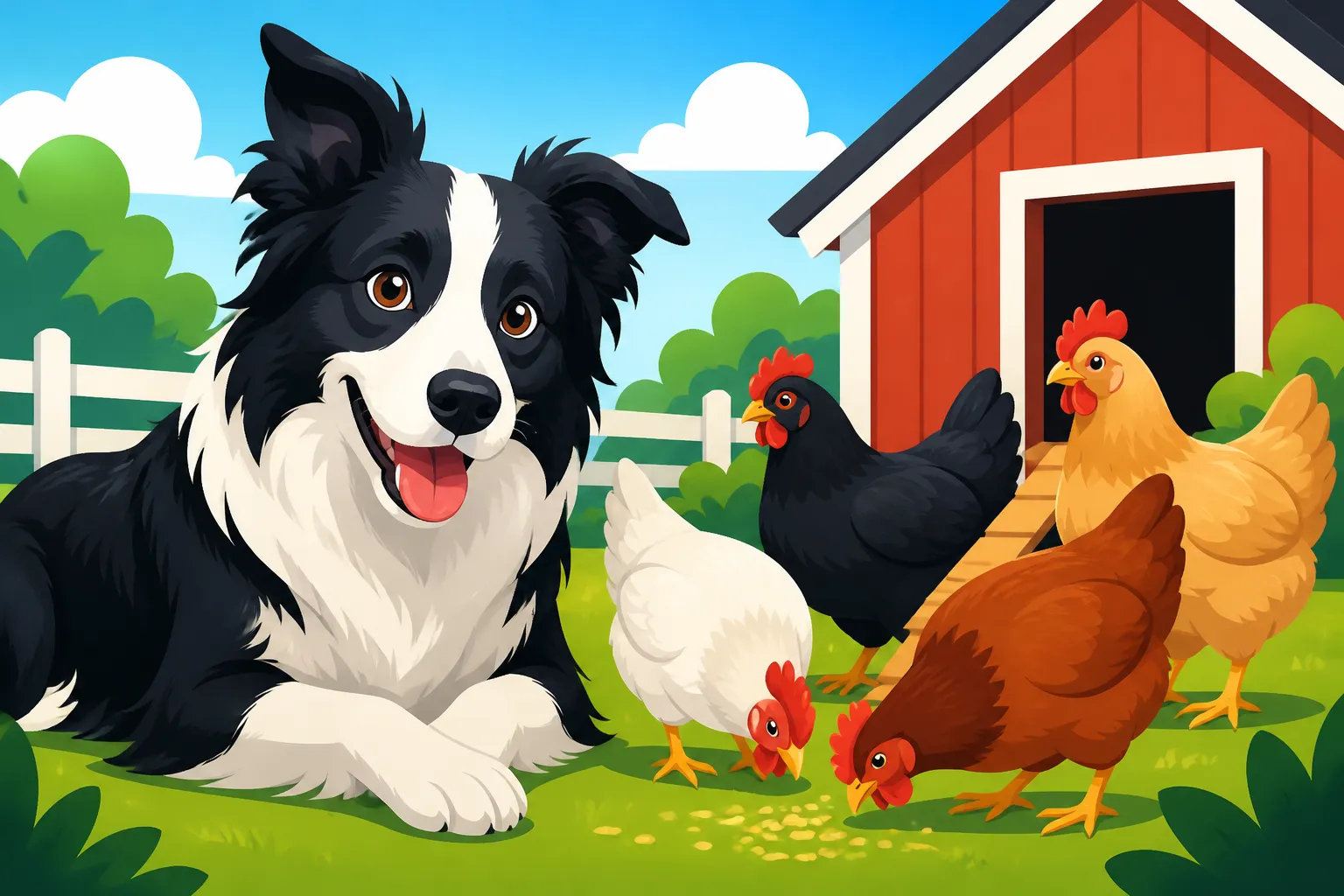
Living with a Border Collie and chickens can be a rewarding experience, showcasing the incredible adaptability of this breed, but it is never without significant dedication. By understanding their instincts, committing to rigorous training, and implementing robust management strategies, you can give your Border Collie and your chickens the best chance at a safe and peaceful coexistence.
Disclaimer
This article is for general informational purposes only and does not constitute professional advice. Laws, prices and regulations vary by location and change over time. Consult a qualified professional for guidance on your specific situation.