Farm Chemicals a Border Collie Finds in a Barn
It's a frustrating reality for any Border Collie owner living or working on a farm: you know your dog is brilliant, driven, and capable, but that same insatiable curiosity and energy can lead them straight into trouble. Barns, sheds, and outbuildings, while the heart of many operations, are often treasure troves of potential hazards, particularly in the form of farm chemicals. This guide will walk you through understanding why your Border Collie is so drawn to these dangerous areas, what specific chemicals pose the greatest threat, and most importantly, how to implement practical safety measures to protect your tireless companion.
The Allure of the Barn for a Border Collie
To a Border Collie, a barn isn't just a building; it's a sensory wonderland, a challenge waiting to be explored, and a potential "job" site. Their natural instincts, while incredibly valuable for herding, can become a significant liability when faced with the hidden dangers of agricultural chemicals.
A World of Sights, Sounds, and Smells
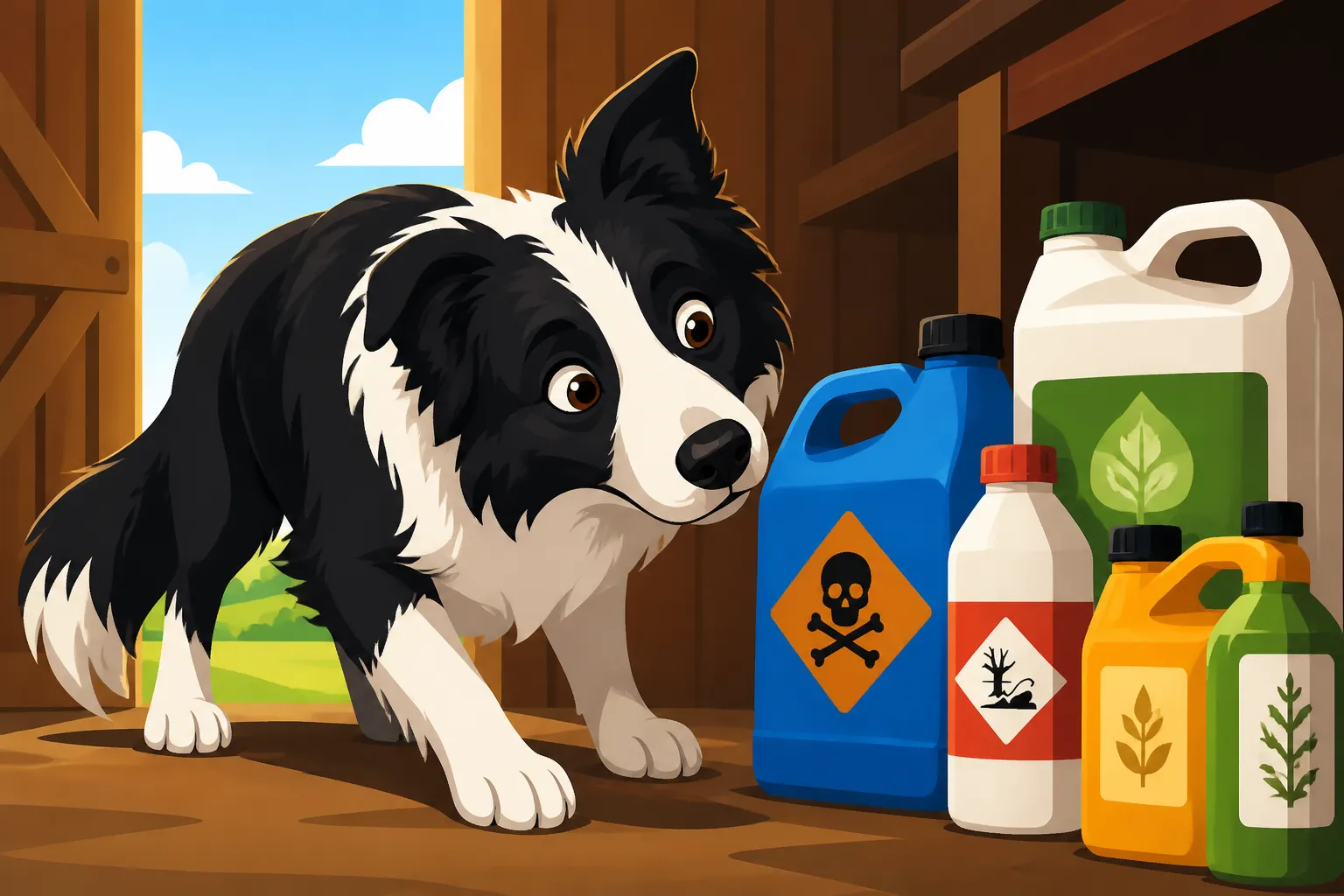
Imagine being a Border Collie stepping into a barn. The air is thick with a thousand intriguing scents: the earthy aroma of feed, the metallic tang of machinery, the musky scent of livestock, and, yes, the sharp, often artificial smells of various chemicals. Their noses are exceptionally sensitive, designed to track subtle changes in wind and ground scent, making even a faint chemical odor an irresistible puzzle to investigate. They'll sniff every corner, poke their noses into cracks, and try to discern the source of every new smell. This intense focus on scent means they might linger too long near a spilled substance or try to get into a container just because it smells "interesting."
Beyond scent, barns offer a constant symphony of sounds – rustling bags, dripping water, the creak of old wood, the distant hum of equipment. These sounds keep a Border Collie's alert system highly engaged, encouraging them to move, explore, and "check" every potential source of activity. Their keen eyesight picks up every flicker of movement, every dust mote dancing in a sunbeam, fueling their perpetual motion and investigation. This constant sensory input can easily override any learned caution, especially if they haven't been specifically trained for barn safety. It's truly a testament to their deep drive to gather and inspect everything in their environment.
Why a Border Collie's Drive Can Be a Hazard
The very traits that make Border Collies exceptional working dogs – their intelligence, intense focus, and unwavering drive – can tragically become their downfall in an environment filled with hazards. When a Border Collie "locks on" to something, whether it's a recalcitrant sheep or an interesting smell emanating from a bag in the corner, their focus becomes almost singular. They are bred to problem-solve, to persist, and to overcome obstacles, and this can translate into attempts to open containers, chew through bags, or dig under barriers to get to whatever has captured their attention.
This relentless drive means that merely placing a chemical container on a high shelf might not be enough if a Border Collie decides it's worth the effort to climb or knock it down. They might jump, use their paws, or even try to figure out how to open a gate or door if they believe something important is on the other side. Unlike some breeds that might lose interest quickly, a Border Collie can fixate, turning what would be a passing sniff for another dog into a determined effort to reach a potentially lethal substance. This is why mere accessibility isn't the only concern; their problem-solving nature demands more robust preventative measures. It's not malice; it's simply their incredible, innate working drive misdirected, and it's something we, as their guardians, must account for.
Common Farm Chemicals and Their Dangers
Barns and farm outbuildings are often repositories for a wide array of chemicals, many of which are essential for agricultural operations but incredibly toxic to dogs. Understanding what these are and how they can affect your Border Collie is the first step in ensuring their safety.
Pesticides and Herbicides: Silent Threats
Among the most insidious dangers lurking in farm buildings are pesticides and herbicides. These products are designed to kill, and unfortunately, their effectiveness doesn't discriminate between pests and pets. Insecticides, often used to control flies or other insects in barns, can come in sprays, powders, or baits. Some are highly toxic if ingested or even if absorbed through the skin. Rodenticides, commonly known as rat or mouse poison, are perhaps one of the most dangerous, as they are often formulated to be palatable to lure pests. Many anticoagulant rodenticides cause internal bleeding, often with delayed symptoms, making it difficult to detect exposure until it's too late. Metaldehyde, found in slug and snail baits, can cause severe neurological symptoms like seizures and tremors rapidly after ingestion.
Herbicides, used to control weeds, can also pose risks. While many are less acutely toxic than pesticides, concentrated forms or large ingestions can still cause gastrointestinal upset, skin irritation, and even more severe systemic effects depending on the active ingredients. A curious Border Collie might chew on a spilled bag, walk through a recently sprayed area, or lap up contaminated puddles. The danger often lies not just in direct ingestion but also in secondary exposure, such as licking contaminated paws after walking through a treated area. It's a constant battle to keep these potent substances away from inquisitive noses and mouths.
Fertilizers and Other Agricultural Products
It's not just pest control that poses a threat; many other common agricultural products found in a barn can be surprisingly dangerous. Fertilizers, especially those containing iron, bone meal, or blood meal, can be very attractive to dogs, smelling like food. While many home garden fertilizers are relatively low in toxicity, consuming large quantities or highly concentrated farm-grade fertilizers can lead to severe gastrointestinal upset, pancreatitis, and in some cases, blockages from the bone or blood meal. Some fertilizers, like those containing urea, can also be toxic in large amounts.
Beyond fertilizers, consider the array of automotive and machinery fluids often present: antifreeze, motor oil, gasoline, and diesel. Antifreeze, in particular, is extremely dangerous due to its sweet taste, which makes it highly appealing to dogs. Even a small amount can cause acute kidney failure, a rapidly fatal condition. Lubricants, paints, cleaning solutions, and solvents also contribute to the chemical cocktail found in many barns. Spills are common, and these substances, once on the ground, become prime targets for a sniffing, licking Border Collie. Even seemingly benign items like fly paper or glue traps can contain insecticides or other chemicals that are harmful if ingested.
Medications for Livestock and Pets
It's natural to keep medications for your farm animals in a convenient spot in the barn, but these can easily become a hazard for your Border Collie. Livestock dewormers, antibiotics, supplements, and even topical treatments, if ingested by a dog, can cause significant problems. For example, some horse dewormers contain ivermectin, which, at concentrations safe for horses, can be highly toxic to dogs, especially Border Collies that may carry the MDR1 gene mutation, making them acutely sensitive to certain drugs. Even if your Border Collie is clear of the MDR1 mutation, a large dose of any medication not intended for them can cause severe adverse reactions.
It's not uncommon for a curious Border Collie to chew through a tube of paste dewormer, knock over a bottle of injectable medicine, or lick up spilled granules. The doses intended for much larger animals can be devastatingly high for a dog of Border Collie size. Consider also medications for other pets if they are stored in the barn – flea and tick treatments, pain relievers, or even prescription diets. Anything that can be chewed through, knocked down, or spilled is a potential pathway to accidental poisoning. A good rule of thumb is that if it's not specifically prescribed for your Border Collie, and it's not locked away, it's a risk. Ensuring your dog's safety against these inadvertent ingestions is critical, especially given the Drug Sensitivity and the Border Collie MDR1 Rate.
Preventing Exposure: Barn Safety Protocols
When it comes to keeping your Border Collie safe in a barn environment, prevention is truly the best medicine. It requires a multi-faceted approach, combining secure storage, diligent training, and routine maintenance to minimize opportunities for accidental exposure.
Secure Storage is Paramount
This might sound obvious, but it's the foundation of barn safety. Every single chemical, medication, and hazardous substance needs to be stored in a way that is utterly inaccessible to your Border Collie, no matter how clever or determined they are. This means locked cabinets, sturdy metal or thick plastic containers with tamper-proof lids, and shelves that are well beyond jumping height. Remember that a Border Collie can climb, jump, and push, so a simple latch or a low shelf won't cut it. Think of it from their perspective: if they can see it, smell it, or reasonably reach it, they might try to get to it.
Chemicals should always remain in their original, clearly labeled containers. Transferring them to unmarked bottles is an open invitation for confusion and potential disaster. Consider investing in dedicated storage lockers designed for chemical safety. For bulk items like feed supplements or mineral licks that aren't toxic but might be ingested in excessive amounts, use heavy-duty bins with secure lids that a clever Border Collie can't pop open. Even a simple bag of fertilizer, if left open on the floor, is an invitation for trouble. Think about what a Border Collie could achieve in five minutes of unsupervised curiosity. Items purchased from suppliers like Chewy or Amazon can often include sturdy, well-designed storage solutions, from heavy-duty bins to locking cabinets. This secure storage goes hand-in-hand with ensuring a secure kennel run if they are ever left unattended in or near the barn.
Training and Supervision in the Barn
While secure storage is essential, it's only one piece of the puzzle. Your Border Collie's training and your consistent supervision are equally critical. Teach your dog a rock-solid "leave it" command, practicing it in various distracting environments, including around enticing smells. This command can be a lifesaver if they are investigating something they shouldn't. A reliable recall, particularly a powerful emergency recall, is also non-negotiable. If you see them heading towards a hazardous area or picking something up, a sharp, immediate recall like Recall on a Border Collie That Has Locked On could prevent a disaster.
Establish clear boundaries for your Border Collie in and around the barn. This might mean teaching them that certain areas are off-limits, or that they are only allowed in specific, supervised zones. Never allow them to roam freely in areas where chemicals are stored or actively being used. If you're working with chemicals, your dog should be safely secured elsewhere, whether in a crate, a separate fenced area, or inside the house. Remember that a Border Collie's attention can be diverted by livestock, machinery, or even a sudden noise, making them momentarily forget any "rules" you've set if the temptation is strong enough. Their working nature, often honed through Teaching a Border Collie the Herding Commands, means they are always looking for guidance, so providing clear, consistent rules around the barn is paramount.
Regular Barn Clean-up and Maintenance
Even with the best storage and training, accidents happen. This is why a rigorous routine of clean-up and maintenance is vital. Make it a habit to do a thorough sweep of all barn areas regularly, perhaps as part of your The Weekly Once-Over a Working Border Collie Gets. Look for any spills, leaks, or dropped items. A tiny pellet of rodenticide, a few drops of antifreeze, or some fertilizer granules can be enough to cause serious harm if ingested by a Border Collie. Promptly clean up any spills according to product instructions, ensuring your dog is nowhere near the area during cleanup.
Check all containers for integrity – are there any chew marks? Are lids still tightly sealed? Are bags intact? Pay close attention to corners, under shelves, and behind equipment, as these are often overlooked spots where small spills or dropped items can accumulate. Dispose of empty containers properly and immediately; don't leave them lying around, as residual chemicals can still be dangerous. Regularly sweeping and washing down concrete floors can help remove invisible residues. This proactive approach ensures that even if a container failed or an accident occurred, your swift action minimizes the window of opportunity for your Border Collie to find and ingest anything harmful.
What to Do in Case of Suspected Exposure
Despite all your best efforts, accidents can still happen. Knowing exactly what to do if you suspect your Border Collie has been exposed to farm chemicals is crucial for a positive outcome. Time is often of the essence.
Immediate Action and Veterinary Contact
If you even suspect your Border Collie has ingested or come into contact with a chemical, act immediately. The first step is to remove your dog from the source of the exposure and prevent them from ingesting any more. If it's on their fur or paws, try to gently wipe it off with a dry cloth to prevent further absorption or licking, but be cautious not to spread it. Do NOT try to induce vomiting unless specifically instructed to do so by a veterinarian or a poison control expert. Some chemicals can cause more harm coming back up, or your dog could aspirate.
Your very next action should be to call your veterinarian or an emergency veterinary hospital immediately. Do not wait for symptoms to appear. The quicker you get professional advice, the better the prognosis. Have the packaging or label of the suspected chemical ready, as this information is vital for the veterinary team to understand the active ingredients and potential toxic effects. Early intervention can make a monumental difference, and understanding Emergency Costs the Night a Border Collie Collapses can help you prepare for the financial aspect of such an urgent situation, though your dog's health is the absolute priority.
Information to Provide Your Vet
When you contact your vet, being prepared with key information will significantly aid their ability to help your Border Collie. You'll need to tell them:
- What was ingested/exposed to? The exact name of the product and, if possible, the active ingredients. This is why keeping original containers is critical.
- How much? Your best estimate of the quantity ingested. A chewed bag, a spilled puddle – any detail helps.
- When did it happen? The approximate time of exposure.
- How did it happen? Was it licked, chewed, walked through?
- What symptoms are you seeing? Be specific: vomiting, diarrhea, tremors, lethargy, drooling, difficulty breathing, changes in gait, or anything unusual. Even if no symptoms are present, it's still an emergency call.
- Your Border Collie's breed, age, weight, and any existing health conditions or medications. This helps the vet tailor their advice.
Even if you only have some of this information, provide what you can. The vet will guide you on whether to come in immediately, monitor at home, or administer first aid. They may also suggest contacting a pet poison control center (like ASPCA Animal Poison Control Center or Pet Poison Helpline) which can provide expert guidance for a fee, and then relay that information to your vet.
Long-term Vigilance and Follow-up
After any suspected chemical exposure, especially if your Border Collie needed veterinary treatment, long-term vigilance and follow-up care are essential. Even if symptoms resolve quickly, some chemicals can have delayed effects on organs like the kidneys or liver. Your vet will likely recommend follow-up blood work or other tests to monitor for any lasting damage. Stick closely to any prescribed medications or dietary changes.
Keep a close eye on your Border Collie for any subtle changes in behavior, appetite, energy levels, or physical condition in the days and weeks following the incident. This could include changes like those observed if your dog has experienced something severe like What Happens After a Border Collie's First Seizure, as some toxins can induce neurological symptoms. Report anything unusual to your vet immediately. This experience should also reinforce the need to review and enhance your barn safety protocols to prevent future incidents. Learning from the scare, however minor or severe, is key to protecting your beloved working companion in the long run.
Here's a quick overview of common barn chemical hazards and how to guard against them:
| Chemical Category | Common Examples | Primary Hazard | Quick Prevention Tips | Brand Examples for Solutions |
|---|---|---|---|---|
| Pesticides | Rodenticides, Slug Baits, Insecticides | Internal bleeding, neurological damage, rapid death | Locked cabinets, tamper-proof bait stations, prompt cleanup | Secure storage containers found on Amazon |
| Herbicides | Weed killers, Plant growth regulators | GI upset, skin irritation, systemic toxicity | Store concentrated forms in locked areas, keep dogs away from freshly sprayed areas | Pet-safe cleaning solutions from Chewy for spills |
| Fertilizers | Bone meal, Blood meal, Urea, Iron | GI upset, pancreatitis, blockages, acute toxicity | Store in heavy-duty, sealed bins; clean up spills immediately | Heavy-duty storage bins from Amazon or farm supply stores |
| Farm Medications | Dewormers (e.g., Ivermectin), Antibiotics, Supplements | Overdose, severe toxicity (especially MDR1-sensitive dogs) | Locked medication chests, keep prescriptions separate, dispose of empties safely | Secure crates or kennels for dogs during barn work (available on Chewy) |
| Automotive/Fuel | Antifreeze, Gasoline, Motor Oil, Kerosene | Kidney failure (antifreeze), chemical burns, aspiration pneumonia | Store in sealed containers, clean spills immediately, use pet-safe antifreeze if possible | Spill cleanup kits and protective mats from Amazon |
| Cleaning Products | Bleaches, Detergents, Disinfectants | Corrosive burns, GI upset, respiratory irritation | Locked utility cabinets, ensure areas are dry before re-entry | Eco-friendly, pet-safe cleaning options often found on Chewy or Amazon |
Disclaimer
This article is for general informational purposes only and does not constitute professional advice. Laws, prices and regulations vary by location and change over time. Consult a qualified professional for guidance on your specific situation.