Teaching a Border Collie the Herding Commands
Many Border Collie owners dream of seeing their incredibly intelligent and driven dogs work stock, but the sheer intensity and complex series of commands can feel utterly overwhelming. It’s not just about getting them to chase; it’s about control, nuance, and a deep partnership. This comprehensive guide will walk you through the essential herding commands, from building a solid obedience foundation to the intricate dance of "come bye" and "away to me," helping you harness that incredible instinct in a controlled, effective way.
Understanding the Border Collie's Instinct
Before you even think about putting your Border Collie near sheep, it's absolutely vital to grasp the deep-seated instincts that make them such phenomenal herding dogs. This isn't just a trick you teach them; it's an inherent drive that you learn to channel and direct. Ignoring this fundamental aspect is like trying to build a house without a proper foundation – it simply won't stand up.
The Herding Drive and "Eye"
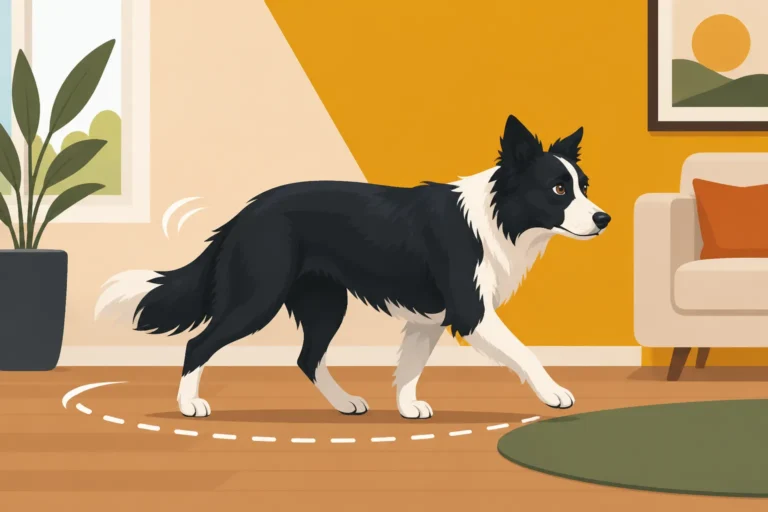
At the heart of every Border Collie lies an ancient, powerful drive: the instinct to hunt, but refined and modified over centuries to control prey rather than kill it. This is their herding drive, and it’s what sets them apart. They don't just chase; they gather, they move, they exert influence. This instinct is so strong that it often manifests in amusing, if sometimes challenging, ways in a pet home. You might notice your Border Collie trying to "herd" your children, the cat, or even the vacuum cleaner, circling them and using their body to direct movement. This isn't naughtiness; it's their natural programming kicking in.
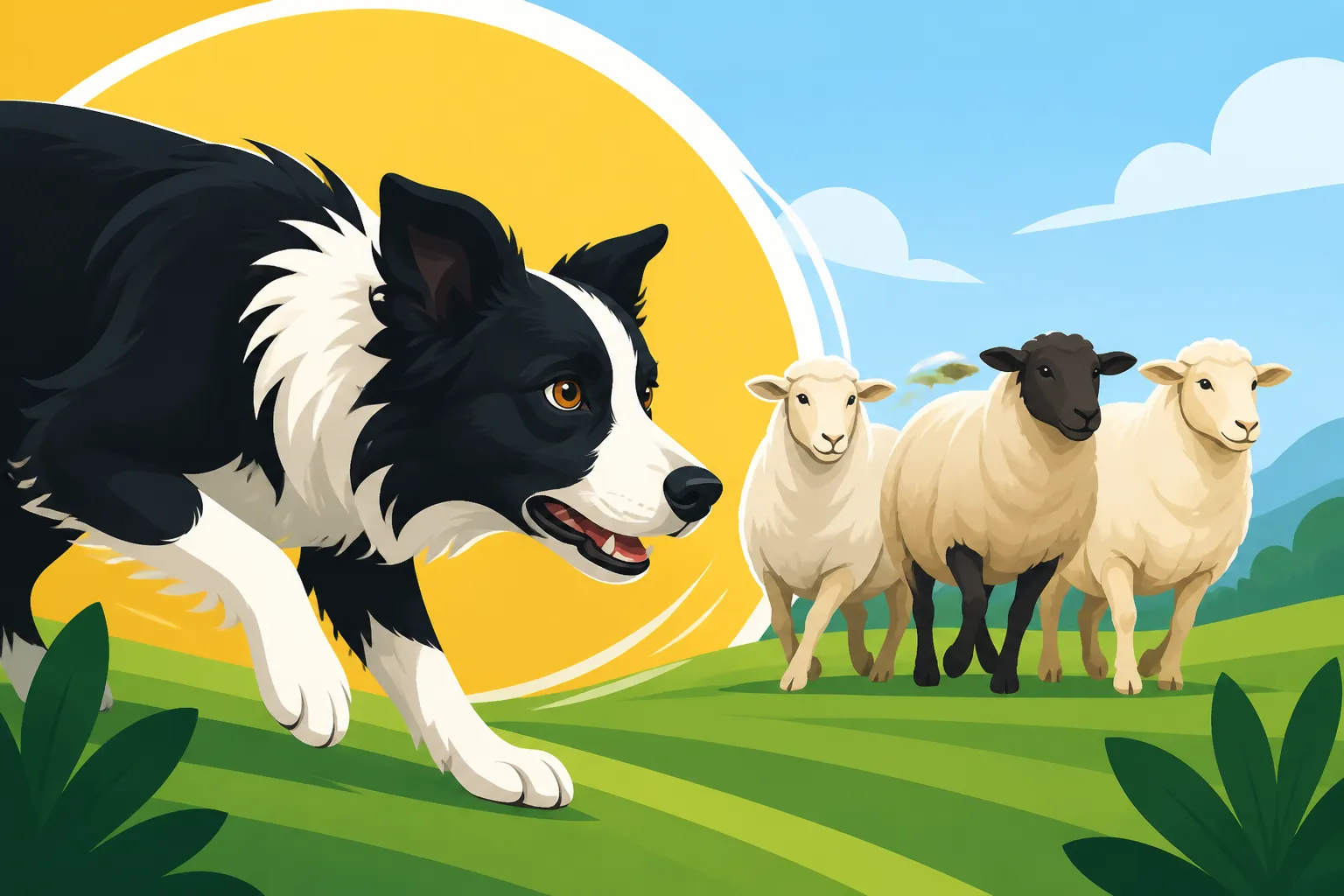
One of the most defining characteristics of the Border Collie's herding style is their intense "eye." This isn't just a focused gaze; it's a concentrated stare that can almost hypnotize livestock. When a Border Collie uses its eye, it's communicating its intent to the sheep, telling them, without a single bark or nip, "I am here, and I am in control of your movement." This strong visual pressure is an incredibly effective tool, allowing the dog to move stock with minimal physical contact, which is crucial for ethical and efficient herding. Understanding this "eye" is key to appreciating how they work and how you'll communicate with them. It’s part of the rich history of The Border Country That Produced the Border Collie and the shepherds who developed them.
Reading Your Dog's Natural Tendencies
Every Border Collie, even within the same litter, will have slightly different natural tendencies when it comes to herding. Some will have a "strong eye," dropping low and staring intently at the stock, moving them with precision and subtle shifts of their body. Others might have a "loose eye," being more upright, using more movement and less direct stare to influence the sheep. Neither is inherently better; they are just different styles that you, as the handler, will learn to work with and refine.
Observing your young dog or puppy can give you clues. Does it naturally try to circle things? Does it approach things cautiously and then try to move them from the back? Does it try to "cut off" movement or does it naturally gather things towards you? These observations are invaluable because you aren't trying to teach your Border Collie to herd; that instinct is already there. Instead, your role is to channel, direct, and control that instinct. You're giving language and structure to what they already inherently want to do. Recognizing these innate traits allows you to tailor your training approach, building on their strengths and gently guiding areas that need more refinement, rather than fighting against their natural leanings.
The Foundation: Basic Obedience Before Herding
It's tempting to rush straight to the sheep, isn't it? You’ve got this incredibly smart, energetic Border Collie, and you just want to see that herding magic happen. But trust me, skipping the foundational obedience steps is a recipe for frustration, chaos, and potentially even danger. Think of basic obedience as the operating system for your dog's brain – without it, all the fancy herding software won't run properly.
Why Obedience is Non-Negotiable
Herding, at its core, is a highly controlled activity. You are asking a dog with a powerful instinct to move a herd of animals, often independently, but always under your ultimate direction. This requires an unparalleled level of communication and trust. A dog that doesn't reliably respond to a "come" or a "down" command in a low-distraction environment simply cannot be trusted to perform those same commands when faced with the immense temptation and excitement of live stock. The stakes are much higher around sheep. An uncontrolled dog can stress, injure, or even kill livestock, which is not only ethically wrong but can also be incredibly costly.
Moreover, herding is a partnership. Your dog needs to understand that you are the director, the guide. Strong basic obedience establishes this relationship, ensuring that your Border Collie looks to you for direction even when its instincts are screaming for it to just go and do. It's about safety for the dog, the stock, and for you. If you're serious about herding, this stage isn't a suggestion; it's a mandatory prerequisite. Online programs, like those offered by BAXTER & Bella, can be an excellent resource for establishing this solid obedience foundation right from the start, often providing structured lessons you can follow at home before stepping foot near a field.
Essential Commands for Control
So, what are these "essential commands"? We're talking about rock-solid, instant-response basics that will form the backbone of your herding communication.
- "Sit" and "Stay": These are crucial for teaching patience and impulse control. You need your dog to be able to "sit" and "stay" for extended periods, even when exciting things are happening around them. This might mean sitting calmly while the sheep are moved into the pen or holding a "stay" while you open a gate.
- "Come" (Recall): This is arguably the most critical command for any dog, but especially for a Border Collie whose focus can become intensely fixated. Your dog must come to you immediately, every single time, no matter what distractions are present. This includes Recall on a Border Collie That Has Locked On to livestock. Without a reliable recall, you literally cannot get your dog off the stock if things go wrong. Practice this in every environment imaginable, gradually increasing distractions.
- "Down" (at a Distance): While we'll discuss the herding-specific "lie down" later, a general "down" command is vital. Your dog needs to be able to drop to the ground and stay there, regardless of how far away you are. This allows you to stop their movement, manage their intensity, and give new instructions from a distance.
- "Leave It": This command is your absolute best friend when preventing unwanted behaviors like gripping (biting the sheep) or fixating on something inappropriate. You need to be able to tell your dog to disengage from a tempting object or action immediately.
These commands should be practiced relentlessly, starting in a quiet environment and slowly introducing more distractions. Make them second nature, so your dog doesn't have to think about them, but rather does them. This groundwork will pay dividends when you introduce them to livestock, giving you the confidence and control you need.
Introducing the Core Herding Commands: Come Bye and Away to Me
Once you have that solid obedience foundation, you're ready to start laying the groundwork for the actual herding language. These first two commands are the cornerstones of directing a Border Collie's movement around stock, and mastering them is paramount.
Defining the Flank Commands
In herding, "flank" refers to the dog moving around the sides of the stock, either clockwise or counter-clockwise, to influence their direction. The two primary flank commands are:
- "Come Bye": This command directs your Border Collie to move around the stock in a clockwise direction. Imagine the dog is on your left, and you want it to move around the sheep and continue moving to your right. It's about initiating and maintaining a flank in that specific direction.
- "Away to Me": This command directs your Border Collie to move around the stock in a counter-clockwise direction. If the dog is on your right, and you want it to move around the sheep and continue moving to your left.
These aren't just arbitrary words; they are specific instructions that tell your dog how to move in relation to the stock. The goal is for your dog to learn to initiate and maintain these flanks smoothly and efficiently, without rushing or over-flanking, always keeping the stock moving in the desired direction. It's an intricate dance, and these commands are your lead.
Starting with a Round Pen or Small Paddock
You wouldn't teach a child to swim in the ocean first, right? The same applies to herding. The absolute best place to start is in a controlled, enclosed environment like a round pen or a very small, secure paddock. This containment minimizes variables and reduces the chance of the stock scattering or the dog becoming overwhelmed. It also allows you to be close enough to your dog to guide them effectively.
In this confined space, you become a crucial part of the "fence." Your body position, your movement, and your voice are all tools to help your dog understand what you want. Initially, you might walk with your dog, using your body to help push them into the desired flank direction as you give the command. It's about creating a clear picture for them: "When I say 'come bye,' this is the path I want you to take around the sheep." The small space allows you to intervene quickly, prevent bad habits, and build confidence in both you and your dog. You're shaping their natural instincts into a disciplined pattern.
First Steps with the Stock
For the very first steps with live stock, choose calm, "dog-broke" sheep or ducks. These animals are accustomed to dogs and are less likely to panic, making the learning experience safer and more positive for your Border Collie. Start with just a few animals, perhaps two or three, as this is easier for a young dog to manage.
Initially, you might not even give formal commands. Instead, you'll observe your dog's natural instinct. As it begins to move around the stock, following its natural urge to gather, you will name the action. So, if your dog naturally starts to flank clockwise, you would say "Come Bye!" If it goes counter-clockwise, you say "Away to Me!" You are essentially pairing the verbal command with the action your dog is already doing. This helps them associate the sound with the movement. Use a long line for safety and gentle correction. A good quality, durable long line, easily found on Amazon, can give you that crucial bit of control when things get a little too exciting, allowing you to gently guide your dog or prevent it from getting too close to the stock. Remember, these initial sessions should be short, positive, and focused purely on building that association. The First Time a Border Collie Meets Sheep is a big moment, so keep it low-pressure!
Developing Control: Lie Down and That'll Do
Once your Border Collie understands how to move the stock in the correct flanks, the next critical step is to teach them how to stop and disengage. Without these commands, you have a powerful engine with no brakes, which is not only ineffective but also potentially dangerous. These commands transform a dog with instinct into a dog with immense control and precision.
The Importance of the "Down"
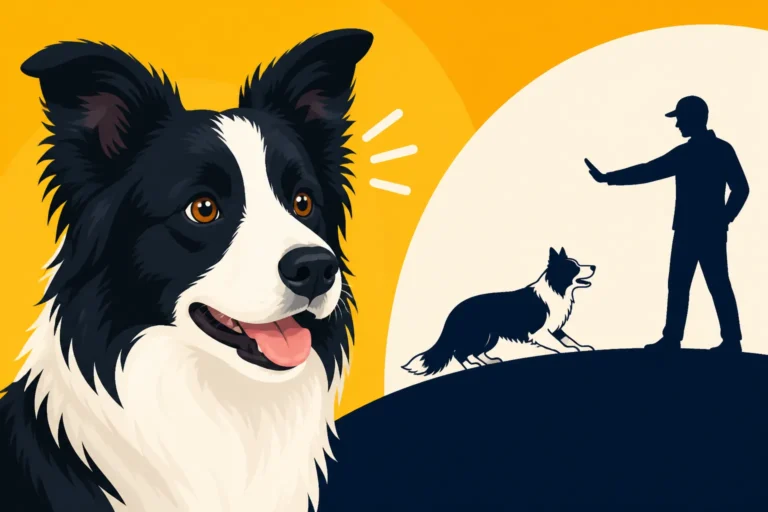
In herding, the "Down" command (often pronounced "Lie Down" or just "Lie") is your ultimate "stop" button. It tells your Border Collie to immediately drop to the ground, wherever they are, and stay there. This command is absolutely essential for several reasons:
- Pace Control: It allows you to instantly halt a dog that is rushing the stock, pressuring them too hard, or getting ahead of the flock.
- Strategic Pauses: You might need your dog to lie down to allow sheep to graze, to wait for a gate to be opened, or to give you time to assess the situation.
- Preventing Gripping: If your dog shows any inclination to grip or nip the stock, an immediate "Down" can break that urge and prevent harm.
- Handler Communication: It allows you to give new instructions or change the direction of work without the dog constantly moving, creating a moment of stillness and focus.
Teaching the "Down" needs to start in a neutral environment, ensuring your dog understands the command perfectly before any distractions are introduced. Then, gradually introduce distractions, first with you close by, then at increasing distances. The goal is for your dog to drop instantly, even when out in the field and focused on the stock. Why a Border Collie Is Taught to Lie Down First is because it provides a foundation of stopping power that's unparalleled in a herding context.
Teaching "That'll Do" to Disengage
While "Down" stops the dog's movement, "That'll Do" is the command that tells your Border Collie to completely stop working and return to you. This is crucial for their mental well-being and for preventing them from becoming obsessive or burnt out. Border Collies, with their intense drive, can easily fall into the trap of endless work. They might not know when to quit, or they might struggle to switch off that intense focus.
"That'll Do" allows you to:
- End Sessions Positively: By calling them off the stock and rewarding them, you teach them that ending work is a good thing, not a punishment.
- Manage Obsession: It breaks their intense focus, reminding them that the work is your decision, not theirs to continue indefinitely.
- Prevent Overwork: Especially for young dogs, short, controlled sessions ending with "That'll Do" prevent physical and mental fatigue.
To teach "That'll Do," start by calling your dog away from the stock at the end of a successful, short session. When they come to you, praise them lavishly, offer a treat, and put them away or engage in a non-herding activity. Consistency is key. They need to understand that this command means "the work is over for now, and it's time to relax or do something else." This command is just as important for their mental health as "Down" is for their physical control. That'll Do and Ending a Border Collie's Work correctly can make all the difference in fostering a balanced, happy working dog.
Refining the Work: Walk Up, Look Back, and Steady
With the core flank and stop commands under your belt, you're now ready to add layers of precision and control that move beyond simply circling the stock. These commands allow for more nuanced movements, critical for effective gathering, driving, and shedding.
Guiding the Dog Forward: "Walk Up"
The "Walk Up" command, sometimes referred to as "Get Back" or "Fetch Up" depending on the handler and region, instructs your Border Collie to move straight forward, directly into the stock, usually from behind. This is distinct from a flank command, which moves them around the sides. "Walk Up" is used to:
- Apply Pressure from Behind: It encourages the stock to move straight ahead, away from the dog. This is essential for driving sheep down a lane or moving them from one point to another.
- Bring Stock Closer: If the stock is too far out in the field, a controlled "walk up" can push them gently towards the handler.
- Tighten the Gather: When gathering a widespread flock, a handler might use "walk up" to push stragglers into the main group.
This command should be introduced once your dog has a solid grasp of "Come Bye" and "Away to Me." You'll often use it in conjunction with these flank commands to maintain a steady, controlled movement of the stock. Teaching it involves sending your dog in a straight line towards the stock, often with the help of a fence or barrier to prevent them from flanking too wide. Rewards for straight, controlled movement are crucial.
Checking in from a Distance: "Look Back"
Imagine your Border Collie is a considerable distance out in the field, expertly gathering sheep. You need to give a new command, perhaps to change direction, or to adjust their line. This is where "Look Back" (sometimes "Look Behind" or "Eye On Me") comes in. This command asks your dog, currently focused on the stock, to momentarily turn its head or body towards you to receive a new instruction.
The "Look Back" is not a recall; it's a check-in. The dog doesn't leave the stock but reorients its attention to the handler. This is incredibly useful when:
- Changing Instructions: You want to switch from "Come Bye" to "Away to Me" or introduce a "Walk Up."
- Correcting Position: If the dog is too wide or too tight on the stock, a "Look Back" followed by a new command can re-center them.
- Ensuring Connection: It reinforces the idea that even at a distance, the dog is still working with you, not just on its own.
Teaching "Look Back" often starts with a visual cue – perhaps raising your hand or making a distinct movement – and pairing it with the verbal command. As soon as your dog even slightly shifts its gaze or turns its head towards you, mark and reward. Gradually increase the distance and the distractions. The Look Back Command on a Border Collie is a testament to the sophisticated partnership between handler and dog.
Managing Pace: "Steady"
Some Border Collies are naturally intense, wanting to rush the stock. Others might be a bit too slow. The "Steady" (or "Easy" or "Take Time") command is designed to control the pace of your dog's work without stopping them entirely. It's about moderation.
"Steady" tells your dog to:
- Slow Down: If your dog is moving too quickly, pressuring the stock excessively, or pushing them too fast, "Steady" asks them to reduce their speed and intensity.
- Maintain Calm: It encourages a calmer, more deliberate approach to the stock, which is especially important for nervous sheep or when teaching a young dog.
- Increase Finesse: For advanced work, like shedding or penning, a dog needs to be able to make very subtle, controlled movements. "Steady" helps build this finesse.
To teach "Steady," use it when your dog is working just a bit too quickly. As soon as you see even a slight decrease in pace, praise and reward. You might use gentle body pressure or even a long line initially to help them understand. Over time, your dog will associate the command with a more controlled, deliberate pace, becoming a more refined and effective herding partner. Steadying a Border Collie That Rushes Stock is a key skill for any handler to develop in their dog.
Transitioning to Whistle Commands
Once your Border Collie is responding reliably to your voice commands, the next logical step, especially if you plan to work in larger fields or compete, is to transition to whistle commands. This is where the magic of working a dog at extreme distances truly comes alive.
Why Whistles for Distance
Imagine trying to shout commands across a vast, windy pasture, or over the bleating of a hundred sheep. Your voice would quickly become hoarse, and your dog would struggle to hear and understand you. This is precisely why whistles became the indispensable tool of shepherds worldwide.
Whistles offer several distinct advantages:
- Clarity and Consistency: A whistle produces a consistent sound, regardless of your voice fatigue, wind direction, or environmental noise. Each specific command is translated into a unique, clear sequence of short or long blasts, rising or falling tones.
- Distance: The sharp, piercing sound of a shepherd's whistle carries much further than the human voice, allowing you to direct your dog when it's hundreds of yards away, almost out of sight.
- Less Emotion: Your whistle tone doesn't carry the same emotional fluctuations as your voice. A stressed or frustrated voice can unintentionally transfer that emotion to your dog, while a whistle remains neutral and objective.
- Tradition and Effectiveness: It's the tried-and-true method developed over centuries, proven to be the most effective way to communicate complex instructions over wide areas. You can find a wide variety of shepherd's whistles, from traditional brass to more modern plastic designs, on Amazon to get started.
Pairing Voice with Whistle
The transition from voice to whistle commands is a systematic process of association. You won't just stop using your voice and pick up a whistle; you'll blend them together until the whistle becomes the primary cue.
Here’s a common approach:
- Start Close: Begin in a quiet environment, close to your dog, with no distractions.
- Voice + Whistle Simultaneously: Give your usual vocal command (e.g., "Come Bye!") and immediately follow it with the corresponding whistle command. Repeat this many, many times. Your dog is already performing the action based on your voice, so it's learning to associate the new whistle sound with that familiar action.
- Phase Out the Voice: Once your dog shows recognition of the paired commands, start to subtly reduce the volume or emphasis on your verbal command, letting the whistle take the lead. Eventually, you'll be giving only the whistle command, with the verbal cue as a backup if needed.
- Increase Distance and Distraction: As your dog becomes proficient, gradually increase the distance between you and your dog, and introduce mild distractions, always reinforcing the whistle commands.
- Consistency is Key: Every time you want your dog to perform a specific herding action, use the correct whistle command. Don't revert to voice unless absolutely necessary. This consistent repetition is what solidifies the whistle's meaning in your dog's mind.
It takes time, patience, and consistent practice, but the ability to direct your Border Collie across a field with just a few sharp notes from a whistle is incredibly rewarding and a hallmark of a truly advanced herding partnership. Moving a Border Collie From Voice to Whistle is a significant milestone in any herding dog's training journey.
Common Challenges and Troubleshooting
Herding a Border Collie is rarely a smooth, linear journey. There will be bumps, plateaus, and moments of frustration. It’s important to anticipate these challenges and have strategies in place to overcome them, ensuring both you and your dog can continue to learn and grow.
Dealing with Over-Excitement and Gripping
One of the most common issues with highly driven Border Collies is over-excitement, which can quickly escalate into unwanted behaviors like gripping, chasing, or simply being too pushy with the stock. Gripping, where the dog nips or bites the stock, is a serious fault that must be corrected immediately. It's not only dangerous for the sheep but also indicates a lack of control and respect from the dog.
Strategies for Over-Excitement and Gripping:
- Reinforce "Leave It": Your pre-herding obedience training comes back into play here. A strong "Leave It" can interrupt the dog before it grips or becomes too overstimulated. Practice this command extensively off-stock.
- Use a Long Line: For young or overly keen dogs, a long line (as mentioned, easily found on Amazon) provides a physical means of control. You can use it to gently guide your dog away from the stock, or to give a quick, firm correction if they try to grip.
- More "Downs": If your dog is too excited, use the "Down" command frequently. Make them stop, lie down, and calm themselves before continuing. This teaches impulse control.
- Shorter Sessions: Over-excited dogs often benefit from very short, controlled sessions. End on a positive note before they have a chance to become overstimulated.
- Calmer Stock: Ensure you are working with calm, "dog-broke" stock. Flighty or panicky sheep can exacerbate a dog's over-excitement.
- Go Back to Basics: If gripping becomes a recurring issue, it means your dog lacks fundamental control. Go back to basic obedience exercises, reinforcing control and calm behavior away from the stock, before gradually reintroducing them.
When Your Dog Ignores Commands
It's incredibly frustrating when you give a command, and your Border Collie, usually so responsive, seems to turn a deaf ear. This often happens in the herding arena due to the intense focus the stock demands.
Troubleshooting Ignored Commands:
- Revisit the Environment: Is the environment too stimulating? Too many sheep? Too large a field? Reduce distractions and simplify the situation. Sometimes, the dog is so focused on the stock that it literally tunes you out.
- Check Understanding: Does your dog truly understand the command in this context, or are they just reacting to your body language or the overall situation? Go back to basics in a less distracting environment to reinforce the command's meaning.
- Reduce Pressure: If you're putting too much pressure on the dog or the stock, the dog might "shut down" or ignore you out of stress. Step back, take a breath, and lower your expectations for the session.
- Increase Motivation: Are you sufficiently rewarding successful responses? Use high-value rewards for correct responses, especially when working through a new or challenging command.
- Physical Intervention (if safe): If a long line is in use, a gentle tug can redirect attention. However, never use harsh or painful corrections. The goal is communication, not punishment.
- Seek Experienced Guidance: If you consistently struggle, find a local herding instructor. They can observe your technique and your dog's behavior, offering tailored advice. An outside eye is invaluable.
Ignoring commands, especially when your Border Collie is fully "locked on" to the stock, can be dangerous. The Border Collie That Will Not Break Its Stare is a common challenge, and it highlights the need for a strong, reliable connection between you and your dog, built on trust and consistent training.
Patience and Consistency are Key
Herding is a skill that takes years to develop fully, for both the dog and the handler. There will be good days and bad days. Your dog is learning a complex skillset that requires immense physical and mental effort, and you are learning to read and direct a highly intelligent animal with powerful instincts.
- Embrace the Journey: Don't expect perfection overnight. Celebrate small successes and learn from setbacks. Every session is a learning opportunity.
- Short, Positive Sessions: Keep training sessions brief, especially for young dogs. Ten to fifteen minutes of focused work is far more effective than an hour of frustration. Always try to end on a positive note, with your dog successfully completing a command.
- Be a Clear Communicator: Your body language, your tone of voice, and your commands all need to be consistent and unambiguous. Your dog relies on your clarity.
- Manage Your Own Emotions: Frustration, anger, or impatience will only hinder your progress. If you're feeling stressed, it's best to take a break and come back with a fresh perspective.
- Every Dog is Different: Some Border Collies pick up herding commands like lightning, while others need more time and repetition. Respect your dog's individual learning pace. The Border Collie That Learns Faster Than You Teach can be a joy, but even they have off days!
Patience is not just a virtue; it's a fundamental requirement for successful herding training. Consistency in your commands, your expectations, and your routine will build a solid, reliable working partnership with your incredible Border Collie.
Beyond the Basics: Advanced Herding Concepts
Once your Border Collie has a solid understanding of the core commands and can work stock with good control, you're ready to explore some of the more advanced elements of herding. These skills are what elevate a good working dog to an exceptional one, capable of complex tasks on the farm or in a trial arena.
Developing the Outrun
The "outrun" is often considered the hallmark of a truly skilled Border Collie and is one of the most beautiful sights in sheepdog work. It's the initial cast that the dog makes when sent out from the handler to gather stock. Rather than running directly at the sheep, which would scatter them, the dog runs wide, in a large arc, around the entire flock to get behind them. The goal is to approach the sheep from directly opposite the handler, forming a straight line with the sheep and the handler.
The outrun requires:
- Independent Thinking: The dog must assess the size and position of the flock and adjust its arc accordingly, often out of the handler's direct line of sight.
- Precision: The dog must not run too wide, wasting time, or too narrow, disturbing the sheep. It needs to "fetch its sheep" quietly and efficiently.
- Trust: The handler must trust the dog to complete this task independently before the first command is given for the "lift" (the moment the dog engages the sheep and brings them towards the handler).
To develop the outrun, you'll start in smaller, contained areas, gradually increasing the distance and the size of the field. You might initially place the sheep closer to a fence, guiding your dog's natural arc. The aim is for the dog to develop a natural, balanced cast that encompasses all the sheep without alarming them. This skill is critical for efficiency and for working large pastures. Building a Border Collie's Outrun is a testament to the breed's extraordinary ability and intelligence.
Shedding and Penning
Once a Border Collie can gather and drive stock reliably, handlers often move on to more intricate tasks like shedding and penning, which demand an even higher degree of control, precision, and partnership.
- Shedding: This is the act of separating specific sheep from a larger flock. For example, a shepherd might need to shed out lambs from ewes, or sick animals from healthy ones. This requires the dog to hold a small group of sheep apart from the main flock, often under the direct guidance of the handler, blocking their attempts to rejoin the larger group. It's a subtle and demanding task that truly tests a dog's control and understanding of flank commands, steady, and lie down. The dog needs to be able to "read" the sheep and anticipate their movements to prevent them from breaking back.
- Penning: This involves guiding a flock of sheep into a small enclosure, such as a holding pen or a trailer. It might sound simple, but it requires the dog to work very precisely, often in tight spaces, pushing the sheep forward while also blocking their escape routes. The dog needs to apply just the right amount of pressure – enough to keep the sheep moving, but not so much that they panic and try to break through. It's a true test of a dog's ability to work calmly under pressure and respond to very specific directional commands.
Both shedding and penning build on all the foundational commands you've taught, integrating them into a fluid, responsive working style. They represent the pinnacle of herding skill, transforming a dog with instinct into a truly invaluable working partner. Shedding and Penning With a Border Collie are advanced tasks that showcase the incredible bond and communication possible between a handler and their dog.
Herding Commands Quick Reference
| Command | Meaning | Key Use | Training Tip |
|---|---|---|---|
| Come Bye | Move clockwise around the stock. | Gathering, moving stock to the right. | Pair with dog's natural clockwise flank; start in small pen. |
| Away to Me | Move counter-clockwise around the stock. | Gathering, moving stock to the left. | Pair with dog's natural counter-clockwise flank; consistent repetition. |
| Lie Down | Stop immediately and drop to the ground. | Stopping rushes, controlling pace, strategic pauses. | Teach solid "Down" off-stock first; practice at increasing distances. |
| That'll Do | Stop working and return to handler. | Ending sessions, preventing obsession/burnout. | Always end on a positive note; reward return to handler away from stock. |
| Walk Up | Move straight forward into the stock. | Driving stock, bringing them closer. | Introduce after flanks are solid; use fences to guide straight movement. |
| Look Back | Turn head/body to acknowledge handler for new command. | Receiving new instructions at a distance, checking focus. | Start with visual cue + verbal; reward any shift of attention. |
| Steady | Slow down pace, maintain calm pressure. | Managing over-excitement, refining touch, working nervous stock. | Reward reduced speed; use subtle body language to encourage calmer movement. |
Disclaimer
This article is for general informational purposes only and does not constitute professional advice. Laws, prices and regulations vary by location and change over time. Consult a qualified professional for guidance on your specific situation.