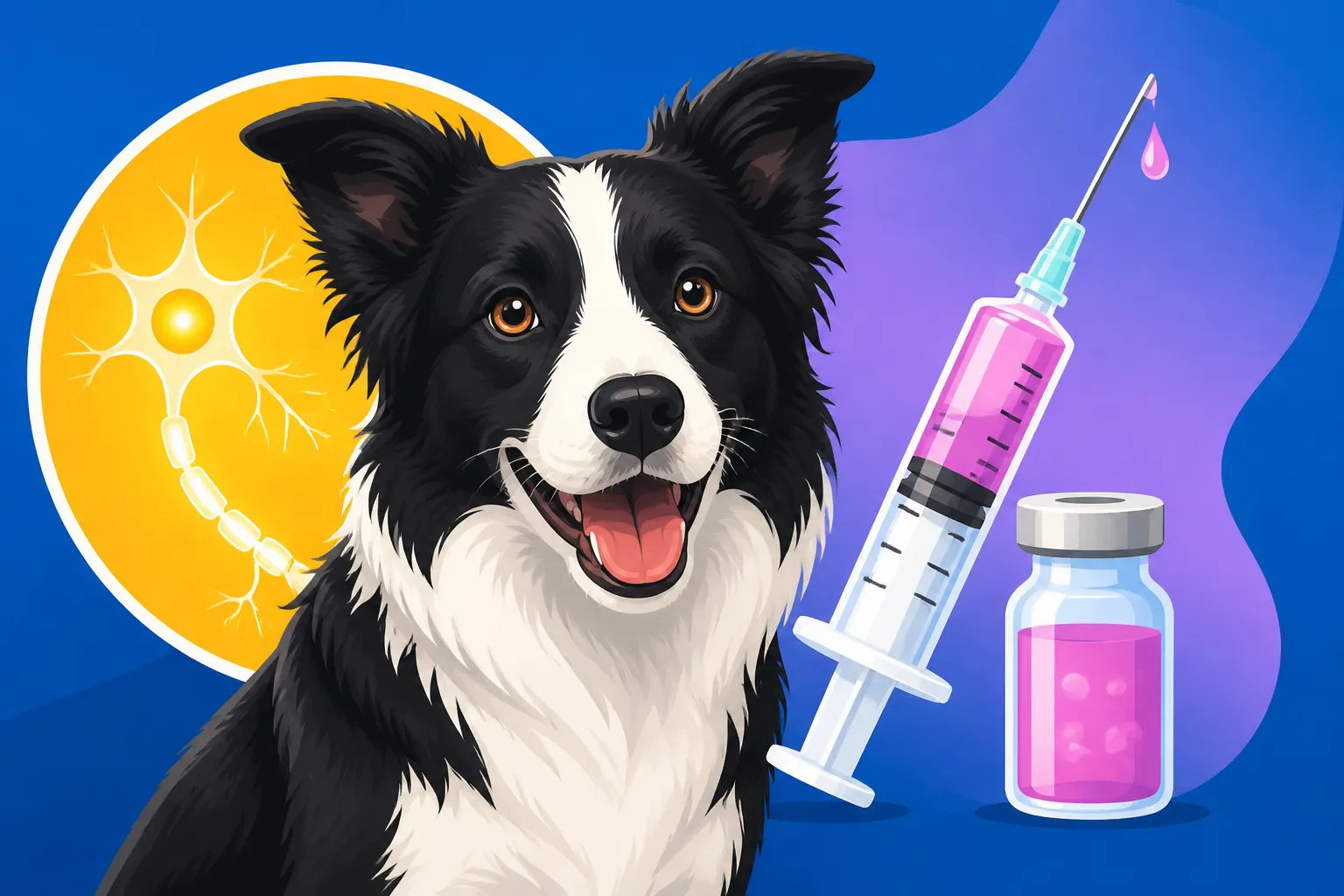
B12 Injections for a Border Collie With IGS
It's incredibly frustrating, isn't it, when your vibrant, intelligent Border Collie starts to seem… off? Maybe they're not quite as bouncy as usual, their coat isn't as shiny, or they just seem to fade a little after activity. You know your dog better than anyone, and these subtle changes can be a real worry. This guide is all about understanding a specific, often overlooked condition called Imerslund-Gräsbeck Syndrome (IGS), also known as Cobalamin Malabsorption, in Border Collies, and how a simple, yet life-changing, solution – B12 injections – can bring your dog back to their best.
Understanding Cobalamin Malabsorption (IGS) in Border Collies
Let's dive right into what Cobalamin Malabsorption, or IGS, actually is. Imagine your Border Collie is eating a perfectly nutritious meal, packed with all the good stuff, including Vitamin B12, also known as cobalamin. Now, in a healthy dog, this B12 would be absorbed efficiently in the small intestine, specifically in a part called the ileum. But for Border Collies with IGS, there's a genetic hiccup. Their bodies can't properly absorb B12 from their food, no matter how much they consume. It's like having a leaky bucket – you keep pouring water in, but it never fills up.
This isn't a problem unique to Border Collies, but they are genetically predisposed to it, often due to a mutation in the CUBN gene. This genetic link means it's a condition that responsible breeders are increasingly screening for, and if you're looking at a puppy, it's wise to be Asking a Border Collie Breeder for Test Results to ensure parents are clear. The symptoms can be quite varied and sneaky, which is why it often gets misdiagnosed initially. You might notice your dog is a little smaller than littermates, perhaps a bit lethargic, or maybe they just don't have that typical boundless Border Collie energy. Diarrhea, poor appetite, and even issues with their nervous system can also manifest. It’s definitely something that warrants a closer look if your dog isn't thriving, especially if they were the "runt" of the litter, though it's important to note that not every runt has IGS, nor every dog with IGS is a runt. Still, it's a common red flag.
The diagnosis usually involves blood tests to check cobalamin levels. If levels are low, your vet might then recommend specific diagnostic tests, sometimes including a urine test or even a specialized B12 absorption test. This is where the intrinsic factor comes in – it's a protein produced in the stomach (and sometimes pancreas) that's necessary to bind with B12 and facilitate its absorption. In IGS, the problem isn't usually with intrinsic factor production, but with the specific receptors in the intestine that are meant to take up that B12-intrinsic factor complex. This distinction is crucial because it tells us that simply giving oral B12, even with intrinsic factor added, often won't be effective. The problem is further down the line, requiring a different approach. For comprehensive health checks, especially for a breed like ours, understanding the full picture of The Border Collie Genetic Panel and What It Screens is always beneficial.
The Critical Role of B12 (Cobalamin) in Your Border Collie's Health
So, why is B12 such a big deal? It’s not just any vitamin; it’s an absolute powerhouse nutrient vital for a multitude of bodily functions in your Border Collie. Think of it as a tiny, indispensable cog in the machinery of life. Primarily, B12 plays a monumental role in the creation of red blood cells, which are responsible for carrying oxygen throughout the body. Without enough B12, your dog can become anemic, leading to that tell-tale lethargy and weakness.
Beyond red blood cells, cobalamin is critical for healthy nerve function. This means it impacts everything from coordination and cognitive sharpness to simply feeling comfortable. A deficiency can contribute to neurological issues, though these are often subtle in early stages and might present more as a general "dullness" or reduced drive. It's also deeply involved in metabolism, helping the body convert food into energy, which, as you can imagine, is absolutely essential for a high-energy breed like the Border Collie. If you've ever wondered Why a Border Collie's Drive Drops With Its Thyroid or noticed a general slowing down, B12 deficiency could be one of the many culprits to rule out, although thyroid issues are a separate concern.
Now, you might think, "Why can't I just give my dog a B12 pill?" And that's a fair question! Many common B vitamins are easily absorbed orally. However, due to the specific malabsorption issue in IGS, the oral route simply isn't effective. The body's natural system for absorbing dietary B12 is compromised. This means that even high doses of oral supplements are unlikely to reach the bloodstream in sufficient quantities to make a difference. This is why injections become the gold standard. They bypass the faulty absorption pathway in the gut, delivering the B12 directly into the muscle or under the skin, where it can be readily utilized by the body. This scientific understanding is key to truly helping your Border Collie. The good news is that once you understand this, the solution is remarkably straightforward.
Administering B12 Injections: A Practical Guide for Owners
The idea of giving your dog an injection can be daunting, I know. Many of us balk at the thought, picturing a wrestling match or causing our beloved Border Collie pain. But let me reassure you, B12 injections are typically very well tolerated, and with a little guidance, most owners find they can administer them quite easily at home. This isn't just convenient; it also reduces stress for your dog by avoiding frequent vet visits.
First things first, you'll need a prescription from your veterinarian. They will determine the appropriate B12 formulation, dosage, and frequency for your individual dog. The B12 itself is readily available through pharmacies or veterinary suppliers. Your vet will also provide you with the necessary syringes and needles. Don't be shy about asking your vet or vet tech for a demonstration. They can show you exactly how to draw up the medication and perform a subcutaneous (under the skin) injection, which is far less intimidating than an intramuscular one.
Here’s a simplified step-by-step for a subcutaneous injection:
- Gather Supplies: Have your B12 vial, syringe, needle, and an alcohol wipe ready.
- Prepare the Injection: Swab the top of the B12 vial with an alcohol wipe. Draw up the prescribed amount of B12 into the syringe.
- Find the Injection Site: The loose skin over your Border Collie's shoulder blades or flank is usually the easiest and least sensitive spot.
- Tent the Skin: Gently grasp a fold of loose skin, pulling it up to form a "tent." This creates a small space between the skin and the underlying muscle.
- Insert the Needle: With a quick, confident motion, insert the needle into the base of the tent, parallel to your dog's back and through only one layer of skin. You'll feel a slight "pop" as it goes through.
- Administer the Medication: Gently pull back on the plunger a tiny bit. If you see blood, you've hit a vessel; withdraw slightly and re-angle. If you see air, you're good. Slowly push the plunger down to inject the B12.
- Remove the Needle: Quickly withdraw the needle and gently massage the injection site for a few seconds.
- Praise and Reward: Lavish your Border Collie with praise and a tasty treat! Make it a positive experience.
The initial phase of treatment often involves more frequent injections, perhaps daily or every other day, to rapidly replenish depleted stores. Your vet will then transition you to a maintenance schedule, which could be weekly, bi-weekly, or monthly, depending on your dog's response. It’s a protocol you’ll quickly get the hang of. Remember that regular Yearly Bloodwork for a Border Collie will also help your vet monitor B12 levels and adjust the maintenance dose as needed over time.
You'll likely start to see improvements fairly quickly, often within a few weeks to a couple of months. Look for renewed energy, a brighter coat, better appetite, and more consistent stools. It's incredibly rewarding to watch your Border Collie regain their sparkle!
| Symptom Category | Potential IGS Symptoms (B12 Deficiency) | General "Unwell" Signs (Could be anything) |
|---|---|---|
| Energy Level | Lethargy, reduced stamina, less drive | General fatigue, reluctance to play |
| Digestion | Chronic or intermittent diarrhea, poor appetite, weight loss | Vomiting, acute diarrhea, refusal to eat |
| Appearance | Poor coat quality, stunted growth (puppies), pale gums | Dull coat, weight loss (various causes), signs of pain |
| Behavior | Mild neurological signs (ataxia, weakness), dullness | Behavioral changes, fear, aggression |
| Bloodwork | Low serum cobalamin (B12) levels, possibly anemia | Elevated white blood cells (infection), organ enzyme abnormalities |
Living Long and Well: Managing IGS and Long-Term Outlook
The good news about Cobalamin Malabsorption is that, unlike many chronic conditions, it's highly manageable with consistent B12 injections. This isn't a condition that should significantly shorten your Border Collie's lifespan or severely diminish their quality of life, as long as you adhere to the treatment plan. It’s a lifelong commitment, but a relatively simple one that yields profound benefits.
Consistency is truly the unsung hero here. Missing doses can lead to a dip in B12 levels, and you might start to see a resurgence of those earlier, frustrating symptoms. Establishing a routine for injections will make it much easier to stay on track. Setting reminders on your phone or marking a calendar can be really helpful.
While B12 injections are the primary treatment, supportive care can also play a role. Your vet might discuss dietary considerations, although typically, the malabsorption issue means that diet alone won't solve the problem. However, feeding a high-quality, easily digestible food can support overall gut health and ensure your dog is getting all the other nutrients they need. Some dogs with IGS might also benefit from probiotics or other gut supplements, but always discuss these with your vet first to ensure they are appropriate and won't interfere with anything.
Regular vet check-ups are also crucial. These appointments allow your vet to monitor your Border Collie's overall health, assess their response to the B12 therapy, and adjust dosages if necessary. They can also keep an eye out for any other age-related issues or health concerns that might arise, ensuring your dog stays as healthy as possible throughout their life. This is also a good opportunity to discuss Cobalamin Malabsorption in a Border Collie in general and stay up to date on any new findings or best practices.
With proper management, a Border Collie with IGS can lead a full, active, and happy life, just like any other Border Collie. They can still excel in agility, herd sheep, or simply be the best companion a family could ask for. The impact on their quality of life and potential lifespan is overwhelmingly positive once the B12 deficiency is addressed. This is where having robust pet insurance can really make a difference for long-term conditions. Companies like Healthy Paws offer comprehensive plans that can help alleviate the financial burden of managing chronic conditions like IGS, covering the costs of diagnostics, prescriptions, and ongoing treatments. While we never want to think about our dogs getting sick, a good pet insurance policy, like those that cover conditions described in Insuring a Border Collie Against Epilepsy and Joints, can provide peace of mind and ensure you can always afford the best care for your beloved companion. Many owners wonder What Insurers Quote Monthly for a Border Collie, and it's definitely worth looking into different options to find one that fits your budget and covers the needs of your particular dog.
Ultimately, diagnosing and treating Cobalamin Malabsorption is a journey, but it’s one with a very happy destination: a thriving, energetic Border Collie. It’s a testament to the power of understanding genetics and modern veterinary medicine in making a real difference in our dogs' lives.
Disclaimer
The information provided in this article is for general informational purposes only and is not a substitute for professional veterinary advice. Always consult with a qualified veterinarian for any health concerns or before making any decisions related to your pet's medical care.