The Age a Border Collie Should Be Hip-Scored
One of the biggest worries for any Border Collie owner, especially those who love watching their dogs fly across an agility course or work sheep with intense focus, is the health of their joints. There's a persistent question that pops up in forums and conversations at every trial: "When is the right time to get their hips checked?" It’s a crucial decision that can impact your dog's future, and getting it wrong can mean unreliable results or missed opportunities for early intervention. This comprehensive guide will walk you through the recommended age for hip scoring your Border Collie, explain the reasoning behind these guidelines, and help you understand the process to ensure your active companion stays sound for years to come.
Understanding Hip Dysplasia in Border Collies
Hip dysplasia is a term that strikes fear into the hearts of many dog owners, and for good reason. It's a debilitating condition that can significantly impact a dog's quality of life, especially for a breed as dynamic and athletic as the Border Collie. Before we dive into when to score, let's really understand what we're up against and why it's such a significant concern for our beloved herders.
What is Hip Dysplasia Anyway?
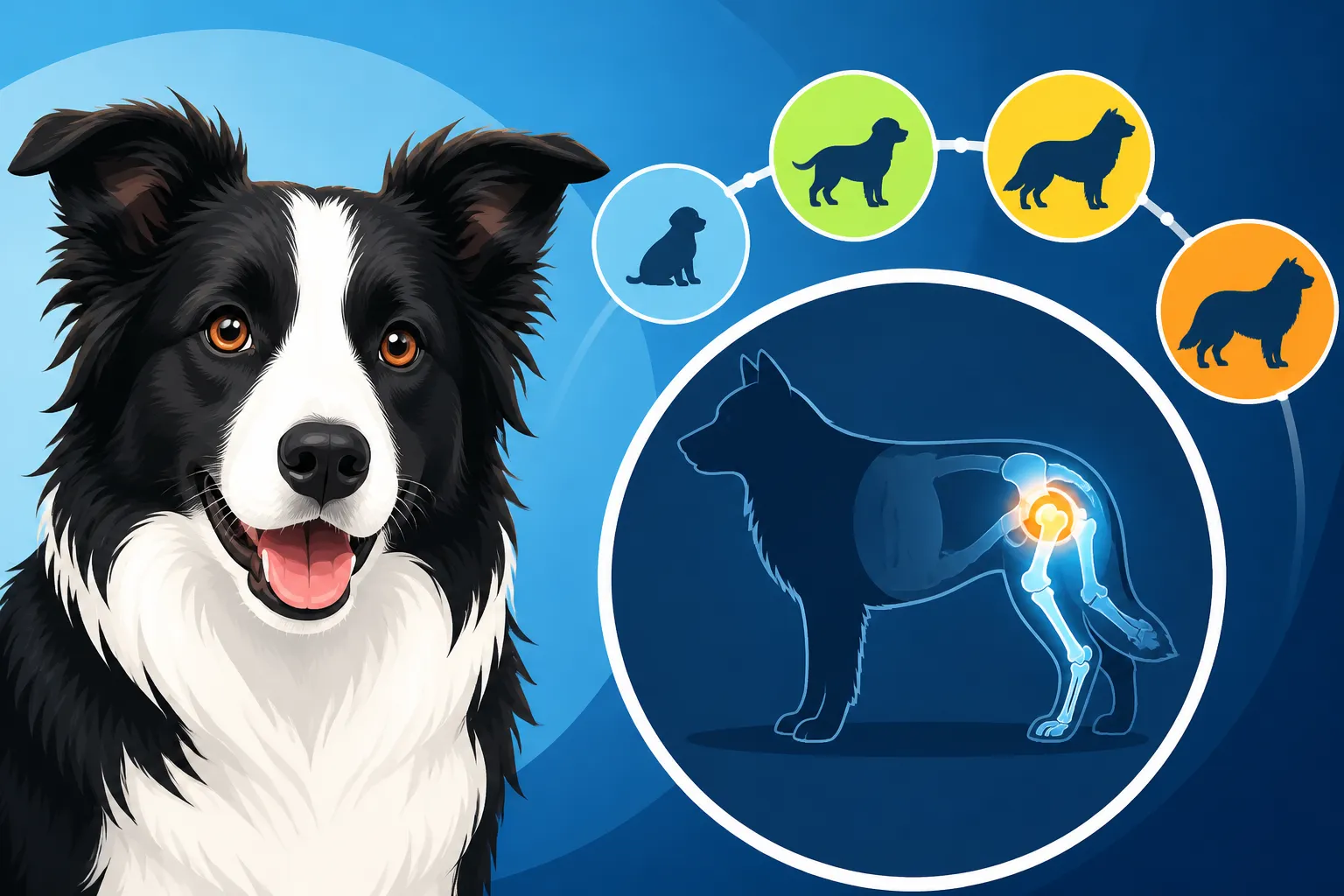
At its simplest, hip dysplasia is a malformation of the hip joint. Imagine a ball-and-socket joint – the "ball" is the head of the femur (thigh bone), and the "socket" is the acetabulum in the pelvis. In a healthy hip, this ball fits snugly and smoothly into the socket, allowing for fluid, pain-free movement. With hip dysplasia, this fit isn't quite right. The socket might be too shallow, the femoral head might be flattened, or the ligaments holding them together might be lax. This poor fit causes the bones to rub and grind against each other instead of gliding smoothly.
Over time, this abnormal friction leads to a cascade of problems. The cartilage cushioning the joint wears down, bone spurs can develop (a condition known as osteoarthritis), and the joint becomes inflamed and painful. This can manifest as lameness, stiffness, reluctance to exercise, difficulty getting up, and even a bunny-hopping gait. It's not just a physical problem; it's a quality-of-life issue that can severely limit a Border Collie's ability to do what it loves most: run, jump, and work.
Why Border Collies Are Prone to Hip Dysplasia
While hip dysplasia can affect any dog breed, and even mixed breeds, it is notably more prevalent in larger, faster-growing breeds and those with a strong genetic predisposition. Border Collies, unfortunately, fall into this category. Their genetic makeup means they carry genes that increase their risk. It's not just genetics, though; environmental factors also play a significant role in how severely the condition develops. Rapid growth, improper nutrition (especially overfeeding puppies), excessive exercise or impact work on young, developing joints, and even slippery flooring can all exacerbate a dog's genetic tendency towards hip dysplasia.
This combination of genetic predisposition and environmental influences makes proactive screening incredibly important for Border Collies. We know they are athletes, often asked to perform demanding tasks from a young age, whether it's herding sheep, navigating an agility course, or excelling in flyball. Ensuring their foundational joint health is sound is paramount to a long, happy, and active life. This is why discussions around topics like Hip Dysplasia in a Border Collie That Runs All Day are so crucial for owners.
The Optimal Age for Border Collie Hip Scoring
So, you understand what hip dysplasia is and why it's a concern. Now for the million-dollar question: when exactly should you get your Border Collie's hips scored? It's not as simple as picking any vet visit; timing is critical to ensure accurate, reliable results that truly reflect your dog's adult hip conformation.
The Standard Recommendation for Hip Scoring
The most widely accepted standard for official hip scoring, particularly by organizations like the Orthopedic Foundation for Animals (OFA) in the United States, is that dogs should be at least 24 months (two years) of age before their final hip evaluations are submitted. This age is considered full skeletal maturity for most medium-to-large breeds, including Border Collies. At this point, their growth plates have typically closed, and their joints have developed to their mature size and shape. Scoring earlier than this can lead to unreliable results, as the hips are still developing and what looks good at 12 or 18 months might not be the final picture.
Some owners, especially breeders, might opt for preliminary evaluations at a younger age, sometimes as early as 4-6 months or around a year old. These preliminary scores can offer an indication of hip health but are not considered definitive. They can be helpful for early decision-making, such as determining if a dog has severe dysplasia that warrants early intervention or if a young prospect looks promising for a breeding program, but they should never replace the final, official score at two years of age or older. Always remember that preliminary results are just that – preliminary. The final assessment provides the most accurate and universally accepted rating.
Why Waiting Until Maturity Matters
The primary reason for waiting until at least two years of age is the critical factor of skeletal maturity. A Border Collie puppy’s bones and joints are dynamic and constantly changing as they grow. Growth plates, which are areas of cartilage at the ends of long bones, are still open and actively producing new bone tissue. The hip joint itself is still remodeling and strengthening. If you X-ray too early, you're essentially looking at an unfinished product.
Imagine trying to judge the structural integrity of a house while it's still being framed, long before the foundation has fully settled or the walls are complete. It's difficult to get an accurate assessment of the finished structure. The same applies to a Border Collie's hips. An early X-ray might show perfectly normal hips, but as the dog continues to grow and put stress on those joints, underlying laxity or malformation could become apparent later. Conversely, a younger dog might show some temporary laxity that resolves as ligaments tighten and muscles develop. Waiting ensures that the joint has reached its adult configuration, providing a stable baseline for evaluation. It's also why preventing issues during growth is so important, with advice on things like Stairs and a Growing Border Collie Puppy to consider.
The Hip Scoring Process and What It Entails
Once your Border Collie reaches the recommended age, it's time to consider the actual hip scoring process. There are two primary methods widely used in North America for evaluating canine hips: OFA (Orthopedic Foundation for Animals) and PennHIP. Both require X-rays, but they differ significantly in their approach, the age at which they can be performed, and the information they provide.
OFA vs. PennHIP: Understanding the Differences
Let's break down the two main players in hip evaluation:
OFA (Orthopedic Foundation for Animals):
- Method: This is a radiographic (X-ray) evaluation that assesses the conformation of the hip joint in a single, extended view. The dog is positioned on its back with its hind legs extended straight and parallel.
- Age: Officially, OFA evaluations for final certification must be done at 24 months (two years) of age or older. Preliminary evaluations can be done younger, but these are not final certifications.
- Assessment: X-rays are submitted to OFA and reviewed by three independent, board-certified veterinary radiologists who grade the hips based on a seven-point scale: Excellent, Good, Fair (all considered "passing"), Borderline, Mild, Moderate, or Severe (the latter four considered dysplastic).
- Anesthesia/Sedation: Moderate to heavy sedation or general anesthesia is typically required to ensure proper positioning, which is crucial for accurate imaging and to minimize muscle tension that could mask laxity.
- Cost: Generally, OFA evaluations are slightly less expensive than PennHIP, but this varies by veterinary clinic and region.
- Benefits: It's a well-established system, widely recognized, and easy for the average person to understand the grading. It also offers evaluations for elbows, patellas, and other conditions.
PennHIP (Pennsylvania Hip Improvement Program):
- Method: This method uses three separate X-ray views to more accurately measure hip laxity. These views include a standard extended hip view (similar to OFA), a distraction view (which assesses passive hip laxity by pushing the femoral heads out of the sockets), and a compression view (to measure the "tightness" of the joint).
- Age: PennHIP evaluations can be performed as early as 16 weeks (4 months) of age. This allows for much earlier assessment of a dog's genetic predisposition to hip dysplasia.
- Assessment: PennHIP provides a "distraction index" (DI) score, which is a quantitative measure of hip laxity. This score ranges from 0 to 1, where 0 indicates no laxity (a very tight hip) and 1 indicates severe laxity. Dogs with DIs closer to 0 are less likely to develop hip dysplasia. This score is then compared to the scores of other dogs within the same breed, providing a percentile ranking.
- Anesthesia/Sedation: General anesthesia is always required for PennHIP evaluations to achieve the precise positioning and muscle relaxation needed for accurate measurements, especially the distraction view.
- Cost: PennHIP is typically more expensive due to the specialized training required for veterinarians and the multiple X-ray views.
- Benefits: Offers earlier evaluation, provides a quantitative and objective measure of laxity (which is a strong predictor of hip dysplasia), and provides breed-specific comparisons.
Here's a quick comparison table:
| Feature | OFA (Orthopedic Foundation for Animals) | PennHIP (Pennsylvania Hip Improvement Program) |
|---|---|---|
| Minimum Age | 24 months for final certification (prelims earlier) | 16 weeks |
| X-ray Views | 1 extended hip view | 3 views (extended, distraction, compression) |
| Assessment | Qualitative grade (Excellent, Good, Fair, Borderline, etc.) | Quantitative Distraction Index (DI) score (0-1), percentile rank |
| Anesthesia | Moderate sedation or general anesthesia typically required | General anesthesia always required |
| Cost | Generally lower | Generally higher |
| Information | Pass/Fail grade, conformation | Degree of hip laxity, likelihood of developing OA |
| Primary Use | Breed certification, general health information | Early screening, genetic prediction for breeding |
Interpreting Your Border Collie's Hip Scores
Understanding your Border Collie's hip scores, regardless of which method you choose, is vital for making informed decisions about their care, activity levels, and potential for breeding. Let's delve into what those scores truly mean.
OFA Grades:
- Excellent, Good, Fair: These are considered "passing" grades. A Border Collie with these scores has hips that are structurally sound and within normal limits for the breed.
- Excellent: Superior hip conformation, nearly perfect.
- Good: Well-formed and congruent hips, slightly less than excellent.
- Fair: Congruent hip joint with minor irregularities, still considered healthy. This is still a good outcome, and a dog with "Fair" hips can live a full, active life, often working livestock or participating in sports. You might hear discussions about Working a Border Collie Graded Fair on Hips which explores the nuances here.
- Borderline: These hips have some minor irregularities that prevent them from being graded as normal, but there are no definitive signs of dysplasia. OFA often recommends re-X-raying in 6-8 months if a Border Collie receives this grade.
- Mild, Moderate, Severe: These are all considered dysplastic.
- Mild: Significant subluxation (partial dislocation) of the femoral head, shallow acetabulum, early signs of degenerative joint disease.
- Moderate: Poor hip joint conformation, significant subluxation, considerable degenerative changes.
- Severe: Marked evidence of hip dysplasia, flattened femoral heads, shallow acetabula, extensive degenerative changes.
It's important to remember that an OFA "Good" or "Fair" score doesn't guarantee your dog will never develop arthritis, but it significantly reduces the likelihood that severe hip dysplasia will be the cause. For more specific details, you can look into articles like What an OFA Hip Grade Means for a Border Collie.
PennHIP Scores (Distraction Index – DI):
The PennHIP DI is a continuous score from 0 to 1.
- Lower DI scores (closer to 0): Indicate tighter hips with less laxity. These dogs have a lower risk of developing hip osteoarthritis (OA).
- Higher DI scores (closer to 1): Indicate looser hips with more laxity. These dogs have a higher risk of developing hip OA.
PennHIP also provides a percentile ranking. For example, if your Border Collie has a DI of 0.40 and is in the 70th percentile, it means 70% of Border Collies evaluated by PennHIP have hips tighter than your dog's, and 30% have hips looser. Breeders often aim to breed dogs with DIs in the tighter half (50th percentile or lower) of the breed. This quantitative measure is a powerful tool for predicting future OA risk and is highly favored by many ethical breeders.
Whether you choose OFA or PennHIP, discussing the results thoroughly with your veterinarian is crucial. They can help you understand the implications for your individual Border Collie and guide you on the best path forward, whether it's for continued sport, pet companionship, or a breeding program.
Beyond the Score: Managing Hip Health and Future Considerations
Getting your Border Collie hip-scored is a fantastic step toward responsible ownership, but the journey doesn't end with the report. The results, whether excellent or less-than-ideal, provide invaluable information that should guide your management of your dog's health and activity levels for years to come.
Living with a Border Collie Graded Fair on Hips
Let's say your Border Collie receives a "Fair" grade from OFA. First, take a deep breath. A "Fair" grade is still considered normal. It means the hip joints are congruent, but there might be some minor irregularities in the ball-and-socket fit. This is a common outcome for many active breeds. What does this mean for your energetic companion?
For most Border Collies with "Fair" hips, it means they can still lead full, active lives, engaging in their favorite activities like herding, agility, or long hikes. The key is intelligent management and preventive care. This might include:
- Maintaining an Ideal Weight: This is paramount. Every extra pound puts additional stress on the joints. A lean Border Collie is a happy Border Collie.
- Regular, Controlled Exercise: Avoid sporadic bursts of intense activity after long periods of rest. Instead, aim for consistent, moderate exercise to build strong supporting musculature around the hips. Think swimming, trotting, or controlled uphill walks rather than excessive, high-impact jumping or sharp turns.
- Supportive Nutrition and Supplements: Discuss with your vet whether joint supplements like glucosamine, chondroitin, MSM, or omega-3 fatty acids might be beneficial. Brands like Healthy Paws often emphasize holistic care, and while they don't sell supplements directly, their approach to comprehensive pet care certainly includes considering all aspects of joint health.
- Soft Surfaces: Encourage play and exercise on softer surfaces like grass or dirt rather than concrete or asphalt to reduce impact.
- Monitoring for Signs of Discomfort: Pay close attention to any changes in gait, stiffness after rest, reluctance to jump, or unusual sensitivity when touched. Early detection of pain allows for prompt veterinary intervention.
- Veterinary Check-ups: Regular check-ups are important to monitor joint health and address any emerging issues proactively. Your vet might suggest physical therapy, anti-inflammatory medications, or other interventions if signs of discomfort appear.
It’s about being proactive and thoughtful, rather than restrictive. Many Border Collies with "Fair" hips excel in various disciplines because their owners are diligent about their overall care.
Ethical Breeding Practices and Hip Health
For those considering breeding their Border Collie, hip scores become an even more critical component of their decision-making. Ethical breeding is about improving the breed, and that means striving to produce puppies with the best possible genetic health.
- Screening All Breeding Stock: Any Border Collie intended for breeding should have official hip scores, ideally passing grades from OFA (Good or Excellent) or low DI scores from PennHIP. Responsible breeders will typically have these results readily available and will be transparent about them. They often screen for other conditions as well, such as through The Border Collie Genetic Panel and What It Screens.
- Considering Both Parents: It’s not enough for one parent to have excellent hips; both dam and sire should be evaluated. This helps to reduce the genetic load for hip dysplasia in the offspring.
- Beyond the Individual: Ethical breeders also look at the hip health of the dog's ancestors (parents, grandparents, siblings) and their progeny. A dog with an "Excellent" score might still produce dysplastic puppies if its relatives frequently have poor scores. This is a testament to the complex polygenic nature of hip dysplasia.
- Balancing Traits: While hip health is crucial, it's just one piece of the puzzle. Responsible breeders balance hip health with other important traits like temperament, working ability, and overall health to ensure they are producing well-rounded, healthy Border Collies.
- Transparency: A responsible breeder will never shy away from showing you the official health clearances of their breeding dogs. They understand the importance of informed decisions and are committed to placing healthy puppies in good homes. They will also be open to discussing things like Breeding Decisions Around Border Collie Collapse and other inherited conditions.
- Pet Insurance Consideration: Many new owners wisely invest in pet insurance. Companies like Healthy Paws offer robust coverage that can be a lifesaver if unforeseen health issues arise, including those related to hips later in life. While pre-existing conditions are typically excluded, getting insurance early is a smart move for any Border Collie puppy.
By adhering to these ethical practices, breeders contribute significantly to the overall health and longevity of the Border Collie breed, helping to ensure that future generations can enjoy the active, vibrant lives they are famous for. This proactive approach to health, including comprehensive screening for conditions like hip dysplasia, forms the bedrock of responsible dog ownership and breeding.
Additional Joint Health Considerations for Your Border Collie
Beyond hip scoring, there are several other critical aspects of joint health that Border Collie owners should be aware of throughout their dog's life. Being vigilant and proactive can make a significant difference in preventing issues and managing any problems that arise.
Elbow Dysplasia and Other Orthopedic Concerns
While hip dysplasia often gets the most attention, elbow dysplasia is another significant orthopedic condition that can affect Border Collies. Like hip dysplasia, it's a complex, inherited condition that involves malformation of the elbow joint. It can lead to pain, lameness, and osteoarthritis. The recommended age for official elbow scoring by OFA is also 24 months of age or older, similar to hips, as the elbow joints also need to reach full maturity for accurate assessment.
Beyond hips and elbows, Border Collies can be susceptible to other sport-related injuries due to their high drive and athletic prowess. These might include:
- Osteochondritis Dissecans (OCD): A condition affecting cartilage in various joints, most commonly shoulders, elbows, and stifles.
- Cruciate Ligament Tears: Particularly the cranial cruciate ligament (CCL) in the knee, often seen in active dogs. This can be a major concern for an active Border Collie.
- Patellar Luxation: Where the kneecap slips out of place.
- Shoulder Injuries: Common in agility dogs due to repetitive turning and jumping.
Regular veterinary check-ups are essential to monitor for any signs of lameness or discomfort that might indicate these issues. Early diagnosis and appropriate treatment, which could range from rest and medication to surgery or physical therapy, are key to a good prognosis. Companies like Healthy Paws can provide peace of mind for these unexpected, potentially expensive, health challenges.
Nutrition, Exercise, and Environment for Joint Longevity
Your Border Collie's lifestyle plays an immense role in supporting their joint health, regardless of their hip scores. It's a holistic approach that combines proper nutrition, appropriate exercise, and a safe environment.
- Balanced Nutrition: A high-quality diet appropriate for their age, activity level, and breed size is fundamental. For puppies, slow and steady growth is key; rapid growth spurts can put undue stress on developing joints. Avoid overfeeding, which can lead to obesity and faster-developing joint issues. As they age, consider diets formulated for active or senior dogs, possibly with joint-supporting ingredients.
- Appropriate Exercise: While Border Collies need a lot of exercise, the type of exercise matters, especially when they are young. Avoid forced, high-impact activities like repetitive jumping or long-distance running on hard surfaces before their growth plates have closed (around 12-18 months). Instead, focus on controlled walks, swimming, and mental stimulation. Once mature, tailor exercise to their individual fitness level and joint health. A Border Collie that runs all day might be fit, but also needs careful monitoring.
- Safe Environment:
- Flooring: Slippery floors can cause young puppies to splay their legs, potentially stressing developing joints. Use rugs or runners in high-traffic areas.
- Stairs and Jumping: Limit excessive stair climbing and jumping on and off furniture, particularly for puppies and older dogs. Consider ramps for cars or beds if your dog struggles.
- Temperature Control: In extreme heat, be mindful of overheating, which can stress a dog's entire system, including their joints, as they push themselves too hard. Ensure they have access to cool water and shade.
- Weight Management: We can't say it enough: keeping your Border Collie lean is the single best thing you can do for their joint health. Even a few extra pounds can dramatically increase the load on their hips and elbows, accelerating the onset and severity of arthritis.
By taking a comprehensive approach to your Border Collie's care – including timely hip scoring, thoughtful exercise, excellent nutrition, and a supportive environment – you are giving them the very best chance at a long, healthy, and active life. This dedication ensures they can continue to live up to their boundless energy and intelligence, making every day a joy.
Disclaimer
The information provided in this article is for general informational purposes only and does not constitute veterinary advice. Always consult with a qualified veterinarian for any health concerns or before making any decisions about your pet's medical care.