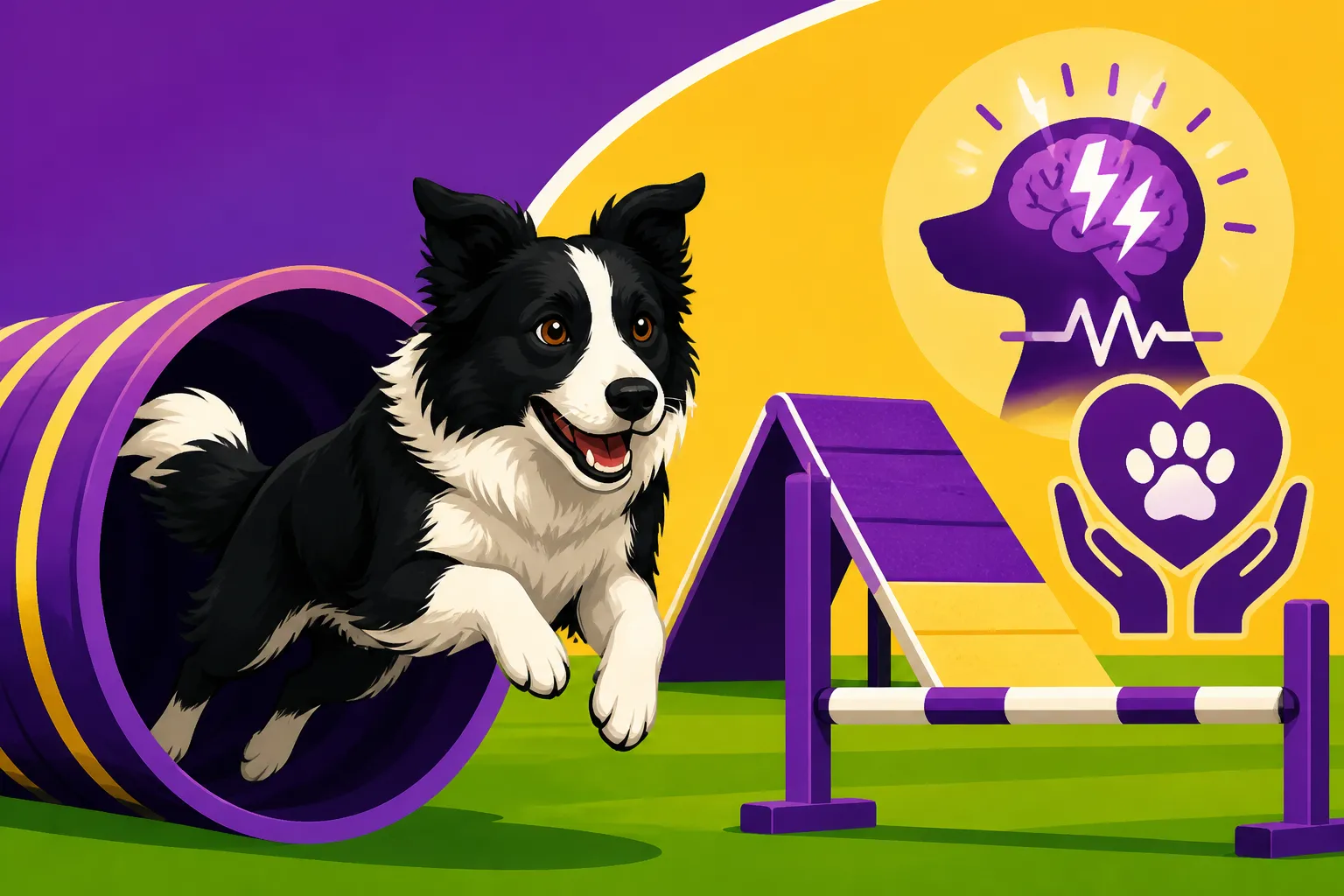
Doing Agility With an Epileptic Border Collie
Getting an epilepsy diagnosis for your high-drive Border Collie can feel like a punch to the gut, especially when you had dreams of conquering agility courses together. You picture your dog seizing on the start line, or the medication making them too dull to enjoy the sport they once loved. The fear of pushing them too hard, or not hard enough, can be overwhelming. This comprehensive guide is here to walk you through navigating the thrilling world of agility with an epileptic Border Collie, focusing on safety, smart training adaptations, and maintaining that incredible bond you share.
Understanding Epilepsy in a Performance Dog
When your Border Collie, a breed renowned for its intelligence and boundless energy, receives an epilepsy diagnosis, it brings a unique set of challenges. For many owners, especially those involved in dog sports like agility, the initial reaction can be one of devastation. You've invested so much time, energy, and love into training, and now there's this unpredictable factor looming over everything. It's not just about managing seizures; it's about re-evaluating goals, understanding limitations, and finding a new rhythm that prioritizes your dog's well-being above all else.
Epilepsy in Border Collies often manifests as idiopathic epilepsy, meaning there's no identifiable cause like a brain tumor or injury. Seizures can range from mild "absence" events, where the dog might seem to zone out or twitch subtly, to full-blown grand mal seizures involving loss of consciousness, paddling, and sometimes loss of bladder or bowel control. These episodes are not only frightening to witness but can also be debilitating for your dog. If your Border Collie is between one and five years old, this is a common window for the first seizure to arrive, which is often when performance careers are just hitting their stride.
The emotional toll on owners is immense. You worry about every new sound, every flicker in their eye, wondering if it's the precursor to another episode. For a Border Collie, whose very essence is often tied to their work and activity, the idea of them being dulled by medication or unable to participate in their favorite sport is heartbreaking. However, a diagnosis of epilepsy does not automatically mean the end of an agility career. It simply means a shift in perspective and a more careful, informed approach. Your veterinary team, ideally one familiar with performance dogs, becomes your most crucial partner in this journey, helping you understand the specifics of your dog's condition and tailoring a management plan that aims to control seizures while preserving their quality of life and spirit. You'll want to be familiar with what a Border Collie seizure looks like, so you can accurately describe it to your vet.
The Impact on Drive and Coordination
One of the biggest concerns for agility handlers is how epilepsy and its medication might affect their Border Collie's natural drive, focus, and physical coordination. Border Collies are celebrated for their incredible athleticism and mental sharpness on the agility course – the precision of their turns, the speed over jumps, and their unwavering connection with their handler. An epileptic diagnosis can understandably make you wonder if those traits will be diminished.
While it's true that certain anti-epileptic drugs (AEDs) can have side effects like sedation, ataxia (loss of coordination), or increased appetite, not all dogs react the same way, and not all medications are created equal. The goal of medication is to find the lowest effective dose that controls seizures with the fewest side effects. It's a delicate balance, and it often requires careful monitoring and adjustment by your veterinarian. Many owners find success with drugs like phenobarbital, potassium bromide, or levetiracetam, and with careful titration, it is possible to keep a Border Collie on medication without dulling it completely.
Beyond medication, the seizures themselves can temporarily impact a dog's neurological function. A dog might be disoriented, tired, or "off" for hours or even days after a seizure. This post-ictal phase means that their coordination might be compromised, and their ability to focus on complex tasks like agility might be severely reduced. It's a crucial time for rest and recovery, not training. The key is recognizing these subtle shifts and understanding that your dog's performance, and indeed their safety, will fluctuate. This isn't a linear path back to normal; it's a dynamic management process that requires patience, observation, and a willingness to adapt.
The Critical Role of Veterinary Management
Effective management of epilepsy is a partnership between you and your veterinary team. This isn't a condition where you can just "wait and see." A prompt diagnosis and the establishment of a treatment plan are paramount. When your Border Collie has its first seizure, it's vital to capture as much detail as possible: the date, time, duration, what happened before, during, and after, and any potential triggers. This detailed record-keeping will become invaluable for your vet.
Your veterinarian will likely recommend blood work to rule out other causes of seizures, and potentially advanced imaging like an MRI if they suspect a structural issue in the brain. Once idiopathic epilepsy is confirmed, the discussion will turn to medication. The decision to start medication often depends on the frequency, severity, and duration of the seizures. For an agility dog, even infrequent seizures might warrant earlier intervention to reduce the risk of injury during activity.
Regular follow-up appointments and blood tests are essential to monitor drug levels, assess liver and kidney function (as many AEDs are metabolized by these organs), and adjust dosages as needed. Don't be afraid to ask questions, voice your concerns about side effects, and discuss how the medication might impact your dog's agility aspirations. A truly supportive vet will work with you to find a solution that allows your Border Collie to live its best life, which, for many, includes staying active in sports. Investing in pet insurance, such as a plan from Healthy Paws, can significantly ease the financial burden of these ongoing veterinary consultations, diagnostics, and medications, allowing you to focus on your dog's care without added stress.
Safety First: Modifying Agility for Seizure Management
Once you have an epileptic Border Collie who's stable on medication, the question inevitably turns to agility. Can they still do it? The answer, for many, is a cautious yes, but with significant modifications and an unwavering commitment to safety. This isn't about pushing through regardless; it's about creating an environment where your dog can enjoy the sport without undue risk.
The first step is always to communicate openly with your veterinarian and your agility instructor. Find an instructor who is not only knowledgeable about agility but also empathetic and willing to learn about epilepsy. Not every instructor will be comfortable with this, and that's okay. You need someone who understands the stakes and is prepared to adapt their teaching methods. They should be aware of what to do if a seizure occurs during class, and you should make sure you know when a seizing Border Collie needs emergency care.
Identifying potential seizure triggers is critical. For many Border Collies, high excitement, stress, fatigue, or even overheating can be precursors to an episode. Agility inherently involves excitement and physical exertion, so understanding your dog's specific triggers will allow you to proactively manage their training environment. You should consistently record what to record about a Border Collie's seizures, noting any patterns related to activity, stress levels, or even weather.
Adjusting Training Intensity and Duration
The days of hour-long, high-intensity training sessions might be a thing of the past for an epileptic Border Collie, at least initially. The key is moderation and listening intently to your dog. Instead of lengthy runs, opt for shorter, more frequent sessions. Perhaps two or three 5-10 minute sessions spread throughout the day, rather than one intense 30-minute block. This reduces overall fatigue and limits prolonged periods of high excitement, both of which can be triggers.
Think quality over quantity. Focus on precise execution of individual obstacles or very short sequences, rather than long, flowing courses that build intensity. Breaks are paramount. Ensure your Border Collie has ample downtime between exercises, allowing their heart rate to normalize and their mental focus to reset. This might mean bringing a comfortable mat or crate to the training area where they can truly relax. If you're working in warmer weather, be extra vigilant. Even fit Border Collies can overheat, and heat stroke in a Border Collie that kept working can be incredibly dangerous. Always provide plenty of water and shade, and know how to cool and water a Border Collie in summer.
Monitoring your dog during training is also crucial. Learn to recognize subtle signs of fatigue or stress that might indicate an impending seizure, such as excessive panting, drooling, or a loss of focus. If your dog seems "off" or unusually tired, it's always better to err on the side of caution and end the session. Remember, you're not trying to create a world champion; you're trying to allow your beloved companion to enjoy a sport they love safely.
Course Design and Environmental Considerations
When planning agility courses or sequences for an epileptic Border Collie, think about mitigating risk. High-impact obstacles like dog walks or A-frames, or tight, weaving sequences, carry a greater risk of injury if a seizure were to occur. Consider simplifying courses: fewer obstacles, wider turns, and focusing on flatwork or less physically demanding challenges.
Avoid long tunnel sequences where you can't easily access your dog. If they do seize in a tunnel, it can be extremely difficult and dangerous to get them out. Jumps should be set at appropriate heights, not maximum. If your dog has any ataxia from medication, lowering jump heights or even removing bars completely during training can be a smart move. When running sequences, consider starting and ending near you, allowing for quick intervention if needed.
The training environment itself plays a big role. A quiet, familiar space with minimal distractions is often preferable to a chaotic, crowded class. If possible, train during off-peak hours or in private lessons. Bright, flashing lights or loud, sudden noises could also be potential triggers for some dogs, so try to control these environmental factors where you can. The goal is to minimize stressors and create a predictable, safe space where your Border Collie feels comfortable and confident.
Training Adaptations and Management Strategies
Successfully navigating agility with an epileptic Border Collie isn't just about managing seizures; it's about a holistic approach to their training and daily life. It means being more attuned to their needs, adapting your methods, and building a robust support system around them.
Consistency and routine are paramount for many dogs with epilepsy, and this extends to their training. Predictable schedules for feeding, medication, exercise, and rest can help stabilize their system and potentially reduce seizure frequency. This doesn't mean rigidity, but rather a framework that reduces sudden changes and surprises.
Positive reinforcement is key in any dog training, but it's even more crucial for an epileptic dog. Keeping training sessions upbeat, fun, and free from pressure helps manage stress levels. If your dog makes a mistake, treat it as information, not a failure. Break down tasks into smaller, achievable steps, and celebrate every tiny success. Building their confidence without adding undue pressure is vital.
Maintaining Fitness Without Overdoing It
While intensity needs to be managed, maintaining a good level of physical fitness is still important for an agility dog. A fit dog generally has better body awareness, stronger muscles to protect joints, and better stamina overall. However, for an epileptic Border Collie, this requires careful calibration.
Instead of intense sprints, focus on steady-state cardio activities like brisk walks or light jogging on varied terrain. Swimming can be an excellent low-impact option that builds strength without putting stress on joints or over-stimulating the nervous system. Cross-training activities like gentle stretching or balance work on stability balls can also help maintain core strength and body awareness without high-impact movements. Always monitor their fatigue levels closely. The goal is to keep them physically conditioned for agility's demands without pushing them to exhaustion, which could be a seizure trigger. You'll need to learn how to adjust a Border Collie's food in the off season to maintain a healthy weight without excess calories from high-intensity work.
Mental stimulation is equally, if not more, important for a Border Collie. These dogs need to think! Scent work, puzzle toys, trick training, or even learning the names of their toys can provide excellent mental enrichment without the physical demands of agility. These activities can keep their brilliant minds engaged and satisfied, which can contribute to overall well-being and potentially reduce stress-related seizure triggers.
The Role of an "Off-Switch" and Preparation for Trials
For a high-drive breed like the Border Collie, an "off-switch" is a non-negotiable life skill, and it becomes even more vital for an epileptic dog. Teaching your dog to settle calmly on a mat or in their crate on cue, regardless of the surrounding excitement, is invaluable. This allows you to manage their arousal levels before, during, and after training or competition. A strong "that'll do" command to end a session is critical. Many Border Collies cannot stop on their own, and this ability to disengage is a powerful tool in preventing overstimulation.
Preparing for trials with an epileptic Border Collie requires meticulous planning. This isn't just about training; it's about managing their entire experience.
Consider these adaptations:
| Aspect | Standard Agility Prep | Epileptic Border Collie Agility Prep |
|---|---|---|
| Training Sessions | Longer, higher intensity, full courses | Shorter, more frequent, focus on elements, less intensity |
| Travel | May travel day of, minimal rest | Ample rest stops, comfortable crate, minimize stress |
| Trial Day Schedule | Often full day, multiple runs, high energy | Prioritize rest, limit runs, quiet downtime between runs |
| Warm-up | Full physical warm-up, build excitement | Gentle warm-up, calm mental focus, monitor heart rate |
| Cool-down | Often minimal, quickly to next task | Extended cool-down, hydration, quiet rest |
| Environment | Adapt to crowds, noise, new venues | Seek quieter spaces, familiar routine, minimize new stressors |
| Food & Hydration | Standard meals, water available | Strict adherence to feeding schedule, easily digestible food, constant hydration |
| Medication | Not applicable | Strict adherence to medication schedule, carry extra |
On trial day, plan for extensive downtime. Arrive early to allow your dog to acclimate, and find a quiet spot away from the main hustle and bustle where they can relax between runs. Bring their familiar crate, toys, and plenty of water. Keep their routine as normal as possible. Avoid excessive excitement before their run. A calm, focused dog is a safer dog. It's often advisable to discuss with your vet about potentially adjusting medication schedules slightly for trial days, though this should only ever be done under their direct guidance. Consider a specialized performance diet that supports their energy needs without causing digestive upset, but always discuss any dietary changes and seizure frequency in a Border Collie with your vet.
Navigating Competitions and Building a Support System
The thought of competing with an epileptic Border Collie can be daunting. You might worry about judgment from others, or the practicalities of managing an episode in a public setting. But many owners successfully continue their agility journeys, often finding a deeper connection with their dogs in the process. It's about recognizing that success isn't just about ribbons; it's about the joy your dog finds in the activity and the bond you share.
One of the most important aspects is open communication. Before you attend a trial, consider contacting the event organizers or the chief ring steward to discreetly inform them about your dog's condition. You don't need to shout it from the rooftops, but having a couple of key people aware can be invaluable. This way, if a seizure does occur, they are prepared to offer assistance or ensure your dog's safety and privacy. Most agility communities are incredibly supportive, and you might be surprised by the understanding and empathy you receive.
Building a strong support system extends beyond the trial grounds. Connect with other owners of epileptic dogs, either online or in person. They can offer invaluable insights, emotional support, and practical tips. Your agility instructor, fellow students, and even your friends and family play a crucial role. Their understanding and willingness to adapt can make all the difference in making this journey less isolating.
Knowing When to Scratch a Run or a Trial
This is perhaps the hardest lesson for many driven agility handlers: knowing when to say no. You've traveled, paid entry fees, and trained hard, but your dog's well-being must always come first. If your Border Collie seems more tired than usual, if they've had a recent seizure, or if the environment (heat, noise, stress) feels overwhelming, it's okay – and often necessary – to scratch a run or even an entire trial.
Learn to read your dog. Do they seem less enthusiastic? Are they showing subtle signs of stress or fatigue? Is their post-seizure recovery taking longer than usual? Trust your gut. There will always be another trial, but you only have one dog. Pushing them when they're not quite right could not only trigger a seizure but also put them at risk of injury on the course. This commitment to their health will, in the long run, strengthen your relationship and potentially prolong their ability to enjoy the sport. Many Border Collies can still trial, but only with careful consideration.
It's also worth investigating if your pet insurance, like Healthy Paws, has any clauses related to pre-existing conditions or sports injuries. While epilepsy itself is a pre-existing condition if diagnosed before coverage, ongoing management and related injuries could be covered depending on your policy. Understanding your annual limits and Border Collie cruciate surgery costs, for example, becomes even more important when considering a performance dog with a chronic condition. For all your general costs, be sure to plan for the annual Border Collie budget nobody plans for.
Celebrating Small Victories and Embracing the Journey
Agility with an epileptic Border Collie becomes less about the podium finishes and more about the shared journey. Every clear run, every successful obstacle, every moment of pure joy your dog exhibits on the course is a victory. Celebrate these moments. They are profound testaments to your dedication, your dog's resilience, and the power of your partnership.
Acceptance is a huge part of this process. Accepting that your dog's path will be different, that there will be good days and bad days, and that setbacks are inevitable. This acceptance frees you from the pressure of perfection and allows you to truly appreciate the unique dog in front of you. Focus on their quality of life above all else. If agility still brings them immense joy, and you can manage it safely, then it's a worthwhile endeavor.
The long-term outlook for an epileptic Border Collie in agility is individual to each dog. Some dogs continue to compete successfully for years, with careful management. Others might transition to less physically demanding sports, or simply enjoy training at home. The most important thing is that your Border Collie remains a happy, fulfilled companion. Their intelligence, drive, and unwavering loyalty are still there, even with epilepsy. Your role is to help them channel that incredible spirit in the safest, most joyful way possible.
Disclaimer
The information provided in this article is for general informational purposes only and does not constitute veterinary advice. Always consult with a qualified veterinarian for any health concerns or before making any decisions related to your Border Collie's health or treatment plan. The author and publisher are not responsible for any actions taken based on the information contained herein.