Whether a Border Collie With CEA Goes Blind
Discovering your beloved Border Collie has Collie Eye Anomaly (CEA) can be incredibly scary, immediately bringing up fears of future blindness and a diminished quality of life. Many owners grapple with uncertainty, wondering if their energetic, intelligent companion will lose the ability to see the world they love to explore. This comprehensive guide will demystify CEA, explaining exactly what it is, how it impacts vision, and whether blindness is an inevitable outcome for your Border Collie.
Understanding Collie Eye Anomaly CEA: What It Is Really?
Collie Eye Anomaly, or CEA, is a congenital, inherited eye disease that primarily affects several collie breeds, including our beloved Border Collies. It's not a single condition but rather a spectrum of developmental defects that occur when the eye doesn't form quite right during puppyhood. The key word here is "congenital"—meaning your puppy is born with it, and it doesn't typically get worse in mild forms over time, unlike some other progressive eye diseases. The severity can range wildly, from almost imperceptible changes to significant structural defects.
The underlying issue stems from a genetic mutation, specifically in the NHEJ1 gene. This mutation interferes with normal ocular development, particularly impacting the choroid, which is a layer of blood vessels and connective tissue located between the retina and the sclera (the white outer layer of the eye). The choroid is absolutely vital for providing oxygen and nutrients to the retina, allowing it to function correctly. When it doesn't develop properly, problems can arise.
The Genetics Behind CEA and Its Manifestations
At its heart, CEA is an autosomal recessive genetic condition. This means a Border Collie must inherit two copies of the affected gene—one from each parent—to be "affected" by the disease. Dogs inheriting only one copy are "carriers" and won't show symptoms themselves but can pass the gene on to their offspring. This is why responsible breeding practices are so crucial, utilizing tools like The Border Collie Genetic Panel and What It Screens. Understanding these genetics is key to preventing the spread of CEA.
The primary manifestation of CEA is Choroidal Hypoplasia (CH). This is an underdeveloped choroid, meaning the essential blood supply to the retina is thinner or less extensive than it should be. In milder cases, CH might only be visible to a veterinary ophthalmologist with specialized equipment. In more severe cases, the choroid can be extremely thin or completely absent in certain areas. This is the most common form of CEA, and thankfully, it often has little to no impact on a dog's vision.
Beyond CH, CEA can also include more serious defects:
- Coloboma: This is literally a "hole" or "cleft" in one of the eye structures, most commonly the optic disc (where the optic nerve connects to the retina) or the retina itself. These can vary greatly in size and location. A small coloboma might not cause any vision impairment, but a large one, especially if it affects the optic nerve, can lead to blind spots or even total blindness in the affected eye. For more detailed information, consider reading What a Choroidal Defect Means in a Border Collie.
- Retinal Detachment: This is when the retina, the light-sensitive tissue at the back of the eye, separates from the underlying choroid. This is a very serious condition that almost always results in significant vision loss or blindness in the affected eye because the retina can no longer receive its vital blood supply and neural input.
- Intraocular Hemorrhage: Less common, but bleeding within the eye can occur, particularly if there are extensive colobomas or retinal detachments. This can also lead to temporary or permanent vision impairment.
The Different Grades of CEA: From Mild to Severe
CEA is typically graded based on the severity of the choroidal changes and the presence of other defects. It’s important to remember that the grades reflect the structural abnormalities and don't always directly correlate with the degree of vision impairment, especially in the milder forms.
Veterinary ophthalmologists use a grading system to describe the extent of CEA:
- Grade 1 (Mild Choroidal Hypoplasia, or "CH"): This is the most common form. The choroid is visibly thinned, but there are no other major defects like colobomas or retinal detachments. Dogs with Grade 1 CEA usually have normal vision and experience no issues throughout their lives. This is what we often refer to as The Mildly Affected Border Collie That Sees Normally. Many of these dogs might even be "go-normal," where the choroidal changes are so subtle they become undetectable as the eye develops, making physical examination alone sometimes unreliable later in life.
- Grade 2 (Moderate CH with small Coloboma): In these cases, there's a more pronounced thinning of the choroid, combined with a small coloboma, usually at the optic disc. Vision might still be perfectly normal, or the dog might have a small blind spot that they easily compensate for.
- Grade 3 (Severe CH with large Coloboma): Here, the choroid is significantly affected, and there's a larger coloboma, which increases the risk of complications. Vision may be compromised, leading to noticeable blind spots or reduced acuity.
- Grade 4 (Severe CH with Retinal Detachment or Hemorrhage): This is the most severe form, involving a detached retina or bleeding within the eye. Dogs with Grade 4 CEA will almost certainly experience significant vision loss or total blindness in the affected eye.
It's a common misconception that all dogs with CEA will go blind. The truth is, the vast majority of Border Collies affected with CEA have the mildest form (Grade 1 CH), which does not affect their vision at all. The real concern for blindness arises with the more severe grades involving colobomas and, most critically, retinal detachment.
The Reality of Vision Loss in Border Collies with CEA
When faced with a CEA diagnosis, especially with a young, vibrant Border Collie, the immediate thought is often about total blindness. While it's a valid concern, it's crucial to understand the nuances of how CEA can, and often doesn't, lead to severe vision impairment. For most Border Collies, a CEA diagnosis is not a harbinger of blindness.
When Vision Is Affected: Choroidal Hypoplasia
As mentioned, Choroidal Hypoplasia (CH) is the most common component of CEA. In its mildest form, where the choroid is merely thinner, dogs typically have absolutely normal vision. Their eyes compensate, and their brains interpret the visual input without issue. Think of it like a slightly less vibrant background color in a painting – the main picture is still perfectly clear. This is why many Border Collies with CEA are fantastic working dogs, agility champions, or active family pets with no visual limitations whatsoever.
It's rare for CH alone, even moderate CH, to cause functional blindness. The concern intensifies when CH is accompanied by other, more severe structural defects. For a dog that needs sharp vision for demanding tasks like herding, even subtle changes could hypothetically be a factor, but this is incredibly uncommon. Most owners would never even know their dog had mild CH without a specialized eye exam.
The Role of Colobomas and Retinal Detachments
This is where the risk of serious vision impairment or blindness truly comes into play.
-
Colobomas: A coloboma at the optic disc can be problematic. The optic disc is the "gateway" for all the visual information leaving the eye to the brain. If there's a large enough hole there, it can disrupt the flow of information, leading to blind spots. Imagine a television screen with a permanent black area – you can still see most of the picture, but a part is missing. The dog's brain is incredibly good at filling in these gaps, especially if the coloboma is small or if it's in one eye and the other eye has normal vision. However, large colobomas, particularly those affecting the optic nerve itself, can lead to significant functional blindness in that eye. If both eyes have large, central colobomas, then a dog might have severe vision impairment or even be functionally blind. The internal link on Coloboma and Retinal Detachment in a Border Collie provides further insight into these specific defects.
-
Retinal Detachments: This is the most concerning complication of CEA in terms of vision. A detached retina cannot function, and without prompt, specialized surgical intervention (which is not always successful or even possible, depending on the extent and chronicity), that eye will become blind. The risk of retinal detachment is significantly higher in dogs with large colobomas, as the coloboma itself can be a weak point where the retina is less securely attached. Retinal detachments can sometimes occur suddenly, even in puppies, and present as an acute loss of vision. If you notice any sudden changes in your Border Collie's vision, like bumping into objects or being disoriented, it’s critical to seek veterinary care immediately. Many pet insurance providers, like Healthy Paws, offer coverage that can help mitigate the significant costs associated with diagnosing and treating such urgent eye conditions, which can be a huge relief for owners.
Progressive Retinal Atrophy as a Separate Concern
It's really important to distinguish CEA from other progressive eye conditions. CEA is largely static after development; it doesn't typically get worse over time. However, there are other inherited eye diseases that do cause progressive vision loss, eventually leading to blindness. One such condition is Progressive Retinal Atrophy (PRA). PRA is a group of degenerative diseases that affect the photoreceptor cells (rods and cones) in the retina, gradually leading to their deterioration and eventually blindness.
While both CEA and PRA affect the eye and are inherited, they are distinct conditions caused by different genetic mutations and have different prognoses. A Border Collie can theoretically have both CEA and PRA, but one does not cause the other. If a Border Collie with CEA experiences worsening vision later in life, it's more likely due to a separate condition like PRA or cataracts, not a progression of their CEA. For more information on this, check out Progressive Retinal Atrophy in an Older Border Collie. It's why comprehensive eye health screening and genetic testing are so important throughout a dog's life.
Diagnosing CEA in Border Collies
Catching CEA early is essential, not just for the individual dog's care, but also for informed breeding decisions. The diagnostic process involves both a physical examination by a specialist and, increasingly, genetic testing. These two methods complement each other beautifully, especially with a condition that can have such varied manifestations.
The Importance of the Six-Week Eye Exam
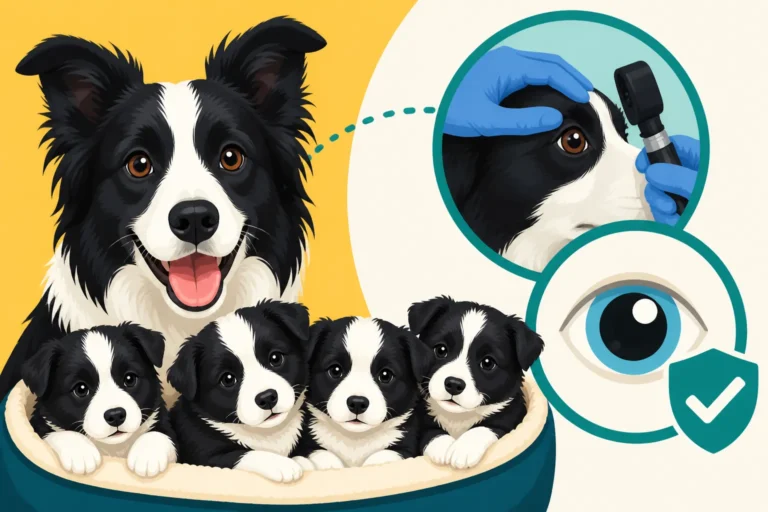
The primary method for diagnosing CEA in puppies is a specialized eye examination performed by a board-certified veterinary ophthalmologist. This exam is typically conducted when puppies are between six and eight weeks old. Why this specific window? Because at this age, the eyes are developed enough to show the defects, but before a phenomenon called "go-normal" can obscure the diagnosis.
During this exam, the ophthalmologist uses an indirect ophthalmoscope to visualize the back of the eye, specifically looking at the choroid and optic disc. They'll be looking for the characteristic thinning of the choroid, any visible colobomas, or signs of retinal detachment. It's a quick, non-invasive procedure, but it requires an expert eye.
The "go-normal" phenomenon is fascinating and sometimes confusing for owners. In some mildly affected puppies, particularly those with Grade 1 CH, pigment can migrate into the area of the choroidal thinning as they mature. This pigment can then obscure the underlying defect, making it appear as though the choroid is normal upon later examination. This means a dog that was affected at six weeks might appear "clear" at six months or a year old if only examined visually. This is why the six-week mark is so critical for a definitive diagnosis of The Eye Exam a Border Collie Puppy Gets at Six Weeks. If you're considering a puppy, always ask for the results of this early eye exam.
The DNA Test: A Definitive Answer for Breeders
While the physical eye exam is crucial for identifying structural defects, genetic testing offers a different, highly accurate layer of information. A DNA test can identify if a Border Collie carries the NHEJ1 mutation responsible for CEA, regardless of whether they show any physical signs of the disease. This is particularly valuable for breeders.
The DNA test can categorize a dog as:
- Clear: The dog does not carry the mutation and cannot pass CEA on to its offspring.
- Carrier: The dog carries one copy of the mutation but is not affected by the disease. It can pass the mutation on to approximately 50% of its offspring.
- Affected: The dog carries two copies of the mutation and is genetically predisposed to CEA. These are the dogs that would typically show the choroidal changes and potentially other defects on an eye exam.
The great advantage of the DNA test is that it can be done at any age, even on very young puppies or before a dog is bred. It eliminates the "go-normal" conundrum entirely, giving a definitive answer about a dog's genetic status. This is immensely helpful for breeders making informed decisions to reduce the incidence of CEA in future generations, which you can learn more about by reading Which DNA Tests a Border Collie Breeder Should Have Run. It also clarifies Why the Border Collie Eye Exam and the DNA Test Differ in their results for some individuals. For a genetic test like The NHEJ1 Test for Collie Eye Anomaly it is advisable to get one from a reputable laboratory.
| CEA Grade | Description | Risk of Blindness | Typical Vision |
|---|---|---|---|
| Grade 1 | Mild Choroidal Hypoplasia (CH) | Very Low | Normal, unaffected |
| Grade 2 | Moderate CH with small Coloboma | Low | Normal to slightly impaired |
| Grade 3 | Severe CH with large Coloboma | Moderate to High | Varied, from blind spots to severe impairment |
| Grade 4 | Severe CH with Retinal Detachment | Very High | Significant loss, often blind |
Living with a Border Collie Diagnosed with CEA
If your Border Collie is diagnosed with CEA, especially one of the milder forms, it's natural to feel worried. But rest assured, for the vast majority, life continues just as normally as it would for any other dog. The key is understanding the specific diagnosis and what it means for your dog.
Management and Care for Affected Dogs
For Border Collies with Grade 1 or 2 CEA (mild to moderate CH and small colobomas), no special management or treatment is usually required. Their vision is typically unaffected, and they can lead full, active lives, whether they're working sheep, competing in agility, or simply enjoying walks with their family. Regular veterinary check-ups, including annual eye exams, are always a good idea for overall health, but specific CEA-related interventions are rarely needed.
For dogs with more severe forms (Grade 3 or 4), especially those with large colobomas or a history of retinal detachment, the approach changes:
- Regular Monitoring: Your veterinary ophthalmologist might recommend more frequent eye exams to monitor for any changes, such as the development of a retinal detachment in an eye with a large coloboma. Early detection can sometimes lead to better outcomes if treatment is an option.
- Environmental Adjustments: If your dog has significant vision impairment or blindness in one or both eyes, you'll need to make some adjustments at home. Keep furniture in consistent locations, use scents or textures to mark boundaries (like at the top or bottom of stairs), and avoid startling your dog. A dog with limited vision can still thrive with love and consistency. Remember, their other senses are incredibly acute and will pick up the slack.
- Safety Precautions: For dogs with compromised vision, especially in unfamiliar environments, keeping them on a leash is paramount. Night Vision in a Border Collie might also be impacted, so evening walks should be well-lit or avoided in favor of daytime excursions. Consider a "blind dog" harness or vest to alert others.
- Protection from Injury: Because large colobomas can weaken the eye structure, dogs with severe CEA might be more prone to eye injuries. Protecting them from rough play or environments with sharp objects can be beneficial.
It's reassuring to know that even with potentially significant veterinary costs for monitoring or emergency treatment for conditions like retinal detachment, robust pet insurance plans, such as those offered by Healthy Paws, can provide financial peace of mind. Investing in such a plan when your Border Collie is young and healthy can make a huge difference if more serious issues arise later.
Breeding Decisions and Genetic Responsibility
For breeders, CEA is a critical consideration. Given its inherited nature, responsible breeding practices are essential to reduce its prevalence. This means:
- Genetic Testing: All breeding Border Collies should be DNA tested for the NHEJ1 mutation. This allows breeders to know a dog's status (clear, carrier, or affected) before breeding.
- Informed Pairings:
- Clear x Clear: All puppies will be clear and unaffected.
- Clear x Carrier: Approximately 50% of puppies will be clear, and 50% will be carriers. None will be affected.
- Clear x Affected: All puppies will be carriers. None will be affected.
- Carrier x Carrier: Approximately 25% of puppies will be clear, 50% carriers, and 25% affected.
- Carrier x Affected: Approximately 50% of puppies will be carriers, and 50% will be affected.
- Affected x Affected: All puppies will be affected.
Reputable breeders will never knowingly breed two affected dogs together, nor will they breed a carrier to an affected dog, as this guarantees affected puppies. Breeding two carriers together is also typically avoided, although it can be done carefully with a full understanding of the risks and thorough testing of all offspring. The goal is to produce as many clear dogs as possible while maintaining genetic diversity. For those interested in pursuing working lines, it is also very possible to have Working Sheep With a Sight-Impaired Border Collie if their condition is mild.
Genetic testing has been a game-changer, allowing breeders to make incredibly precise decisions. This proactive approach ensures that the incidence of severe CEA, and therefore the risk of blindness, continues to decline in Border Collies. Any breeder you consider should be transparent about their dogs' CEA status and able to provide all relevant health clearances and genetic panel results, including for Collie Eye Anomaly in a Border Collie Puppy. It’s an investment in the health of the breed and a commitment to ensuring happy, healthy lives for generations of Border Collies, and Healthy Paws supports these preventative measures by covering unexpected illnesses and accidents should they arise in genetically sound puppies.
Disclaimer
The information provided in this article is for educational purposes only and is not intended to be a substitute for professional veterinary advice, diagnosis, or treatment. Always seek the advice of your veterinarian or other qualified animal health provider with any questions you may have regarding a medical condition.