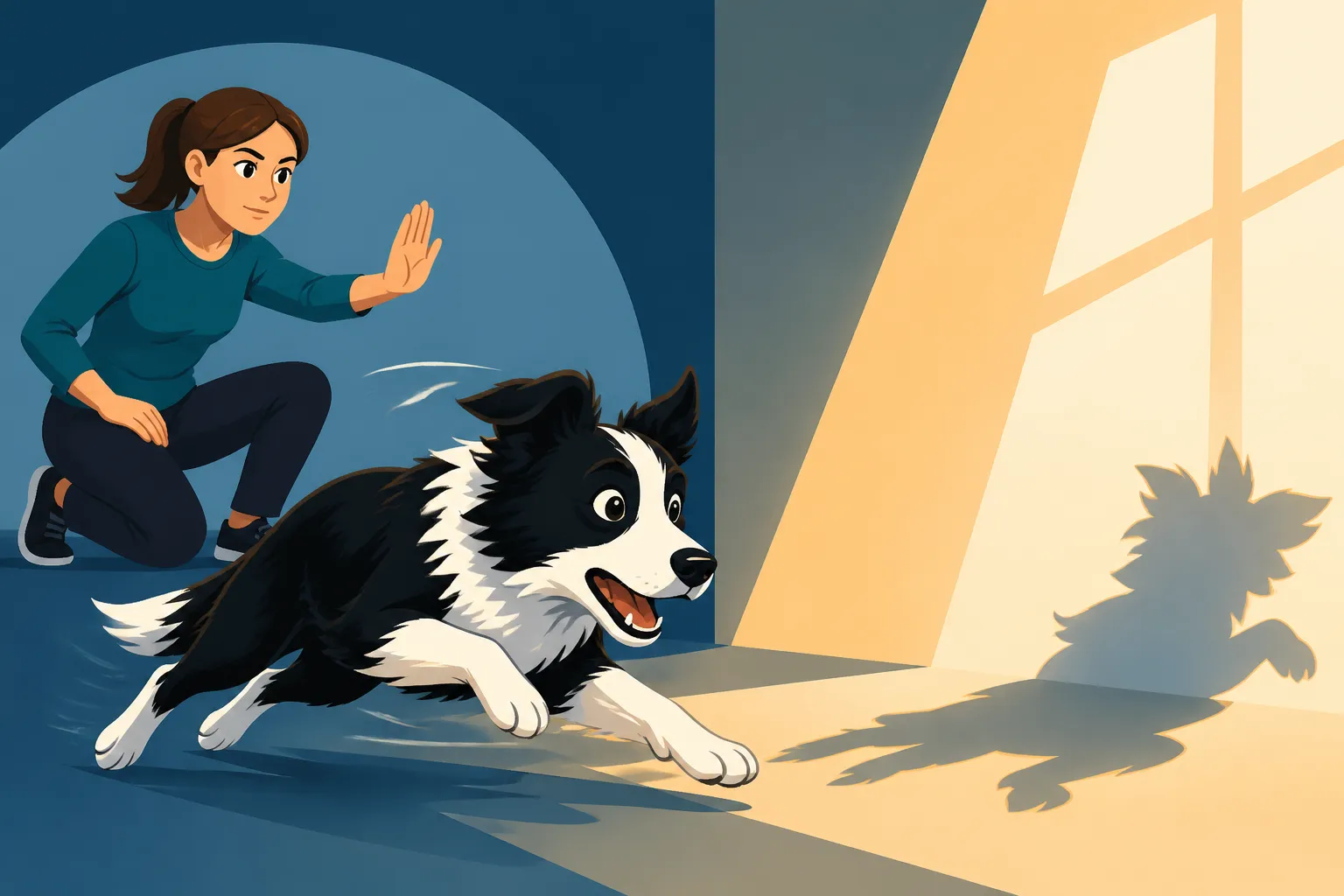
Stopping a Border Collie Chasing Shadows and Light
There's nothing quite like the boundless energy and intense focus of a Border Collie. It's what draws so many of us to the breed, isn't it? But sometimes, that incredible intensity gets channeled into behaviors that can be baffling and downright frustrating, like an unshakeable obsession with chasing shadows and light. If you've found yourself watching your dog frantically "work" a sunbeam or a reflection, unable to break their trance, this guide is for you. We'll dive deep into why this happens and, more importantly, how you can help your Border Collie find healthier, more productive outlets for their amazing drive.
Understanding the Border Collie's Predatory Drive and Why It's Not Just a Quirk
It's easy to dismiss a dog chasing shadows as a cute, quirky habit, but for a Border Collie, it's often far more ingrained than that. Their genetic blueprint is wired for work, for observing, stalking, and controlling movement. When there are no sheep, ducks, or even agility obstacles to "work," that powerful instinct has to go somewhere.
The Instinct Behind the "Eye" and Stalking
Border Collies possess what's famously known as "the eye." This isn't just about good eyesight; it's that intense, focused stare they lock onto their quarry, whether it's a flock of sheep or, in this case, a flickering shadow. It's part of their predatory sequence, the instinctual chain of behaviors that allows them to hunt and herd. While domestic dogs don't usually complete the sequence by killing prey, the initial phases – orienting, eye, stalking, chasing – are incredibly strong in a Border Collie.
When a patch of sunlight bounces off a metallic surface and dances across the floor, or a tree branch sways outside, creating shifting shadows, it mimics the subtle, erratic movements of livestock. For a Border Collie, especially one who isn't given appropriate mental and physical work, these visual stimuli can trigger that ancient, deep-seated herding drive. They're not just playing; they're attempting to "control" that movement, just as they would a wayward lamb. This isn't a sign of naughtiness; it's a powerful instinct misdirected, leading to behaviors that can spiral into true obsession. It’s part of The Border Collie Stare and Where It Comes From.
Why Certain Stimuli Are Irresistible
The world is full of things that move and flicker, and for a Border Collie predisposed to shadow chasing, these things become incredibly stimulating. Think about a laser pointer – that little red dot, zipping around uncontrollably, is the ultimate trigger for a dog with a strong chase drive. It’s small, fast, and completely unpredictable, making it an irresistible "prey" for a dog whose instincts are always on high alert. Many dog owners, unaware of the potential pitfalls, mistakenly use laser pointers as a form of exercise, unknowingly fueling an unhealthy obsession.
But it’s not just laser pointers. Reflections from glass, jewelry, cell phone screens, or even the sun glinting off a shiny floor can set off an episode. Even the movement of tree shadows on a breezy day or the headlights of a passing car creating fleeting patterns on walls can become a source of fixation. The key is the erratic, quick movement. It engages their vision, their instinct to stalk, and their desire to contain. Without a real job to do, these inanimate movements become their "sheep," and they will dedicate themselves wholeheartedly to managing them, often to their own detriment. They struggle to find an "off switch" because the "prey" never truly yields or stops.
Recognizing the Signs and Severity of the Behavior
It’s crucial to understand the difference between a dog briefly noticing a shadow and one truly consumed by the chase. What starts as an occasional interest can, over time, escalate into a full-blown compulsive behavior that significantly impacts your Border Collie's well-being and your daily life.
What a Chasing Episode Looks Like
When a Border Collie is caught in the grip of shadow or light chasing, the signs are usually very clear. You’ll notice their body language change almost immediately. Their head will lower, their tail might tuck slightly or become very still, and their eyes will narrow, taking on that intense, unblinking "eye" that Border Collies are famous for. They might crouch low to the ground, mimicking the stalking posture they’d use with sheep, and then suddenly launch into frantic pursuit of the moving light or shadow.
This pursuit isn't casual. It's often accompanied by quick, sharp movements, sudden changes in direction, and sometimes a low whine or focused bark. They might repeatedly run into walls, furniture, or other obstacles, completely oblivious to their surroundings because their focus is so absolute. During these episodes, your Border Collie will likely be unresponsive to their name or commands. They are completely "zoned out," trapped in their own world of chasing. It’s a powerful, almost trance-like state, and it’s a clear indicator that this is more than just playful curiosity. This level of fixation is far more concerning than a momentary glance at a flickering light.
When it Crosses the Line into Compulsive Behavior
The real concern arises when shadow chasing becomes frequent, prolonged, and difficult to interrupt. If your Border Collie is spending significant portions of their day scanning rooms for reflections, reacting to every passing shadow, or becoming visibly distressed when they can't "catch" the light, then it has likely crossed the line into compulsive behavior. This is not just an annoying habit; it's a sign of underlying anxiety and stress.
A compulsive dog might start showing other related behaviors, such as Spinning and Tail Chasing in a Border Collie, repetitive licking, pacing, or an inability to settle down even when no shadows are present. The constant vigilance and the frustration of never being able to complete the "predatory sequence" can lead to chronic stress, manifesting as destructive behavior, aggression, or digestive issues. Owners often describe their dogs as being "on edge" or "hyper-vigilant." If the behavior impacts their appetite, sleep, or their ability to interact normally with family members, it’s a serious issue that needs intervention. At this point, it's not about them being naughty; it's about a deep-seated behavioral problem that requires a thoughtful and consistent approach to resolve.
The Dangers and Downfalls of Shadow Chasing
While it might seem harmless on the surface, allowing a Border Collie to indulge in obsessive shadow and light chasing carries significant risks, both for their physical well-being and their mental health. It’s important to understand these dangers to fully appreciate why intervention is so necessary.
Physical Risks and Injuries
A Border Collie in the throes of shadow chasing is often oblivious to their physical surroundings. They are so intently focused on the moving light or shadow that they lose awareness of obstacles. This can lead to them repeatedly running full-tilt into furniture, doors, or even walls. I’ve heard stories of dogs fracturing toes, bruising themselves badly, or even sustaining concussions from these frantic, uncontrolled bursts of speed.
Beyond collisions, the repetitive nature of the chasing itself can take a toll. Constant sudden stops, starts, and sharp turns put immense stress on joints, ligaments, and tendons. Over time, this can contribute to early onset arthritis or exacerbate existing conditions like hip or elbow dysplasia. Paw pads can become raw or cracked from skidding on hard floors. Furthermore, if the sessions are prolonged, the dog can become severely overheated and dehydrated, especially if they are already prone to Heat Stroke in a Border Collie That Kept Working. This isn't just a concern for working dogs; even a pet Border Collie can push itself to exhaustion in pursuit of an elusive light.
Mental and Emotional Toll
The physical dangers are clear, but the mental and emotional toll of compulsive shadow chasing is perhaps even more insidious. Imagine being constantly driven to pursue something you can never catch, never "win." This unfulfilled instinct creates immense frustration and anxiety for the dog. They are perpetually in a state of high arousal, unable to relax and find peace. This chronic stress can lead to a host of other behavioral problems.
Dogs might develop generalized anxiety, becoming fearful of new situations or exhibiting reactivity towards other dogs or people. They might struggle with separation anxiety because they can't self-soothe. The constant focus on fleeting stimuli can also hinder their ability to learn and respond to other training cues, making it harder to engage them in more appropriate activities. In severe cases, some dogs may even become destructive or self-mutilate, chewing on their paws or flanks as an outlet for their internal distress. This type of behavior certainly impacts the dog's overall quality of life and the bond you share. If you're concerned about your Border Collie's mental well-being, discussions around Whether medication helps a compulsive Border Collie might become necessary with your vet.
Strategies to Manage and Prevent the Obsession
Addressing shadow and light chasing requires a multi-faceted approach. It's not about punishing the behavior, but rather understanding its root cause and providing constructive alternatives while carefully managing the environment.
Environmental Management: Removing the Triggers
The first, and often most critical, step is to minimize your Border Collie's exposure to the triggers. This might sound obvious, but it requires vigilance and a bit of creativity. Start by observing when and where the chasing happens most frequently. Is it specific times of day when the sun hits a certain window? Is it reflections off a particular piece of jewelry or a shiny floor?
Once you've identified the culprits, take action. Close blinds or curtains on sunny days, especially during peak hours. If your watch or phone screen causes reflections, be mindful of where you hold them or simply take off your watch indoors. You might need to temporarily cover reflective surfaces or even rearrange furniture. If outdoor reflections are an issue, consider window film or strategically placed plants. It’s also crucial to educate everyone in the household, particularly children, about the dangers of laser pointers. These tools should never be used with a Border Collie, as they almost universally exacerbate this kind of obsessive behavior. Removing the opportunity to practice the behavior is the fastest way to start breaking the habit.
Structured Exercise and Mental Stimulation
Many Border Collie owners mistakenly believe that simply providing endless physical exercise will solve all behavioral problems. While Border Collies absolutely need a lot of physical activity, Why walking a Border Collie is not enough when it comes to mental engagement. A physically tired Border Collie without mental stimulation is still a bored Border Collie, and boredom is often the breeding ground for compulsive behaviors.
Instead, focus on structured exercise that engages both body and mind. Think about activities like long walks with varied terrain, hiking, or even running alongside a bicycle (if properly conditioned). But don't stop there. Integrate mental challenges into their daily routine. Obedience training, learning new tricks, or practicing advanced commands like "stay" and "come" in distracting environments are excellent ways to tire their minds. Mental Work That Tires a Border Collie Faster is incredibly important. Consider activities like Scentwork for a Border Collie Between Trial Seasons, where they use their powerful noses to solve puzzles. These activities channel their intense focus and problem-solving abilities into appropriate outlets, reducing the mental bandwidth available for obsessing over shadows.
Redirection and Counter-Conditioning
Once you've started managing the environment and upping the appropriate mental stimulation, you can begin to actively redirect your Border Collie when a potential trigger appears. This involves teaching them to do something else when they see a shadow or light, and rewarding them for it.
A strong "leave it" or "focus" command is invaluable here. Practice these commands frequently in non-triggering situations until they are rock-solid. Then, in a controlled environment, introduce a subtle trigger. The moment your dog notices the trigger but before they become fixated, give your "leave it" command and redirect their attention to a high-value toy or treat. Reward them enthusiastically when they disengage from the shadow and focus on you. For example, if you see a sunbeam start to move, immediately ask for a "sit" or "down" and reward them with a delicious treat.
Avoid using games like endless fetch, as this can sometimes feed into the same obsessive chase drive. Instead, use structured play with appropriate toys. Flirt poles can be good, as they allow for a controlled chase and the opportunity for your dog to "catch" and retrieve the toy, completing the predatory sequence in a healthy way. You can find a good selection of durable flirt poles on Amazon. The key is to redirect before they enter the trance-like state, as once they are fully fixated, it's much harder to break through. Consistency is paramount; every successful redirection reinforces the desired behavior. Many online training programs, like those offered by BAXTER & Bella, provide excellent modules on redirection and counter-conditioning techniques specifically for high-drive breeds.
Incorporating Enrichment and Alternative Outlets
For a Border Collie, life is about having a job to do. If that job isn't herding sheep, it needs to be something equally engaging and fulfilling. Providing a rich environment with varied enrichment is critical to diverting their intense energy away from shadows and lights.
Engaging Puzzle Toys and Interactive Feeders
One of the best ways to provide mental stimulation is through puzzle toys and interactive feeders. These aren't just for fun; they make your Border Collie "work" for their food or treats, tapping into their natural problem-solving abilities. Instead of simply putting their meal in a bowl, make them earn it.
There's a huge variety available. Snuffle mats require your dog to sniff out kibble hidden in fabric strands, engaging their powerful nose. KONGs, stuffed with wet food or peanut butter and frozen, can keep a dog busy for a significant amount of time, teaching them patience and focus. Treat-dispensing balls and other interactive feeders, which require your dog to manipulate them to release food, also provide excellent mental exercise. You can find an incredible array of these on Amazon, often with reviews that help you gauge their durability for a smart, persistent Border Collie. Vary the toys you use to keep things interesting and prevent your dog from getting bored and solving them too quickly. This kind of mental effort is surprisingly tiring and helps them use their brain in a constructive way, leaving less energy for obsessive behaviors. Refer to Puzzle feeders that hold a Border Collie for ideas.
Structured Dog Sports and Training Classes
If your Border Collie is chasing shadows, it's a huge signal that they need more appropriate outlets for their talents. Structured dog sports are a fantastic way to channel their drive, intelligence, and athleticism. Activities like agility, obedience, rally, and nose work provide physical exercise, mental challenges, and the opportunity for you and your dog to work as a team.
Agility, for example, demands focus, speed, and precision, using a dog’s natural athleticism. Nose work taps into their incredible sense of smell, providing a deeply satisfying mental workout that often leaves dogs more tired than a long run. Even advanced obedience, with its precise commands and distance work, is incredibly mentally stimulating for a Border Collie. For dogs with strong herding instincts, even if they aren't working on a farm, controlled herding lessons can be profoundly fulfilling. Choosing a sport for a Border Collie that aligns with their natural abilities can transform their behavior and immensely improve their quality of life. These activities provide a positive focus, build confidence, and strengthen the bond between you and your dog, replacing the endless, unrewarding chase of shadows.
Controlled Herding Instinct Outlets
For a Border Collie, the urge to herd is often at the very core of their being. If they don't have a natural outlet for this, it can manifest in unusual ways, like chasing shadows or even attempting to "herd" family members or other pets. Providing a controlled, safe outlet for this instinct can be incredibly beneficial.
If you have access to a facility offering herding lessons, this can be a truly transformative experience for a Border Collie. Under the guidance of an experienced instructor, they learn to channel their instincts onto actual livestock in a structured, safe environment. This allows them to engage in the full predatory sequence – eye, stalk, chase, gather – but with a productive and fulfilling outcome. Even if full-fledged herding isn't an option, you can simulate some aspects. Big-ball herding games for a Border Collie using large, sturdy exercise balls can be a great way for them to practice "pushing" and "controlling" an object without the risk of developing obsessive behaviors associated with small, fast-moving objects. The key is that these activities are structured, have a clear beginning and end, and provide a sense of accomplishment for your dog, unlike the never-ending frustration of chasing reflections.
When to Seek Professional Help
While many cases of shadow chasing can be managed with consistent owner intervention, there are times when the behavior is so deeply ingrained or accompanied by such intense anxiety that professional help becomes essential. Knowing when to reach out can make all the difference.
Consulting a Veterinarian
Your first point of contact should always be your veterinarian. It’s important to rule out any underlying medical conditions that might be contributing to your Border Collie's compulsive behavior or heightened anxiety. Certain neurological issues, pain, or even nutritional deficiencies can sometimes manifest as odd or obsessive behaviors. Your vet can perform a thorough physical examination, blood work, and potentially other diagnostic tests to ensure there's no medical explanation for the shadow chasing.
If no medical cause is found, your vet can still be a crucial resource. They might suggest a referral to a veterinary behaviorist, or in some cases, if the anxiety and compulsion are severe, they may discuss medication options. For dogs with extreme anxiety related to their shadow chasing, medication can sometimes help "take the edge off," allowing them to be more receptive to behavioral modification training. It's not a cure, but it can be a vital tool in helping your dog relax enough to learn new coping mechanisms. Remember that the goal of medication, if used, is to support training, not replace it, and your vet can advise on approaches like Medicating a Border Collie without dulling it.
Working with a Certified Professional Dog Trainer or Behaviorist
If the shadow chasing is persistent and impacting your Border Collie’s quality of life, bringing in a professional dog trainer or a certified veterinary behaviorist is highly recommended. Not all trainers have experience with compulsive disorders, so look for someone specifically knowledgeable about high-drive breeds like Border Collies and experienced in addressing obsessive behaviors. Certifications from organizations focused on positive reinforcement and behavior modification are a good sign.
A professional will be able to assess your dog's specific situation, identify triggers you might have missed, and help you develop a tailored behavior modification plan. This plan will likely combine environmental management, redirection techniques, counter-conditioning, and enrichment strategies. They can guide you through the process, providing hands-on instruction and helping you refine your techniques. For example, they might show you how to build a rock-solid "look at me" command that breaks your dog's focus on a shadow, or introduce specific enrichment games that effectively channel their drive. Online resources can also be a great starting point; some platforms, like BAXTER & Bella, offer comprehensive online training programs that can provide foundational skills and address specific behavioral challenges with expert guidance.
Living with a Recovering Shadow Chaser
Addressing a deeply ingrained behavior like shadow chasing in a Border Collie is a marathon, not a sprint. It requires dedication, understanding, and a whole lot of patience from you. But the rewards – a calmer, happier, more engaged companion – are immeasurable.
Patience, Consistency, and Realistic Expectations
This is arguably the hardest part for us humans. We want a quick fix, especially when our dogs are struggling. But compulsive behaviors develop over time, and they take time to undo. There will be good days and bad days. There will be moments of frustration when you feel like you're taking two steps back. It’s absolutely vital to be patient with your Border Collie and, just as importantly, with yourself.
Consistency is your superpower. Every time you redirect, every time you manage an environment, every time you engage their mind with a puzzle, you are reinforcing the new, healthier pathways. A single slip-up with a laser pointer can undo weeks of progress, so maintain those boundaries. Set realistic expectations: your goal isn't necessarily to eliminate every single flicker of interest in a shadow (they're still a Border Collie!), but to significantly reduce the intensity, frequency, and duration of the compulsive episodes, helping your dog to relax and live a more balanced life. Celebrate every small victory – a moment they chose a toy over a reflection, a shorter chase episode, or a quicker recovery from a trigger.
Building a Stronger Bond Through Positive Reinforcement
Throughout this journey, remember that you are working with your Border Collie, not against them. They aren't trying to be difficult; they are driven by powerful instincts that need guidance. Focusing on positive reinforcement methods will not only be more effective but will also strengthen the incredible bond you share. Every time they make a good choice, acknowledge it with praise, a favorite treat, or a cherished toy. This builds their confidence and teaches them that engaging with you and appropriate activities is far more rewarding than chasing an elusive shadow.
By understanding their needs, patiently guiding their instincts, and providing a fulfilling life, you can help your Border Collie redirect their incredible intelligence and drive toward constructive and joyful pursuits. This shared journey of overcoming challenges will, in the end, forge an even deeper connection between you and your amazing, intelligent companion.
| Strategy | Description | Key Benefits | Best Use Cases |
|---|---|---|---|
| Environmental Management | Removing or minimizing access to light and shadow triggers. | Immediate reduction of triggers, prevents practice of undesired behavior. | Initial phase of intervention, ongoing prevention. |
| Puzzle Toys/Feeders | Toys that require problem-solving to dispense food or treats. | Mental stimulation, reduces boredom, provides appropriate "work." | Daily enrichment, meal times, when owner is busy. |
| Scent Work | Training dogs to find hidden scents (e.g., specific oils, treats). | Highly engaging mentally, taps into natural canine abilities, tiring. | Off-season activity, rainy days, substitute for high-arousal play. |
| Structured Dog Sports | Activities like Agility, Obedience, Rally, Nose Work, or controlled Herding. | Channels drive constructively, builds focus, strengthens handler bond. | Long-term engagement, regular schedule, fulfilling breed-specific needs. |
| Flirt Poles | A long pole with a lure on the end, used for controlled chase and retrieve. | Allows for a healthy, controlled predatory sequence (chase and catch). | Supervised play, short bursts of intense exercise, redirection tool. |
| "Leave It" / Redirection | Teaching dog to disengage from a trigger and focus on handler for reward. | Direct intervention, teaches impulse control, reinforces alternative behavior. | When triggers are unavoidable, proactive prevention of fixation. |
Disclaimer
This article is for general informational purposes only and does not constitute professional advice. Laws, prices and regulations vary by location and change over time. Consult a qualified professional for guidance on your specific situation.