Big-Ball Herding Games for a Border Collie
Living with a Border Collie often means navigating a whirlwind of energy and an intense instinct to herd, even when there isn't a single sheep in sight. Many of us find ourselves struggling to provide a fulfilling outlet for this powerful drive, leading to dogs who try to herd children, cats, or even the vacuum cleaner, leaving owners feeling a bit overwhelmed. This guide will delve into big-ball herding games, offering a fantastic way to channel that innate Border Collie instinct into a fun, safe, and mentally stimulating activity that benefits both you and your tireless companion.
Understanding the Herding Instinct in a Pet Border Collie
If you’ve ever watched your Border Collie intently staring down a squirrel, trying to gather your kids into a tight group, or nipping at the heels of a passing jogger, you’re witnessing their deep-seated herding instinct in action. This isn't just a quirk; it's a fundamental part of their genetic makeup, honed over generations of working livestock. For many pet owners, understanding this drive is the first step toward a happier, more harmonious life with their dog.
Why Traditional Herding Isn't Always Possible
Let’s be honest, most of us don't live on a sprawling farm with a flock of sheep ready for our Border Collie to work. The dream of a dog gracefully moving livestock across a field is often far removed from the reality of urban or suburban living. This can lead to a lot of guilt for owners who feel their intelligent, driven dog isn't getting the "job" it was bred for. You might feel like you're failing your dog by not providing authentic sheep work, and that's a very real and common frustration.
The truth is, while sheep work is the pinnacle for many Border Collies, it's simply not accessible or practical for everyone. Setting up access to livestock can be costly, time-consuming, and require specialized knowledge and facilities that are out of reach for most. It’s also important to remember that not every Border Collie, even from working lines, will have the full complement of skills needed for successful sheepdog trials, nor will every owner have the time or inclination to learn how to handle them on stock.
So, what happens when this powerful instinct has no appropriate outlet? It doesn't just disappear. Instead, it often re-routes itself to whatever is available – usually, anything that moves. This can manifest as circling and staring at family members, trying to "gather" other pets, or even becoming fixated on inanimate objects that move, like shadows or cars. This redirection often results in behaviors that are frustrating for owners and can even be dangerous for the dog or others. This is precisely where creative, alternative outlets become essential.
The Drive to Gather and Control Movement
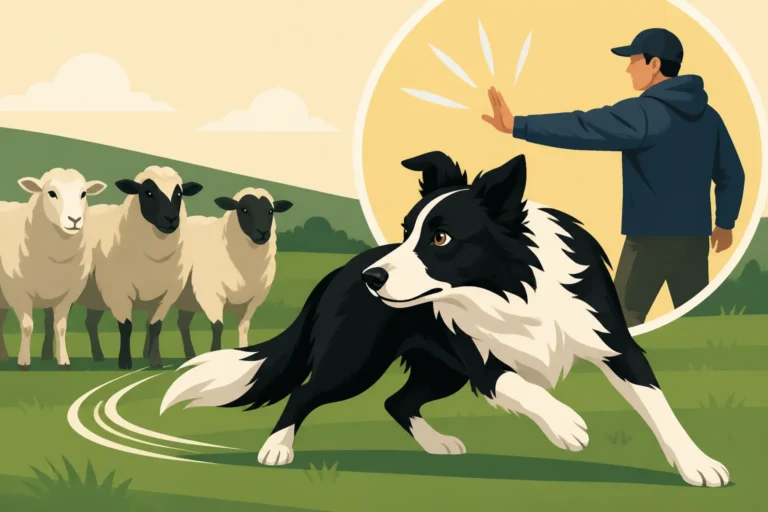
At its core, herding isn't just about chasing; it's about gathering, moving, and controlling a group. A Border Collie's eye and intensity are legendary for a reason – they allow the dog to exert psychological pressure on livestock, influencing their direction and pace without needing physical contact. This mental aspect of control is just as important as the physical exertion. They don't just want to run; they want to manage.
This innate drive to gather and control is what makes a Border Collie such an incredible partner on the farm, but it's also what makes them so challenging in a pet home without an appropriate job. They're constantly scanning their environment for things to organize, things to put into place. When you walk into a room and your Border Collie immediately positions itself between you and the door, or tries to push you towards a particular spot, that's their herding instinct kicking in. They're trying to establish order, their order. A Border Collie Gathering the Family Into One Room describes this behavior in more detail.
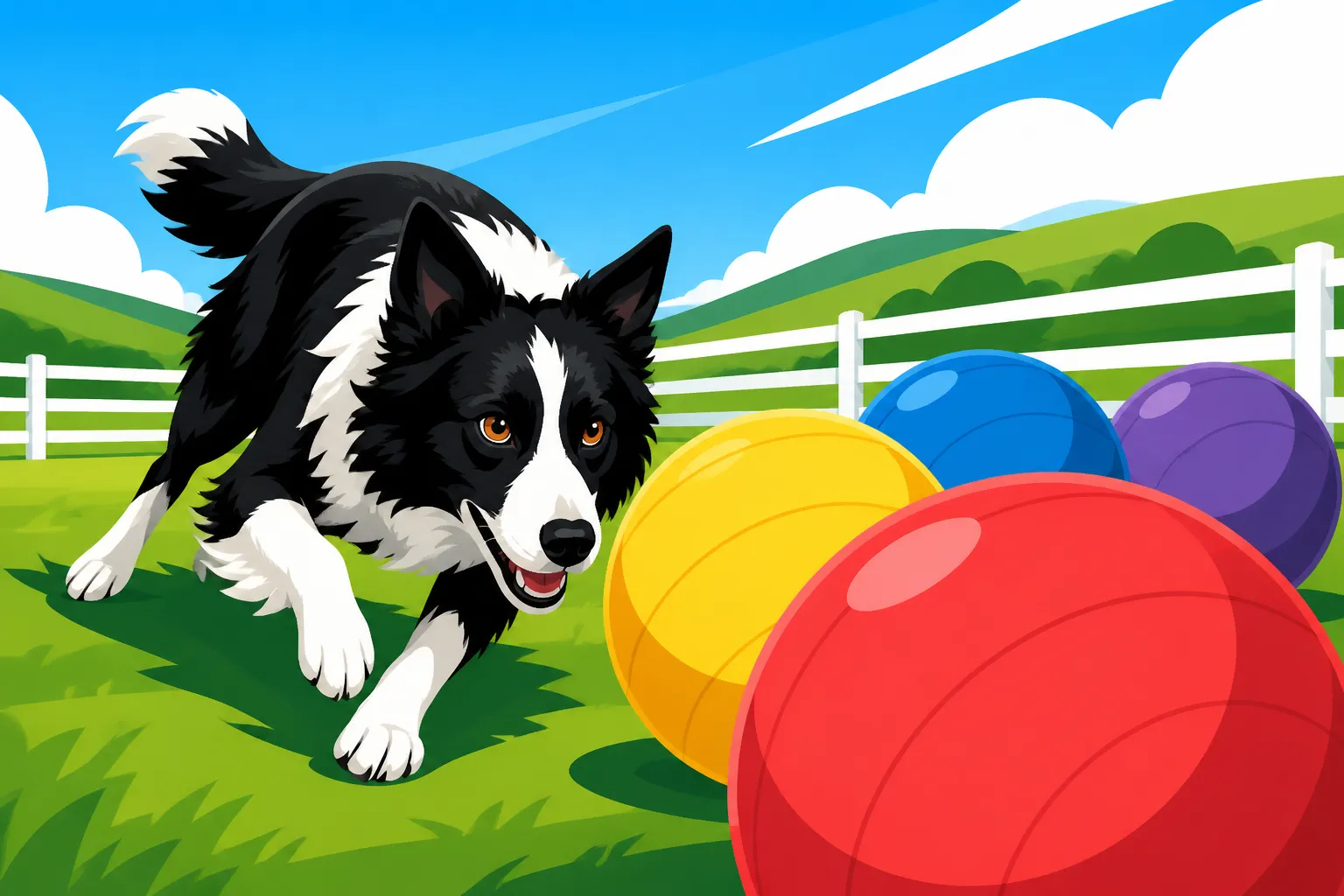
This intense desire to influence movement and maintain control is precisely why big-ball herding games are such a natural fit. Instead of trying to suppress an instinct, these games provide a structured, safe, and highly satisfying way for your Border Collie to express that deeply ingrained genetic programming. The ball becomes their "flock," and they can use their eye, their body, and their intelligence to move and control it, mimicking the intricate dance of a working dog with its sheep. It satisfies that deep, primal urge in a way that endless games of fetch simply can't.
Choosing the Right "Livestock" for Big-Ball Herding
You wouldn't send a seasoned ranch hand out with a toy lasso, and similarly, you need the right "livestock" for your Border Collie's big-ball herding games. The type of ball you choose is crucial for both their enjoyment and, more importantly, their safety. This isn't just about finding the biggest ball you can; it's about selecting one that can withstand the intense focus and physical interaction of a powerful, driven herding dog.
Characteristics of the Ideal Herding Ball
When it comes to big-ball herding, the primary goal is usually to get your dog to push the ball with their nose, chest, or shoulders, rather than picking it up in their mouth. This means the ball needs to be large enough to discourage full mouth-gripping, yet not so massive that it's impossible for them to manipulate. Generally, a ball between 10 to 30 inches in diameter is a good starting point, depending on the size of your particular Border Collie.
Durability is absolutely key. Forget the cheap beach balls or flimsy exercise balls meant for humans; a Border Collie will make short work of those. You're looking for something made of a robust, puncture-resistant material. Brands specifically designed for dog play, like the various "Jolly Ball" products or dedicated herding balls, often fit the bill. These are typically made from tough, thick plastics or hard rubber. Check reviews on sites like Amazon to see how well they hold up to enthusiastic chewers and pushers.
Think about the material: is it smooth enough to roll easily, but not so slick that your dog can't get purchase on it? Is it too heavy, making it a potential injury risk if it rolls over their paws, or too light, causing it to bounce erratically and frustrate your dog? The goal is a ball that moves predictably when pushed, offering a satisfying challenge without being unwieldy or unsafe. Some even come with recessed handles or textures that make it easier for dogs to manipulate without damaging their teeth.
Sourcing and Cost Considerations
Finding the perfect herding ball might take a little searching beyond your local supermarket. Specialized pet supply stores are a good starting point, especially those catering to working or sport dog enthusiasts. Online retailers, like Amazon, are often the best resource, offering a wider variety of brands and sizes specifically designed for active dogs. You might also find suitable options in sporting goods stores in their exercise or play equipment sections, but always scrutinize the material for dog-proofing.
In terms of cost, expect to make an investment. A quality, durable herding ball isn't going to be the cheapest toy you buy, but think of it as an essential piece of equipment for channeling your Border Collie's drive. Prices can vary significantly based on size, material, and brand, but generally, you'll find them in a range that reflects their specialized construction. While it might seem like a lot for a "toy," compare that to the potential costs and frustrations of managing a bored or destructive Border Collie whose herding instincts are left unfulfilled.
Consider the longevity of the ball. A well-chosen, durable ball should last for a considerable amount of time, even with regular use, making the initial investment worthwhile. It's often more economical in the long run to buy a higher-quality, more expensive ball that holds up than to repeatedly replace cheaper, less robust options. Always read product descriptions and user reviews carefully to ensure the ball is indeed designed for the kind of rigorous play a Border Collie will put it through.
| Ball Type | Typical Material | Key Features | Pros | Cons |
|---|---|---|---|---|
| Dedicated Herding Ball | Heavy-duty plastic, rubber | Large, solid construction, puncture-resistant | Extremely durable, designed for pushing, satisfies herding instinct | Can be expensive, may be too hard for some dogs if mouth-gripped |
| Jolly Ball | Low-density polyethylene | Scented, buoyant, can be kicked/pushed | Very durable, engaging scents, variety of sizes, good for kicking | Some dogs might try to carry it, can still be punctured by sharp teeth |
| Large Exercise Ball (Dog-specific) | Thick PVC | Extra-thick, puncture-resistant | Great for nose-work, excellent herding simulation, good physical workout | Needs to be inflated, can still be punctured if not dog-specific |
| Heavy-Duty Kick Ball | Layers of rubber and canvas | Designed for kicking, very robust | Highly durable, can withstand vigorous play, encourages pushing | Can be very heavy, might not roll as smoothly as rounder options |
Setting Up and Playing Big-Ball Herding Games
Once you have your ideal "livestock" ready, it's time to introduce your Border Collie to the game. Remember, the goal is not just frantic chasing, but controlled movement and mental engagement. This requires a structured approach and consistent training, just like teaching any other skill to your intelligent companion.
Introducing the Ball and Basic Engagement
The first step is a calm introduction. Don't just throw the ball out and expect your Border Collie to know what to do, especially if they're used to high-octane fetch games. Present the ball in a low-key manner, perhaps letting it sit in the yard for a bit while you're out there with your dog. The idea is to pique their curiosity without triggering their intense chase drive immediately.
When they approach, encourage gentle interaction. Praise them for nudging it with their nose, pawing at it, or pushing it with their chest. You can even demonstrate by gently pushing the ball yourself with your foot or hand. The aim is to get them to understand that their body, not necessarily their mouth, is the tool for moving this object. Keep sessions short and positive. If they try to mouth the ball, gently redirect them by moving the ball away and encouraging a nose or body push instead. This initial phase is about building a positive association with the ball and teaching them the desired method of interaction.
Reward any calm, controlled engagement. Use high-value treats or verbal praise to reinforce the behavior you want to see. Over time, your Border Collie will start to understand that pushing the ball with their body earns them praise and enjoyment, rather than the frantic, less-rewarding experience of trying to carry an oversized object. Consistency here is crucial to establish the right foundation for more advanced play. Teaching a Border Collie the Names of Its Toys might be an interesting read to understand how quickly they can learn specific objects.
Teaching Directional Cues and Control
Once your Border Collie is happily pushing the ball, you can start to introduce directional commands. This is where the herding aspect truly comes into play. You can adapt traditional herding commands like "Come Bye" (go clockwise) and "Away to Me" (go counter-clockwise) to guide the ball. Start in a confined, safe area, like a fenced yard, so your dog has fewer distractions and the ball can't roll too far away.
Use your body language and verbal cues to direct your dog to push the ball in a specific direction. For instance, walk alongside the ball, pointing in the direction you want it to go, and say "Come Bye" as your dog pushes it that way. When they respond correctly, offer enthusiastic praise and a reward. It's important to keep the pace slow and controlled initially. The goal is thoughtful movement, not a chaotic sprint. As they get the hang of it, you can start to send them further away from the ball, asking them to go around it and bring it back towards you or a designated spot.
Introduce an "off switch" command, such as "That'll Do" or "Lie Down," which is vital in any Border Collie training. This teaches them to disengage from the intense focus of the game and relax. Practice this throughout your sessions, even if only for a few seconds. This helps prevent the game from escalating into an obsessive activity and ensures you maintain control. Resources like BAXTER & Bella offer excellent training programs that can help you build these foundational obedience skills, making it easier to apply them to specialized games like big-ball herding. Getting a Border Collie to Stop at Two Hundred Yards highlights the importance of precise control.
Managing Intensity and Preventing Obsession
Border Collies are renowned for their intensity, and while it's a desirable trait for working, it can quickly tip into obsession if not managed carefully. Big-ball herding, because it taps into such a strong instinct, needs careful handling to prevent it from becoming compulsive. Keep your sessions relatively short – perhaps 10-15 minutes, two or three times a day, rather than one long, exhausting session. The quality of the engagement trumps the quantity of time.
Always end the game on a high note, before your Border Collie becomes overly fatigued or hyper-focused. This leaves them wanting more, rather than feeling depleted. Put the ball away completely out of sight and reach once the game is over. This signals that playtime is done and helps them switch off mentally. Don't leave the ball accessible for them to play with unsupervised, as this can encourage them to become self-employed and obsessive.
Consider rotating toys and activities. While big-ball herding is fantastic, it shouldn't be the only outlet for your Border Collie's energy. Incorporate other activities like scent work, trick training, or structured walks to provide a well-rounded mental and physical exercise regimen. This variety keeps their mind engaged in different ways and prevents any single activity from becoming an unhealthy fixation. If you notice signs of compulsive behavior, like frantic pacing, whining, or inability to settle after the game, it's time to re-evaluate your approach and potentially seek guidance from a professional dog trainer specializing in Border Collies.
Benefits and Potential Pitfalls of Big-Ball Herding
Big-ball herding games can be a game-changer for Border Collie owners, offering immense benefits. However, like any powerful tool, they come with potential downsides if not wielded responsibly. Understanding both sides of the coin will help you make the most of this engaging activity.
The Rewards for Both Dog and Owner
The most immediate and obvious benefit is the incredible mental and physical stimulation your Border Collie receives. This isn't just a leisurely stroll; it's a dynamic activity that requires coordination, problem-solving, and sustained focus. Your dog will be using their body and their brain simultaneously, which is the perfect recipe for a truly tired and satisfied Border Collie. Mental Work That Tires a Border Collie Faster emphasizes this distinction between physical and mental exhaustion.
For the dog, it provides a profoundly satisfying outlet for their natural herding instincts. Instead of trying to control your cat or the neighbor's kids, they have a designated "flock" to manage. This redirection can significantly reduce unwanted herding behaviors in the home and yard, leading to a calmer, more settled dog overall. When a Border Collie's innate drives are met in a constructive way, you often see a decrease in destructive chewing, excessive barking, or general restlessness because they've had a meaningful "job."
For owners, it's a fantastic bonding experience. Working together to move the ball strengthens your communication and deepens your relationship. You'll learn to read your dog's body language more effectively, and they'll become more attuned to your cues. It’s a joy to watch your Border Collie engage so fully, using the skills they were born with in a safe and positive environment. Plus, it can be a great alternative or supplement to endless fetch, especially if you're trying to Weaning a Border Collie Off Endless Fetch or looking for impact-friendly activities.
Common Mistakes to Avoid
While the benefits are many, there are some common pitfalls to watch out for when introducing big-ball herding. One of the biggest mistakes is letting the game get too high-intensity, too quickly. Border Collies can easily become overstimulated, leading to frantic, uncontrolled chasing, barking, and potentially nipping at the ball in frustration. The goal is control, not chaos. If your dog is getting too revved up, take a break, introduce a calming command, or end the session.
Another pitfall is not having clear rules or an "off" switch. As mentioned, Border Collies thrive on structure. If they don't understand when the game starts, what the boundaries are, and when it ends, they can develop an unhealthy fixation. This can manifest as constantly trying to get to the ball, whining, or obsessive pacing when the ball isn't present. Consistent use of a release cue and putting the ball away are critical. Whether a Border Collie Cannot Stop on Its Own highlights their need for handler guidance.
Finally, using the wrong type of ball can lead to injuries. A ball that's too small can encourage hard mouth-gripping, potentially damaging teeth or jaws. A ball that's too heavy or hard could injure paws or joints if your dog crashes into it or if it rolls over them awkwardly. Always prioritize safety in your choice of equipment and in how you conduct the game. Watch your dog for any signs of discomfort or pain during or after play, and consult your vet if you have concerns, especially regarding their joints. Remember, their health and well-being should always come first, ensuring they can enjoy these games for years to come.
Big-ball herding games offer a powerful and fulfilling way to engage your Border Collie's incredible intellect and instinct, providing a happy medium between traditional livestock work and the constraints of modern pet ownership. By choosing the right equipment, introducing the game thoughtfully, and managing its intensity, you can unlock a fantastic new avenue for exercise, mental stimulation, and a deeper bond with your extraordinary companion.
Disclaimer
This article is for general informational purposes only and does not constitute professional advice. Laws, prices and regulations vary by location and change over time. Consult a qualified professional for guidance on your specific situation.