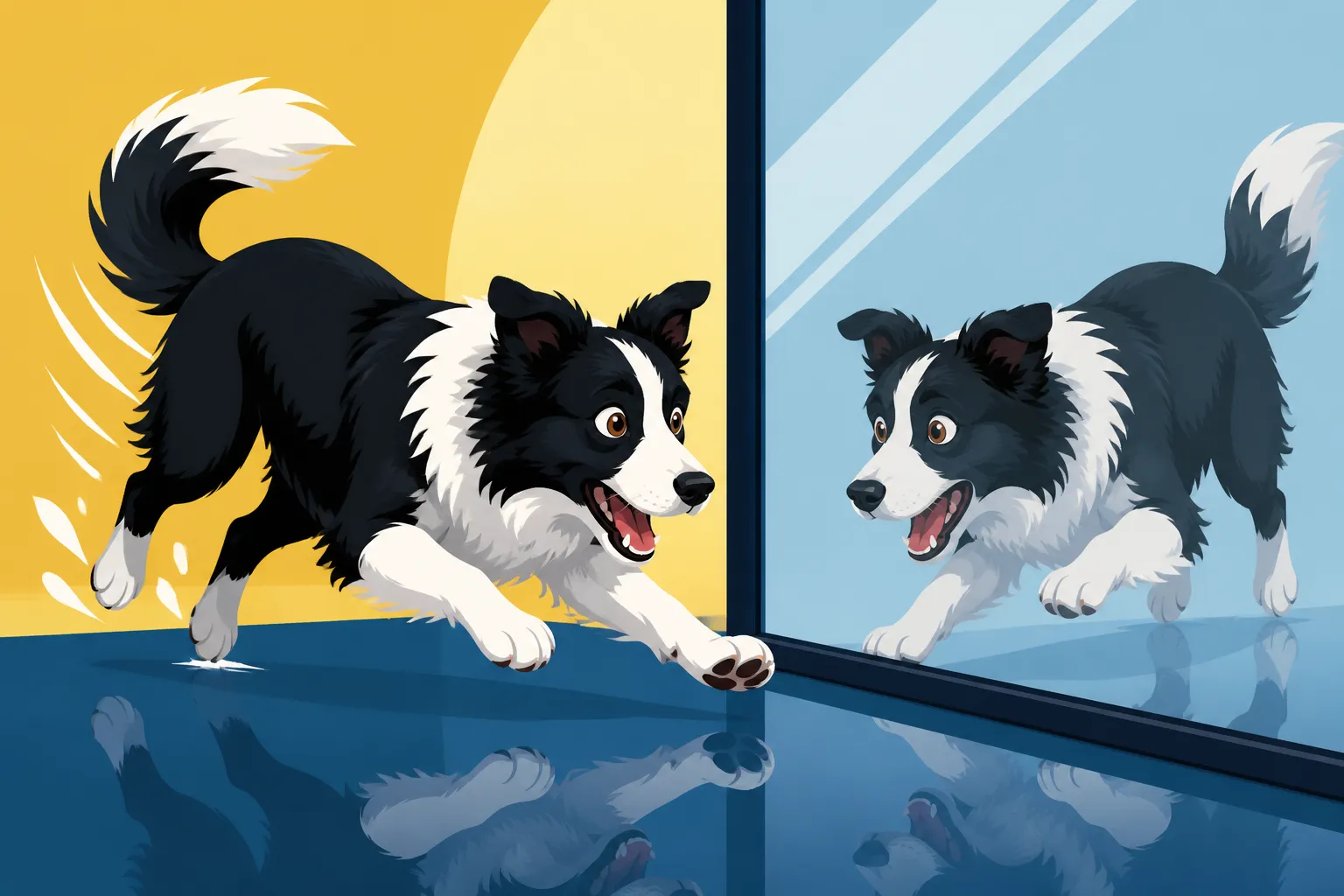
The Border Collie That Chases Reflections
It’s a sight many Border Collie owners know all too well: your dog is fixated, muscles tensed, eyes glued to a tiny sparkle dancing across the wall, or a fleeting reflection from a watch or phone. This isn't just a quirky habit; for many of these intense, high-drive dogs, chasing reflections can quickly spiral into a frustrating, even compulsive, behavior that disrupts the home and causes real distress. This guide will delve deep into why your Border Collie might be chasing reflections and, more importantly, equip you with practical, empathetic strategies to help redirect that powerful instinct into more productive, healthy outlets.
The Instinctive Roots of Reflection Chasing in Border Collies
Border Collies are renowned for their intelligence, intense focus, and unparalleled herding instinct. These traits, while magnificent in a working capacity, can manifest in unexpected ways in a domestic environment. Understanding the inherent wiring of your Border Collie is the first step toward addressing behaviors like reflection chasing.
Herding Instinct and the "Eye"
The quintessential Border Collie "eye" isn't just a piercing gaze; it's a fundamental part of their herding technique. It's that intense, unwavering focus they use to control and move livestock. When there are no sheep to gather, that powerful instinct doesn't simply vanish. It seeks an outlet. A flickering reflection, a dancing shadow, or even the glint of sunlight off a polished floor can trigger this deeply ingrained predatory sequence. Your dog sees movement, and their brain immediately signals "prey." It’s a primal response, not a disobedient one. They're not being stubborn; they're being a Border Collie.
Consider a working dog on a farm. Their entire day revolves around observation, quick reactions, and sustained focus on moving objects. They are bred to notice the slightest shift in a sheep's posture, the faintest flicker of movement at the edge of the flock. In your living room, that same finely tuned perception picks up on the smallest glint that most humans would never even register. The very thing that makes them exceptional herders – their acute visual processing and drive to control movement – makes them susceptible to reflection chasing. This is a powerful instinct, and it's why it can be so hard to simply "tell" them to stop. You might find yourself saying, "Stop staring at the wall!" or "It's just the light!" but to your Border Collie, it's a very real, very engaging target. The Border Collie Stare and Where It Comes From dives deeper into this fascinating aspect of their behavior.
High Drive and Intelligence Seeking an Outlet
Border Collies possess an incredibly high drive, a tireless energy, and a sharp intellect that constantly seeks engagement. When these powerful internal motors aren't given appropriate jobs to do, they don't just idle; they find their own "work." Unfortunately, this self-assigned work often manifests in ways we don't appreciate, like obsessive behaviors. Chasing reflections provides a continuous, unpredictable stimulus that taps into their innate desire to pursue and control. It’s an endless game, constantly moving, never quite caught.
Think about a brilliant human mind left without any challenges or puzzles to solve. It might start to create its own, even if those challenges are unproductive or repetitive. For a Border Collie, an intelligent and driven animal, a lack of meaningful physical and mental stimulation can lead to them hyper-focusing on easily accessible, yet ultimately unfulfilling, activities. It becomes a loop: the reflection appears, triggers the chase, provides a momentary burst of "work" for their brain, and then disappears, leaving them primed for the next appearance. This isn't a sign of a "bad" dog, but rather a dog desperate for an appropriate outlet for its immense capabilities.
The Spiral of Obsession: Why Reflections Become a Problem
What starts as an innocent chase can quickly escalate into an obsessive, compulsive behavior for a Border Collie. The very nature of reflections makes them particularly problematic for a breed hardwired for movement and control.
The Uncatchable "Prey" and Self-Reinforcement
Unlike a ball or a Frisbee, a reflection can never be caught, cornered, or controlled. This is precisely what makes it so reinforcing and, paradoxically, so frustrating for a Border Collie. Each time the reflection vanishes, the chase remains unresolved, leaving the dog in a perpetual state of heightened arousal and anticipation. Their instinct tells them to finish the job, to pin down the moving object, but it's an impossible task. This creates a self-reinforcing cycle of pursuit without resolution. The thrill of the chase is always there, but the satisfaction of a "catch" is absent, leading to a constant craving for the next opportunity.
Imagine trying to catch smoke. You see it, you lunge, but it dissipates. A Border Collie experiences this over and over with reflections. This unfulfilled chase can heighten their anxiety and frustration, making them even more hyper-vigilant for the next glint of light. They might start scanning rooms, pacing, or barking at any light source, convinced that the "prey" is just around the corner. This constant state of alert is exhausting for the dog and stressful for the household. Why a Border Collie Cannot Stop on Its Own explores similar patterns of behavior where their drive takes over.
Environmental Triggers and Lack of Boundaries
Reflections are everywhere in a typical home: sunlight off a watch, a phone screen, a glass tabletop, a polished floor, a stainless steel appliance, or even water in a bowl. Without careful management, a Border Collie can be constantly bombarded with these visual triggers, making it incredibly difficult for them to disengage from the behavior. The more access they have to these triggers, the more entrenched the habit becomes.
It’s crucial to understand that we often inadvertently create or enable these triggers. A quick flash from your phone or the sun hitting a mirror just right can kickstart an episode. It’s not your fault – who thinks about these things until they become a problem? But once you recognize the pattern, you can start to modify the environment. If your dog is constantly chasing shadows and light, they are essentially being given repeated opportunities to practice and refine this obsessive behavior. Without clear boundaries and proactive management, it's an uphill battle.
The Real-World Impact of Reflection Chasing
This seemingly innocuous habit can have profound and detrimental effects on your Border Collie's well-being and the harmony of your home. It’s more than just an annoyance; it's a sign that your dog is struggling.
Stress, Anxiety, and Compulsive Behaviors
A Border Collie obsessed with reflections is often a highly stressed and anxious dog. The constant scanning, the unresolved chase, the perpetual state of arousal – these all take a significant toll on their mental health. You might notice your dog pacing, whining, panting excessively, or even destroying objects in their frustration. This isn't just "being energetic"; it's a clear indicator of underlying anxiety. Over time, this stress can lead to other compulsive behaviors, such as tail chasing, flank sucking, or excessive licking, as the dog tries to cope with its internal turmoil.
A dog living in a constant state of hyper-vigilance is not a happy dog. Their cortisol levels can remain elevated, impacting their overall health and ability to relax. It can even lead to increased reactivity towards other dogs or people, as their threshold for stress becomes lower. Owners often report that their dogs seem "on edge" or "jumpy" all the time. This cycle of stress and obsession is debilitating for both the dog and the owner. Learning about Whether a Border Collie's Habits Are Compulsive can offer more insights into how these behaviors develop.
Physical Risks and Household Disruptions
While less common, extreme reflection chasing can lead to physical injuries. Dogs might crash into furniture, walls, or even people in their frantic pursuit. Their paws can get raw from scratching at floors or windows, and repeated jumping or twisting can put strain on their joints. Furthermore, the constant movement, barking, and hyper-focus can make a household feel like a chaotic environment. Imagine trying to relax or have guests over when your dog is frantically chasing a light spot around the room, utterly oblivious to anything else. It makes simple, everyday activities challenging.
The intensity of the behavior can also make it difficult to train or engage your dog in other activities. If their mind is always half-tuned to finding the next reflection, their ability to focus on you, learn new commands, or enjoy a game of fetch is severely compromised. This can strain the bond between you and your dog, as frustration mounts on both sides.
Practical Strategies to Manage and Prevent Reflection Chasing
Addressing reflection chasing requires a multi-pronged approach that tackles both the environmental triggers and your Border Collie's underlying needs. It's about proactive management and redirection.
Environmental Management: Out of Sight, Out of Mind
The most immediate step is to drastically reduce or eliminate your dog's access to triggers. This might sound obvious, but it requires diligent attention to your home environment.
- Block Reflections: Use blinds, curtains, or even temporary window film on windows that produce particularly troublesome glares. Simple frosted or static cling window film, easily found on platforms like Amazon, can diffuse light without making your home feel like a cave. Identify shiny objects – mirrors, glass tables, reflective wall art – and either move them, cover them, or temporarily remove them.
- Be Mindful of Your Habits: Pay attention to how you use reflective items. Do you wear a watch that flashes light? Is your phone screen creating glares? Even a glass of water on a sunny counter can cause a moving reflection. Try to be conscious of these small actions and adjust them to minimize triggers.
- Create "Safe Zones": Designate areas in your home where reflections are minimized. This could be a crate in a quiet corner with a blanket over it, or a room with fewer windows and reflective surfaces. Teach your Border Collie to settle in this area. A comfortable, secure crate can be an invaluable tool here, not as punishment, but as a safe den where they can truly relax. Many dogs benefit from learning to "switch off" and a cozy crate can help them do that.
Here's a quick comparison of common reflection sources and possible solutions:
| Reflection Source | Immediate Action | Long-Term Strategy |
|---|---|---|
| Sunlight through windows | Close blinds/curtains during peak hours | Install static cling window film or solar shades |
| Phone/tablet screens | Be mindful of screen angle; turn off when not in use | Use anti-glare screen protectors |
| Watches/jewelry | Remove during interactive play or periods of high dog vigilance | Be conscious of movement when dog is present |
| Glass tables/shiny floors | Place tablecloths; use rugs | Consider floor mats or anti-glare coatings |
| Wall decor (mirrors, metal) | Cover temporarily with blankets/sheets | Relocate or replace with non-reflective alternatives |
| Water bowls in sunlight | Move to a shaded area | Use opaque bowls |
Redirection and Enrichment: Giving Their Brain a Job
Simply removing triggers isn't enough; you must replace that intense drive with appropriate activities. Your Border Collie needs meaningful mental and physical work.
- Structured Play: Engage in structured play that has a clear beginning and end. Instead of endless fetch, which can contribute to obsessive behavior, try games with rules, like "find it" using hidden treats or toys. Practice retrieving different named toys, which taps into their intelligence. This is where high-quality, durable toys and puzzle feeders from places like Amazon can be a game-changer.
- Training for Focus: Enroll in obedience classes or dedicate time daily to advanced trick training. Commands like "watch me" or "settle" can be incredibly helpful. Reward calm, focused behavior heavily. When you notice them starting to fixate on a reflection, immediately redirect with a known command and reward them for shifting their focus to you.
- Scent Work and Puzzle Toys: These activities are fantastic for Border Collies because they engage their brains deeply without relying on visual chasing. Scent work, where they track specific odors, is incredibly tiring. Puzzle toys, especially advanced ones, force them to problem-solve to get a treat, burning mental energy effectively. Look for brands that offer robust puzzle toys that can withstand a determined Border Collie. Puzzle Feeders That Hold a Border Collie offers excellent ideas for this kind of enrichment.
- Physical Exercise with Purpose: While physical exercise is crucial, endless running or ball throwing can sometimes exacerbate obsessive tendencies. Focus on varied activities like hiking, agility training (once they are mature enough, often after two years old to protect joints), or even just long, structured walks where they practice loose-leash heeling and recall. Remember, Exercise, Work and What Actually Settles a Border Collie means quality, not just quantity.
Training Alternatives: Teaching New Behaviors
Teaching your Border Collie alternative behaviors when a reflection appears is a key part of management.
- "Leave It" Command: This command is invaluable. Practice it with low-value items first, then gradually introduce distractions. When a reflection appears, give the "leave it" command and immediately reward them for disengaging and looking at you.
- Impulse Control Exercises: Games that teach impulse control, such as waiting for food or staying in a "down" position while you move around, build the mental discipline needed to resist chasing. Stopping a Border Collie Before an Episode Starts highlights the importance of proactive intervention.
- "Go to Your Place": Teach your dog to go to a designated bed or mat and stay there calmly. This provides a clear, alternative behavior when you anticipate triggers or when they start to get fixated. Reward them heavily for settling on their place.
When to Seek Professional Help
Sometimes, despite your best efforts, reflection chasing can become so deeply ingrained that it requires professional intervention. It's not a sign of failure, but a smart choice to get specialized help.
Recognizing the Need for a Professional
If the behavior is severely impacting your dog's quality of life, leading to self-harm, extreme anxiety, or aggression, or if your attempts at management and redirection are consistently failing, it’s time to call in the experts. A professional dog trainer or a veterinary behaviorist can provide a tailored plan. They can help you differentiate between an ingrained habit and a true compulsive disorder.
A certified professional dog trainer with experience in high-drive breeds can assess your dog's specific triggers and motivations, offering hands-on guidance for training and environmental modification. They can also help you understand if the behavior has escalated to a point where medication might be beneficial, especially in conjunction with behavior modification. Websites like BAXTER & Bella often have resources or can recommend qualified trainers in your area.
Differentiating from Other Issues
It's important to rule out other potential health issues that might contribute to obsessive behaviors. Occasionally, medical conditions or even vision problems could be a factor. A visit to your veterinarian is always a good starting point to ensure there are no underlying physical causes. They can also refer you to a veterinary behaviorist, who is a veterinarian with specialized training in animal behavior and can prescribe medication if necessary. Whether Medication Helps a Compulsive Border Collie is a topic worth exploring with a professional.
A veterinary behaviorist takes a holistic approach, considering both the physical and mental health of your dog. They can help distinguish between learned behaviors, anxiety, and true compulsive disorders, and develop a comprehensive treatment plan that might include medication, specific behavioral exercises, and environmental adjustments. Don't hesitate to reach out if you feel overwhelmed; these professionals are there to help you and your Border Collie navigate these complex challenges.
Disclaimer
This article is for general informational purposes only and does not constitute professional advice. Laws, prices and regulations vary by location and change over time. Consult a qualified professional for guidance on your specific situation.