Weaning a Border Collie Off Endless Fetch
It's a familiar scene: you toss the ball, your Border Collie races after it, brings it back, drops it at your feet, and stares, tail wagging, demanding more. For many Border Collie owners, this isn't just a game; it's a relentless cycle, a one-sided conversation where your dog seems to believe "endless fetch" is the only valid activity. This guide is here to help you understand why your Border Collie gets so fixated on fetch and, more importantly, how to gently but firmly wean them off this singular obsession, opening up a world of more balanced and enriching activities for both of you.
The Allure of Endless Fetch: Why Border Collies Get Hooked
It’s easy to think your Border Collie simply loves fetch, and they do, but there’s a deeper, more primal reason why this particular game can become an all-consuming passion. Understanding this foundation is the first step in addressing the behavior and helping your dog find more varied joy.
The Hunter's Instinct and the Herding Drive
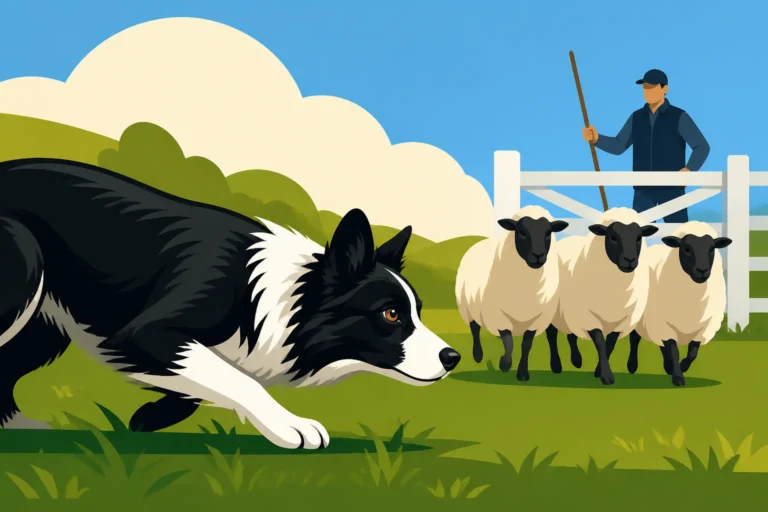
At its heart, fetch taps into the very essence of what makes a Border Collie a Border Collie: their innate herding and predatory drives. Think about it from their perspective. The thrown ball or frisbee mimics a fleeing animal. The chase, the focus, the "eye" they put on the object, the gather (bringing it back), and the "drop" (presenting the "prey") are all components of a highly refined predatory sequence, minus the actual kill. They're not just running; they're enacting centuries of selective breeding designed to control livestock. When they're in that deep crouch, staring intently at the ball in your hand, that's The Border Collie Stare and Where It Comes From in full effect.
Every time you throw, you're essentially allowing them to "work" in a way that fulfills this deep-seated instinct. It’s incredibly rewarding for them, reinforcing that this behavior is not only acceptable but highly desirable. The problem arises when this becomes the only outlet for these powerful drives, leading to a narrow focus and an inability to switch off.
The Dopamine Loop of Repetitive Action
Beyond instinct, there's a powerful neurochemical component at play: dopamine. Every time your Border Collie successfully chases and retrieves the ball, their brain releases a hit of dopamine, a neurotransmitter associated with pleasure, motivation, and reward. This creates a positive feedback loop. The more they chase, the more dopamine they get, and the more they want to chase. It's not just fun; it becomes a self-reinforcing addiction.
This dopamine rush can be so intense that it can override other signals, like fatigue or boredom with the repetition. They might seem absolutely tireless, but they're often fueled by this internal chemical reward system. This is why it often seems a Border Collie cannot stop on its own when it comes to a game of fetch. They are genuinely driven by an internal process that makes it hard to disengage without your intervention. This intense, focused pursuit can sometimes spill over into other compulsive behaviors if not managed, like Stopping a Border Collie Chasing Shadows and Light.
Owner Reinforcement and Unintentional Training
Let’s be honest, we play a huge role in this. We often start playing fetch with our Border Collie puppies because it’s a quick and easy way to burn off some of that incredible energy. It feels good to see them happy and exhausted, and it’s convenient. But every time we succumb to the insistent nudge, the bark, or the unwavering stare, we are inadvertently training them that persistence pays off.
Our intentions are good – we want to exercise our dogs – but without varied activities and clear boundaries, we reinforce the idea that fetch is the only game in town. We might not realize we’re shaping an obsessive habit until it’s firmly entrenched. They learn that if they just keep bringing the ball, you'll eventually throw it again, no matter how long they have to wait or how loudly they have to demand it. It's a classic case of demand-and-reward, where the dog is effectively training the human.
Recognizing When Fetch Becomes an Obsession
It’s one thing for your Border Collie to enjoy a good game of fetch; it’s quite another when it consumes their entire focus. Identifying the point where enjoyment tips into obsession is crucial for intervening effectively and promoting a healthier behavioral repertoire.
Physical and Mental Tolls of Over-Fetching
While fetch is excellent physical exercise, excessive, repetitive fetching can lead to significant problems. Physically, it puts immense strain on a Border Collie's joints, muscles, and soft tissues. Repeated sprints, sudden stops, and twisting motions can contribute to injuries like cruciate tears or shoulder strains over time. Their bodies are built for endurance and agility, but constant, high-impact repetition without adequate warm-up or cool-down can wear them down.
Mentally, an over-reliance on fetch can narrow their world. Instead of learning to engage with different stimuli, solve problems, or explore their environment, their brain becomes singularly focused on the ball. This can lead to a lack of independent thought and an inability to entertain themselves or relax without a constant external stimulus. They might become restless, anxious, or even destructive when the ball isn't present, because they haven't learned other ways to cope with their energy.
Signs Your Border Collie Is Becoming Compulsive
How do you know if your Border Collie has crossed the line from enthusiast to obsessive? There are several tell-tale signs:
- Relentless Demanding: They might drop the ball at your feet, then stare intensely, bark, nudge, or paw at you incessantly, even if you’ve been playing for a long time. They may not take a "no" for an answer.
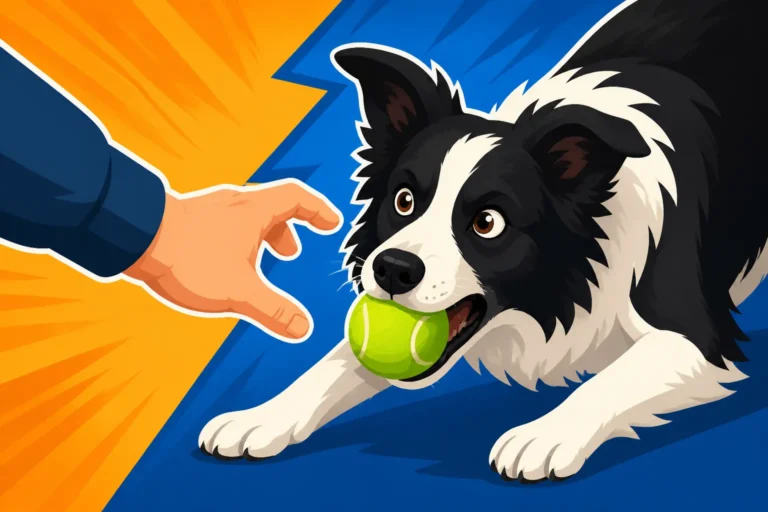
- Difficulty Disengaging: When you try to stop, they might whine, pace, try to grab the ball from you, or even herd you back towards the throwing spot. This relates directly to The Border Collie That Will Not Drop the Ball.
- Anxiety Without the Ball: If the ball isn't visible, they might search frantically, pace, pant, or appear agitated. They might ignore other toys or activities if the possibility of fetch exists.
- Exclusion of Other Activities: They show little interest in walks, training, or interaction with other dogs or people if they think fetch might be an option. Their world shrinks to the ball.
- Over-Arousal: They get excessively excited at the sight or sound of a ball, sometimes to the point of losing control, barking frantically, or even nipping out of frustration if you don't throw it immediately.
- Resource Guarding: In some cases, they might start guarding the ball, becoming possessive and unwilling to let you take it, further indicating an unhealthy attachment.
The Slippery Slope to Other Compulsive Behaviors
An unchecked fetch obsession can sometimes be a gateway to other compulsive disorders in Border Collies. Their intelligent, high-drive nature makes them prone to these types of behaviors if their mental and physical needs aren't met in a balanced way. If their predatory drive is constantly stimulated by fetch but never fully satisfied or redirected, it can manifest in other forms.
This might include shadow chasing, light chasing, spinning, tail chasing, or even repetitive pacing. These behaviors are often self-reinforcing, much like the dopamine loop of fetch, and can be incredibly difficult to break once established. It’s a sign that their brain is seeking an outlet for its intense energy and focus, and if that outlet isn’t productive, it can become destructive or obsessive. Recognizing this potential helps you understand the urgency of addressing the fetch fixation before it morphs into something more concerning.
Strategic Steps to Reduce Fetch Dependency
Breaking the cycle of endless fetch requires a conscious effort, consistency, and a clear plan. It’s not about stopping fetch entirely, but about diversifying your Border Collie’s activities and teaching them that there are other, equally rewarding ways to engage.
Setting Boundaries and Structured Play
The key to weaning your Border Collie off endless fetch is to introduce clear boundaries and structure to your play sessions. This means you decide when fetch starts and when it ends, not your dog.
- Time Limits: Instead of playing until your dog drops, set a timer. Start with short sessions, say 5-10 minutes, and stick to it. When the timer goes off, the game is over, regardless of how eager your dog still seems. Put the ball away completely, out of sight and out of mind.
- Number of Throws: Alternatively, set a specific number of throws (e.g., 5-10 throws). After the last throw, praise your dog, put the ball away, and transition to a different activity.
- Initiate and End on Your Terms: Never throw the ball if your dog is demanding it. Wait for a moment of calm, even if it's just a brief pause in their insistence, before initiating play. End the game before they get over-aroused and before they demand another throw. This teaches them that calm behavior gets rewards, not demanding behavior.
- Rotate Toys: Don't let fetch be the only game. Introduce other toys during play sessions that don't involve retrieval, like tug ropes or durable chew toys. Make the ball just one option among many.
- Use a Specific "Fetch" Toy: Designate one specific type of ball or frisbee only for fetch. All other balls or toys are for different types of play, or for individual chewing. This helps them understand that not every round object means "endless retrieve."
Introducing a "Stop" or "All Done" Cue
One of the most powerful tools in your arsenal is a clear "stop" or "all done" cue. This command signals the absolute end of the play session and means the ball is going away.
- Teach the Cue Separately: Start by teaching "all done" outside of high-arousal fetch sessions. Practice it when you're picking up other toys or ending a training session. Say "all done," put the item away, and reward your dog for calm acceptance.
- Apply to Fetch: Once your dog understands the general meaning, introduce it to fetch. Towards the end of your pre-determined fetch session, say "all done," pick up the ball, and put it away immediately. If your dog whines or gets upset, gently redirect them to a calming activity or simply ignore the demanding behavior. The key is consistency. They will quickly learn that "all done" means the game is truly over for now.
- Walk Away: If your dog persists in demanding the ball after your "all done" cue, walk away. Go inside, sit down, or simply disengage. This teaches them that demanding behavior doesn't lead to more play, but rather to the cessation of interaction. The BAXTER & Bella online puppy program, for instance, emphasizes consistency and clear communication, which is vital for teaching these types of boundary cues effectively from an early age.
Utilizing Training Tools to Diversify Play
While we want to reduce obsessive fetch, we also want to provide outlets for your Border Collie’s energy and intelligence. There are many fantastic training tools that can help diversify play and encourage different behaviors.
- Long Lines: If your Border Collie's recall struggles when they're fixed on something, a long line (15-30 feet) can be invaluable for practicing recall and "leave it" commands in a safe, controlled way. This is particularly useful when you're trying to interrupt the fetch sequence or redirect their focus. You can find excellent options on Amazon.
- Flirt Poles: These are great for engaging your Border Collie's predatory chase drive without the repetitive throwing motion. They involve a pole with a lure attached, which you can drag and whip around, letting your dog chase, stalk, and "catch" it occasionally. It’s mentally stimulating and physically demanding in a different way.
- Tug Toys: Engaging in a structured game of tug-of-war can be incredibly rewarding and physically tiring. Teach clear "take it" and "drop it" commands to maintain control and ensure it's a game you can both enjoy without escalation. This helps fulfill their need to interact with a "prey" item directly, but with rules.
- Multiple Balls: Instead of throwing one ball, picking it up, and throwing it again, try throwing several balls in quick succession, then having your dog collect them all. This breaks the single-focus retrieve pattern and engages them in a different "gather" behavior. You can even hide the balls for them to "find" after you throw the first one.
Cultivating a Broader Spectrum of Engagement
Once you've started setting boundaries around fetch, the next crucial step is to fill that void with other enriching activities. Your Border Collie still needs significant mental and physical stimulation; it just needs to come from a wider variety of sources.
Unleashing Their Minds with Scent Work and Puzzle Games
Border Collies are problem-solvers, and their noses are powerful tools. Engaging their brain through scent work and puzzle games is an incredible way to tire them out mentally without relying on physical exertion alone. Mental Work That Tires a Border Collie Faster is incredibly important for their overall well-being.
- Scent Work (Nose Work): This is a fantastic activity that taps into their natural sniffing abilities. Start simply by hiding treats around a room or in the yard and encouraging them to find them. As they get better, you can introduce specific target odors (like birch or anise, available in scent work kits on Amazon) and more complex search scenarios. Even a simple "find it" game with their kibble can be deeply satisfying for them.
- Puzzle Feeders: These ingenious devices make your dog work for their food, turning mealtime into a mental challenge. Instead of gobbling down their dinner in seconds, they have to manipulate the puzzle to get the kibble out. There are various types, from treat-dispensing balls to more intricate sliding and lifting puzzles. Choose Puzzle Feeders That Hold a Border Collie's attention for a good while.
- "Find the Toy" Games: Teach your Border Collie the names of their different toys. Start with two distinct toys, say a rope and a squeaky duck. Name one, then ask them to "find the [toy name]." When they retrieve the correct one, reward them enthusiastically. This not only engages their intellect but also builds a vocabulary, as famously demonstrated by Chaser, the Border Collie who knew over a thousand words.
Exploring New Physical Activities Beyond Retrieval
While fetch might be on a diet, your Border Collie still needs plenty of physical activity. Diversifying these activities can help prevent joint strain and broaden their physical capabilities.
- Hiking and Exploring: Instead of endless throws in the yard, take your Border Collie on varied hikes. Let them explore new scents, navigate different terrains, and use their body in new ways. The mental stimulation of a novel environment is immense. A long line can be a great tool for safe exploration in areas where off-leash isn't appropriate.
- Agility and Obedience Training: These structured dog sports provide both physical and mental challenges. Agility teaches them to navigate obstacles, follow courses, and work as a team, using different muscle groups than just sprinting. Obedience training refines their understanding of commands, requires focus, and strengthens your bond. If you have an athletic dog, agility can be a wonderful outlet.
- Flirt Pole Revisited: As mentioned earlier, flirt poles are excellent for focused, high-intensity bursts of chase and capture without the repetitive impact of ball retrieval.
- Swimming: If your Border Collie enjoys water, swimming is a fantastic low-impact exercise that works their entire body and is often incredibly enjoyable for them.
The Importance of Calmness and Relaxation Training
Perhaps one of the most overlooked aspects of managing a high-drive Border Collie is teaching them how to be calm. Their minds are constantly whirring, and if they only learn to satisfy that energy through high-octane activities, they'll struggle to relax.
- Place/Mat Training: Teach your Border Collie to go to a designated "place" (a mat, bed, or crate) and stay there until released. Reward them heavily for settling calmly. Gradually increase the duration and distractions. This gives them an "off-switch" and a designated spot for quiet time. The "Place" command is a cornerstone of many balanced training programs, including those like BAXTER & Bella.
- Structured Downtime: Schedule specific periods of enforced downtime. This might mean crating them for an hour with a chew toy, or putting them on a long-lasting chew in their "place." They need to learn that not every moment is "go time."
- Massage and Gentle Handling: Practice calm handling and massage, especially after active sessions. This not only helps them relax but also makes them more comfortable with physical examination, which is vital for any working or sport dog.
- Observation Walks: Instead of always moving with a purpose, take some "observation walks" where you simply sit on a bench with your leashed Border Collie and let them watch the world go by. Reward them for calm observation, rather than reacting to every passing stimulus. This helps them process their environment without needing to do anything with it.
By implementing these strategies, you're not just taking away fetch; you're giving your Border Collie a richer, more balanced life, equipping them with a broader range of skills and a greater capacity for self-regulation. Remember, it's a marathon, not a sprint, and consistency is your best friend.
Fetch vs. Alternative Activities: A Comparative Look
Here's a quick comparison of the benefits and considerations of fetch versus diversifying your Border Collie's activity repertoire.
| Feature | Fetch (Obsessive/Sole Activity) | Diverse Activities (Balanced Approach) |
|---|---|---|
| Physical Impact | High-impact, repetitive strain on joints, high risk of overuse injuries. | Varied impact, engages different muscle groups, reduced risk of specific overuse. |
| Mental Stimulation | Low, repetitive "hunter" instinct, can lead to narrow focus. | High, problem-solving, scent work, learning new skills, environment exploration. |
| Dopamine Loop | Strong, addictive, difficult to disengage from. | Present, but balanced with other rewards, promoting better self-regulation. |
| Owner-Dog Bond | Can become demand-driven, dog trains owner. | Collaborative, reciprocal, builds communication and trust. |
| Behavioral Health | Risk of compulsive behaviors (e.g., A Border Collie That Spins Before Meals). | Promotes flexibility, calmness, and adaptive coping mechanisms. |
| Longevity/Sustainability | Higher risk of early physical breakdown, mental burnout. | Promotes long-term physical health, mental resilience, and adaptability. |
| Required Equipment | Ball/frisbee | Puzzle feeders, long lines, scent kits, agility equipment, varied toys (e.g., from Amazon). |
Ultimately, it’s not about Whether a Border Collie Should Play Fetch at All, but how fetch fits into the larger picture of your Border Collie's life. A game of fetch can still be part of their routine, but it needs to be a small piece of a much larger, more varied, and more enriching pie. By providing a wide range of physical and mental outlets, you empower your Border Collie to be a more adaptable, calm, and happy companion, for many years to come, truly living up to their incredible potential.
Disclaimer
This article is for general informational purposes only and does not constitute professional advice. Laws, prices and regulations vary by location and change over time. Consult a qualified professional for guidance on your specific situation.