What Come Bye Means to a Border Collie
Many new Border Collie owners hear specific herding commands like "Come Bye" and "Away to Me" and can feel an immediate sense of intimidation, wondering if they need to become a competitive sheepdog trialist just to navigate daily life with their energetic companion. It's easy to feel overwhelmed by the specialized terminology, but understanding these fundamental commands is incredibly valuable, even for pet Border Collies. This guide will demystify "Come Bye," explaining its true meaning, historical context, and practical applications, helping you understand this cornerstone of Border Collie communication.
The Core Meaning of "Come Bye" for Your Border Collie
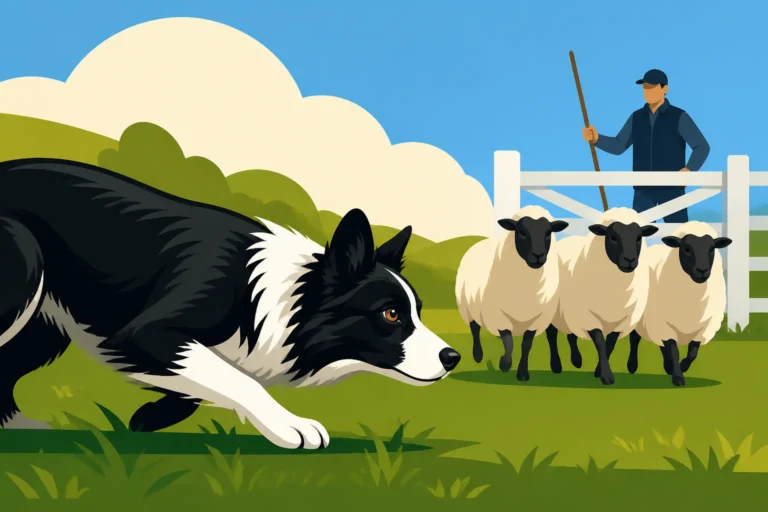
At its heart, "Come Bye" is a directional command unique to the world of herding. For a Border Collie, it means to move in a clockwise direction around a flock of sheep or an object, from the handler's perspective. Imagine yourself standing with your dog facing the sheep: "Come Bye" tells your dog to flank out and move around the stock to its left, initiating a sweep to gather or move them in a specific direction. It's not just a casual "turn left"; it's a precisely orchestrated maneuver designed to control the movement of livestock.
Think of it this way: your dog is the hand of a clock, and the sheep are the center. When you say "Come Bye," you're instructing your dog to move its "hand" around the "clock" face in a clockwise sweep. This command is absolutely foundational in herding, allowing the shepherd to position the dog exactly where needed to influence the flock's movement. Without this clear directional guidance, a Border Collie's natural instinct to gather could quickly devolve into chaos, with the dog simply chasing or scattering the sheep. The beauty of "Come Bye" lies in its ability to channel that intense prey drive and focus into productive, controlled work.
Even for Border Collies not actively working stock, understanding this fundamental concept helps explain why they might instinctively circle objects or people. Their brains are hardwired for these flanking movements, and "Come Bye" gives you a way to communicate within that innate framework. It’s a language they are bred to understand, a direct line to their deepest instincts.
The Origins and Significance of the Command
The command "Come Bye" isn't just some arbitrary phrase; it's steeped in centuries of working tradition from the Anglo-Scottish borders, the very cradle of the Border Collie breed. Shepherds in these rugged lands needed a way to direct their dogs over vast distances and varied terrain, often out of sight, to manage their flocks. Simple hand signals weren't always enough, and a clear, concise vocal command became essential. "Come Bye" emerged from this necessity, becoming part of the shared lexicon of working dog handlers.
Historically, herding dogs would often work with minimal direct human intervention once given an initial direction. However, as sheep farming became more sophisticated and handlers sought greater control and precision, specific commands for flanking and gathering became critical. "Come Bye" allowed shepherds to direct their dogs to collect a scattered flock, bring them closer, or move them along a predetermined path. It’s a command that speaks to the very soul of a Border Collie's purpose: to gather and control. The entire herding style of the Border Collie, with its characteristic "eye" and controlled movements, is intrinsically linked to commands like "Come Bye." You can learn more about this connection in our article on The Border Collie Stare and Where It Comes From.
Over time, as sheepdog trials began to formalize in the late 19th and early 20th centuries, these commands became standardized. Judges needed a consistent way to assess a dog's ability to follow directions and manage sheep, and the specific definitions of "Come Bye" and its counterpart, "Away to Me," became universally recognized. Even today, whether you're at a local farm trial or the highest levels of competitive herding, these commands remain the bedrock of communication. It's more than just a command; it's a piece of living history, a direct link to the lineage of dogs like Old Hemp and the shepherds who first harnessed their incredible talent.
Teaching "Come Bye" to Your Border Collie
Teaching "Come Bye" to your Border Collie, even if they'll never see a sheep, can be an incredibly enriching experience that taps into their natural instincts and strengthens your bond. It's about speaking their language. Here's how you can approach it:
Starting in a Controlled Environment
Begin in a small, enclosed area like a round pen or a securely fenced yard. You'll want a central object for your dog to circle – this could be a large traffic cone, a sturdy post, or even a willing (and patient!) human helper. The key is to have a defined point of focus. Start by luring your dog to move in a clockwise direction around the object. Use a treat or a favorite toy, drawing them in a wide arc. As they begin the desired movement, introduce the verbal cue "Come Bye."
Many trainers advocate for using a long line or a leash during these initial stages. A 30-foot line, readily available on platforms like Amazon, can give you control while still allowing your dog to understand the scope of the desired flank. This line acts as a gentle guide, physically moving them into the correct arc while you give the verbal command. As your dog begins to associate the physical movement with the sound, consistently reward them with praise or a high-value treat. Keep these initial sessions short, positive, and full of enthusiasm. Remember, you're building a foundation of understanding, not forcing compliance.
Progressing to Distance and Without Lures
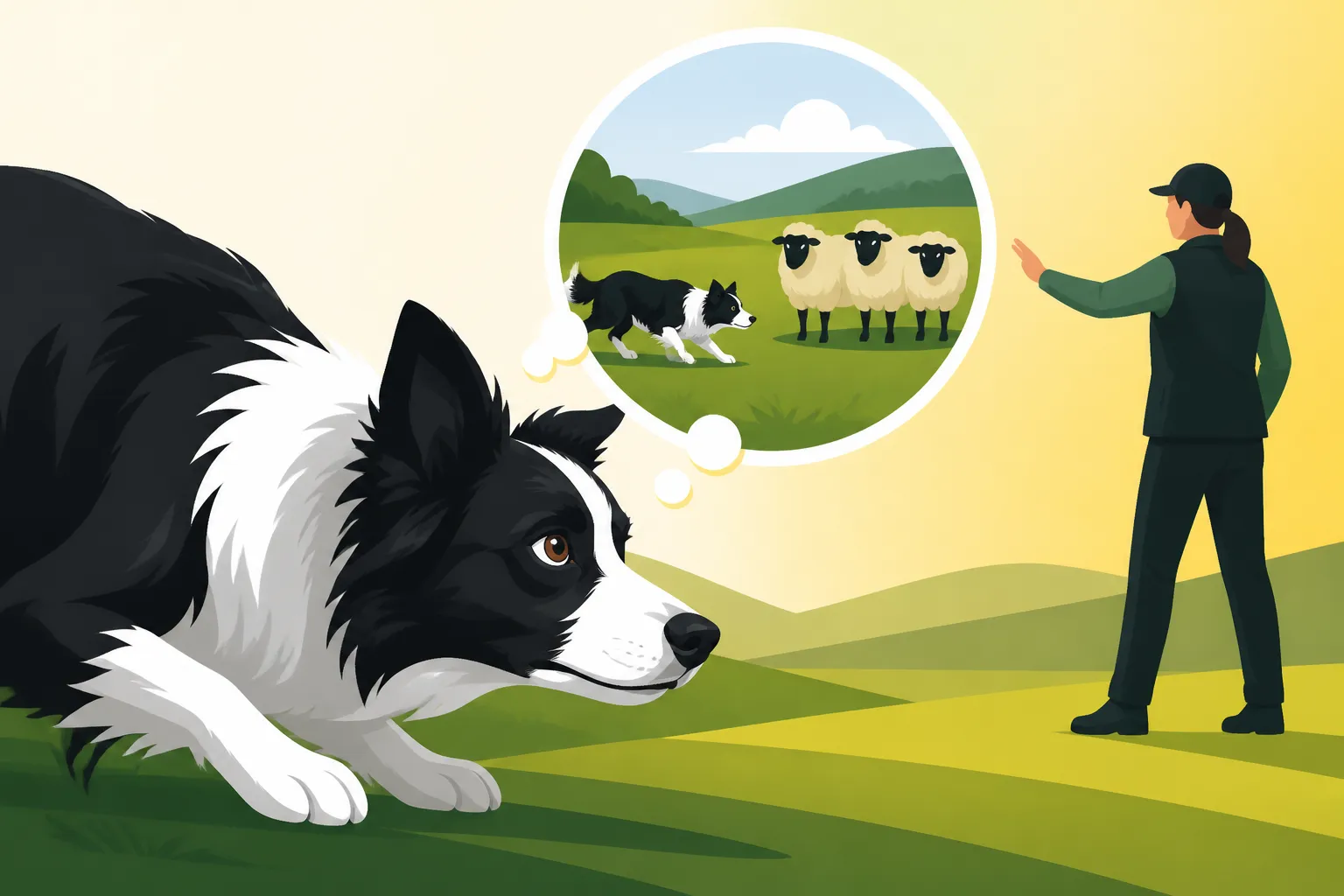
Once your Border Collie consistently performs the clockwise sweep around a single object with a lure, you can start to fade the lure and introduce distance. Gradually increase the distance between yourself, the dog, and the object. Your goal is for the dog to respond to the verbal "Come Bye" and hand signal (a sweep of your arm to your left, indicating the clockwise movement) without needing to be led. This is where the true brilliance of the Border Collie mind shines – their ability to understand and execute commands at a distance.
You might find online training programs, such as those offered by BAXTER & Bella, valuable here. While they might not be specifically for herding, many foundational obedience courses emphasize clear directional cues and building response at a distance, which are transferable skills. They can help you structure your training sessions and troubleshoot common issues. As you progress, introduce multiple objects or even a small group of tolerant, calm dogs (if you have them) to simulate the idea of a "flock." This helps your dog generalize the command beyond a single, static object. Practice regularly, always ending on a successful note, and keep the energy positive. For more on advanced training, consider our post Teaching a Border Collie the Herding Commands.
Table: "Come Bye" Training Progression
| Stage | Environment | Key Action | Cues & Aids | Goal |
|---|---|---|---|---|
| 1. Introduction | Small, enclosed yard | Lure clockwise around object | Verbal "Come Bye", lure, leash/long line | Dog associates word/movement with reward |
| 2. Fading Lure | Small, enclosed yard | Dog initiates movement | Verbal "Come Bye", hand signal | Dog responds to cue without lure |
| 3. Increasing Distance | Larger enclosed area | Dog flanks further out | Verbal "Come Bye", hand signal, long line | Dog understands command at a distance |
| 4. Generalization | Varied areas, multiple objects | Dog circles different objects/groups | Verbal "Come Bye", hand signal | Dog applies command in new situations |
"Come Bye" Beyond the Sheep Field
While "Come Bye" is fundamentally a herding command, its underlying principles of directional flanking can be incredibly useful for pet Border Collies, translating into improved obedience and a more engaged companion. It's not about making your dog into a sheepdog if that's not your intention, but rather leveraging their natural intelligence and drive in a constructive way.
Everyday Applications for Pet Border Collies
Even without sheep, "Come Bye" can be integrated into games and daily routines. Imagine you're playing fetch in a large field and want your dog to retrieve a ball that landed to your left. Instead of just saying "get it," you could use "Come Bye" to encourage a wider, sweeping arc around you to the ball. This isn't just a fancy trick; it exercises their brain, taps into their natural flanking instincts, and offers a more challenging retrieve than a straight line.
Another practical application might be in agility or other dog sports. A well-taught "Come Bye" can be adapted to guide your dog around the outside of a jump, through a tunnel, or to flank wide around a set of weave poles, encouraging them to maintain speed and line. It's about giving them specific, clear instructions for complex movements. For a detailed look at agility, you might find Shoulder Injuries in an Agility Border Collie helpful. The consistent mental work these commands provide is a fantastic way to tire out a Border Collie, as detailed in Exercise, Work and What Actually Settles a Border Collie.
Furthermore, understanding "Come Bye" can help you interpret your dog's natural behaviors. If you notice your Border Collie naturally circling objects or people in a clockwise fashion, they are exhibiting their innate herding tendencies. By understanding the command, you can better engage with and redirect these instincts, making your communication more fluent. For a deeper dive into the working mindset, read What a Border Collie Does With Its Whole Day.
Distinguishing from Other Commands
It's crucial to differentiate "Come Bye" from a simple "left" command. A general "left" cue in obedience typically means the dog should turn its body to its left, often staying close to the handler, as in heeling exercises. "Come Bye," however, implies a flanking movement – a wider, usually faster, arc around an object or group, with the intention of gathering or moving something. It's about a specific trajectory, not just a bodily turn.
For instance, when you say "left" during a heel, your dog shifts its weight and turns its body. When you say "Come Bye" in a herding context, your dog is expected to run an arc around the sheep. The scale and intent are entirely different. Misunderstanding this distinction can lead to confusion for your dog and frustration for you. While some handlers adapt "Come Bye" to mean a wide left flank in sports like agility, its fundamental meaning remains rooted in the expansive movement required for herding. If you're looking into more general obedience, our article on Recall on a Border Collie That Has Locked On offers great advice on crucial commands.
By embracing "Come Bye," you're not just teaching a command; you're delving into the heritage and inherent capabilities of your Border Collie. It's a testament to their intelligence and a powerful tool for connection and control, whether they're gathering sheep in the pasture or expertly navigating a game of fetch in the park.
Disclaimer
This article is for general informational purposes only and does not constitute professional advice. Laws, prices and regulations vary by location and change over time. Consult a qualified professional for guidance on your specific situation.