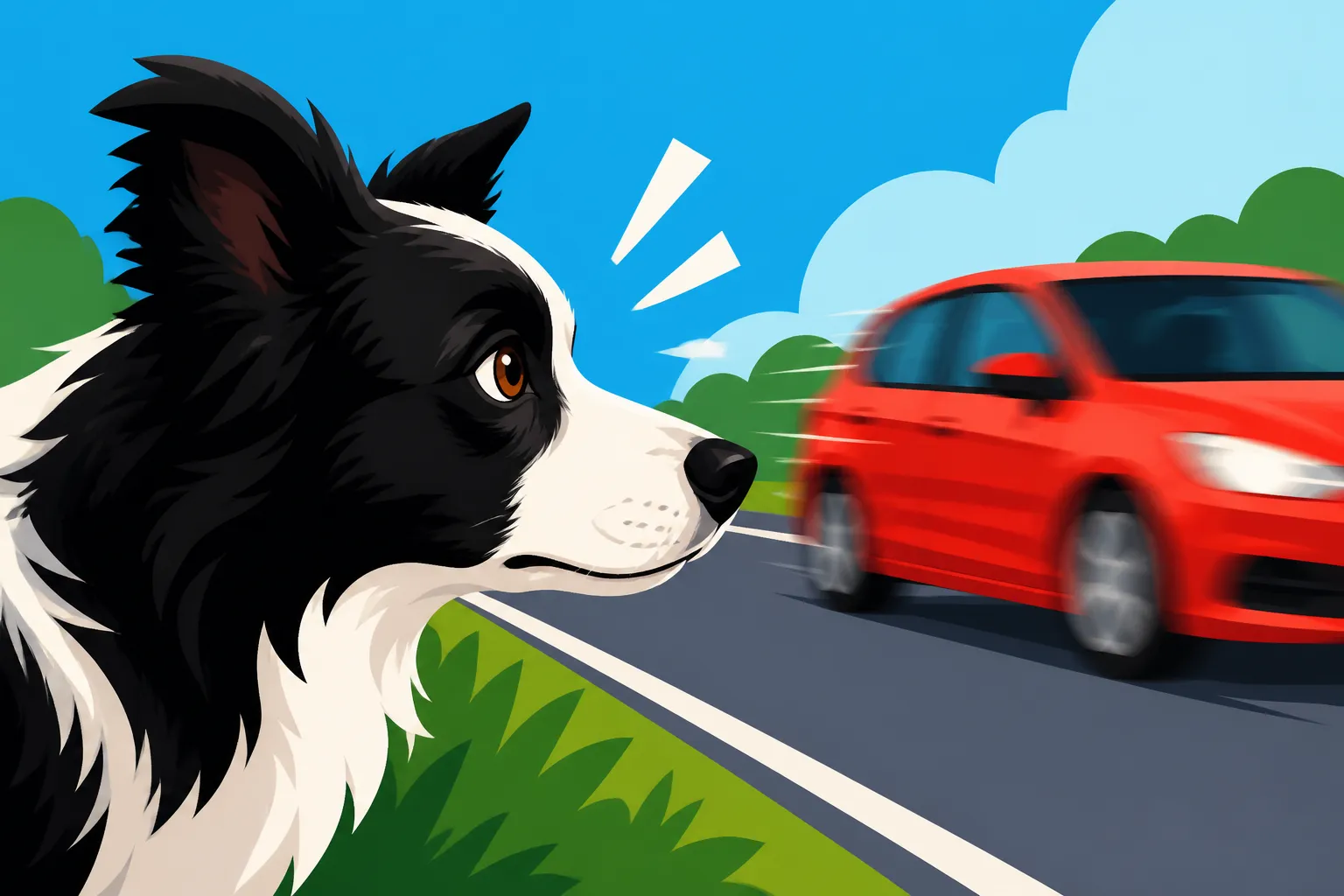
A Border Collie Fixated on Passing Cars
It’s incredibly frustrating when your otherwise brilliant Border Collie becomes completely unglued at the sight of a passing car, isn't it? One moment you’re enjoying a peaceful walk or a quiet moment in the yard, and the next, your highly intelligent dog transforms into a barking, lunging, panting mess, entirely fixated on that moving vehicle. This isn't just an annoyance; it's a deeply ingrained instinct gone wild, and it can be downright dangerous. This guide will walk you through understanding why your Border Collie does this and, more importantly, how to manage and modify this challenging behavior so you can both enjoy a calmer, safer life.
Understanding the Root of the Fixation
To effectively address your Border Collie's fixation on passing cars, we first have to understand why they do it. It’s not about spite or disobedience; it's deeply wired into their genetic makeup.
The Herding Instinct Gone Awry
Border Collies were literally bred for generations to control moving objects – sheep, in their case. Their entire purpose revolves around "the eye," the intense stare, and the instinct to gather, chase, and direct. When a car passes, especially one moving quickly and predictably, it ticks all the boxes for their primal herding drive. It's a large, fast-moving object, and their instinct tells them to engage with it, to stop it, to turn it, or to gather it.
Imagine your Border Collie's ancestors on the vast open fields, watching a sheep bolt. Their eyes would lock on, their bodies would coil, and they'd be off, driving that sheep back to the flock. Now, swap that sheep for a shiny sedan or a rumbling truck. The car represents a compelling, yet entirely inappropriate, "sheep" that needs to be controlled. The frustration often stems from being unable to complete the herding sequence. They want to chase, they want to stop it, but the leash or the fence prevents them. This inability to act on such a strong instinct can lead to intense vocalization, pulling, and even nipping at the air as they try to "grip" the car. It’s a powerful internal conflict that can be incredibly distressing for both dog and owner.
Fear, Frustration, or Just Fun?
While herding instinct is often the primary driver, a Border Collie's fixation can also be a cocktail of other emotions. Pinpointing the exact underlying cause can help tailor your training approach.
- Pure Prey/Herding Drive: This is the classic "I must chase it!" response. The dog's body language will often be low, intent, and focused, reminiscent of stalking prey. They might crouch, stiffen, and then lunge or bark as the car gets closer, driven by the sheer excitement of the chase. This isn't necessarily fear, but rather an overwhelming genetic predisposition to respond to movement.
- Frustration-Based Reactivity: If your Border Collie is on a leash and desperately wants to chase but can’t, that frustration can boil over into barking, growling, and lunging. This often looks similar to fear-based reactivity but stems from a desire to engage, not escape. The dog might whine or paw at the ground, then escalate when the car is too close. They’re basically screaming, "Let me get it!" This is a common scenario in dogs who spend a lot of time on leash walks where they see many triggers.
- Fear or Anxiety: Sometimes, the behavior is rooted in fear. A loud truck, a large bus, or even a close call early in life can create an aversion. The barking and lunging become a "go away" signal, an attempt to make the scary thing retreat. Your Border Collie might show signs of anxiety like tail tucked, ears back, or trembling, even while barking aggressively. This can sometimes be mixed with the herding drive, where the dog wants to control the scary thing to make it less threatening.
- Over-Arousal: For some Border Collies, it's simply an overwhelming wave of excitement that they struggle to regulate. The world is a high-stimulus place, and fast-moving cars can push them past their threshold. This over-arousal can manifest as frantic barking, jumping, and general hyper-vigilance, making it hard for them to focus on anything else. It's not necessarily good or bad, just too much for them to handle calmly.
Observing your dog’s specific body language – tail carriage, ear position, facial expression, and overall posture – before, during, and after the car passes can offer crucial clues to their internal state.
Practical Strategies for Management and Training
Dealing with car fixation requires a multi-faceted approach that combines immediate management to prevent rehearsal of the unwanted behavior with long-term training to change your Border Collie's emotional response.
Managing the Environment (Immediate Solutions)
Before you can start effective training, you need to set your Border Collie up for success by controlling their environment. This means minimizing their exposure to triggers until they have better coping mechanisms.
- Optimize Leash Management: If your Border Collie is pulling or lunging on walks, a standard flat collar isn't going to cut it, and it can even harm their neck. Consider using a front-clip harness, like those widely available on Amazon, which redirects their pulling power towards you, making it harder for them to lunge with full force. Another option is a head halter, which gives you more control over their head direction. While some dogs dislike them initially, they can be very effective for strong pullers and those with a high prey drive. The key is to introduce any new equipment positively with treats.
- Distance Management is Your Best Friend: One of the most critical things you can do is to start training at a distance where your Border Collie notices cars but doesn't react. This "threshold" distance might be 50 feet, 100 feet, or even across a park. If your dog is already barking and lunging, you're too close. Find a quieter street or a time of day with less traffic. The goal is to keep them under their reactivity threshold so they can learn to focus on you.
- Physical Barriers for Yard and Home: If your Border Collie is reacting to cars from your yard or through a window, physical barriers can be invaluable. For yards, solid fencing or even temporary opaque tarps secured to chain link can block their view. Indoors, use window film, strategically placed furniture, or close blinds during peak traffic times. Sometimes, simply preventing them from seeing the trigger is the best first step to breaking the habit. Think about Fencing a Yard a Border Collie Cannot Leave as a serious consideration if your current setup isn't robust enough.
- Managing Car Travel: If your Border Collie reacts while riding in the car, consider a secure, covered crate. This limits their visual access to passing vehicles and provides a safe, den-like space. Alternatively, use window shades or covers to block their view, especially if they fixate on cars in other lanes or coming from behind. This prevents them from practicing the unwanted behavior, which is a huge part of behavior modification.
Desensitization and Counter-Conditioning
These are the cornerstones of behavior modification for car fixation. They work by gradually exposing your Border Collie to the trigger (cars) at a low intensity and pairing that exposure with something positive.
- Desensitization (Gradual Exposure): This means exposing your dog to cars below their reaction threshold. Start far away, where cars are just tiny moving dots that your Border Collie barely notices, or simply sees without reacting. Over days, weeks, or even months, slowly decrease the distance as your dog shows comfort and neutrality. If your dog reacts, you've moved too quickly, and you need to increase the distance again. This isn't about rushing; it's about building calm, confident associations.
- Counter-Conditioning (Changing the Emotion): This is where you change your Border Collie's emotional response to cars from "MUST CHASE!" or "SCARY!" to "Yay, cars mean good things!" Every time a car passes at a distance where your dog is not reacting, immediately give them a high-value treat (cooked chicken, cheese, hot dogs – something irresistible). The moment they see a car, before they can react, the treat appears. The car predicts good things. The sequence is: Car appears -> treat. Car passes -> no treat (or less exciting treat). You want them to look at a car and think, "Oh, a moving snack dispenser!"
- A useful game here is "Look at That!" or LAT. When your Border Collie looks at a car without reacting, mark that moment (a verbal "yes!" or a clicker) and immediately reward them. They look at the car, then look at you for the treat. This helps them disengage from the car and re-engage with you. Be consistent, and practice this hundreds of times. This process takes immense patience but is incredibly effective in rewiring their brain.
Impulse Control and Alternative Behaviors
Training specific commands can give your Border Collie something to do instead of fixating on cars, empowering them to make better choices.
- Solid "Leave It" and "Watch Me": Before tackling cars, practice these commands in low-distraction environments. "Leave it" means ignoring something enticing. "Watch me" teaches your dog to make eye contact with you on cue, redirecting their attention. Once these are solid, introduce them to progressively higher distractions, eventually including a stationary car at a distance, and then a slowly moving car. BAXTER & Bella offers excellent online courses that break down these foundational commands in a way that resonates with intelligent breeds like Border Collies, helping you build a strong training base.
- Teaching a "Settle" or "Place" Command: This is particularly helpful if your Border Collie reacts to cars from a window or a specific spot in the yard. Teach them to go to a designated mat or bed and stay there calmly. Practice this in various locations, gradually introducing car noises or distant car sightings. This gives them an alternative, calm behavior to perform instead of pacing or barking.
- Redirecting Before Fixation: The key is to interrupt the behavior before it starts. If you see your Border Collie lock onto a car, interrupt with a sharp sound, a quick command like "heel," or toss a high-value treat away from the car to redirect their focus. Don't wait until they're already lunging. This requires you to be hyper-aware of their body language and the environment. Also, ensure your dog is getting enough appropriate Mental Work That Tires a Border Collie Faster to reduce overall arousal, as a tired mind is less likely to fixate.
Addressing Specific Scenarios and Advanced Tips
Car fixation can manifest in different ways, from walks to yard play. Tailoring your approach to these specific situations is crucial.
What to Do When Your Border Collie Fixates on Walks
Walking a Border Collie that lunges at cars can be exhausting and embarrassing. The goal is to anticipate, intervene, and reinforce desired behavior.
- Recognize Early Warning Signs: Your Border Collie often gives subtle cues before a full-blown reaction. This might be a stiffening of the body, a lowered head, intensified "eye," or a slight tremor. The moment you see these signs, before the actual lunge or bark, is your window for intervention.
- Create Distance and Change Direction: As soon as you spot a car approaching, if you know it's too close for your dog to cope, immediately turn and walk the other way, or step behind a parked car or bush to create a visual block. A quick U-turn or a sudden change of direction can break their focus and give you an opportunity to reward them for following your lead. This isn't avoiding; it's managing the situation to prevent rehearsal of the unwanted behavior.
- Carry High-Value Rewards: Dry kibble won't cut it when a car is whizzing by. You need truly irresistible treats that can compete with the intense drive to chase. Think small, soft, smelly, and meaty treats. Keep them easily accessible so you can reward instantly.
- Build a Rock-Solid Recall: For those rare, unavoidable moments when your Border Collie might slip their leash or you need them to disengage from a distant car, a strong recall is paramount. Practice Recall on a Border Collie That Has Locked On in varied environments, ensuring it's reliable even with distractions. This is a critical safety net.
Car Chasing in the Yard
A Border Collie chasing cars from the perceived safety of their own yard is a common and dangerous problem. It can lead to injury or even escape.
- Reinforce Boundaries: If your yard isn’t securely fenced, it’s a non-starter. Border Collies are athletic and driven; a flimsy fence is just a suggestion. Consider solid six-foot fencing or other robust barriers that remove the visual trigger. Even then, supervise your dog actively in the yard. Don't just let them out and assume they'll be fine.
- Teach a Strong "Come" Away from the Fence: Practice calling your Border Collie away from the fence line before any cars appear. Reward heavily for immediate response. If they are already fixating, you may need a long line (a lightweight lead of 20-30 feet, easily found on Amazon) attached to them for safety and to physically interrupt the behavior and guide them away. The goal is for them to learn that engaging with you is more rewarding than fixating on the street.
- Block the View: As mentioned before, opaque screens, privacy hedges, or even temporary tarps can be life-savers. If they can't see the cars, they're less likely to react. This is especially true for the initial stages of training, allowing you to gradually introduce the sight of cars in a controlled manner.
- Manage Boredom and Excess Energy: A bored Border Collie with pent-up energy is a problem waiting to happen. Ensure they are getting adequate physical and mental exercise daily. This might include regular training sessions, puzzle toys, scent work, or even safe off-leash play in a secure area. A Border Collie whose needs are met is less likely to invent their own (often undesirable) entertainment.
When to Seek Professional Help
There are times when even the most dedicated owner needs an extra hand. Don't view seeking professional help as a failure; it's a smart decision.
- When Your Methods Aren't Working: If you've been consistent with your training, and the behavior isn't improving, or worse, is escalating, it's time to call in a professional. Behavior modification can be complex, and a fresh pair of expert eyes can identify nuances you might be missing.
- Aggression or Danger: If your Border Collie's car fixation includes lunging with growling, snapping, or any signs of aggression that could lead to injury (either to themselves, you, or others), immediate professional intervention is crucial. A severe fixation can also be dangerous if they manage to get loose.
- Certified Professional Dog Trainers (CPDT-KA) or Veterinary Behaviorists: Look for trainers certified by reputable organizations. For more severe cases, or if there's an underlying anxiety component, a veterinary behaviorist (a DVM with specialized training in animal behavior) can prescribe medication to help manage anxiety alongside behavior modification. Resources like BAXTER & Bella offer virtual consultation options, which can be incredibly convenient for discussing your specific challenges with experienced trainers and getting tailored advice from the comfort of your home. They can guide you through personalized training plans and help you understand the nuances of your Border Collie's behavior.
It's a long road, but with patience, consistency, and the right strategies, you can help your Border Collie learn to manage their intense instincts around passing cars.
| Strategy Type | Description | Key Benefit | Recommended Tools |
|---|---|---|---|
| Environmental Mgmt. | Restricting visual access or physical ability to chase. | Prevents rehearsal of unwanted behavior, reduces immediate stress. | Front-clip harness, head halter, long line (Amazon), solid fencing, window film |
| Desensitization | Gradual, controlled exposure to cars at non-reactive distances. | Builds tolerance, normalizes car presence. | High-value treats, quiet locations, patient observation |
| Counter-Conditioning | Pairing car sightings with positive experiences (e.g., treats). | Changes emotional response from negative/aroused to positive. | Super high-value treats (meat, cheese), clicker/marker word |
| Impulse Control | Teaching alternative, incompatible behaviors (e.g., "watch me," "leave it"). | Gives dog a desirable action to perform instead of fixating. | Standard leash, training treats, engaging toys, BAXTER & Bella online courses |
| Professional Help | Consulting experts for complex or dangerous cases. | Tailored plans, medication options, expert guidance. | Certified professional dog trainer, veterinary behaviorist |
Remember that every Border Collie is an individual. What works for one might need slight adjustments for another. Don't get discouraged, celebrate small wins, and keep working steadily. Your dedication will pay off in a calmer, happier life for you and your amazing dog.
Disclaimer
This article is for general informational purposes only and does not constitute professional advice. Laws, prices and regulations vary by location and change over time. Consult a qualified professional for guidance on your specific situation.