Whether a Border Collie Chases Wildlife
It’s a scenario many Border Collie owners know all too well: you’re enjoying a peaceful walk, your dog is off-leash and doing beautifully, and then a squirrel darts across the path, a rabbit pops its head up, or a deer freezes in the distance. In a flash, your well-trained companion is gone, deaf to your frantic calls, driven by an instinct far older than any command. This guide will delve into why Border Collies are so prone to chasing wildlife, differentiate it from their famous herding instinct, and offer practical strategies to manage this powerful drive.
The Instinct Behind the Chase
Let's be honest, it can be utterly frustrating when your devoted Border Collie suddenly transforms into a creature of pure, unadulterated chase drive, utterly ignoring you in favor of a fleeing critter. You might wonder if they even know their own name in that moment! But it’s crucial to understand that this isn’t a sign of disobedience or a lack of love for you; it's a deeply ingrained instinct, a fundamental part of what makes a Border Collie a Border Collie.
Prey Drive Versus Herding Instinct
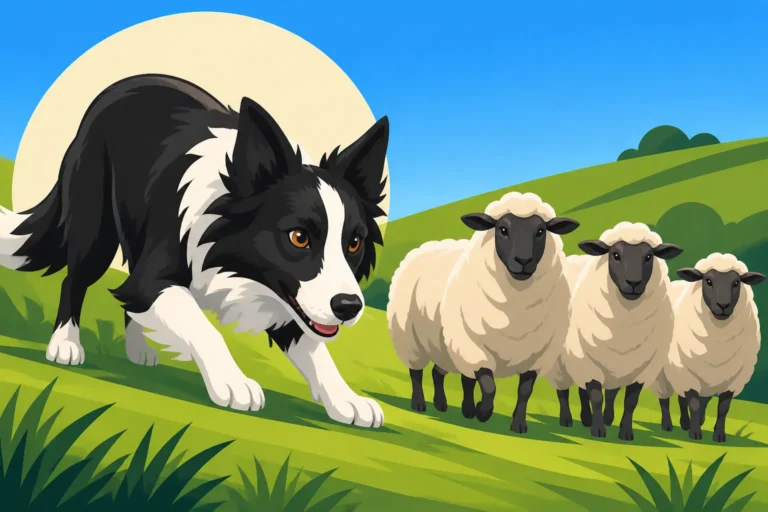
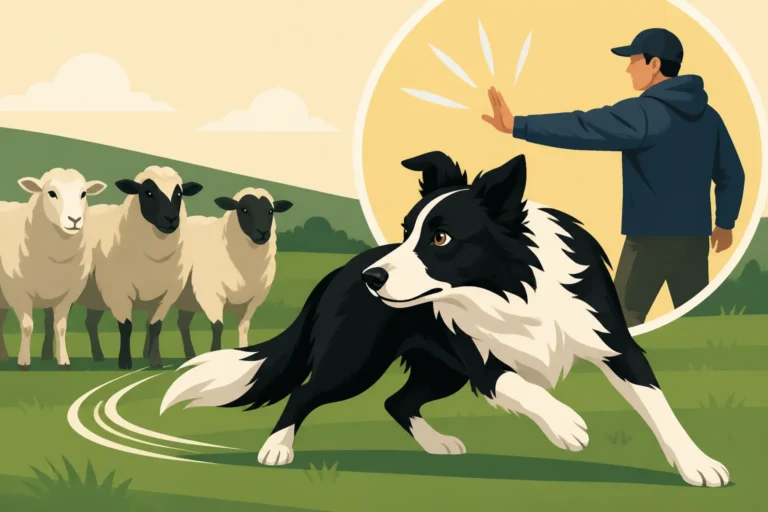
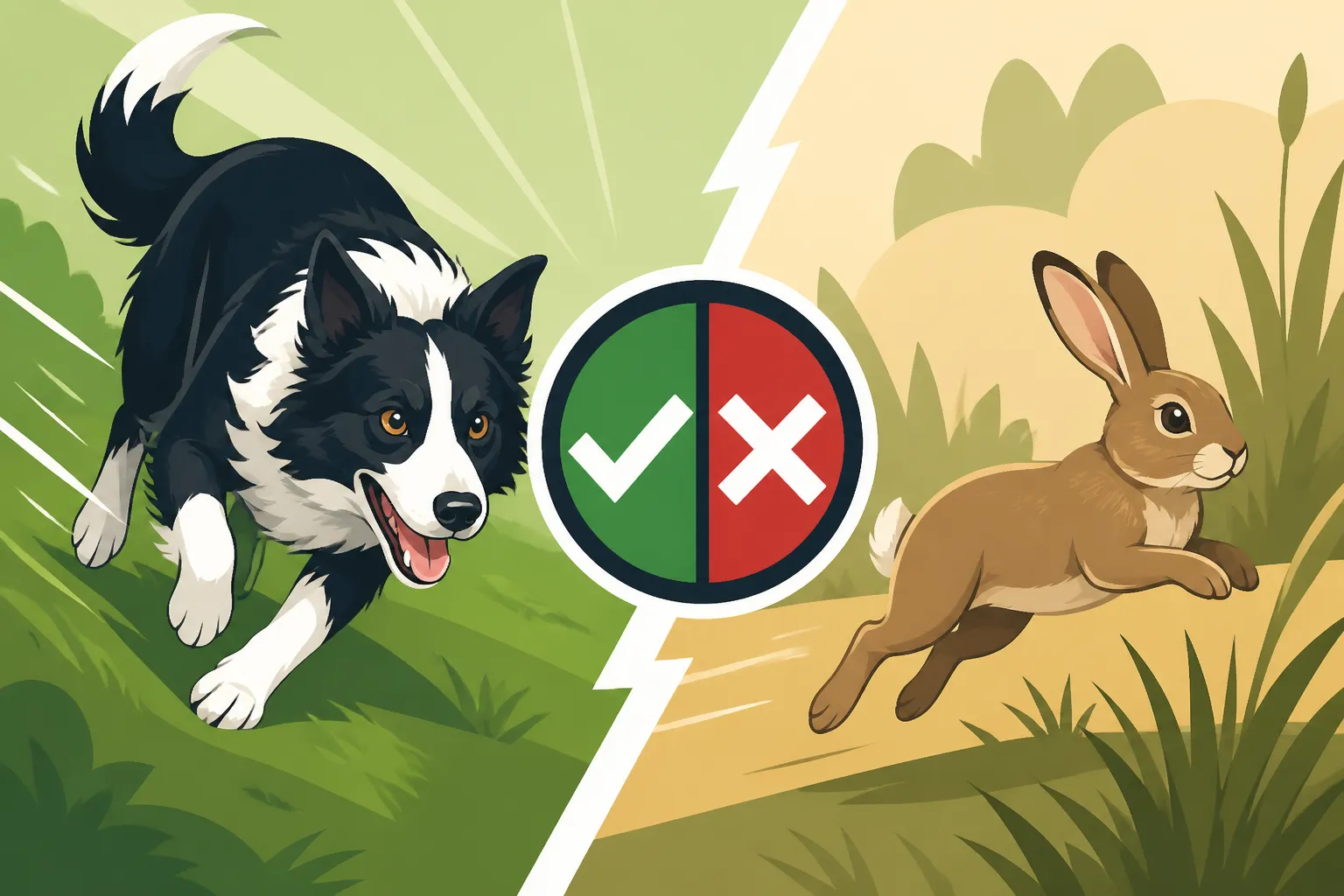
While Border Collies are renowned for their herding abilities, it's easy to mistakenly believe that their intense focus on moving objects is solely about gathering sheep. However, there's a fine but critical line between their herding instinct and pure predatory drive. Herding, at its core, is a modified and inhibited form of the predatory sequence. Think about it: a Border Collie stalking sheep, circling, gathering them – this mimics the initial stages of a hunt: eye, stalk, and chase. But a good herding dog inhibits the final stages: the grab, the kill, the consume. They apply pressure and control, rather than harm.
The problem arises when that inhibition is weak or absent, especially with smaller, faster-moving prey that doesn't "herd" in the traditional sense. A squirrel, for example, is not going to respond to a flank command. For many Border Collies, the sight of a squirrel bolting up a tree or a rabbit disappearing into a hedge is a powerful trigger that bypasses the herding override and taps straight into the raw, unadulterated prey drive. This is why you'll see them chase, not gather. It's not about moving the critter, it's about catching it.
The Border Collie Stare and Its Role in the Hunt
That famous "eye" that Border Collies use to control stock? It's a double-edged sword when it comes to wildlife. In a herding context, the intense stare, often coupled with a low crouch, is a tool to intimidate and direct sheep. It's a calculated, controlled display of pressure. However, in the context of chasing wildlife, that same "eye" becomes the first step in the predatory sequence: the lock-on. Your dog spots movement, freezes, and their entire being focuses on that potential prey. The Border Collie Stare and Where It Comes From provides more insight into this fascinating behavior.
Once that intense stare is engaged, it's incredibly difficult to break their focus. It's like flipping a switch in their brain that screams, "Hunt!" Every fiber of their being is primed for the chase. This isn't them being stubborn; it's their ancient instincts taking over, making them temporarily oblivious to everything else, including your voice.
Genetic Predisposition
Let's not forget the genetic blueprint. Border Collies were selectively bred for generations to work stock, a job that requires immense drive, speed, agility, and an unparalleled ability to react to movement. These traits, while invaluable on the farm or in dog sports, can become a management challenge when applied to the local deer population or the neighborhood cat. The desire to chase, to engage with movement, is hardwired into their DNA. It’s what makes them such incredible working dogs, but also why they present unique challenges in a suburban park.
Understanding this genetic drive helps us approach the issue with more patience and realistic expectations. You can't train away a fundamental instinct, but you can channel it, manage it, and teach your dog acceptable outlets for that incredible energy. It’s about building a relationship where you are more compelling than the squirrel, which is a big ask for a breed whose ancestors lived to hunt and herd.
Common Wildlife Targets and Triggers
It’s often not if your Border Collie will chase wildlife, but what they’ll chase and when. The sheer variety of animals that can trigger this instinct, and the subtle cues that set it off, can be bewildering for an owner trying to predict and manage the behavior.
Squirrels, Rabbits, and Deer: Typical Culprits
While a Border Collie's herding instinct might be finely tuned for sheep, their prey drive is far less discerning. Squirrels are often top of the list, their erratic movements and habit of bolting up trees being irresistible. Rabbits, too, with their sudden dashes across open fields, are prime targets. Then there are larger animals like deer, which, despite their size, can trigger an equally intense chase, particularly in a young, confident Border Collie. Even birds taking flight can be enough to ignite that spark.
The chase doesn't discriminate based on size or perceived threat; it's about the movement, the flight. For a dog bred to stop and turn a thousand-pound sheep with nothing but its presence, chasing a smaller, faster creature taps into that primal desire to control and pursue.
Movement, Sound, and Scent: What Gets Their Attention
It's not just the visual of a creature running that triggers the chase. Border Collies are incredibly observant and have highly tuned senses. A rustle in the undergrowth, the distinct thumping of a rabbit's hind legs, or the subtle scent of a deer trail can all act as potent triggers. You might be walking along, completely unaware, and your dog will have picked up on something long before you see it. Their world is rich with sensory information that we often miss.
This sensory awareness means that even if you don't see the wildlife, your Border Collie likely knows it's there. A sudden turn of the head, a heightened posture, a sniffing of the air – these are all signals that your dog is about to switch into hunt mode. Being attuned to these subtle changes in your dog's demeanor can give you a critical head start in preventing a full-blown chase.
The "On Switch": How Quickly They Engage
The speed at which a Border Collie can go from calm, attentive companion to full-throttle hunter is astounding. It truly feels like an "on switch" is flipped. One moment they're trotting happily beside you, the next they're a blur of black and white disappearing into the distance. This rapid escalation is what makes managing the behavior so challenging and often anxiety-inducing for owners. A small movement, a sudden scent, and the chase is initiated before you can even react. What Happens If a Border Collie Worries Sheep illustrates the potential intensity of their focus.
This immediate engagement is a testament to their breeding, designed for quick reactions and intense focus in a working environment. However, in a public park, it means you need to be constantly vigilant and proactive, rather than reactive, to avoid them putting themselves or the wildlife at risk.
Training Strategies to Manage Predatory Chase
So, your Border Collie has that intense drive. Great! Now, how do we manage it so you can actually enjoy walks and keep everyone safe? It's a journey, not a sprint, and it requires consistency, patience, and a healthy dose of realistic expectations.
Building a Bombproof Recall
This is your absolute top priority, your safety net, your ultimate "off switch." A solid recall is crucial for any dog, but for a Border Collie with a high prey drive, it's non-negotiable. Your recall needs to be reliable under all circumstances, even when that squirrel is practically waving from a branch. Start in a low-distraction environment, like your backyard, and make coming back to you the most rewarding thing ever. Use high-value treats, exciting toys, and enthusiastic praise. Practice, practice, practice. Recall on a Border Collie That Has Locked On goes into more detail on how to achieve this.
Gradually introduce distractions, but always set your dog up for success. Use a long line, perhaps a 30-foot one you can find on Amazon, during these stages so you can prevent them from self-rewarding a chase if your recall isn't perfect yet. Don't call your dog if you know they won't come; you're just teaching them to ignore you. Make it a game, make it fun, and make it predictable that coming back to you is always better than chasing. This foundational work is vital before even thinking about off-leash freedom in areas with wildlife. The Thirty-Foot Line a Border Collie Recall Needs is a great resource for this.
Focus and Engagement Training
Beyond just recall, you need to teach your Border Collie to actively choose you over the environment. This means building a strong bond and making yourself the most interesting thing around. Practice engagement exercises: lure them with treats, play short, exciting games of fetch or tug (if appropriate for their drive – some Border Collies become over-aroused by endless fetch), and work on impulse control exercises like "leave it" and "wait." BAXTER & Bella offers some excellent online programs that focus on building this kind of engagement and handler focus, which can be invaluable for high-drive breeds.
Teach your dog to offer you eye contact voluntarily, especially when distractions are present. Start small: eye contact for a treat in a quiet room, then in the yard, then on a leash walk. The goal is to build a dog that defaults to checking in with you, rather than scanning the horizon for potential prey. This isn't just about stopping the chase; it's about building a cooperative relationship where your Border Collie actively wants to work with you.
Management and Environmental Control
Prevention is often the best strategy. If you know your Border Collie has a strong prey drive, don't put them in situations where they're likely to fail. This might mean keeping them on a leash in areas where wildlife is abundant, or using a long line for extra security. If you have a yard, ensure your fencing is secure enough to prevent them from darting after a rabbit; Fencing Heights a Border Collie Will Not Clear can offer guidance here.
Consider the time of day you walk your dog. Dawn and dusk are often when wildlife is most active. Adjusting your walk schedule can sometimes reduce encounters. When you do encounter wildlife, practice "look at that" exercises – reward your dog for noticing the wildlife and then choosing to look back at you for a treat. This helps them associate seeing wildlife with a positive interaction with you, rather than a trigger for chase.
Alternative Outlets for Drive
Remember, that drive isn't going away. It's part of who your Border Collie is. The trick is to channel it into acceptable, safe outlets. Engage them in dog sports like agility, flyball, or scent work. These activities utilize their intelligence, speed, and focus, giving them a constructive "job" to do. What a Border Collie Does With Its Whole Day emphasizes the importance of mental and physical stimulation.
Puzzle feeders and interactive toys are also fantastic for mental stimulation, especially indoors. You can find a huge variety on Amazon. These make your dog use their brain to "hunt" for food, satisfying some of that primal urge. Puzzle Feeders That Hold a Border Collie can help you find options that will truly challenge your clever companion. Teaching them complex tricks can also be incredibly satisfying for both of you, tapping into their desire to learn and work. The more you engage their minds and bodies in positive ways, the less likely they are to seek out undesirable outlets like chasing wildlife.
| Instinct | Primary Goal | Typical Triggers | Canine Behavior | Owner's Challenge | Management Approach |
|---|---|---|---|---|---|
| Herding Drive | Gather, control, move stock | Moving groups (sheep, ducks, children, other dogs) | Stalk, crouch, "eye," circle, push, bark (sometimes) | Redirecting focus, preventing unwanted "herding" of people/pets | Training commands (come bye, away to me), structured sports, appropriate outlets |
| Prey Drive | Chase, catch, kill (inhibited in domestic dogs) | Fleeing individuals (squirrels, rabbits, deer, birds, cars) | Lock-on, intense stare, full-speed chase, ignoring commands | Breaking focus, ensuring safety of dog and wildlife | Bombproof recall, leash management, impulse control, alternative enrichment |
When Professional Help is Needed
Sometimes, despite your best efforts, the predatory drive can be overwhelming, or your attempts at training just aren't cutting through. It's not a failure on your part to admit you need a little extra help. Border Collies are incredibly complex dogs, and sometimes a fresh pair of experienced eyes can make all the difference.
Escalating Behavior
If your Border Collie's chase behavior is escalating – perhaps they're becoming more persistent, going further, or showing more aggression towards the wildlife (even if they don't catch it) – it's a clear sign to seek professional guidance. This escalation can indicate that the behavior is becoming more ingrained and harder to interrupt. What might start as a fun sprint after a squirrel can, for some dogs, morph into a highly focused, almost frantic pursuit that puts them at greater risk.
Similarly, if your dog is showing signs of obsessive behavior around movement, such as constant scanning of the environment, pacing, or an inability to settle after a chase, these are red flags. While Border Collies are known for their intensity, an unhealthy obsession needs professional intervention to prevent it from becoming a bigger problem or leading to other compulsive behaviors like Stopping a Border Collie Chasing Shadows and Light.
Safety Concerns
The most pressing reason to get professional help is when safety becomes an issue. This includes the safety of your dog, the wildlife, and even other people or pets. A Border Collie running full tilt after a deer could easily bolt into traffic, get injured by the wildlife itself (especially if cornered), or cause an accident involving cyclists or other park-goers. If your dog is consistently putting themselves or others in harm's way due to their chase drive, it's beyond the scope of general advice and requires tailored strategies from an expert.
Another safety concern is the potential harm to wildlife. While most domestic dogs don't actually "catch" deer or squirrels, the stress and exertion of being chased can be detrimental to wild animals, especially during breeding seasons or harsh weather. If your Border Collie successfully catches small prey, it indicates a strong, uninhibited predatory drive that absolutely needs professional guidance to manage humanely and safely.
Finding the Right Professional
When you're ready to seek help, look for a certified professional dog trainer or a veterinary behaviorist who has specific experience with herding breeds and high prey drive. Not all trainers are equipped to handle the unique intensity of a Border Collie. Ask about their methodology and ensure it aligns with positive reinforcement and force-free techniques. Avoid anyone who suggests harsh corrections or punitive methods, as these can damage your relationship with your Border Collie and often suppress the behavior rather than truly addressing the underlying drive.
A good professional will assess your individual dog, your living situation, and your specific challenges, then help you develop a comprehensive plan. This might include advanced recall training, impulse control exercises, structured enrichment, and perhaps even exploring tools like long lines or specific harnesses. They can also help you understand how to Working an Epileptic Border Collie on Stock if you face additional challenges. Don't hesitate to invest in this expertise; it can be life-changing for both you and your Border Collie, ensuring you can enjoy a safe, fulfilling life together.
Disclaimer
This article is for general informational purposes only and does not constitute professional advice. Laws, prices and regulations vary by location and change over time. Consult a qualified professional for guidance on your specific situation.