A Border Collie That Herds Joggers
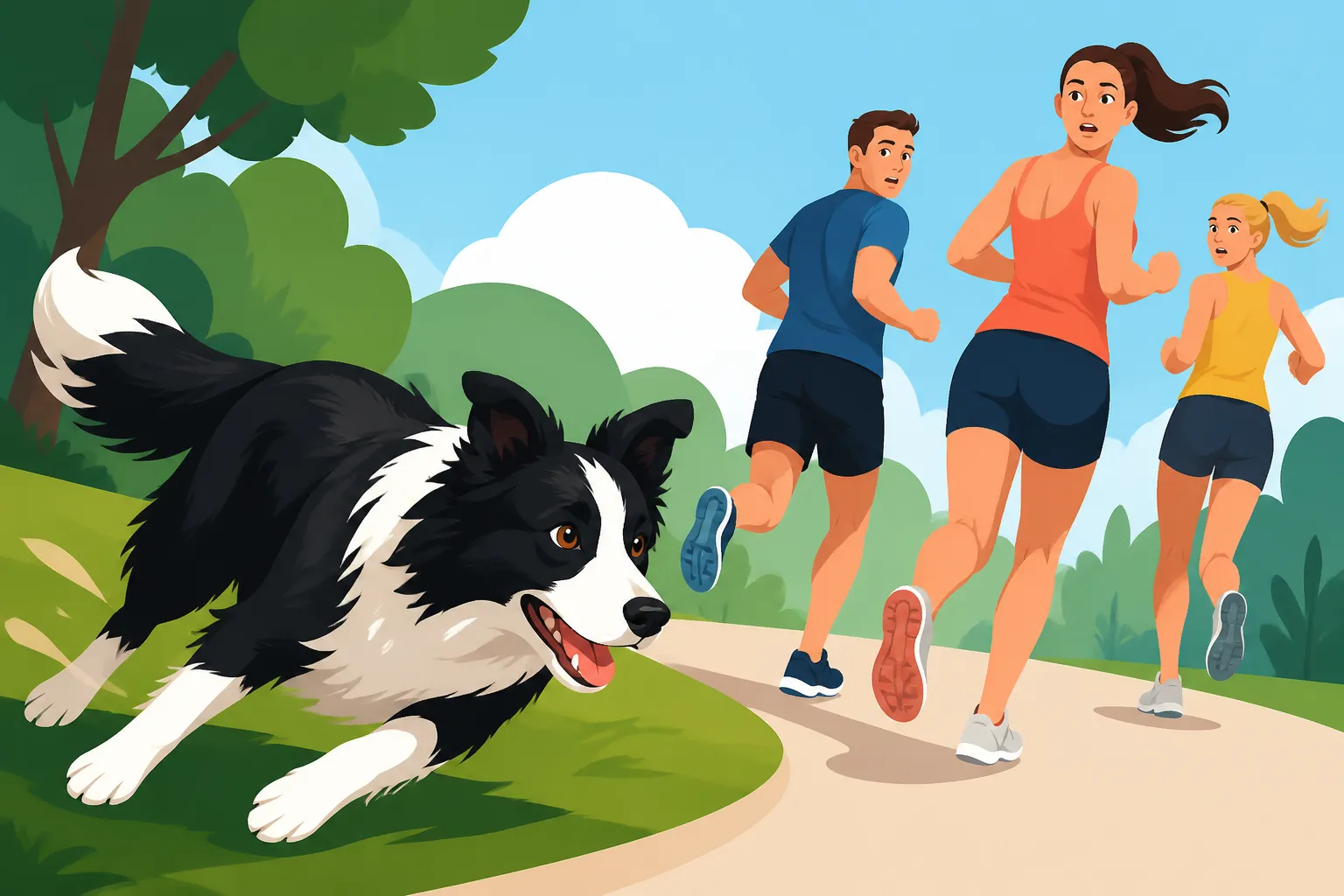
You're out for a peaceful stroll with your magnificent Border Collie, enjoying the fresh air, when suddenly a jogger appears. Before you can even react, your dog has tensed, given that intense stare, and is lunging, barking, or attempting to circle the runner. It's frustrating, embarrassing, and frankly, a bit scary. This guide is here to help you understand why your Border Collie acts this way and, more importantly, how to manage and retrain this deeply ingrained behavior, ensuring safer walks for everyone.
Understanding the Instinct to Herd Joggers
It’s easy to feel like your Border Collie is just being naughty, disobedient, or trying to embarrass you. But the truth is, what you're seeing isn't malice; it's instinct. The Border Collie was bred for hundreds of years to perform very specific behaviors, and when those behaviors don't have an appropriate outlet, they often find less-than-ideal targets.
The Deep-Seated Herding Drive
Border Collies are renowned for their intense herding drive, and for good reason. It’s what makes them exceptional working dogs. This drive isn't just about moving sheep; it's a complex set of behaviors involving stalking, eye contact, circling, driving, and collecting. Every single one of these actions has been meticulously selected for over generations to create a dog that can control livestock with minimal physical intervention. Think about it: they're not just running after sheep; they're reading movement, anticipating direction, and positioning themselves to influence the flock. It's a dance, a chess game, and a marathon all rolled into one.
When a Border Collie is on pasture, working stock, these instincts are channeled, directed, and rewarded. The dog understands its role and has a clear job to do. But take that same dog, or one with a similar genetic makeup, and place it in a suburban park or on a busy street, and suddenly those powerful, inherent drives have nowhere to go. They don't just disappear; they look for an outlet. This intense desire to control movement is the fundamental reason why a passing jogger can become an irresistible target.
Misdirected Instincts in a Pet Environment
In a typical pet home, a Border Collie rarely encounters actual sheep or cattle. While some owners do engage in herding sports or urban herding activities, many do not, or don't have access to them. This creates a vacuum where the dog's primary genetic purpose isn't being fulfilled. Instead of working a flock, the Border Collie might start to "herd" other things: children, bicycles, cars, or yes, joggers. It's not because they're being aggressive, but because these moving targets trigger that ancient impulse to gather, control, and redirect.
The problem arises because these substitute "sheep" (like joggers) don't behave like actual livestock. A sheep will respond to a dog's pressure, changing direction or slowing down. A jogger, however, might speed up, try to ignore the dog, or even become alarmed, which can intensify the dog's perceived need to "control" them. The dog isn't intentionally being a nuisance; it's simply applying its innate skillset to the nearest available moving object, often with an incredible amount of focus, or The Border Collie Stare and Where It Comes From. This misdirection can lead to frustrating and potentially dangerous situations if not understood and managed proactively.
Why Joggers Become "Sheep"
It’s fascinating, and sometimes infuriating, how quickly a Border Collie can identify a moving target and decide it needs to be managed. For our dogs, a jogger isn't just a person; it's a rapidly moving entity that triggers a primal response deep within their DNA.
Movement Triggers the Chase Instinct
Imagine you're a Border Collie, and your entire existence has been shaped by generations of selective breeding to respond to movement. A sheep breaks from the flock, a lamb wanders off, and instantly, your ancestors knew their job was to bring it back, to keep the flock cohesive. This manifests as an incredibly powerful chase instinct. When a jogger comes into view, especially one moving at a steady, rhythmic pace, it mimics the movement of a straying animal. The dog's brain lights up, signaling, "Here is something that needs my attention! Something is moving!"
This isn't just a casual interest; it's an almost irresistible compulsion for many Border Collies. The speed, the direction, the sheer act of someone passing by can switch on that deep-seated predatory sequence. It often starts with the "eye" – that intense, focused gaze that Border Collies are famous for – followed by a crouch, a stalk, and then, if not interrupted, an attempt to cut off, circle, or "head" the jogger. The faster the jogger moves, the more compelling the trigger often becomes, reinforcing the dog's perceived need to intervene and control that movement.
The Border Collie's Perception of Control
For a working Border Collie, the goal isn't just to chase; it's to control. They don't simply run wildly at sheep. They use their body position, their speed, and their eye to dictate where the sheep go. They push when they need to push, and they hold when they need to hold. When a Border Collie attempts to herd a jogger, it's often a manifestation of this desire for control. The dog sees the jogger moving away or moving past its perceived "flock" (which might be you, your family, or even just the territory it deems its own), and its instinct is to bring that moving object back or prevent it from straying further.
This perception of control is what makes the behavior so challenging to break. From the dog's perspective, it's doing its job, responding appropriately to a stimulus. It might bark to "drive" the jogger, or lunge to "head them off." If the jogger slows down or stops due to the dog's actions, the dog inadvertently gets a reward – its behavior worked to exert control. This accidental reinforcement can make the behavior stronger and harder to overcome without consistent, dedicated training and management. It's a classic example of why a solid Recall on a Border Collie That Has Locked On is so utterly critical.
Common Scenarios and Their Dangers
When a Border Collie decides a jogger is fair game for herding, it can play out in various ways, each carrying its own set of challenges and potential dangers for both the dog and the people involved.
Leash Reactivity and Lunging
One of the most common ways this herding instinct manifests in public is through leash reactivity. You’re walking your Border Collie on a lead, a jogger approaches, and suddenly your dog is transformed. The quiet, attentive companion you had a moment ago is now a lunging, barking, straining animal, desperate to get to the moving target. This isn't just inconvenient; it can be incredibly frustrating and physically demanding for the handler. A strong Border Collie can easily pull a person off balance, especially if caught off guard.
Beyond the physical challenge, leash reactivity can escalate. The continuous barking and lunging can be intimidating for passersby, potentially leading to complaints or even fear from those who don't understand canine behavior. More concerning is the impact on your dog. Each time they perform this reactive behavior, it reinforces the pattern. They learn that lunging and barking might get them closer to the "sheep," or at the very least, it provides an intense, albeit negative, outlet for their frustrated energy. It also creates a cycle of stress for your dog, making walks less enjoyable for both of you.
Off-Leash Risks and Potential Incidents
While leash reactivity is a struggle, allowing a Border Collie with a known tendency to herd joggers to be off-leash in areas where runners might appear is extremely risky. An off-leash Border Collie can quickly close the distance to a jogger, circling them, nipping at their heels (a classic herding behavior), or even tripping them. This is not only terrifying for the jogger but can lead to serious injury. Imagine your dog causing someone to fall and sustain an injury; the legal and ethical ramifications are significant.
Furthermore, an off-leash dog pursuing a jogger can easily run into traffic, get lost, or encounter other dogs or wildlife, creating a cascade of dangerous situations. The intensity of a Border Collie's focus when herding means they might become "deaf" to your commands, truly locking onto their target. This is why strict adherence to leash laws and careful management in public spaces is paramount. Until you have thoroughly trained and proofed a reliable recall and desensitized your dog to joggers, off-leash freedom in public areas is simply not an option. It's about protecting your dog, protecting others, and maintaining responsible dog ownership. Nobody wants to be the owner whose dog caused an incident; it's a huge burden, and one that is entirely preventable with foresight and training.
Strategies for Management and Training
Dealing with a Border Collie that herds joggers requires a two-pronged approach: effective management to prevent the behavior from occurring, and consistent training to redirect and modify the underlying instinct. This isn't a quick fix, but a journey that builds trust and understanding between you and your dog.
Building a Rock-Solid Recall
Your recall command is your absolute lifeline, especially with a Border Collie whose instincts can kick in with such ferocity. If your dog has a tendency to lock onto moving objects, a recall needs to be more than just "come here" – it needs to be "drop everything and come to me now." This isn't just about obedience; it's about safety.
Start training your recall in low-distraction environments, like your backyard, with high-value rewards. Think cooked chicken, cheese, or their favorite squeaky toy. Practice frequently, making it a fun game. Gradually increase distractions, working in different locations, and always ensure your reward outweighs the distraction. Using a long line, perhaps from Amazon, can be incredibly helpful here. A thirty-foot line allows you to practice a full-speed recall while still maintaining a physical connection and preventing your dog from practicing the undesirable herding behavior. When your dog is truly reliable, meaning they will leave a moving object to return to you, then and only then can you even consider increasing their freedom, and even then, with caution and continued vigilance. Remember, a single successful herding attempt can set your training back significantly, so prevention is key. You're essentially building a stronger, more rewarding pattern of behavior than the deeply ingrained herding drive.
Leash Skills and Engagement
For those walks where off-leash isn't an option (which for most of us, is most walks!), strong leash skills are non-negotiable. This means teaching your Border Collie to walk politely on a loose leash, even when distractions are present. It's a continuous process, not a one-time lesson. Focus on engagement with you. If your dog is checking in with you regularly, making eye contact, and responding to your cues, they are less likely to be scanning the horizon for potential "sheep."
When you spot a jogger approaching from a distance, it's your cue to spring into action before your dog does. Don't wait for the lunge or the bark. Interrupt the stare. Use a cheerful tone, ask for a "look at me," "sit," or "touch" command, and reward heavily as the jogger passes. Make you the most interesting thing in the environment. High-value treats, praise, or a quick game with a favorite toy can effectively redirect their attention. If your dog is simply too overstimulated, increase the distance. Cross the street, step behind a bush, or find a less busy route. The goal is to keep your dog under their reactivity threshold, slowly building their tolerance to joggers without allowing them to practice the herding behavior. Consider a front-clip harness or a head halter if you need more control, but always pair these tools with positive reinforcement and training, rather than relying solely on their restrictive nature.
Providing Appropriate Outlets for Herding Energy
One of the biggest mistakes owners make with Border Collies is thinking that simply "more exercise" will solve everything. While physical exercise is crucial, it’s often mental work and purposeful activity that truly satisfies their deep-seated needs. Exercise, Work and What Actually Settles a Border Collie is a prime example of this. You need to give them a job, even if that job isn't gathering sheep.
Consider these alternatives:
- Dog Sports: Agility, flyball, disc dog, obedience, rally, or scent work can all provide incredible mental and physical stimulation. These sports tap into their intelligence, their drive to work with a handler, and their athleticism, but in a structured, safe environment. They learn to channel their energy and focus into specific tasks, with clear rules and rewards.
- Urban Herding or Treibball: If you have access to it, urban herding uses large exercise balls instead of sheep, allowing your Border Collie to use their herding skills in a controlled way. Treibball is a fantastic sport that directly mimics herding without livestock, using large inflatable balls for the dog to push and gather.
- Advanced Obedience and Trick Training: Border Collies thrive on learning. Teaching complex trick sequences, working on advanced obedience routines, or engaging in canine freestyle can challenge their minds and strengthen your bond. Remember Mental Work That Tires a Border Collie Faster often more effectively than purely physical exertion.
- Puzzle Toys and Interactive Games: Incorporate puzzle feeders, like those you can find on Amazon, into their daily routine. These make them "work" for their food, engaging their problem-solving skills. Scent work games, where they have to sniff out hidden treats or toys, are also excellent for mental fatigue.
By providing these constructive outlets, you’re not just burning off energy; you're fulfilling their innate desire to do something, to use their incredible brains and bodies in a meaningful way. This can significantly reduce the internal pressure that leads them to "herd" inappropriate targets like joggers.
Tools and Resources to Help
Navigating the complexities of Border Collie behavior can feel overwhelming, but thankfully, there are many tools and resources available to make the journey smoother and more successful.
Essential Training Gear
Having the right gear can make a huge difference in managing and training your Border Collie, especially when dealing with high-drive behaviors like herding joggers.
- Long Line: As mentioned, a long line (15-50 feet) is invaluable for practicing recall in a semi-controlled environment. It allows your dog more freedom than a standard leash but still gives you the ability to prevent them from bolting after a jogger. Look for durable, lightweight options that don't tangle easily. This is vital for The Thirty-Foot Line a Border Collie Recall Needs.
- Front-Clip Harness: For dogs that pull on the leash due to their strong herding drive, a front-clip harness can provide much better control than a standard back-clip harness or collar. When the dog pulls, it redirects their body sideways, making it harder for them to lunge forward with full force. Brands like Easy Walk or Freedom Harness are popular choices.
- Head Halter: For some dogs, particularly those with very strong necks or intense reactivity, a head halter (like a Halti or Gentle Leader) offers even more control. It works much like a horse's halter, guiding the dog's head, and where the head goes, the body often follows. It’s crucial to introduce these gradually and positively, ensuring your dog is comfortable wearing it.
- High-Value Treats: Forget bland kibble for these training sessions. You need treats that are so irresistible, your Border Collie will choose them over the most exciting distraction. Small pieces of cooked chicken, hot dogs, cheese, or specialized training treats are often effective. Keep a variety on hand to keep your dog engaged.
- Engagement Toys: A favorite tug toy or squeaky ball can be an incredible reward and distraction. Teach your dog to focus on playing with you in distracting environments. Many trainers recommend using a specific toy only for outdoor training, making it even more special and high-value.
Remember, these tools are aids to training, not replacements for it. They help you manage the situation while you teach your dog appropriate behaviors.
Professional Guidance and Online Programs
Sometimes, the challenges feel too big to tackle alone, and that's perfectly normal. Border Collies are incredibly intelligent but also incredibly sensitive and driven, and their quirks can be complex.
- Certified Professional Dog Trainer (CPDT): Seeking help from a professional dog trainer specializing in positive reinforcement and force-free methods can be a game-changer. A good trainer can assess your dog's specific triggers, body language, and temperament, then create a tailored training plan. They can also provide hands-on guidance, showing you how to correctly implement techniques and troubleshoot issues in real-time. Look for trainers with experience in high-drive breeds or reactivity.
- Behavioral Veterinarian (DACVB): For more severe cases of reactivity, aggression, or if you suspect underlying anxiety, a veterinary behaviorist is the highest level of expertise. These are veterinarians with specialized training in animal behavior, who can rule out medical causes for behavior issues and prescribe medication if appropriate, alongside behavioral modification.
- Online Training Programs: While not a substitute for hands-on help in severe cases, many excellent online programs can provide foundational knowledge and structured exercises. Programs like those offered by BAXTER & Bella (known for their comprehensive online puppy and dog training courses) or others focused on leash reactivity or impulse control can offer a wealth of information and video tutorials that you can work through at your own pace. These can be particularly useful for understanding the theory behind the training and getting ideas for specific exercises to practice at home and in gradually more distracting environments. They often include community forums where you can ask questions and get support from other owners facing similar challenges.
No matter which path you choose, consistency is key. Border Collies learn rapidly, but they also form strong habits, both good and bad. Patience, understanding, and a willingness to put in the work will be your greatest assets in helping your Border Collie learn to coexist peacefully with joggers and other moving targets.
Summary of Management and Training Strategies
To give you a quick overview of the key strategies for managing a Border Collie that herds joggers, here's a table outlining the approaches and their benefits:
| Strategy | Description | Key Benefits |
|---|---|---|
| Preventative Management | Avoid situations where your dog can practice the unwanted behavior (e.g., leash in busy areas, maintain distance from joggers, secure fencing). | Prevents reinforcement of unwanted behavior, reduces stress, ensures safety for all. |
| Building Strong Recall | Consistently train your dog to come back to you immediately, regardless of distractions, using high-value rewards. | Your ultimate safety net, allows interruption of herding behavior, provides handler control. |
| Leash Engagement | Teach your dog to focus on you during walks, using positive reinforcement, eye contact, and obedience cues as distractions pass. | Reduces reactivity, strengthens bond, makes walks more enjoyable and controlled. |
| Appropriate Outlets | Provide structured physical and mental activities that fulfill your Border Collie's natural drives (e.g., dog sports, urban herding, advanced training). | Channels innate instincts constructively, reduces frustration, leads to a more content dog. |
| Desensitization/Counter-Conditioning | Gradually expose your dog to joggers at a distance where they remain calm, pairing their appearance with high-value rewards. | Changes your dog's emotional response to joggers from excitement/instinct to positive association. |
| Professional Help | Consult a certified professional dog trainer or veterinary behaviorist for personalized guidance and advanced techniques. | Expert assessment, tailored plans, effective troubleshooting, support for complex cases. |
It's a lot to take in, but remember, every little step forward is progress. A well-managed and well-trained Border Collie is a joy to live with, and with your dedication, your dog can learn to channel those powerful instincts into more appropriate and enjoyable activities. You'll both be happier and safer for it.
Disclaimer
This article is for general informational purposes only and does not constitute professional advice. Laws, prices and regulations vary by location and change over time. Consult a qualified professional for guidance on your specific situation.