Whether a Border Collie Can Be Trusted Near Livestock
It's a question many Border Collie owners ponder, often with a mix of awe for their dog's incredible instincts and a healthy dose of anxiety: can this whirling dervish of a dog actually be trusted around livestock? The truth is, that powerful herding instinct that makes Border Collies so captivating is a double-edged sword, capable of beautiful, precise work or utter chaos. This guide will help you navigate that complex terrain, understanding the core drive, the risks involved, and the steps to build reliable control and a trustworthy relationship between your Border Collie and any animals it might encounter.
The Instinct Versus the Skill: Understanding the Border Collie Drive
When you see a Border Collie intensely focused on something, be it a flock of sheep or even a rolling ball, you're witnessing the essence of its being. This isn't just a dog that likes to chase; it's a dog with centuries of selective breeding for a very specific, highly refined predatory sequence. Understanding this deep-seated drive is the first step in knowing whether your Border Collie can ever be truly "trusted" near livestock.
The Raw Herding Instinct: More Than Just Chasing
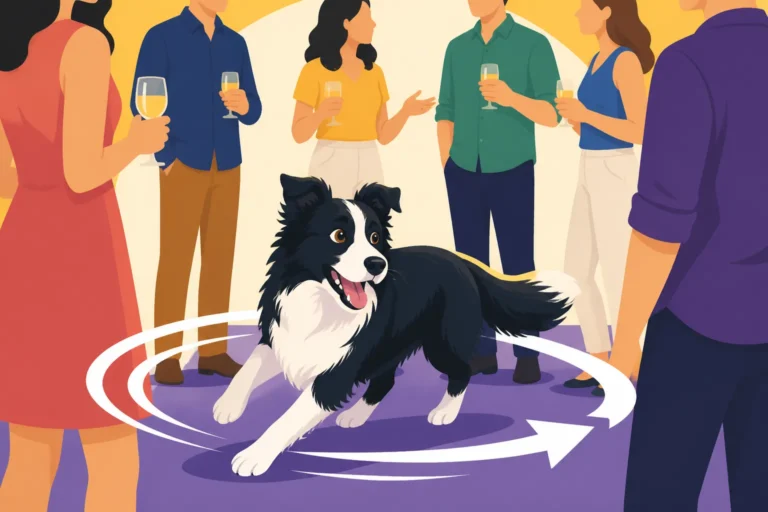
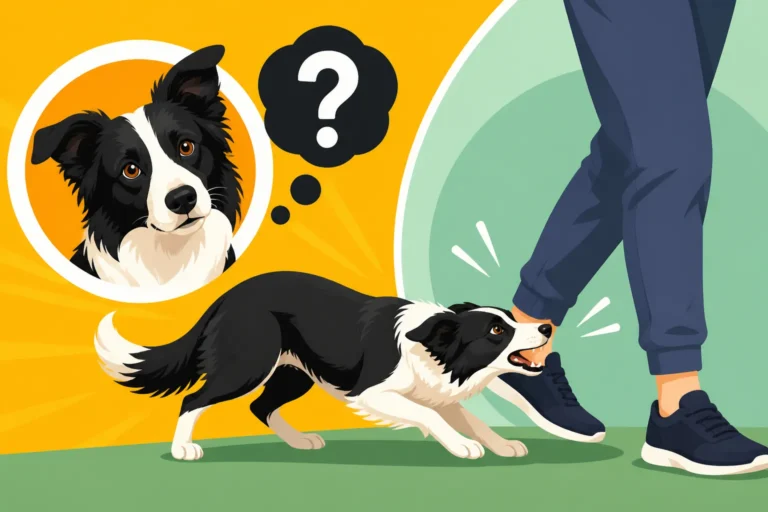
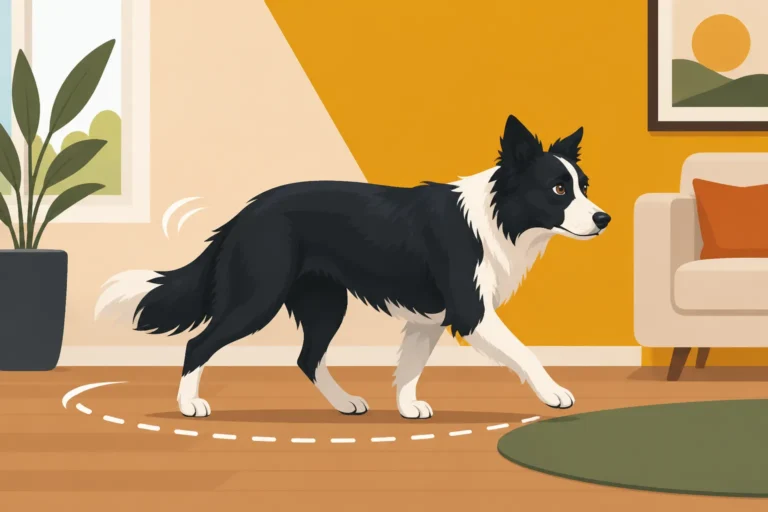
The Border Collie's herding instinct is often misinterpreted. It's not simply running after things; it's a complex set of behaviors that mirror the hunt, but without the final kill. They stalk, they eye, they crouch, they chase, and they gather. This is what we call "eye" – that intense, unwavering gaze that can stop a sheep in its tracks. This instinct is hardwired, often present even in puppies who've never seen a sheep. It's a powerful force, and left untrained, it can manifest as nipping, excessive chasing, or even attempts to "gather" children, bicycles, or other pets.
Imagine your Border Collie spotting a group of chickens or a few calves for the first time. Their eyes might glaze over, their body language shifts, and they might drop into that characteristic low crouch. This isn't naughtiness; it's their genetic blueprint screaming "WORK!" The raw instinct tells them what to do, but not how to do it safely or effectively within human-defined boundaries. This is where the distinction between instinct and skill becomes absolutely critical.
The Journey from Instinct to Skilled Work
Having a strong herding instinct is like having raw talent for playing a musical instrument – it's a fantastic starting point, but it doesn't mean you can play a symphony without lessons and practice. A Border Collie's natural instinct needs to be channeled, refined, and controlled through rigorous training. Without this, their instinct can be a liability rather than an asset around livestock.
A dog that hasn't been taught how to use its eye and body language correctly might rush the sheep, scattering them and causing panic. They might grip or bite out of frustration or over-excitement, which can lead to injury to the stock and could result in the dog itself being harmed. The goal of training isn't to remove the instinct, but to install an "off-switch" and a repertoire of specific commands that allow the handler to direct that powerful drive. Think of it as teaching your dog to drive a car – they have the engine (instinct), but they need to learn the steering, brakes, and traffic rules (commands and control). Many owners start this journey by taking their dog to an instinct test for a Border Collie, which can provide valuable insight into their natural aptitude.
The Risks of an Untrained Border Collie Around Livestock
Allowing an untrained or improperly trained Border Collie unsupervised access to livestock is fraught with potential dangers, not only for the animals but for the dog itself, and the owner too. The romantic image of a dog effortlessly working sheep can lead to dangerous assumptions about their innate reliability.
Stressing and Worrying Livestock
One of the most immediate and common risks is the psychological stress an uncontrolled Border Collie can inflict on livestock. Even if the dog never physically touches an animal, constant harassment, barking, or relentless "eye" can terrorize sheep, goats, or cattle. This stress can have severe consequences, particularly for pregnant animals, young stock, or those already in a delicate state. Ewes can abort their lambs, milk production can drop in dairy animals, and all livestock can lose condition, becoming flighty and difficult to manage.
Imagine a flock of sheep, normally calm, suddenly being "worked" by a dog that doesn't understand restraint. They're constantly being moved, never allowed to settle, their flight instinct always triggered. This isn't herding; it's worrying. The sheep might injure themselves trying to escape, running into fences, or trampling each other. This is precisely why proper training on Off-Leash Rules for a Border Collie Near Stock is so vital from the outset.
Physical Harm and Injury to Animals
Beyond stress, an uncontrolled Border Collie can cause direct physical harm. Their natural instinct sometimes includes nipping at the heels or flanks to turn or move stock. While a trained dog uses this sparingly and correctly, an untrained dog might nip excessively, break skin, or cause bruising. In extreme cases, a dog might even "grip" an animal, biting down and holding on, leading to serious injury or even death. This is particularly dangerous with young lambs, kids, or calves, who are much more vulnerable to even a playful nip from a powerful dog.
The sheer chasing power of a Border Collie can also injure livestock. A dog running stock into a fence at high speed, or repeatedly scattering them, can cause collisions and falls, leading to broken bones, lameness, or internal injuries. The cost, both emotionally and financially, of such incidents can be devastating for a farmer or livestock owner. Remember, even a dog with good intentions can cause significant damage if it lacks proper control and boundaries.
Financial and Legal Consequences
The legal and financial repercussions of an uncontrolled dog worrying or injuring livestock can be substantial. In many regions, laws are in place to protect livestock from dog attacks. An owner whose dog causes damage might be liable for the market value of any injured or killed animals, veterinary bills, and even consequential damages like lost production. In severe cases, livestock owners may be legally entitled to protect their animals by any means necessary, which can put your dog at serious risk.
Consider the scenario where your Border Collie, driven by instinct, chases a neighbor's sheep through a fence, causing several to escape onto a busy road. The direct cost of fence repair and any injured sheep is just the start. If those sheep cause a traffic accident, the liability could skyrocket. This isn't just about training your dog; it's about being a responsible neighbor and citizen. The stakes are very high, making the investment in proper training an absolute necessity.
Building Trust and Control Around Livestock
Building trust and control with a Border Collie around livestock is a long-term commitment that begins long before the dog ever sees a sheep. It's about establishing a robust foundation of obedience and then meticulously layering on specific herding commands under expert guidance.
Foundation Obedience is Paramount
Before your Border Collie even dreams of herding, it needs a rock-solid foundation of general obedience. This means a recall so reliable you could call them off a plate of steak, a "stay" command that holds under distraction, and an immediate "down" or "stop" from any distance. These commands are not just polite manners; they are the emergency brakes and steering wheel you'll need when the powerful herding instinct kicks in. Without these basics, introducing your dog to livestock is like handing a child the keys to a sports car – exciting, but incredibly dangerous.
Many successful working dog handlers will tell you that the difference between a great stock dog and a dangerous one often comes down to the reliability of their basic commands. Programs like BAXTER & Bella offer excellent online resources to build this foundational obedience from puppyhood, ensuring your Border Collie understands impulse control and responds reliably to your voice, even when excited. This is the bedrock upon which all future herding skills are built. A strong Recall on a Border Collie That Has Locked On is not optional; it's a lifeline.
Introduction to Stock in a Controlled Environment
Once your Border Collie has excellent foundational obedience, the next step is a carefully managed introduction to livestock. This should never happen unsupervised. Seek out experienced herding trainers who work with young dogs. They will typically start with a small number of quiet, "dog-broke" sheep in a confined area, often a round pen. This controlled environment allows the dog to express its natural instinct in a safe way, while the trainer teaches you how to read your dog and give it appropriate commands.
During these initial sessions, the focus isn't on perfect herding, but on teaching the dog to respond to commands like "walk up," "lie down," "come bye" (go clockwise), and "away to me" (go counter-clockwise). It’s about building a working partnership, where the dog learns that listening to you allows them to do what they love, but only under your direction. This prevents them from simply indulging their instinct to chase or worry. The First Time a Border Collie Meets Sheep should be a structured, positive experience guided by a knowledgeable mentor.
Progressive and Consistent Training
Training a Border Collie to work stock is a progressive journey, not a destination. You'll move from quiet sheep in a round pen to larger groups, then perhaps to open fields, and eventually to more challenging stock or competition settings. Each step requires consistent practice and patience. Regular lessons with a qualified trainer are invaluable, as they can help you interpret your dog's behavior, refine your commands, and troubleshoot any issues that arise.
Even a highly trained Border Collie isn't "done" and can't be put out with livestock unsupervised. Their instinct is always there. It requires ongoing reinforcement, clear boundaries, and constant communication with their handler. The relationship is one of partnership and control, where the dog trusts your judgment, and you trust its willingness to respond. The commands like What Come Bye Means to a Border Collie and What Away to Me Means to a Border Collie become second nature through repetition and positive association.
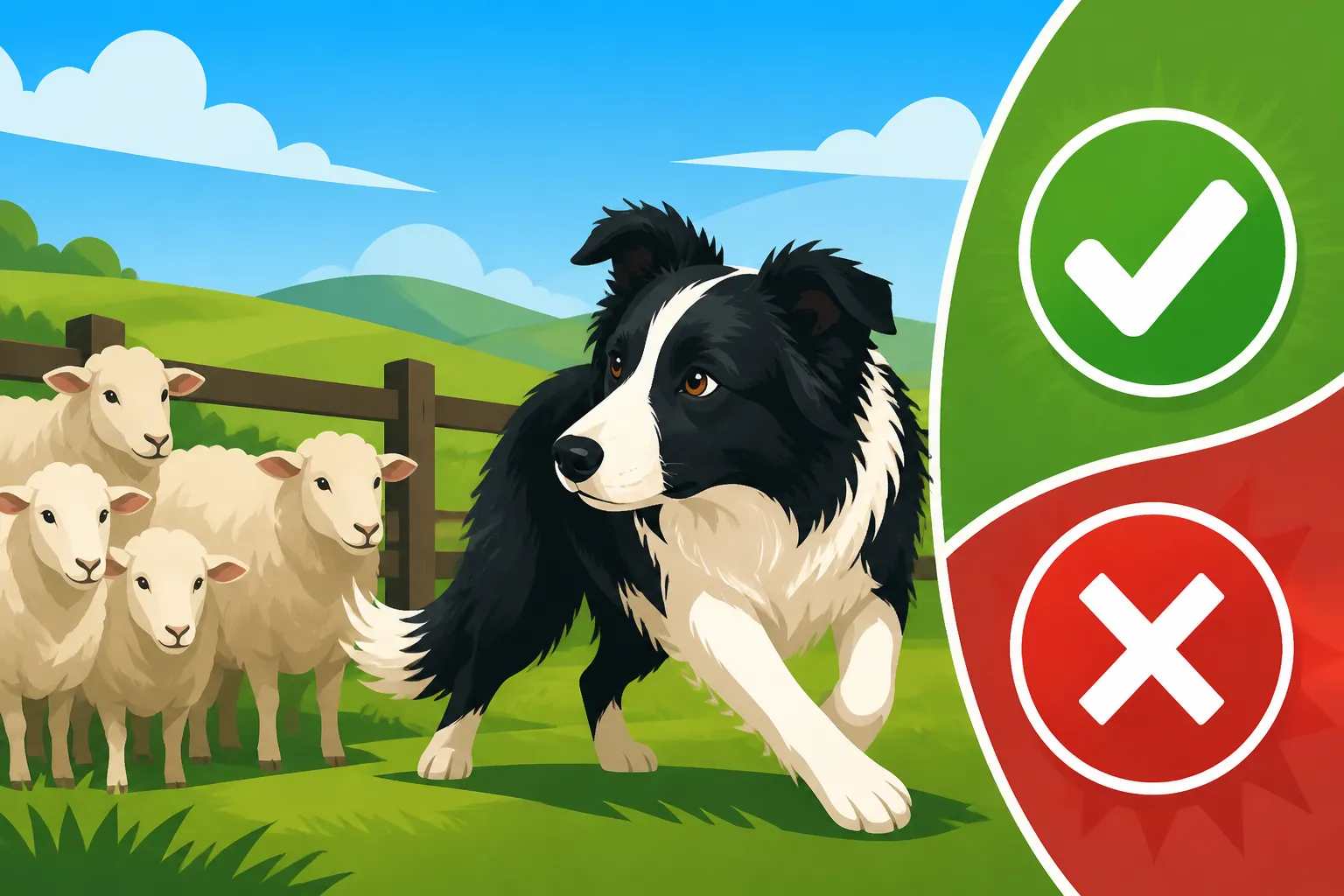
Here's a quick overview of how a Border Collie's behavior shifts from raw instinct to trained skill around livestock:
| Behavior Aspect | Untrained Border Collie (Instinct-Driven) | Trained Border Collie (Skill-Driven) |
|---|---|---|
| Eye | Intense, fixed stare, can freeze stock, may lead to excessive pressure. | Controlled, used to gather and move stock with appropriate pressure. |
| Movement | Rushes, scatters, may cut off stock incorrectly, erratic, high-energy. | Fluid, purposeful, flanks (circles) effectively, maintains proper distance. |
| Mouth/Nipping | May nip indiscriminately out of frustration or over-excitement, can injure. | Uses mouth only when necessary (e.g., to turn stubborn stock), controlled. |
| Response to Handler | Ignores commands when fixated, difficult to call off, self-directed. | Responds instantly to voice and whistle commands, works with the handler. |
| Impact on Stock | Stresses, exhausts, injures, scatters, causes fear and distrust. | Moves calmly, gathers efficiently, minimizes stress, builds confidence in stock. |
| Overall Goal | Satisfy innate urge to chase/gather, often without purpose. | Achieve handler's objective (move, sort, pen stock) safely and effectively. |
Continuous Reinforcement and Boundaries
Never assume your Border Collie is "finished" with its training around livestock. Like any high-drive athlete, they need continuous practice and reinforcement to maintain their skills and responsiveness. This means regularly working stock, even if it's just a few sheep in a small pen, to keep their commands sharp. It also means maintaining strict boundaries in all other aspects of their life. If you allow them to chase squirrels or herd children in the backyard, you're blurring the lines of control and making it harder for them to understand that livestock is different.
Consistency is key. Every interaction, every command, every boundary reinforced builds that deep understanding and trust. It's a testament to their intelligence and desire to work that Border Collies thrive on this structure. Provide opportunities for Mental Work That Tires a Border Collie Faster to keep their minds engaged, as a bored Border Collie is often a creative one, and not always in a good way around stock. For specific equipment like long lines for practicing recall in open areas, or specialized herding whistles, you can often find a good selection on platforms like Amazon.
When Not to Trust Your Border Collie Near Livestock
Even with the best training in the world, there are crucial situations where you should exercise extreme caution or outright avoid trusting your Border Collie near livestock. Overconfidence can quickly undo years of hard work and lead to dangerous outcomes.
The Dangers of Unsupervised Access
This is perhaps the biggest and most critical rule: never, ever leave your Border Collie unsupervised with livestock. No matter how well-trained, how experienced, or how trustworthy you believe your dog to be, the potential for instinct to override training when no handler is present is simply too great. A sudden noise, a frightened animal, or even a moment of boredom could trigger a reversion to raw instinct, leading to damage.
Even on a working farm, a trained Border Collie isn't left alone in a pasture with sheep for hours on end. They work under direction, and when their job is done, they are kenneled or brought inside. The risk of injury to the livestock, or even to the dog if an animal defends itself, is too high. This is not a judgment on your dog's character, but a realistic acknowledgment of their powerful, ancient drive. If you're wondering Whether a Border Collie Can Be Trusted Near Livestock without you there, the answer is almost always no.
Handling New or Flighty Stock
Not all livestock is created equal when it comes to dog interaction. Quiet, "dog-broke" sheep or cattle that are accustomed to being worked by dogs present a much different challenge than new, wilder, or flightier animals. A Border Collie that works perfectly with your calm flock might become over-excited or aggressive with stock that runs at the slightest provocation. The dog's instinct to gather can quickly escalate into frantic chasing when dealing with animals that refuse to stand or move predictably.
Introducing your Border Collie to different types of stock, or even new individuals within your usual stock, needs to be done carefully and under strict control. Some stock, particularly those unaccustomed to dogs, can also be aggressive towards them, posing a danger to your Border Collie. Always err on the side of caution. An experienced handler knows the temperament of both their dog and their stock, and understands when a situation is too challenging or risky for safe interaction. What Happens If a Border Collie Worries Sheep can vary wildly depending on the sheep's temperament and breed.
High-Distraction or Over-Excitement Scenarios
Border Collies thrive on routine and clear direction, but even the best-trained dogs can struggle when they are over-stimulated or faced with overwhelming distractions. A trial environment, for instance, with many dogs, handlers, and a large, unfamiliar flock of sheep, can be incredibly exciting. If your dog isn't accustomed to such high-pressure situations, its training might temporarily falter. The same applies to chaotic farm environments, or situations where livestock are already agitated.
It's also crucial to monitor your Border Collie for signs of over-excitement – frantic barking, relentless staring, or ignoring your commands. These are red flags that your dog is operating purely on instinct and needs to be removed from the situation to calm down. Pushing a dog through this state won't build trust; it will likely reinforce bad habits and could lead to an incident. Recognizing Excitement as a Trigger for Border Collie Collapse and other behavioral issues is essential to prevent both physical and mental over-exertion. Always prioritize safety and control over pushing your dog's limits.
Disclaimer
This article is for general informational purposes only and does not constitute professional advice. Laws, prices and regulations vary by location and change over time. Consult a qualified professional for guidance on your specific situation.