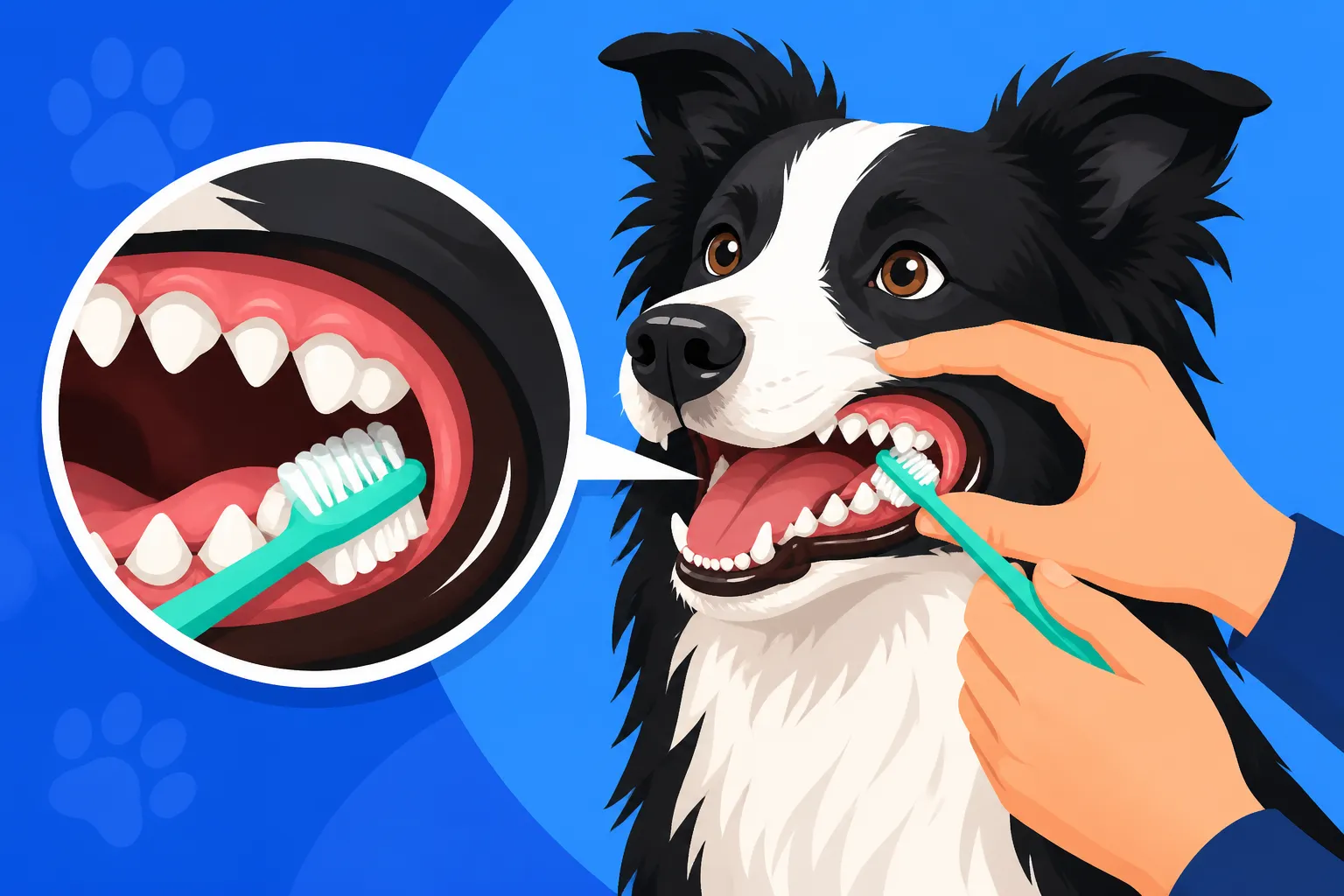
Brushing a Border Collie’s Back Teeth
Anyone who shares their life with a Border Collie knows they're smart, active, and sometimes, well, a little opinionated about what they will and won't tolerate. And when it comes to dental hygiene, specifically brushing those tricky back teeth, it can feel like you're wrestling a greased-up shadow. This guide is here to walk you through why those molars matter so much and how to actually get them clean without turning teeth-brushing into a daily battle.
Why Back Teeth Are So Important (and Often Overlooked!)
It's easy to focus on the front teeth when your Border Collie flashes you a grin, but those teeth at the very back of their mouth are the real workhorses – and often the most neglected. They're tucked away, harder to reach, and out of sight, out of mind for many busy owners. But ignoring them can lead to some serious health problems down the line, affecting not just their mouth but their entire body.
The Hidden Dangers of Neglect
Think about how much chewing your Border Collie does, whether it's on a favorite tug toy, a hardy dental chew, or their kibble. Those powerful back molars are constantly at work, grinding and crushing. This constant action, combined with food particles and bacteria, creates a perfect storm for plaque accumulation. Plaque is that sticky, invisible film that coats teeth, and if it's not removed regularly, it hardens into tartar. And once tartar sets in, it's virtually impossible to remove with just a toothbrush.
Tartar then acts like a rough invitation for even more bacteria, irritating the gums and leading to gingivitis. You might notice red, swollen gums, or even a bit of bleeding when your dog chews or if you manage to poke around back there. If gingivitis isn't addressed, it can progress to full-blown periodontal disease, where the infection attacks the structures supporting the teeth. This can cause significant pain, loose teeth, abscesses, and even bone loss in the jaw. Imagine living with that kind of constant discomfort – it's no wonder your usually energetic Border Collie might start refusing certain toys or become picky with their food. Beyond the mouth, these bacterial infections can spread through the bloodstream, affecting vital organs like the heart, kidneys, and liver. It’s a frightening thought, and it underscores just how critical consistent dental care, especially for those hard-to-reach back teeth, truly is.
Anatomy of a Border Collie's Mouth
A Border Collie, like most dogs, has 42 adult teeth. Among these, the premolars and molars at the back are designed for shearing and grinding food. The upper fourth premolar and lower first molar are particularly important, often called the carnassial teeth, and they do the heavy lifting in breaking down food. Because of their broad, flat surfaces and their location deep within the mouth, they tend to collect more plaque and tartar than the sharper, self-cleaning incisors at the front.
Their powerful jaws, while excellent for gripping a favorite frisbee or working stock, can also make it challenging to access these areas for brushing. Many Border Collies, with their innate intelligence and sometimes stubborn nature, quickly learn to clamp down or turn their head just as you’re trying to maneuver a brush past their canines. Their lips, while flexible, can also obstruct your view and access. Understanding this anatomy and behavioral tendency helps you anticipate the challenges. It’s not just about getting a brush in their mouth, it’s about strategically reaching those specific surfaces that are most prone to disease, particularly along the gumline where the plaque accumulates fastest. For tips on managing their general health, check out The Weekly Once-Over a Working Border Collie Gets.
Getting Your Border Collie to Cooperate (It's a Journey, Not a Sprint)
Let's be real: trying to brush a dog's teeth, especially one as clever and discerning as a Border Collie, can feel like you're trying to win an argument with a furry, four-legged lawyer. They know what's coming, and they'll try to outsmart you. But with patience, positive reinforcement, and a realistic outlook, you can turn this daunting task into a manageable part of your routine. Remember, Rome wasn't built in a day, and neither is a perfectly clean set of Border Collie back teeth.
Starting Early and Positive Reinforcement
If you're lucky enough to have a Border Collie puppy, you've got a head start! Introducing them to mouth handling, toothbrushes, and toothpaste from a young age is absolutely key. Even before their adult teeth come in, gently rub their gums with your finger. This desensitizes them to having hands near and in their mouth. As they grow, move to a finger brush or a very soft infant toothbrush. Keep these sessions super short – just a few seconds at first – and always follow with high-value treats and enthusiastic praise. The goal is to make it a positive, even exciting, experience. You want them to associate the toothbrush with good things, not a battle.
For adult Border Collies who haven't had much dental attention, the process will take longer, and you'll need even more patience. Start by simply letting them lick a tiny bit of dog-specific toothpaste off your finger. Then, introduce your finger into their mouth, gently rubbing their gums. Build up slowly to a brush, always rewarding calm acceptance. If they resist, back off and try again later. Never force it, as this can create a negative association that’s incredibly hard to undo. Consistency is more important than speed. A five-second positive experience every day is far better than a two-minute wrestling match once a week.
Making Brushing a Routine
Border Collies thrive on routine. Establishing a consistent time and place for dental care can make a huge difference. Maybe it's right before their evening meal, or after their last potty break of the night. Pick a quiet, comfortable spot where both you and your dog can relax. Make it predictable. When they know what to expect, they're less likely to resist.
The type of toothpaste you use also plays a significant role in cooperation. Dog-specific toothpastes come in flavors like poultry, beef, or peanut butter, which can be a huge motivator. Experiment to find a flavor your Border Collie absolutely loves. You can find a good selection of these on sites like Amazon or Chewy, making it easy to try a few options without a trip to the pet store. The taste alone can sometimes be enough to distract them from the weird sensation of a brush in their mouth. Remember, the goal is to make them want to participate, or at least tolerate it without too much fuss. Feeding a Border Collie That Works Two Hours a Day might give you ideas on how to integrate this into their broader feeding and activity schedule.
Advanced Techniques for Stubborn Dogs
Some Border Collies are just naturally more resistant, or they've learned over time that resistance works. For these more challenging cases, you might need some "advanced" techniques.
One common struggle is getting them to keep their mouth open or at least tolerate manipulation. If your dog is prone to snapping, for safety, you might consider a soft muzzle, but only if they are comfortable wearing it. The muzzle isn't punishment; it's a safety tool. Introduce it gradually, with treats, so they associate it positively. Once it's on, you can lift their lips more confidently to access the back teeth.
Another approach is to have two people. One person can gently hold the dog's head steady and lift the lips, while the other focuses on brushing. This can be particularly effective for reaching those far-back molars that are otherwise impossible to see or reach. Make sure the person holding is calm and reassuring, and both of you are working in sync. Again, keep sessions short, positive, and reward heavily afterwards. Remember that patience is paramount here; it's about building trust and routine, even with a dog that finds it frustrating.
Tools and Techniques for Effective Back Teeth Brushing
Once you've got your Border Collie tolerating the idea of brushing, the next step is ensuring you have the right tools and a solid technique to actually clean those critical back teeth. It's not just about scrubbing; it's about targeting the right areas effectively and safely.
Choosing the Right Toothbrush
The market is flooded with pet toothbrushes, and finding the right one for your Border Collie can feel a bit overwhelming. Here’s what to look for:
- Finger Brushes: These slip over your finger and are great for puppies or dogs new to brushing because they offer a lot of control and a natural feel. However, they can be tough to reach the very back molars on a longer-snouted Border Collie.
- Long-Handled Toothbrushes: These are often dual-headed with different sized brushes on each end. The longer handle is crucial for reaching deep into the mouth to get to those back teeth without putting your fingers too far in. Look for brushes with an angled head, which can help navigate the curves of their jaw.
- Electric Toothbrushes: While effective for some dogs, many Border Collies are sensitive to the vibration and noise. If you go this route, introduce it very gradually, turning it on away from their mouth first, then bringing it closer, always paired with treats. They offer thorough cleaning, but the desensitization process can be extensive.
No matter the type, ensure the bristles are soft. Canine gums are delicate, and stiff bristles can cause irritation or damage. The size of the brush head should be appropriate for your Border Collie's mouth – small enough to maneuver, but large enough to cover a decent surface area.
Selecting Dog-Specific Toothpaste
This is a non-negotiable rule: NEVER use human toothpaste on your Border Collie. Human toothpaste contains fluoride, xylitol, and other ingredients that are toxic if ingested by dogs. Dog-specific toothpastes are formulated to be safe for swallowing and often contain enzymes that help break down plaque.
As mentioned earlier, flavor is key! Experiment with poultry, beef, or even peanut butter flavored toothpastes. You can find a wide variety of enzymatic toothpastes specifically designed for dogs on online retailers like Chewy or Amazon. These toothpastes don't just taste good; the enzymatic action helps fight bacteria and reduce plaque even if your brushing technique isn't perfect. A good quality enzymatic toothpaste is a valuable ally in your dental care routine.
Step-by-Step for the Back Teeth
Now for the main event! Here’s a breakdown of how to approach brushing your Border Collie’s back teeth:
- Preparation: Gather your toothbrush, dog-specific toothpaste, and plenty of high-value treats. Find your quiet, comfortable spot.
- Positioning: Stand or kneel beside your Border Collie, facing the same direction. Use one hand to gently lift their upper lip on the side you’re starting with. Your goal isn't to open their mouth wide, but just to expose the outer surfaces of the teeth.
- Accessing the Molars: Carefully slide the toothbrush into their mouth, aiming for the back molars first. You'll likely need to hold their muzzle gently to keep their head steady and prevent them from clamping down. With a long-handled brush, you can reach further back.
- Brushing Technique: Focus on the gumline, where plaque and tartar accumulate most rapidly. Use small, circular motions, ensuring the bristles gently massage the gum tissue as well as cleaning the tooth surface. Work from the back teeth towards the front on one side, then repeat on the other. Don't forget the inside surfaces if your dog will allow it, though the outer surfaces are the most critical.
- Frequency: Ideally, you should aim to brush your Border Collie's teeth daily. If daily isn't feasible, every other day is a good compromise. Consistency is more important than infrequent, intense sessions.
Here's a quick comparison of brushing approaches:
| Method | Pros | Cons | Best For |
|---|---|---|---|
| Finger Brush | Excellent control, gentle, good for puppies | Hard to reach far back molars, limited reach on larger dogs | Puppies, highly sensitive dogs, beginners |
| Long-Handled Brush | Good reach for back teeth, various head sizes | Can be intimidating for some dogs, requires more technique | Most adult Border Collies |
| Electric Toothbrush | Highly effective plaque removal, less effort | Noise and vibration can scare dogs, expensive, takes training | Well-acclimated dogs, owners with experience |
| Gauze on Finger | Very gentle, good for initial desensitization | Less effective at scrubbing, limited reach | Very fearful dogs, introductory phase |
For a broader understanding of Border Collie health concerns that might impact their willingness to be handled, you might find The Border Collie Genetic Panel and What It Screens insightful, as it touches on overall health.
Beyond the Brush: Other Dental Health Strategies
While brushing remains the gold standard for maintaining your Border Collie's oral hygiene, it's not the only tool in your arsenal. Combining brushing with other strategies can create a more comprehensive dental health plan, especially for those stubborn Border Collies who make brushing a monumental task.
Dental Chews and Toys
Many companies offer dental chews specifically designed to help scrape away plaque as your dog chews. Brands like Greenies are popular and widely available, often through major retailers like Chewy. These chews typically have a unique texture that helps scrub the tooth surface and some even contain ingredients that help freshen breath or reduce plaque.
When choosing dental chews or toys:
- Look for veterinary approval: Some products carry the Veterinary Oral Health Council (VOHC) seal, which means they meet specific standards for plaque and/or tartar control.
- Consider texture and durability: The chew needs to be firm enough to provide abrasive action but not so hard that it risks fracturing a tooth. This is especially important for strong chewers like Border Collies. Avoid natural bones, antlers, or extremely hard nylon toys, as these can cause serious dental damage.
- Supervise: Always supervise your Border Collie when they're enjoying a dental chew to ensure they chew safely and don't try to swallow large pieces.
Remember, dental chews are supplements to brushing, not replacements. They primarily work on the outer surfaces of the teeth and usually don't reach the gumline as effectively as a brush.
Water Additives and Oral Rinses
Dental water additives are tasteless solutions that you add to your Border Collie's drinking water. They contain ingredients that help inhibit bacterial growth and reduce plaque and tartar formation. Similarly, oral rinses can be applied directly to your dog's mouth.
These products can be a helpful addition, particularly if you're struggling with consistent brushing or if your dog has chronic bad breath. They can contribute to a healthier oral environment, but it's important to manage your expectations. They are generally less effective than direct mechanical brushing and should not be seen as a standalone solution for significant plaque buildup or existing periodontal disease. They're best used as part of a multi-faceted approach. You can often find a good selection of these products on Amazon.
Professional Dental Cleanings
Even with the most diligent home care, many Border Collies will eventually need a professional dental cleaning, performed by a veterinarian. Think of it like your own trips to the dentist – sometimes, you just need a professional touch.
A professional cleaning typically involves:
- Anesthesia: Dogs need to be under general anesthesia for a thorough dental cleaning. This allows the vet to fully examine every tooth, clean below the gumline (which is impossible on an awake dog), and take X-rays to assess the health of the tooth roots and jawbone. For information on yearly health checks, consider Yearly Bloodwork for a Border Collie.
- Scaling: Using ultrasonic and hand scalers, the vet or veterinary technician removes plaque and tartar from above and below the gumline.
- Polishing: After scaling, the teeth are polished to smooth out any microscopic etches in the enamel, making it harder for plaque to adhere again.
- Extractions (if necessary): If any teeth are severely diseased or damaged, the vet may need to extract them to prevent pain and further infection.
The need for professional cleanings can vary greatly depending on your Border Collie's genetics, diet, and the effectiveness of your home care routine. Your veterinarian will be able to assess your dog's oral health during their annual check-up and recommend when a professional cleaning might be necessary. It's an investment, but one that can significantly extend your Border Collie's lifespan and quality of life, preventing the pain and systemic issues associated with advanced dental disease. For a look at the overall financial commitment, you might want to read The Annual Border Collie Budget Nobody Plans For or Fourteen Years of Border Collie Bills. The ability for a Border Collie to stay sound into its later years, as explored in The Border Collie That Stays Sound Into Its Teens, is often linked directly to excellent preventative care, including dental hygiene. When you start seeing signs of discomfort or reluctance to eat, or you notice particularly worn teeth, Soft Food for a Border Collie With Worn Teeth might become a relevant consideration for their diet.
Disclaimer
This article is for general informational purposes only and does not constitute professional advice. Laws, prices and regulations vary by location and change over time. Consult a qualified professional for guidance on your specific situation.