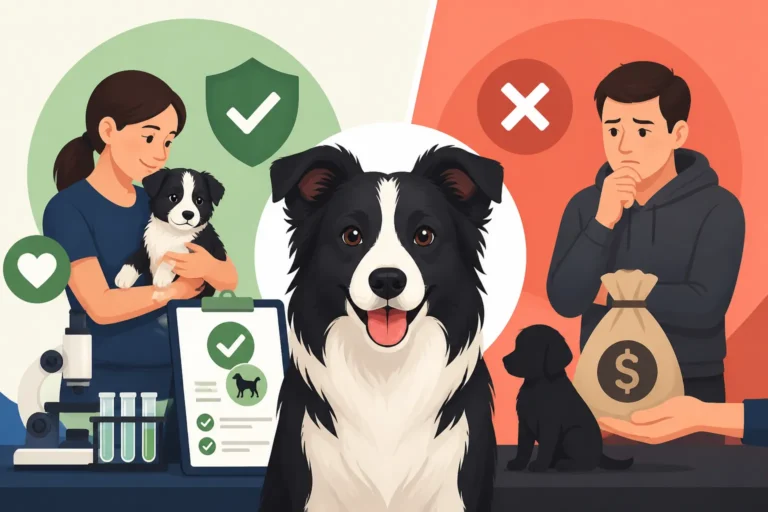
Why a Border Collie Insured at Three Is Late
It’s a common misconception that a young, seemingly healthy Border Collie, bouncing with energy and showing no signs of slowing down, doesn't need pet insurance right away. Many owners decide to wait, thinking they’ll save a bit of money and only get coverage if a problem arises. Unfortunately, waiting until your Border Collie is three years old, or even older, to enroll them in a pet insurance plan can often put you at a significant disadvantage, leaving you vulnerable to costly health issues that could have been covered. This guide will delve into why that waiting period can be a critical misstep and what you stand to lose by delaying.
The Illusion of Invincibility and the Reality of Pre-Existing Conditions
When you bring home a Border Collie puppy, they seem like a bundle of endless energy and robust health. It’s easy to look at that vibrant, tireless dog and think, "They're invincible! We won't need insurance for years." This happy delusion is often reinforced by the breed's reputation for hardiness and athleticism. However, even the most vigorous Border Collie isn't immune to genetic predispositions or unexpected accidents, and the biggest pitfall of waiting to insure is the dreaded pre-existing condition clause.
Why "Waiting and Seeing" Can Cost You Dearly
Pet insurance, much like human health insurance, operates on the principle of covering new illnesses or injuries that arise after your policy is in effect. If your Border Collie develops any health issue, no matter how minor, before you enroll them in a pet insurance plan and before any waiting periods have passed, that condition is generally classified as "pre-existing." This means the insurance company will almost certainly exclude it from future coverage.
Imagine your Border Collie, let's call him Finn, is a whirlwind of activity, just hitting his stride at three years old. He's never had a sick day in his life. You finally decide it's time to get insurance. But then, a few months later, Finn starts showing a subtle limp. After a vet visit, you get the diagnosis: hip dysplasia, a condition that might have been developing silently for years, or perhaps something like early-onset arthritis. Even if it was diagnosed after you signed up for insurance, if the vet notes or medical history indicate signs or symptoms were present before your policy's effective date, it's likely going to be deemed pre-existing. That sudden and very expensive surgery, along with ongoing medication and physical therapy, could be entirely out of pocket. This is why getting coverage when they are puppies, ideally before any issues arise, is so critical. You want a clean bill of health on record before the policy begins.
The Unseen Development of Genetic and Hereditary Issues
Border Collies, for all their strength and intelligence, are prone to a range of genetic and hereditary conditions that often don't show obvious symptoms until they're older, sometimes right around that three-year mark or even later. These conditions aren't usually something you can prevent with diet or exercise; they're coded into their DNA.
Consider a condition like epilepsy. A Border Collie's first seizure can occur any time between one and five years of age, but sometimes later. If your active, seemingly healthy three-year-old Border Collie suddenly has a seizure, and you decide then to get insurance, any subsequent seizures or related treatment would almost certainly be considered a pre-existing condition. This means years of expensive anti-seizure medication, diagnostic tests, and emergency vet visits would likely not be covered. You can learn more about Epilepsy in a Border Collie Between One and Five and The Age a Border Collie's First Seizure Arrives. The financial burden of managing a chronic condition without insurance can be astronomical, completely dwarfing the cost of premiums over several years.
Common Health Issues That Emerge Early in Border Collies
It’s easy to think of a three-year-old Border Collie as being in their prime, and they certainly are! But their prime years can also be when some underlying issues decide to make themselves known. It's a cruel twist of fate that many conditions commonly seen in Border Collies often begin to show symptoms during this "young adult" phase, precisely when many owners, mistakenly, feel it's still "early days" for insurance.
Orthopedic Concerns: More Than Just Puppy Growing Pains
Border Collies are incredibly agile and powerful, which puts a fair amount of strain on their joints. While conditions like hip and elbow dysplasia are often diagnosed younger, sometimes the subtle signs aren't recognized until the dog is more mature and putting more stress on those joints. A three-year-old Border Collie might suddenly start showing discomfort after a long run, or struggle with certain movements that were once effortless.
Hip dysplasia in particular can be insidious. While severe cases are often evident in puppyhood, milder forms might only cause intermittent lameness or stiffness that becomes more pronounced as the dog ages and the joint cartilage degrades. If your three-year-old Border Collie develops signs of hip or elbow issues and then you seek insurance, it will be considered pre-existing. The necessary diagnostics (X-rays, specialist consultations), medications, and potentially surgeries (which can run into the thousands of dollars per joint) would be entirely your responsibility. Getting Hip and Elbow Scores in a Border Collie done early can give you some insight, but even a good score doesn't guarantee a lifetime free of joint issues.
Neurological Surprises: When the Unpredictable Strikes
Epilepsy is a heartbreaking reality for some Border Collie owners. As mentioned, the typical onset age for idiopathic (meaning no known cause) epilepsy in Border Collies can be anywhere from one to five years. Imagine your perfectly healthy three-year-old dog suddenly experiencing What a Border Collie Seizure Looks Like. It's terrifying, and your immediate reaction is to get them to the vet. This first seizure, as difficult as it is, immediately marks epilepsy as a pre-existing condition if you don't already have insurance.
Treatment for epilepsy is usually lifelong, involving daily medication to control seizures. These medications can be costly, and often require regular blood tests to monitor levels and check for potential side effects. Without insurance, these ongoing expenses can become a significant financial strain, forcing difficult decisions about your dog's care. This is a prime example of why Insuring a Border Collie Before the Seizure Window is so crucial.
Other Emerging Health Challenges
Beyond major orthopedic and neurological issues, Border Collies can face other health challenges that might surface around the three-year mark. While genetic panels help breeders screen for many known conditions, not every potential issue is detectable or preventable. For instance, some Border Collies carry the MDR1 gene mutation, which makes them sensitive to certain common medications. While this is often screened for earlier (you can learn more about Drug Sensitivity and the Border Collie MDR1 Rate), complications could still arise from an unforeseen reaction to a drug administered for an unrelated issue if their status wasn't known or flagged on their records.
Also, even seemingly minor chronic conditions, like allergies, can develop and require ongoing management. If allergies appear at three and you then get insurance, future treatment for those specific allergies might be excluded as pre-existing, leading to out-of-pocket costs for special foods, medications, or immunotherapy.
The Financial Ramifications of Delayed Coverage
Let's be blunt: vet care is expensive, and it's only getting more so. The advanced diagnostics and treatments available today, while life-saving, come with a hefty price tag. For a dog as active and prone to specific genetic conditions as a Border Collie, delaying insurance can quickly turn a manageable monthly premium into an unmanageable financial crisis.
Facing the Full Weight of Emergency Bills
Imagine a scenario where your three-year-old Border Collie, let's call her Jess, is having the time of her life at the park, only to suddenly come up lame with a suspected cruciate ligament tear – a very common sport injury in active breeds. Cruciate surgery is not a minor procedure; it involves specialist veterinary care and a significant recovery period. Without insurance, you could be looking at thousands of dollars for the surgery, plus follow-up vet visits, pain medication, and potentially physical therapy. This can be devastating, forcing you to make difficult choices based on your wallet, not what's best for Jess.
Here's a quick comparison of what you might face:
| Scenario | Insured as Puppy (Clean History) | Insured at Age 3 (Cruciate Tear develops at 3.5) |
|---|---|---|
| Cruciate Surgery Cost | Full cost (e.g., $4,000-$7,000) | Full cost (e.g., $4,000-$7,000) |
| Reimbursement (e.g. 80%) | Covered (after deductible), potentially $3,200-$5,600 back | Not Covered (pre-existing condition) |
| Medication/Rehab | Covered (after deductible) | Not Covered |
| Total Out-of-Pocket | Deductible + 20% co-pay | Entire Bill |
This table clearly illustrates how crucial early coverage is. Suddenly, that few hundred dollars a year in premiums seems like a wise investment rather than an optional expense. When you consider Annual Limits and Border Collie Cruciate Surgery, you realize how quickly these costs add up.
Limited Options and Provider Choices
Once a condition is deemed pre-existing, it severely limits your options moving forward. You might be able to find a new insurance provider later on, but that specific condition will almost certainly remain excluded. This means if you switch from, say, Healthy Paws to Chewy Pet Insurance, any hip issues diagnosed before the switch will still not be covered by the new policy. You're essentially stuck paying out of pocket for that particular ailment for the rest of your dog's life, regardless of who your insurer is.
This situation can be incredibly frustrating. Many owners report wishing they had known about these limitations earlier. It's not just about covering big, catastrophic events; it's about having a safety net for anything that might arise, including those insidious conditions that slowly develop.
The True Value of Peace of Mind
Beyond the financial calculations, there's the invaluable peace of mind that comes with knowing your beloved Border Collie is covered. When an emergency strikes, your focus should be entirely on your dog's well-being, not on agonizing over how you're going to pay for potentially life-saving treatment. Pet insurance, especially from reputable providers, allows you to make medical decisions based on what's best for your pet, rather than being limited by your budget.
Providers like Healthy Paws and Chewy Pet Insurance, for example, aim to offer broad coverage for accidents and illnesses, giving you that essential buffer. While no insurer covers pre-existing conditions, their value lies in being there for the unexpected, new issues. Many owners find that the monthly premium is a small price to pay for the ability to say "yes" to necessary care without a second thought.
What to Look for When Insuring Your Border Collie
Now that we understand why insuring early is so vital, let's talk about how to approach getting the right coverage for your energetic Border Collie. It’s not just about getting any policy; it's about getting one that makes sense for this active, intelligent, and sometimes predisposed breed.
Understanding Policy Types and Coverage Levels
When you start looking at pet insurance, you'll encounter a few main types of policies:
- Accident-Only Plans: These are the most basic and typically the least expensive. They cover injuries from accidents, like broken bones, lacerations, or car accidents. They won't cover illnesses like epilepsy or allergies. For a Border Collie, given their active nature and potential for sport injuries like Shoulder Injuries in an Agility Border Collie or Cruciate Tears in a Border Collie, an accident-only plan is a start, but it leaves many common Border Collie health concerns unaddressed.
- Accident and Illness Plans: This is the most popular and comprehensive type of plan. It covers accidents and a wide range of illnesses, including chronic conditions, infections, cancer, and hereditary conditions (as long as they aren't pre-existing). This is generally the best option for a Border Collie, as it provides coverage for many of the issues we've discussed.
- Wellness Add-ons/Plans: Some companies offer separate wellness plans or add-ons to their accident and illness policies. These can help cover routine care like annual exams, vaccinations, and sometimes even spaying/neutering. While not insurance against unexpected events, they can help budget for preventative care. Brands like Ollie, known for their fresh dog food subscriptions, sometimes partner with or offer resources related to overall pet well-being, which might include discussions of wellness coverage, though their primary focus is nutrition.
When reviewing plans, pay close attention to:
- Deductible: This is the amount you pay out of pocket before your insurance starts reimbursing you. It can be annual or per-incident.
- Reimbursement Rate: This is the percentage of the vet bill that the insurance company pays after your deductible. Common rates are 70%, 80%, or 90%.
- Annual Limit: This is the maximum amount the insurance company will pay out in a policy year. Some policies have unlimited annual payouts, which can be very beneficial for chronic or catastrophic conditions.
- Waiting Periods: All policies have waiting periods (e.g., 14 days for illness, sometimes longer for orthopedic conditions) before coverage kicks in. This further emphasizes insuring early, so you get through these periods while your dog is still young and healthy.
Researching Providers and Customizing Your Plan
There are many reputable pet insurance providers out there, and it's worth taking the time to compare their offerings. Each has slightly different policies, pricing structures, and customer service reputations.
- Look for Transparency: Good providers will clearly outline what is and isn't covered, including how they define pre-existing conditions.
- Read Reviews: See what other Border Collie owners or active dog owners say about their claims experience.
- Get Multiple Quotes: Don't just go with the first option. Get quotes from several companies to compare pricing and coverage for your specific dog. When considering a provider like Healthy Paws, for example, investigate their deductible and reimbursement options, and whether they have unlimited annual payouts. Companies like Chewy also often have pet insurance options available through their platform, so it's worth exploring if you already use their services.
It's also important to factor in your Border Collie's specific needs. If your dog comes from a line known for certain genetic predispositions (which you can often learn from the breeder and by looking into The Border Collie Genetic Panel and What It Screens), ensure the policy offers good coverage for those areas, assuming they haven't yet developed.
The "When" is as Important as the "What"
The resounding advice from seasoned Border Collie owners and vets alike is to enroll your puppy in a comprehensive pet insurance plan as early as possible. Most providers offer policies for puppies as young as 6-8 weeks old. This gives you the best chance to get coverage before any health issues, subtle or obvious, have a chance to develop and be flagged as pre-existing.
Even if you're adopting an older Border Collie, get them insured as soon as they're in your care. While it might be "late" compared to puppyhood, it's still better than waiting until they show symptoms of a condition that could then become pre-existing. Every day you delay increases that risk. Think of it as an essential part of The First Year of Border Collie Spending, ensuring that their future health care needs are protected.
Disclaimer
This article is for general informational purposes only and does not constitute professional advice. Laws, prices and regulations vary by location and change over time. Consult a qualified professional for guidance on your specific situation.