Wetting a Border Collie Down Between Runs
If you're like me, you've probably stood ringside at a trial or watched your Border Collie work stock on a hot day, feeling that knot of worry tighten in your stomach as they just keep going, giving their all. Our Border Collies are relentless, a trait we love them for, but it also means they often push past their own limits, especially when it comes to heat. Keeping them cool and safe during intense activity isn't just a good idea; it's absolutely crucial for their well-being and longevity. This guide is all about how to effectively wet down your Border Collie between runs or during high-intensity sessions, ensuring they can cool down properly without any detrimental effects.
Why Getting Your Border Collie Wet Helps (and When It's Essential)
It’s natural to wonder if simply getting your dog wet is enough, or even if it’s the right approach. With a Border Collie's thick double coat, it's not quite as straightforward as splashing them with a bucket of water. Understanding the nuances can make all the difference in preventing dangerous overheating.
Understanding How Dogs Cool Down
Unlike humans who sweat across most of their skin, dogs primarily cool themselves through panting. This process allows moisture to evaporate from their respiratory tract, carrying heat away from their bodies. They also release some heat through their paw pads. Their coat, particularly a thick double coat like many Border Collies possess, is actually designed to insulate them from both heat and cold. While this is fantastic in winter, it can become a real challenge when they're working hard in warmer temperatures. When the external temperature rises and their internal temperature climbs, their natural cooling mechanisms can become overwhelmed, quickly leading to a dangerous situation. It's a fine line between a dog working hard and one heading for trouble, and we know our Border Collies will often choose to push that line without complaint. This is why interventions like strategic wetting become so vital to prevent serious issues such as Heat Stroke in a Border Collie That Kept Working.
The Immediate Benefits of Strategic Wetting
When done correctly, wetting your Border Collie down can significantly enhance their natural cooling process. The water, especially if it's cool (but not icy cold, more on that later!), helps to draw heat away from the body as it evaporates from the fur and skin. This is a direct assist to their panting, reducing the burden on their respiratory system. Think of it as giving their internal air conditioning a much-needed boost. This isn't just about comfort; it's about maintaining their core body temperature within a safe range, allowing them to recover faster between efforts and return to work or competition with more stamina. A dog that is properly cooled is a dog that can perform safely and enjoy its work.
When to Reach for the Water
Knowing when to wet your Border Collie is just as important as knowing how. The key is proactive management, not just reacting when they're already showing signs of distress. If you’re at a trial, especially in warmer weather, a quick cool-down is absolutely paramount between runs. Even during intense training sessions in your own yard, such as repetitive retrieves or agility drills, keep a keen eye on the thermometer and your dog's energy levels. If the sun is beating down, or even if it's just a humid day with moderate temperatures, your Border Collie can heat up surprisingly fast. Any time your dog is engaged in strenuous activity for more than a few minutes, particularly if the ambient temperature is above 70°F (around 21°C), or humidity is high, plan for regular cool-down breaks where wetting down can be a game-changer. Don't wait until they're visibly struggling; by then, you're playing catch-up. Watch for early signs like increased panting, a slight decrease in drive, or seeking shade, as these are subtle cues that it's time for a cool-down.
The Right Way to Wet Down Your Border Collie for Maximum Effect
It's not about drenching them head to tail. There's an art to effective cooling that focuses on specific areas of the body where heat exchange is most efficient.
Where to Focus the Water for Best Results
Many people instinctively just spray water over their dog's back, but this is often the least effective place for rapid cooling, especially for a rough-coated Border Collie. The trick is to target areas where major blood vessels run close to the surface of the skin. These are your prime cooling zones. Think about getting water to their armpits, groin, belly, and the soft pads of their feet. These spots act like radiators for their body. Also, don't forget their neck, especially under the collar area, where a lot of heat can build up. A good technique is to work the water down to the skin, not just wetting the top layer of fur. For some dogs, lightly wetting the ears can also help. The goal is to facilitate evaporative cooling from these high-traffic heat zones, maximizing the effect of every drop of water you apply.
The Temperature of the Water Matters
This might sound counter-intuitive, but using icy cold water can actually be detrimental. While it feels like it would cool them faster, extremely cold water can cause the blood vessels in the skin to constrict, a process called vasoconstriction. When this happens, blood flow to the surface is reduced, which can actually trap heat inside the dog's body rather than helping it dissipate. Instead, aim for cool tap water—water that feels cool but not shocking to your own skin. This allows the blood vessels to remain dilated, facilitating efficient heat exchange as the water evaporates. A steady, gentle cool-down is far more effective and safer than a sudden, harsh shock of icy water. Remember, we're trying to help their natural systems, not shock them.
Tools of the Trade: What to Use
You don't need fancy equipment, but having the right tools on hand can make the process much smoother and more effective.
- Sponge or Cloth: A simple sponge or a hand towel soaked in cool water is incredibly versatile. It allows you to target those crucial areas like armpits, groin, and paw pads directly, working the water down to the skin. This is great for precise cooling and minimizes mess.
- Spray Bottle: A spray bottle filled with cool water can be handy for a quick, light mist over the entire body, focusing on the underside and neck. It’s less effective for deep cooling but good for a rapid, refreshing spritz or when you want to avoid drenching the entire coat.
- Cooling Vests or Coats: These can be fantastic, especially for prolonged periods in the heat, or even as a preventative measure before intense activity. Brands you might find on Chewy or Amazon often offer vests that you soak in water, wring out, and then place on your dog. They work by continuous evaporation. Just be sure to check that the vest allows for good air circulation and doesn't trap heat if it's not actively evaporating. They can be a great hands-free option once your dog is used to wearing one.
- Dedicated Water Buckets: At many trials, you'll see handlers with designated water buckets and sponges specifically for cooling their dogs. Having one ready to go, filled with cool water, means you can immediately start the cooling process the moment your Border Collie comes off the field.
Avoiding Over-Wetting and Trapping Heat
Here's where many well-meaning owners can inadvertently cause an issue. While the goal is to get them wet, drenching a thick-coated Border Collie, especially if there isn't good airflow, can actually create a problem. If the water simply saturates the outer layer of their dense double coat and doesn't evaporate quickly, it can act like an insulating blanket, trapping heat against their skin rather than allowing it to escape. This is particularly true if they are then confined to a crate or a vehicle without proper ventilation. The key is evaporation. Apply enough water to get to the skin in those target areas, but then ensure they have access to shade and a gentle breeze, or even a fan, to encourage that crucial evaporative cooling. A damp dog in still, humid air might actually be at higher risk than a dry one. For more tips on managing heat, consider reading about Heat Management for a Border Collie on a Trial Field.
Practical Tips for Managing Hydration and Heat Beyond Just Water
Wetting down is one piece of the puzzle, but a holistic approach to heat management and hydration will give your Border Collie the best chance of staying healthy and performing optimally.
Offering Water, Not Just Applying It
While external cooling is vital, internal hydration is equally, if not more, important. Always ensure your Border Collie has constant access to fresh, cool drinking water. Offer it frequently between runs, during training breaks, and even when just hanging out in warm weather. Some dogs, especially those focused on their work, might need a little encouragement to drink. You can try adding a splash of low-sodium broth to their water to entice them, or bringing a collapsible bowl specifically for water breaks. A properly hydrated dog is better equipped to regulate its own body temperature. For more insights on this, you might find How Much a Border Collie Drinks on a Working Day helpful.
Strategic Rest and Shade
Don't underestimate the power of simply resting in the shade. It’s not just about active cooling; it’s about giving their body a chance to recover from the exertion and the heat load. Between tasks or trial runs, guide your Border Collie to a cool, shaded spot. This could be under a tree, a pop-up canopy, or even inside an air-conditioned vehicle if it's safe and well-ventilated. Even a few minutes of quiet rest away from direct sunlight can make a significant difference. Combine this with strategic wetting, and you're providing a powerful defense against overheating. We have an entire piece on Shade and Rest Between a Border Collie's Runs that delves deeper into this.
Recognizing the Signs of Overheating
Our Border Collies are stoic, often pushing through discomfort to please us. This makes it even more critical for us to be vigilant. Beyond excessive panting, which is a primary sign, look for other indicators like bright red gums (instead of a healthy pink), thick, ropy saliva, a rapid heart rate, staggering or uncoordinated gait, weakness, or lethargy. If your dog starts to refuse commands, acts confused, or experiences a sudden collapse, these are emergency signs of heatstroke. Do not confuse the staggering gait of an overheated dog with The Wobbling Gait a Collapsing Border Collie Shows, which is indicative of Border Collie Collapse. Immediate action is required if you see these signs: move them to a cool place, wet them down, and seek veterinary attention immediately. Being able to read Reading a Border Collie's Panting After Hard Work can also give you an early warning.
Nutrition and Cooling
While not directly related to wetting down, a Border Collie's diet plays a foundational role in their overall health and ability to cope with physical exertion and heat. A high-quality, balanced diet supports strong cardiovascular health, efficient muscle function, and proper hydration at a cellular level. Dogs on a fresh food diet, like those from Ollie, often have higher moisture content in their food, contributing to their overall hydration. This can indirectly aid their ability to manage body temperature and recover from work. Ensuring your Border Collie is in peak physical condition through proper nutrition means their body is better prepared to handle the demands of work, including heat stress.
Common Mistakes and How to Avoid Them
Even with the best intentions, it's easy to fall into common pitfalls when trying to cool down a working dog. Knowing these can help you avoid them and keep your Border Collie safe.
Drenching the Whole Coat
As we touched on earlier, simply drenching your rough-coated Border Collie from head to tail with water, especially without good airflow, can be counterproductive. The dense undercoat can trap water, creating a humid, insulated layer against the skin that prevents evaporation. This is like wrapping them in a damp, warm blanket. Instead, focus on thoroughly wetting the key cooling areas (armpits, groin, belly, paw pads, neck) and then ensure they have access to a breeze or a fan to promote rapid evaporation from those spots. Lightly misting the rest of the body is fine, but avoid saturation if you can't guarantee quick drying.
Using Ice Water
We've already covered the physiological reasons why extremely cold water can hinder cooling by causing vasoconstriction. Stick to cool tap water. Your dog will thank you, and their body will be able to cool down much more efficiently and safely. A helpful read on this topic is Whether a Border Collie Should Drink Cold Water, which discusses similar principles for internal cooling.
Neglecting Essential Areas
It's tempting to just spray the top of their back, but this is like trying to cool a car engine by spraying the hood. The most effective cooling happens where the large blood vessels are closest to the skin. Make a conscious effort to lift their legs and get water into their armpits and groin. Gently drench their paw pads. These are the true "radiators" of their body, and focusing on them will yield far better results than just wetting the outer coat.
Forgetting to Hydrate Internally
Applying water externally is only half the battle. If your Border Collie isn't adequately hydrated internally, their overall ability to cope with heat will be compromised. Always provide ample fresh, cool drinking water. Offer it consistently, even if they don't seem thirsty at first. Remember, thirst is a sign of already being dehydrated. Proactive hydration is key to maintaining their performance and health, especially on days when How Hot a Border Collie Gets After Ten Minutes could become an issue, or when their The Calorie Load a Working Border Collie Burns is high. Thinking about Whether a Border Collie Knows to Stop in Heat is also important, as they often don't.
| Method of Wetting | Pros | Cons | Best Use Case |
|---|---|---|---|
| Sponge/Cloth | Targeted, controlled, minimal mess, good for reaching skin | Time-consuming for large areas, requires active handler participation | Precise cooling of key areas, sensitive dogs, travel |
| Spray Bottle | Quick, easy, light application, can cover broader areas | Less effective for deep cooling, can just wet topcoat | Rapid surface cool-down, refreshing mist, short breaks |
| Cooling Vest/Coat | Sustained cooling, hands-free, allows handler to focus on work | Can be bulky, some dogs dislike wearing them, can trap heat if not evaporating | Longer periods in heat, before/after work, consistent passive cooling |
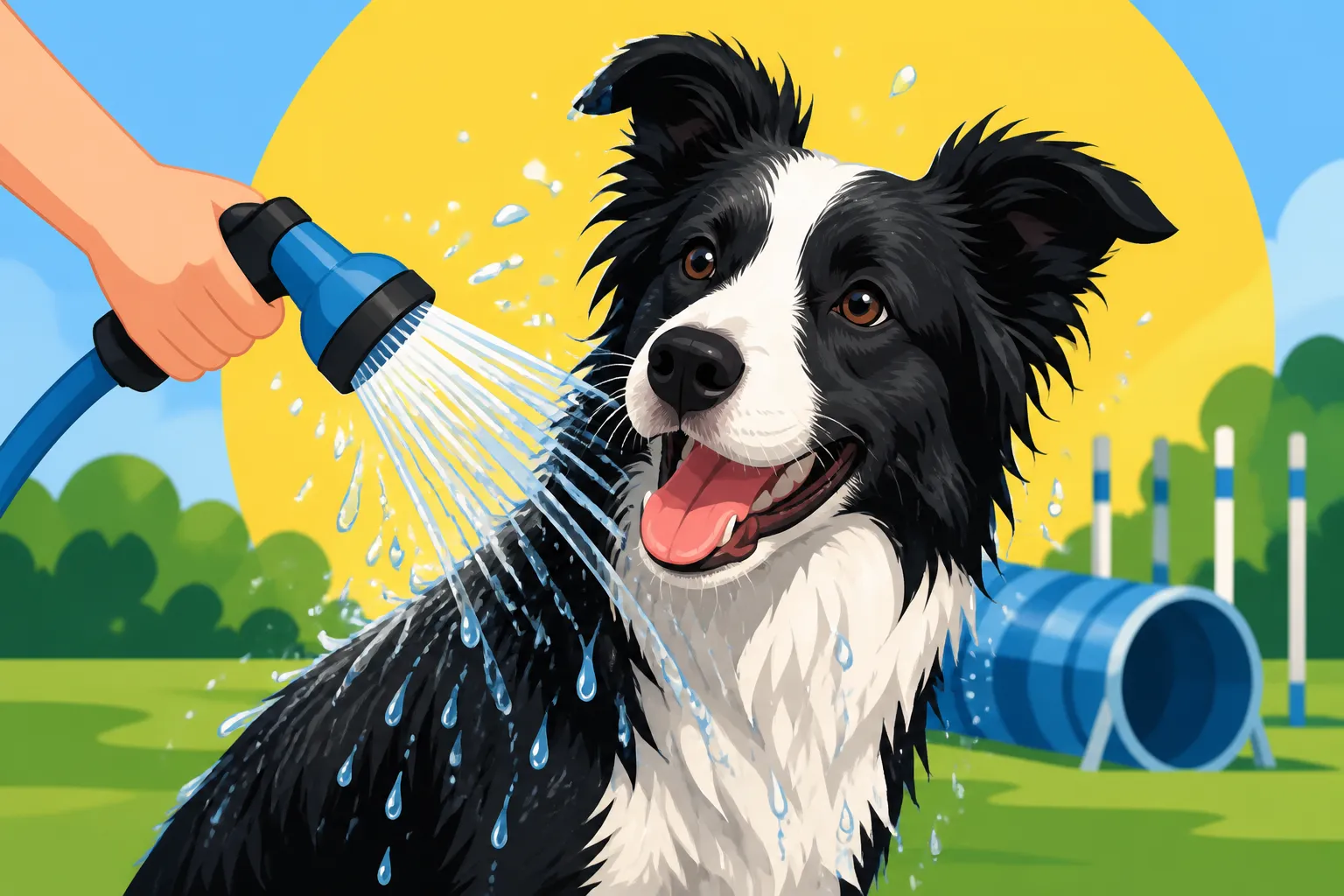
| Full Hose/Bucket | Very fast initial cool-down | Risk of over-wetting, vasoconstriction if too cold, messy | Emergency situations, very hot days with immediate need for rapid cooling |
Ultimately, caring for our Border Collies means being mindful of their intense drive and ensuring we put their health and safety first. Understanding how to properly wet them down is a small but incredibly significant part of that commitment. It helps them continue to do what they love, safely and comfortably. For more general advice on how to manage their daily life, consider reading What a Border Collie Does With Its Whole Day, and especially if you're dealing with very hot days, Working a Border Collie in the Early Morning can offer useful scheduling advice.
Disclaimer
This article is for general informational purposes only and does not constitute professional advice. Laws, prices and regulations vary by location and change over time. Consult a qualified professional for guidance on your specific situation.