Whether a Border Collie Should Drink Cold Water
It’s a common scenario: your Border Collie has just come tearing in from a vigorous session of fetch, a long training run, or an intense herding practice, panting hard, eyes bright with exertion, and clearly parched. Your first instinct might be to offer a big bowl of ice-cold water, perhaps even with a few ice cubes clinking. It seems like the most refreshing thing to do, right? To give them that immediate, satisfying chill. But many Border Collie owners find themselves wondering if that icy blast is truly the best thing for their high-energy companion, or if it could actually lead to problems. This guide will dive deep into the science and practical considerations of hydrating your Border Collie, helping you make the best choices for their health and comfort.
The Instinct to Guzzle: Why Cold Water Seems Appealing to a Working Border Collie
Border Collies are phenomenal athletes, driven by an incredible work ethic and boundless energy. This means they heat up quickly during activity, and when they do, their natural inclination is to cool down and rehydrate as fast as possible. That cold water in the bowl looks like pure salvation.
The Urgent Need to Cool Down
Our Border Collies are bred for endurance and intense bursts of activity, whether it's out on the trial field moving sheep, zipping through an agility course, or simply having a marathon session of frisbee in the park. All this high-octane work generates a significant amount of body heat. When they come to a stop, panting heavily, their core temperature is elevated, and their body is desperate to shed that heat and replace lost fluids. The immediate sensation of cold water hitting their mouth and throat feels incredibly good, offering a quick, albeit superficial, sense of relief.
Physiologically, when a dog gets hot, its blood vessels near the surface of the skin and in the tongue dilate to help dissipate heat. Cold water, when consumed, provides a direct internal cooling effect, helping to bring down their overall body temperature. It’s no wonder they gravitate towards it after a hard session. We often see them, mouths open, tongues out, practically diving into the water bowl. It’s an urgent, instinctual drive to alleviate discomfort and restore balance. Owners must understand this powerful instinct to better manage their dog's recovery and prevent issues like Heat Stroke in a Border Collie That Kept Working.
The challenge for us, as responsible owners, is to manage this powerful instinct. When a Border Collie is extremely hot and thirsty, their judgment about how to drink goes right out the window. They're not thinking about the pace of their intake; they're solely focused on quenching that deep thirst. It's our job to guide them through this process safely, ensuring that their immediate desire for relief doesn't inadvertently lead to other health concerns.
Beyond Temperature: The Drive to Hydrate Quickly
While the temperature of the water plays a role, it's often the sheer volume and speed of ingestion that becomes a more critical factor for a parched Border Collie. A dog that has gone too long without access to water, or one that has worked extremely hard, will drink rapidly and voraciously, almost regardless of the water's temperature. This rapid intake can be a concern for several reasons, which we'll explore in the next section. It's a testament to their dedication to their work that they'll often push themselves to the point of extreme thirst.
To prevent this state of extreme thirst, it's paramount to ensure constant access to fresh water throughout the day, not just after a strenuous activity. Frequent, smaller drinks are always better than one massive gulp. Owners should monitor their Border Collie for signs of adequate hydration, such as moist gums and good skin elasticity. If you notice your dog seeming excessively thirsty or slow to rehydrate, it could be a sign of underlying issues or simply that they aren't getting enough fluids throughout their day. For more insights on this, you might find our article on Dehydration in a Border Collie After a Day's Work helpful.
Even slightly cool water, rather than icy, can be immensely refreshing and satisfying without carrying the same potential risks associated with water straight from the freezer. The goal is to provide relief and rehydration effectively and safely, supporting their recovery without adding stress to their system.
Navigating the Risks: When Cold Water Can Be a Concern
While providing cold water might seem like a natural fit for a hot, thirsty dog, there are legitimate concerns that many Border Collie owners grapple with. Understanding these potential pitfalls allows us to make more informed decisions about how we offer hydration.
The Bloat Question: Understanding Gastric Dilatation-Volvulus (GDV)
Among the most serious concerns when discussing rapid water intake, especially after exercise, is Gastric Dilatation-Volvulus, commonly known as bloat. This is a life-threatening condition where the stomach distends with gas and/or fluid and often twists upon itself, cutting off blood supply. Deep-chested breeds like Border Collies are generally considered to be at a higher risk for GDV. While there is no definitive scientific proof that cold water alone causes bloat, rapid, large-volume ingestion of anything – be it food or water – particularly after strenuous exercise, is widely recognized as a significant risk factor.
The issue isn't typically the temperature of the water itself, but rather that very cold water, especially on a hot day, can encourage a Border Collie to drink even more rapidly and take in larger gulps, potentially ingesting air along with the water. Imagine your Border Collie, having just completed an hour of intense frisbee catching or a demanding agility run. They come in panting, their body temperature is up, and they're desperate for a drink. If you present them with a huge bowl of ice-cold water, the temptation to gulp it down without pause is immense. It's this sudden, massive intake, combined with the post-exercise state, that raises the bloat concern. Our article Why a Border Collie Bloats After Running Hard delves deeper into understanding this risk.
Therefore, the focus should be less on banning cold water entirely and more on managing the rate and volume of intake, especially when your dog is overheated and has an empty stomach. Small, frequent offerings of cool (not icy) water are generally safer than an unrestricted deluge of very cold water.
Digestive Discomfort and Upset
Beyond the severe risk of bloat, very cold water can sometimes cause a temporary stomach upset or digestive distress. While this is rarely life-threatening, it can certainly be uncomfortable for your Border Collie and inconvenient for you. Some dogs, particularly those with sensitive digestive systems, might react to the sudden shock of extremely cold water hitting a warm stomach.
This reaction might manifest as mild stomach cramps, excessive gas, or even a brief bout of vomiting or diarrhea. It's often transient, resolving quickly as their system adjusts, but it's still something to avoid if possible. For a Border Collie whose focus and physical well-being are so crucial for their performance in work or sport, even a minor digestive upset can impact their ability to concentrate, train, or compete. Think about how you feel when you drink ice water too fast on an empty stomach – some discomfort isn't uncommon.
Consider the detailed nutritional needs of your working Border Collie, as discussed in Feeding a Border Collie Before and After Work. Their diet and hydration practices are intricately linked to their overall gut health and energy levels. Providing water at a more temperate, cool (not freezing) level can help prevent these minor but irritating digestive disturbances, allowing your dog to recover smoothly and comfortably.
Smart Hydration: Best Practices for Your Border Collie
Given the potential risks and the Border Collie's strong drive, how do we best hydrate them, especially after intense activity? The key lies in moderation, observation, and intelligent planning.
Aim for Cool, Not Icy: The Balanced Approach
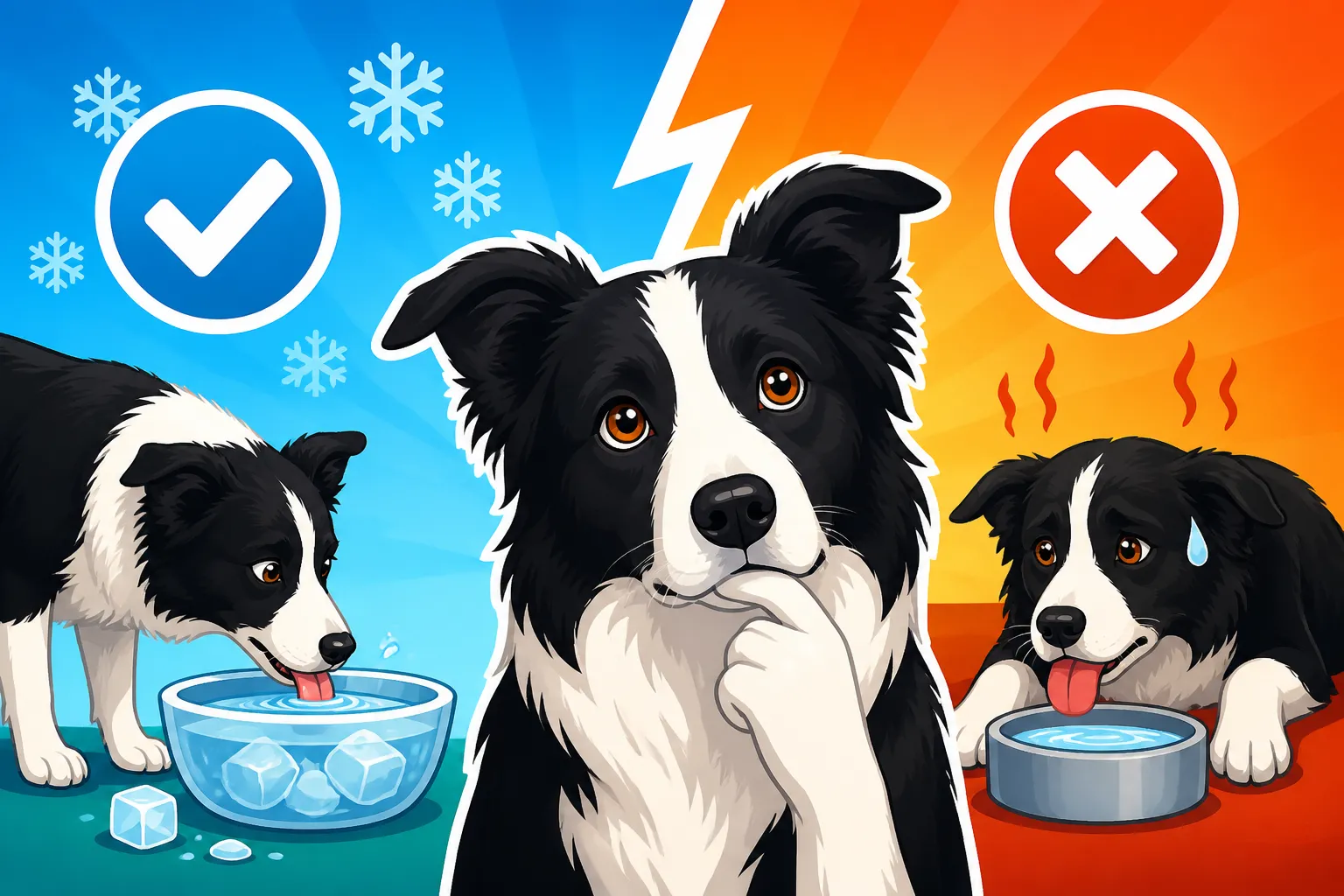
The sweet spot for hydrating your Border Collie is usually cool, fresh water. Think about the temperature of tap water that's been running for a moment or sitting out for a short while, rather than water straight from the ice dispenser. This temperature range is incredibly refreshing and effective for rehydration and gentle internal cooling without presenting the shock factor of icy water. It helps their body temperature regulate without causing an abrupt internal chill that could lead to digestive upset or encourage overly rapid ingestion.
To achieve this, always keep a large, clean water bowl available in a shaded spot, or inside the house, so it remains relatively cool throughout the day. When you're out and about, especially during training or trials, a portable water bottle with an attached dispenser or a collapsible travel bowl is indispensable. You can find excellent, durable options on platforms like Amazon or Chewy. These tools make it easy to offer water frequently and in controlled amounts, preventing your Border Collie from getting to a point of extreme thirst where they might gulp too fast. For dogs working in very hot conditions, alongside proper hydration, external cooling aids like Cooling Coats and Vests for a Border Collie can also be a game-changer.
Encouraging Steady, Controlled Drinking
The real goal isn't just to provide water, but to encourage your Border Collie to drink it at a steady, controlled pace. This is especially important immediately after high-intensity exercise. Instead of letting them have free access to a full bowl after a grueling session, offer small amounts of cool water, let them drink, then perhaps make them take a short walk or sit for a minute or two before offering more. This prevents them from gulping down a massive volume all at once, which, as we discussed, is a primary risk factor for bloat.
You can use strategies like offering water from a smaller bowl, or even just a cupped hand, to control the intake speed. Some specialized slow-feed water bowls are available, though they are less common than their food bowl counterparts. Another method is to simply offer water in multiple, smaller servings over a 10-15 minute period after intense exercise. This ensures they rehydrate thoroughly without stressing their system. Additionally, incorporating moisture-rich foods into their diet can contribute significantly to their overall hydration. Fresh food diets, like those offered by Ollie, often have a higher water content than dry kibble, providing supplemental fluids with every meal.
Having fresh water consistently available throughout the day, even indoors where they might not seem as active, is key to preventing extreme thirst. If water is always there, they are less likely to become so parched that they feel the desperate need to gulp when it’s finally offered.
Beyond the Bowl: Other Hydration Methods
Sometimes, a Border Collie just isn't a big drinker from the bowl, or you want to boost their fluid intake, especially if they're a working dog burning a high The Calorie Load a Working Border Collie Burns. This is where creativity comes in! A simple and effective method is to add a little extra water or low-sodium, plain bone broth to their regular meals. This not only increases their fluid intake but can also make their food more palatable, encouraging them to eat after hard work.
Frozen treats can also be a fantastic way to hydrate and cool down slowly, especially during warm weather. You can make your own "pup-sicles" using diluted broth, plain yogurt, or pureed fruit (ensure it’s dog-safe) frozen in ice cube trays or toy molds. These offer a prolonged cooling and hydration experience. Just be mindful of the size of the treat to prevent choking, especially for enthusiastic chewers. Remember, when considering their overall diet, what a Border Collie eats directly impacts their hydration; Whether a Border Collie Eats More Than a Pet Dog often means they need more consistent fluid management too.
Lastly, never underestimate the value of regular veterinary check-ups. Discussing your Border Collie's hydration habits and dietary needs with your vet is crucial. They can help you tailor a plan that's specific to your dog's activity level, age, and any individual health considerations. These routine visits, like The Annual Exam a Border Collie Needs, are vital for monitoring their overall health, including kidney function and signs of dehydration, ensuring your Border Collie stays healthy and happy for years to come.
Debunking Myths and Making Informed Choices
The topic of cold water and dogs, especially active breeds, is often surrounded by old wives' tales and well-meaning but sometimes misinformed advice. Let's clarify some common points so you can feel confident in your hydration choices.
The "Ice Water Causes Bloat" Debate
This is perhaps the most persistent myth in dog hydration circles, and it's something many Border Collie owners worry about deeply. The idea that giving ice water will immediately cause bloat has circulated for years. However, as we discussed earlier, scientific evidence does not directly support ice water as a cause of bloat (Gastric Dilatation-Volvulus). The primary concern with bloat, particularly in deep-chested, active breeds like Border Collies, is rapid, large-volume ingestion of anything (food or water), especially when combined with strenuous exercise immediately before or after.
Cold water might contribute to the risk by encouraging a dog to drink faster and in larger quantities, potentially leading to increased air swallowing and stomach distension. So, while the ice itself isn't the villain, the manner in which the water is consumed can be. Instead of fixating on the temperature, shift your focus to managing the speed and volume of your Border Collie's intake after intense activity. Break up their drinking into smaller, controlled sessions rather than allowing them to gulp down an entire bowl at once. This approach prioritizes safety without unnecessarily depriving your dog of a refreshing, cool drink.
Ensuring Consistent Access to Fresh Water
One of the simplest yet most crucial aspects of Border Collie care is ensuring they always have access to fresh, clean water. This isn't just about after-work hydration; it's about all-day, everyday availability. A dog that is constantly well-hydrated is less likely to become excessively thirsty and less prone to gulping water rapidly when they finally get access to it. Think about it: if water is always there, they can take small, frequent sips as needed, keeping their system balanced without ever reaching a critical dehydration point.
This means having multiple water stations around your home and yard, especially if your Border Collie spends time in various areas. Keep bowls clean, rinsing them daily and scrubbing them regularly to prevent bacterial buildup and keep the water appealing. Change the water frequently, especially in warmer weather, to ensure it's always fresh and cool. For outdoor bowls, placing them in the shade helps keep the water from getting too warm and encourages your dog to drink more regularly throughout the day.
Listening to Your Individual Border Collie
Every Border Collie is an individual, and what works perfectly for one might not be ideal for another. Some dogs have more sensitive stomachs, while others can tolerate a wider range of temperatures and drinking habits without issue. The best approach is always to observe your own dog closely. Pay attention to how they react after drinking water of different temperatures, especially after exercise.
Do they seem to get stomach upset after very cold water? Do they gulp excessively? Does a slightly warmer, cool water seem to settle better? Your dog's behavior and physical reactions are your best guide. If you notice any signs of discomfort, changes in digestive habits, or excessive panting even after drinking, it's worth adjusting your hydration strategy or consulting with your veterinarian. They can provide personalized advice based on your Border Collie’s unique health profile and activity level, helping you ensure their long-term health and vibrant energy.
Disclaimer
This article is for general informational purposes only and does not constitute professional advice. Laws, prices and regulations vary by location and change over time. Consult a qualified professional for guidance on your specific situation.