Getting Water Through a Border Collie’s Undercoat
Anyone who has tried to give their Border Collie a thorough bath knows the struggle: the water just seems to bead up and run off their coat, leaving the dense undercoat frustratingly dry. It's not just annoying; an improperly washed dog can end up with skin irritations, leftover shampoo residue, or even hot spots because the skin beneath that impenetrable fur never truly got clean. This guide will walk you through proven methods and essential tools to ensure every strand of your Border Collie’s magnificent coat, right down to the skin, gets wonderfully wet and clean, making bath time less of a wrestling match and more of a spa day for your energetic companion.
The Challenge of the Border Collie's Double Coat
Border Collies are equipped with a magnificent coat designed for function, not just beauty. Their double coat is an evolutionary marvel, perfectly adapted to protect them from the harsh weather conditions of the Scottish-English borderlands where they originated. While fantastic for insulation and shedding rain in the field, it presents a unique hurdle when it comes to bath time. Understanding this coat structure is the first step to conquering the bathing challenge.
Anatomy of a Working Dog's Coat
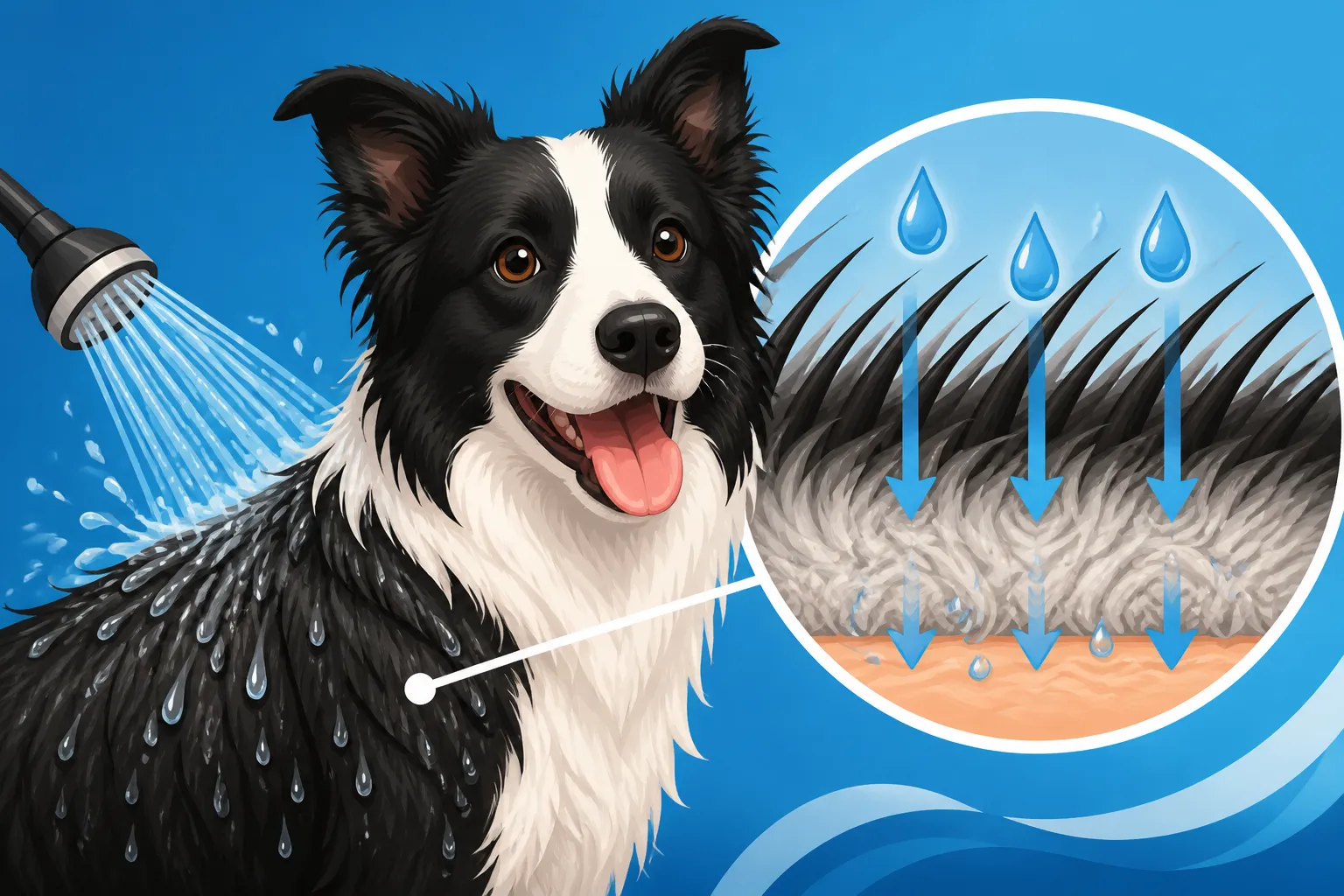
At first glance, you might just see a thick, luscious coat, especially on a rough-coated Border Collie. But beneath that outer layer lies the real secret to their weather resistance: their dense undercoat. The outer coat, often called the guard hairs, is coarser and longer, designed to shed water and dirt. These hairs act like tiny shingles, overlapping to create a protective barrier. Then, nestled underneath, is the undercoat – a soft, downy, incredibly thick layer of shorter hairs. This undercoat is what provides the primary insulation, keeping them warm in winter and helping to regulate their temperature in summer.
Because these guard hairs are so effective at repelling moisture, water often struggles to penetrate past them to reach the underlying skin and undercoat. Think of it like trying to wet a duck's feathers – the oil and structure mean water just rolls right off. Your Border Collie’s coat, while not oily in the same way, achieves a similar effect, making a superficial spray-down almost useless for true cleanliness.
Why Water Struggles to Penetrate
The sheer density of the undercoat is a major factor. Even if some water manages to get past the guard hairs, it can get trapped in the upper layers of the undercoat, never quite making it to the skin. This is particularly true if your dog has any matting or compacted fur, which creates an even more formidable barrier. Mats act like sponges, absorbing water on the surface but preventing it from flowing through to the rest of the coat or the skin. Without proper pre-bath grooming, you’re essentially trying to wash a waterproof mattress.
Beyond density, the natural oils and texture of the coat also play a role. These oils, while beneficial for coat health and weatherproofing, can also repel water, especially if the dog hasn't been bathed recently or has accumulated a lot of dirt and grime. The goal, then, is to bypass these surface defenses and saturate the entire coat, preparing it for a deep and effective cleanse.
Essential Preparations for Effective Bathing
You wouldn't start cooking a complex meal without getting all your ingredients and tools ready, right? Bathing a Border Collie is no different. Proper preparation isn't just helpful; it's absolutely crucial for getting water through that formidable coat and ensuring a successful, less stressful bath experience for both of you. Skipping these steps is a recipe for frustration and a half-clean dog.
Pre-Bath Brushing and Dematting
This is, hands down, the most critical step before any water even touches your Border Collie. Imagine trying to wash a tangled mop – the water just won't distribute evenly. A matted or heavily shedding coat will actively resist water penetration. So, grab your best grooming tools! A good slicker brush and a deshedding rake are your best friends here. Spend a solid 15-30 minutes, or even longer for a very dense or shedding coat, systematically brushing out all loose hair and working through any tangles. Focus on areas prone to matting: behind the ears, armpits, flanks, and the 'trousers' on their hind legs. If you encounter any significant mats, you might need a mat splitter or even safety scissors (with extreme caution!) to gently tease them apart.
Removing all that dead hair and separating the individual strands of the undercoat creates pathways for the water to travel. It breaks down the dense barrier that makes your dog’s coat so water-repellent. If you skip this, you'll be fighting an uphill battle, pouring water on top of a compacted, felt-like layer that simply won't let it through. Think of it as opening up all the tiny floodgates before the rain comes. Grooming a Rough-Coated Border Collie offers more tips on getting that coat ready.
Choosing the Right Environment and Tools
Where you bathe your Border Collie can make a huge difference. For smaller dogs, a laundry tub or a walk-in shower might work. For larger, more active Border Collies, a dedicated dog wash station (if you're lucky enough to have one), or even bathing them outside with a garden hose attachment on a warm day, can be ideal. The key is to have enough space to move around your dog comfortably and to keep them secure. Some folks use a non-slip mat in the tub to help their dog feel more secure and prevent slips, which can make a nervous dog even more anxious.
Next, gather your tools. You'll need:
- Shampoo and Conditioner: Formulated for dogs, preferably a concentrated, deep-cleaning shampoo that you can dilute. Diluting shampoo helps it spread more easily through dense fur. Shampoo That Does Not Strip a Border Collie's Oils talks about selecting the right products.
- Bathing Wand or Sprayer Nozzle: This is a game-changer! A powerful, focused stream of water is far more effective than a gentle showerhead or a bucket pour. You can find excellent options on Amazon or Chewy that attach to your shower or garden hose.
- Multiple Towels: Large, absorbent towels for post-bath drying.
- Rubber Curry Brush or Grooming Mitt: These are fantastic for working shampoo through the coat and gently massaging the skin.
- Treats! Always have plenty of high-value treats on hand to reward good behavior and make the experience positive.
Setting up a warm, draft-free area is also important, especially if you're bathing indoors. A cold dog is a miserable dog, and that dense undercoat takes a while to dry.
Step-by-Step Techniques for Undercoat Saturation
Now that you're prepped and ready, it’s time to get down to business. Getting that water all the way to the skin requires a bit of technique, patience, and the right tools. Don't rush this stage; it's the foundation for a truly clean dog.
The Power of a Targeted Water Stream
Forget gently drizzling water over their back. To penetrate that dense undercoat, you need a powerful, direct stream. A high-pressure bathing wand or a specialized sprayer nozzle that attaches to your shower or garden hose is invaluable. These tools allow you to direct a focused stream of water, pushing past the guard hairs and into the undercoat.
Start from the paws and work your way up, moving against the direction of hair growth. If you’re using a bathing wand, get the nozzle right down to the skin and let the water stream push the hair apart. Hold the wand close, even touching the skin in less sensitive areas, and make sure you see the water running off their belly and legs, not just beading on top. Pay extra attention to those dense areas like the ruff, the feathering on the legs, and the tail. These areas soak up water slower than you might expect. Mentally divide your dog into sections – chest, each leg, back, sides, belly – and don't move on until that section is thoroughly saturated. You want to see the water running clear from the skin, not just sitting on the surface.
Using Pressure and Massage to Aid Penetration
It's not just about the water stream; it's also about physically helping that water get where it needs to go. While the water is running, use your free hand to massage your dog's coat and skin. Work your fingers against the direction of hair growth, physically separating the hairs and allowing the water to reach the skin. This massage also helps loosen dirt and dead skin cells, preparing them for shampoo.
For rough-coated Border Collies, consider a rubber curry brush during this wetting stage. As the water flows, gently brush against the fur to further open up the coat and encourage water penetration. This physical action, combined with the strong water stream, helps break the surface tension and gets the undercoat soaking wet. Don't forget to work under the chin, around the ears (being careful not to get water inside the ear canals), and under the tail. These are often overlooked spots that remain stubbornly dry.
Here's a quick comparison of bathing tools:
| Tool/Method | Water Penetration for Undercoat | Ease of Use | Key Benefits | Considerations |
|---|---|---|---|---|
| Standard Shower Head | Low to Medium | High | Readily available, gentle | Inefficient, often requires more time/effort |
| Garden Hose (nozzle) | Medium to High | Medium | Good pressure, outdoor option | Water temperature can be an issue, not always gentle |
| Specialized Bathing Wand | High | Medium to High | Targeted, strong stream, often adjustable pressure | Requires purchase, connection to water source |
| Bucket Pour | Very Low | High | Simple | Highly inefficient for deep coats, superficial only |
| Hand Massage + Direct Stream | High | Medium | Physically aids penetration, loosens dirt | Requires engagement, can be messy |
Remember, the goal is to see the skin. If you can't part the fur and see their skin, it's not wet enough yet.
Shampooing and Rinsing: Ensuring Deep Cleanliness
Once your Border Collie is thoroughly soaked to the skin, you're halfway there! Now comes the crucial part of applying shampoo and, perhaps even more importantly, rinsing it all out. A deep clean isn't just about getting sudsy; it's about making sure all the dirt, grime, and shampoo residue are completely gone.
Applying Shampoo for Maximum Coverage
When your dog is dripping wet, it's time for the shampoo. As mentioned earlier, diluting your chosen dog shampoo (check the bottle for specific ratios, but often 1 part shampoo to 5-10 parts water works well) can make it much easier to spread through that dense coat. Pour the diluted shampoo over your dog's back, then use your hands and a rubber curry brush or grooming mitt to work it deep into the fur.
Again, work against the grain of the hair, massaging the shampoo all the way down to the skin. You'll want to see suds forming at the skin level, not just on the surface of the coat. Don't be shy about really working it in – this is where the dirt and oils trapped in the undercoat get lifted. Take your time, section by section. You might need more shampoo than you think, especially for their first wash if they're particularly dirty. Be careful around their face, using a washcloth to gently clean around their eyes and ears without getting water or soap in them. A thorough shampooing is vital to clean the Border Collie that works in mud.
The Critical Art of Rinsing Thoroughly
This is arguably the most neglected step in home bathing, and it's where many problems start. Leftover shampoo residue can cause skin irritation, dryness, itching, and dullness in the coat. With a double-coated breed like a Border Collie, rinsing needs to be incredibly meticulous. Just when you think you've rinsed enough, rinse some more!
Use your bathing wand or sprayer nozzle again, maintaining that targeted, powerful stream. Start at the top of their head and work your way down their body, allowing the water to carry the shampoo and dirt away. Continuously run your hands through their coat, feeling for any slippery or tacky residue. Lift the fur, especially in thick areas, to check that the water running off is completely clear and free of suds. Again, working against the lie of the hair helps expose the undercoat for better rinsing.
Many people find they need to rinse for at least twice as long as they shampooed. If you use a conditioner, apply it in the same thorough manner, working it down to the skin, and then rinse it out just as painstakingly. You want your dog's coat to feel clean, not greasy or slick from product. Taking the time here will prevent discomfort for your dog and ensure their coat looks and feels its best. Once rinsed, a good initial towel dry helps wick away excess water before you move on to air or blow drying. Drying a Border Collie After a Wet Day's Work explains why a proper dry is so important.
Disclaimer
This article is for general informational purposes only and does not constitute professional advice. Laws, prices and regulations vary by location and change over time. Consult a qualified professional for guidance on your specific situation.