Drying a Border Collie After a Wet Day’s Work
If you've spent any time at all with a Border Collie, especially one who genuinely works or plays hard outdoors, you know the scenario: they come barreling in from the field, the trails, or even just a wet backyard romp, absolutely sodden. The mud, the damp dog smell, the sheer volume of water clinging to their glorious coats – it's enough to make even the most devoted owner sigh. But getting your Border Collie truly dry isn't just about protecting your floors; it's crucial for their health and comfort, and this guide is going to walk you through how to tackle it effectively.
The Challenges of a Wet Border Collie
Let's be honest, a wet Border Collie is more than just a minor inconvenience. It’s a full-body experience of dampness, dirt, and that distinctive "wet dog" aroma that seems to permeate every soft furnishing in your home. But beyond the aesthetics and the cleaning effort, there are real health implications to consider when your highly active companion spends too much time wet.
Why a Wet Coat is More Than Just a Nuisance
A perpetually damp coat, especially on a dog with a dense double coat like many Border Collies, can lead to a host of problems. One of the most common issues is skin irritation and infections. Moisture trapped close to the skin creates a perfect breeding ground for bacteria and yeast. This can manifest as hot spots, which are painful, red, oozing lesions that can develop incredibly quickly. Imagine the discomfort for your dog, constantly itching and gnawing at an irritated patch of skin. It’s a vicious cycle that can be tough to break once it starts. Beyond specific infections, prolonged dampness can simply dry out their skin, leading to flakiness and itching.
Then there's the chill factor. While their thick coats are designed to offer protection, a soaking wet coat loses much of its insulating properties. In cooler weather, or even indoors if it's not particularly warm, a wet Border Collie can get chilled. This isn't just about them being a bit cold; a prolonged chill can weaken their immune system and make them more susceptible to other illnesses. Think about coming in from a heavy rainstorm yourself – you want to get dry and warm as quickly as possible, and your dog feels the same way.
And yes, we can't forget the household mess. Muddy paw prints tracked through the house, wet fur brushing against furniture, and that unmistakable damp dog smell that settles into rugs and upholstery. It's a battle we fight daily during wet seasons, and it adds to the mental load of dog ownership. Getting them properly dry mitigates all these issues. For more on this, you might find our article Whether a Damp Border Collie Coat Causes Trouble insightful, or even Why a Border Collie Smells After a Wet Day.
Rough vs. Smooth Coats: Different Drying Needs
Border Collies come in a couple of primary coat types: the rough (or medium-length) coat and the smooth (or short) coat. While both types get wet, they certainly don't handle drying the same way.
The rough-coated Border Collie is often what people picture when they think of the breed – that beautiful, flowing fur with feathering on the legs, chest, and tail. This coat, while stunning, is a master at holding onto water, mud, burrs, and anything else it encounters. The dense undercoat acts like a sponge, soaking up moisture and trapping it close to the body. This means a rough-coated Border Collie takes significantly longer to air dry, and if not dried thoroughly, the chances of skin issues or mats developing are much higher. Those longer hairs also mean more surface area for dirt to cling to, turning a quick splash into a full-body mud mask. Grooming a Rough-Coated Border Collie delves deeper into managing these luxurious coats.
On the other hand, the smooth-coated Border Collie has shorter, coarser hair that lies flatter against the body. While they might seem like they'd dry faster, they're not entirely off the hook. Their coats still have a dense undercoat, though it's less pronounced than in a rough coat, and they can still get quite wet. The main difference is that they tend to shed water more easily, and mud doesn't get as deeply embedded. However, because their protective layer isn't as thick, they can often get chilled more quickly in cold, wet conditions. So, while the process of getting the water out might be faster, ensuring they are truly warm and dry to prevent a chill is just as important. You can learn more about their specific needs in The Smooth-Coated Border Collie and What Its Coat Needs. Understanding your dog's specific coat type will greatly influence your drying strategy and the tools you reach for.
Essential Tools and Techniques for Drying
Getting your Border Collie dry after a hard day's work isn't just about waiting for them to shake it off. You need a proactive approach and the right tools. From the moment they step indoors, you're on cleanup duty, but with a plan, it doesn't have to be a monumental task.
Initial Steps: Removing Excess Water and Debris
The first line of defense against a wet, muddy Border Collie is immediate action upon their return. Don't let them wander through the house spreading their dampness and dirt.
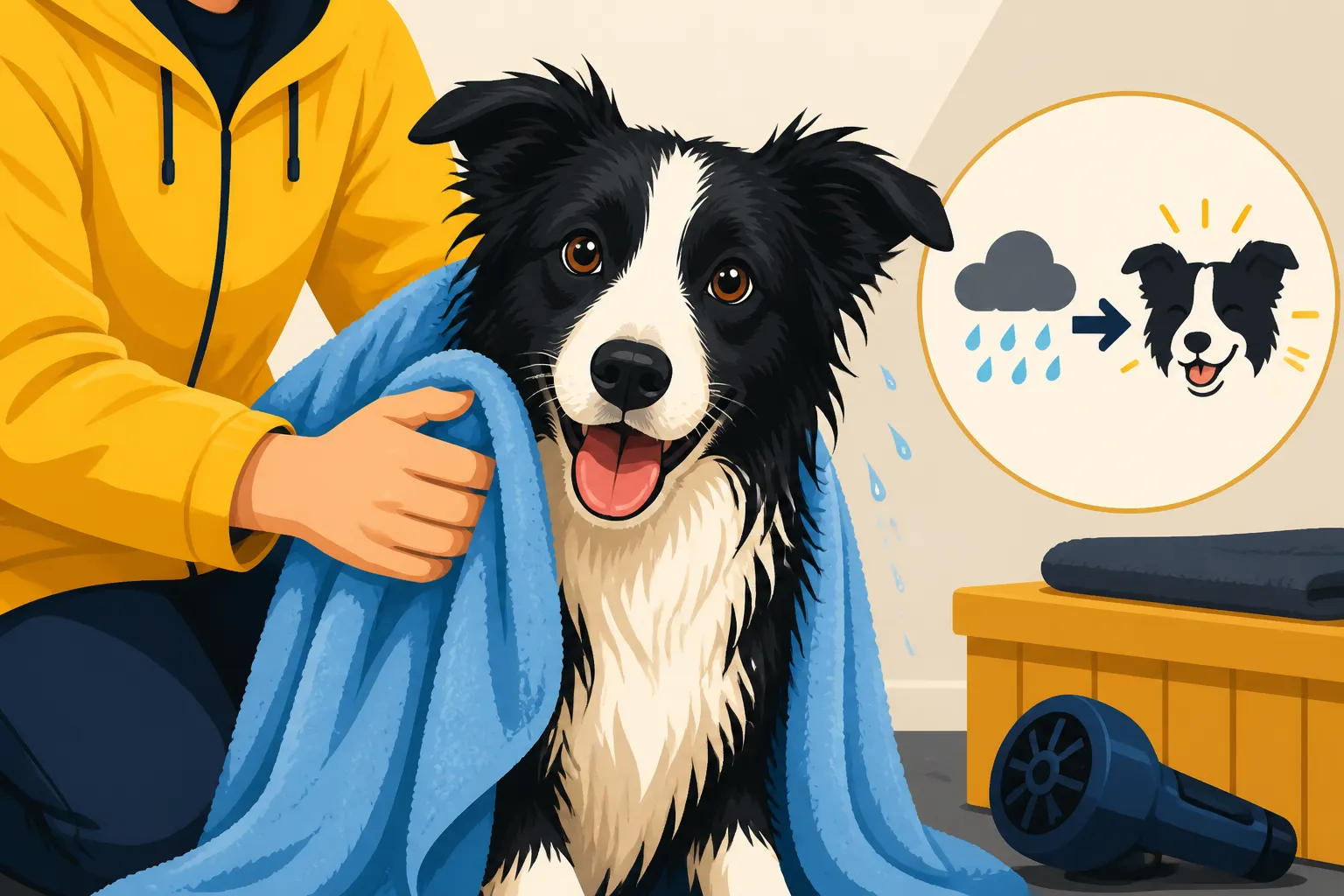
Start with vigorous towel drying. Have a stack of absorbent towels ready near your entry point. Microfiber towels designed for pets are absolute game-changers here. They absorb significantly more water than standard bath towels and can cut down drying time considerably. Use firm, rubbing motions, paying close attention to their legs, belly, and chest – areas that often collect the most mud and water. If your Border Collie has a rough coat, gently squeeze the feathering and tail to express excess water. Don't just wipe; try to blot and rub to pull the moisture out of the undercoat.
Before you even think about "drying," you absolutely must address any mud, burrs, or debris stuck in their coat. Mud, if left to dry in the fur, turns into a concrete-like substance that is incredibly difficult to brush out and can pull at their skin, causing discomfort. For heavy mud, a quick rinse with warm water in a utility sink or outdoor shower might be necessary. Focus on the lower legs and belly. You don't need a full bath every time, just enough to dislodge the caked-on dirt. A dedicated "drying zone" in your home, perhaps a tiled entryway or a mudroom, makes this initial cleanup much easier. If burrs or sticky seeds are present, gently pick them out by hand or use a slicker brush, being careful not to tug at their skin. Ignoring these can lead to painful mats, especially in the long feathering of a rough-coated Border Collie.
Advanced Drying Methods for a Thorough Job
Once the initial towel-off and debris removal are done, it's time to get down to serious drying. This is where specialized tools really shine, especially for our double-coated friends.
High-Velocity Dryers: These are perhaps the most effective tool for drying a Border Collie thoroughly and quickly. They aren't like human hair dryers; they use powerful, cool or warm (not hot) air to literally blast the water off and out of the coat. This force helps separate the dense undercoat, allowing air to reach the skin and dry it completely.
- Pros: Dramatically reduces drying time, prevents matting, helps de-shed loose undercoat, gets right down to the skin, which is crucial for preventing skin issues. Many professional groomers and handlers swear by brands like K9 Blaster or even more affordable options found on Amazon or Chewy.
- Cons: Can be noisy, which some dogs find alarming. Requires desensitization and careful use. You must always keep the nozzle moving and never direct the air directly into their ears, eyes, or genitals. The air should feel comfortable on your own skin – never too hot. Start on a low setting and praise your dog generously.
- How to Use Safely: Start with the dryer a good distance away, aiming for a leg or hindquarter, and gradually bring it closer as your dog tolerates it. Use positive reinforcement (treats!) and take breaks if your dog shows signs of stress. Brush as you go, pushing the hair against the direction of growth to help lift the undercoat and allow the air to penetrate.
Forced Air Dryers vs. Regular Human Blow Dryers: It's important to understand the difference. High-velocity or forced-air pet dryers are designed specifically for animals, focusing on high volume and velocity of air, often with minimal or no heat. Human blow dryers, on the other hand, produce much higher heat levels, which can easily burn a dog's sensitive skin, especially if you hold it too close or in one spot for too long. They also lack the power to effectively dry a thick double coat, mostly just drying the surface. Never use a human blow dryer on your Border Collie on a hot setting. If you absolutely must use one in a pinch, keep it on the coolest setting, far away from their skin, and only for surface drying after most of the moisture has been removed.
Air Drying with Caution: While air drying seems easy, it's rarely sufficient for a Border Collie, especially a rough-coated one, after a thorough soaking.
- When it's appropriate: Maybe after a very light drizzle and a good towel rub, or if your dog has access to a warm, dry, well-ventilated space and you've already removed most of the surface water. This might be a sunny patch on a protected porch or a warm kennel.
- When it's not: If your dog is heavily soaked, if it's cold outside or inside, or if your dog is prone to skin issues. Allowing a thick undercoat to air dry slowly can lead to matting, a damp smell, and those dreaded skin infections. It's simply not thorough enough for a working Border Collie.
Here's a quick comparison of common drying methods:
| Method | Pros | Cons | Best For |
|---|---|---|---|
| Microfiber Towels | Highly absorbent, gentle, portable, affordable | Requires effort, can't fully dry thick undercoats | Initial water removal, light dampness, travel |
| High-Velocity Dryer | Fast, thorough, prevents mats, de-sheds | Noisy, requires desensitization, upfront cost | Heavy soaking, thick coats, regular grooming, preventing skin issues |
| Crate Drying (with fan) | Hands-free, good air circulation, safe | Slower than HV dryer, still requires initial towel dry | Dogs comfortable in crates, lighter dampness, finishing a dry |
| Air Drying (unassisted) | No equipment needed | Slow, can lead to matting, skin issues, chilling, odors | Very light dampness, warm weather, supplemental drying only |
Preventing Issues and Maintaining Coat Health
Dealing with a soggy Border Collie is part of the territory, but there are definitely proactive steps you can take to minimize the wetness, the mess, and potential health issues. A little foresight goes a long way in keeping both your dog and your home happier.
Strategies for Minimizing Wetness and Mess
Sometimes, you can nip the problem in the bud, or at least significantly reduce its impact, before your dog even gets soaked.
Consider waterproof coats or vests for working dogs or during very wet weather. While not every Border Collie will tolerate clothing, especially if they're actively working, a lightweight waterproof layer can prevent their core coat from becoming completely saturated. This is particularly useful for pet Border Collies on walks in the rain or for short periods in damp fields. If their outer coat stays relatively dry, your drying job becomes much simpler.
Designating a "drying zone" in your home is a lifesaver. This could be a mudroom, a large bathroom with a non-slip mat, or even a covered porch area. The key is to have a space where your dog can be contained and where you don't mind a bit of water and dirt. Stock this area with your drying towels, brushes, and perhaps a small fan or even their crate if you're going to use a crate dryer. Training your Border Collie to go directly to this spot upon coming inside will save your carpets and furniture from countless wet paw prints.
For routine mud and dampness, especially after a simple walk or a romp in the yard, quick rinses for muddy paws and bellies are often sufficient. You don't need to bathe your whole dog. A shallow bucket of warm water, or a dedicated paw washer, can quickly clean muddy paws. If their belly is splattered, a quick spray down with a detachable showerhead and a thorough towel dry of just that area can make a huge difference. This prevents bringing in excessive dirt and keeps the problem localized. It also helps prevent potential skin irritations on their sensitive belly area from prolonged mud contact. Checking a Border Collie Over After Field Work emphasizes why these routine checks are so important.
Long-Term Coat Care to Aid Drying
A healthy coat isn't just about looks; it's about function. A well-maintained coat, especially for a breed like the Border Collie, is easier to clean and dries more efficiently.
Regular grooming to prevent mats is paramount, particularly for rough-coated Border Collies. Mats trap moisture against the skin, creating an ideal environment for bacteria and fungal infections. They also make it incredibly difficult to get air to the skin, prolonging drying time and increasing the risk of hot spots. Brushing out your dog's coat regularly – daily for some rough coats, a few times a week for others – removes dead undercoat, prevents tangles, and ensures their coat can breathe. Pay special attention to areas prone to matting, like behind the ears, armpits, and the "trousers" on their hind legs. If mats do form, you'll want to tackle them gently with a detangling spray and a comb, or if they're severe, a trip to a professional groomer may be necessary. Mats Behind a Rough Border Collie's Ears is a specific problem area to watch. Having the right tools, like a good slicker brush and an undercoat rake (available at retailers like Chewy or Amazon), makes this task much more manageable.
The importance of proper nutrition for coat health cannot be overstated. A dog's coat is a reflection of their internal health. A high-quality diet rich in essential fatty acids (like Omega-3s and Omega-6s) contributes to a healthy skin barrier and a strong, vibrant coat. A strong coat repels water more effectively and is less prone to dryness and irritation. If your Border Collie's coat seems dull, excessively shedding, or prone to dryness, a conversation with your vet about their diet and potential supplements might be in order. Brands like Ollie, which focus on fresh, whole ingredients, or other high-quality kibbles, can make a difference. Feeding a Border Collie That Works Two Hours a Day explores dietary needs for active Border Collies.
Finally, always be checking for skin issues that can be exacerbated by prolonged wetness. During your drying routine, make it a habit to visually inspect and feel your Border Collie's skin. Look for redness, flakiness, bumps, or any signs of irritation. Lift their fur to check the skin underneath. Early detection of a hot spot or other skin problem means you can address it quickly, before it becomes a bigger, more painful issue. Pay attention to areas where moisture might linger, like the armpits, groin, and between their toes. If you notice persistent redness, scratching, or any unusual odors, it's time to consult your veterinarian. These could be early signs of allergies or other dermatological problems.
When a Border Collie's Coat Just Won't Dry
Sometimes, despite all your best efforts with towels and dryers, your Border Collie still feels perpetually damp, or their coat seems to attract and hold onto moisture more than it should. This isn't just frustrating; it can be a sign that something deeper is going on.
Identifying Underlying Issues
If you're noticing an unusual or persistent dampness, or a coat that simply doesn't respond to drying methods as it once did, it's worth exploring potential underlying health factors.
Health conditions affecting coat quality are a significant consideration. The thyroid gland, for instance, plays a crucial role in maintaining healthy skin and coat. An underactive thyroid (hypothyroidism) can lead to a dull, dry, brittle coat that may take longer to dry, excessive shedding, and even skin infections. If you've also noticed a change in your Border Collie's energy levels or weight, thyroid issues could be at play. Similarly, allergies in a Border Collie – whether environmental, food-related, or to fleas – can cause chronic skin inflammation, leading to a compromised skin barrier and a coat that struggles to maintain its natural protective oils, making it more prone to dampness and irritation.
Beyond specific diseases, general poor circulation or other health concerns can also subtly impact coat health and drying efficiency. A dog that isn't in peak physical condition might have a less robust coat. Even issues like chronic pain could lead to a dog being less inclined to move vigorously and help shake off water, or to tolerate grooming efforts, indirectly contributing to dampness. Regularly scheduled veterinary check-ups, like The Annual Exam a Border Collie Needs, are vital for catching these subtle changes.
The role of diet in a healthy coat extends beyond just shine. A diet lacking in essential nutrients, particularly fats, vitamins, and minerals, can result in a dry, lackluster coat that doesn't have the natural oils to repel water effectively. If your Border Collie isn't getting adequate nutrition, their skin and coat will often be the first places to show it. Ensuring they are on a high-quality, balanced diet that supports their active lifestyle is fundamental to overall coat health. Sometimes, a change in diet or the addition of a vet-approved supplement can make a surprising difference.
Seeking Professional Help
If you've tried everything and your Border Collie's coat still feels stubbornly damp, or you're seeing accompanying skin problems, don't hesitate to reach out for professional guidance.
Consulting a vet for persistent dampness or skin problems is always the best first step. They can perform diagnostic tests to rule out or identify underlying medical conditions, such as blood work for thyroid function or skin scrapings for parasites or infections. They can also advise on appropriate treatments for allergies, infections, or other dermatological issues. For example, if your Border Collie is suffering from Coat Loss in a Border Collie With Thyroid Trouble, your vet can prescribe medication to get their hormones back in balance. Ignoring these signs can lead to worsening conditions and more discomfort for your beloved companion.
Beyond medical issues, professional groomers for specialized drying techniques or de-shedding can also be incredibly helpful. A skilled groomer has access to powerful drying equipment and a wealth of experience with various coat types. They can often get a heavily matted or double-coated dog thoroughly dry in a way that's difficult to achieve at home. They can also provide professional de-shedding treatments that remove vast amounts of dead undercoat, which, in turn, makes subsequent home drying much more efficient and helps prevent future matting and odor. They can also offer advice on the best brushes and tools for your specific Border Collie's coat type, like Which Brush Suits a Rough Border Collie's Coat, and demonstrate proper techniques. Sometimes, a professional deep clean and dry is all it takes to reset their coat health and make your life easier.
Disclaimer
This article is for general informational purposes only and does not constitute professional advice. Laws, prices and regulations vary by location and change over time. Consult a qualified professional for guidance on your specific situation.