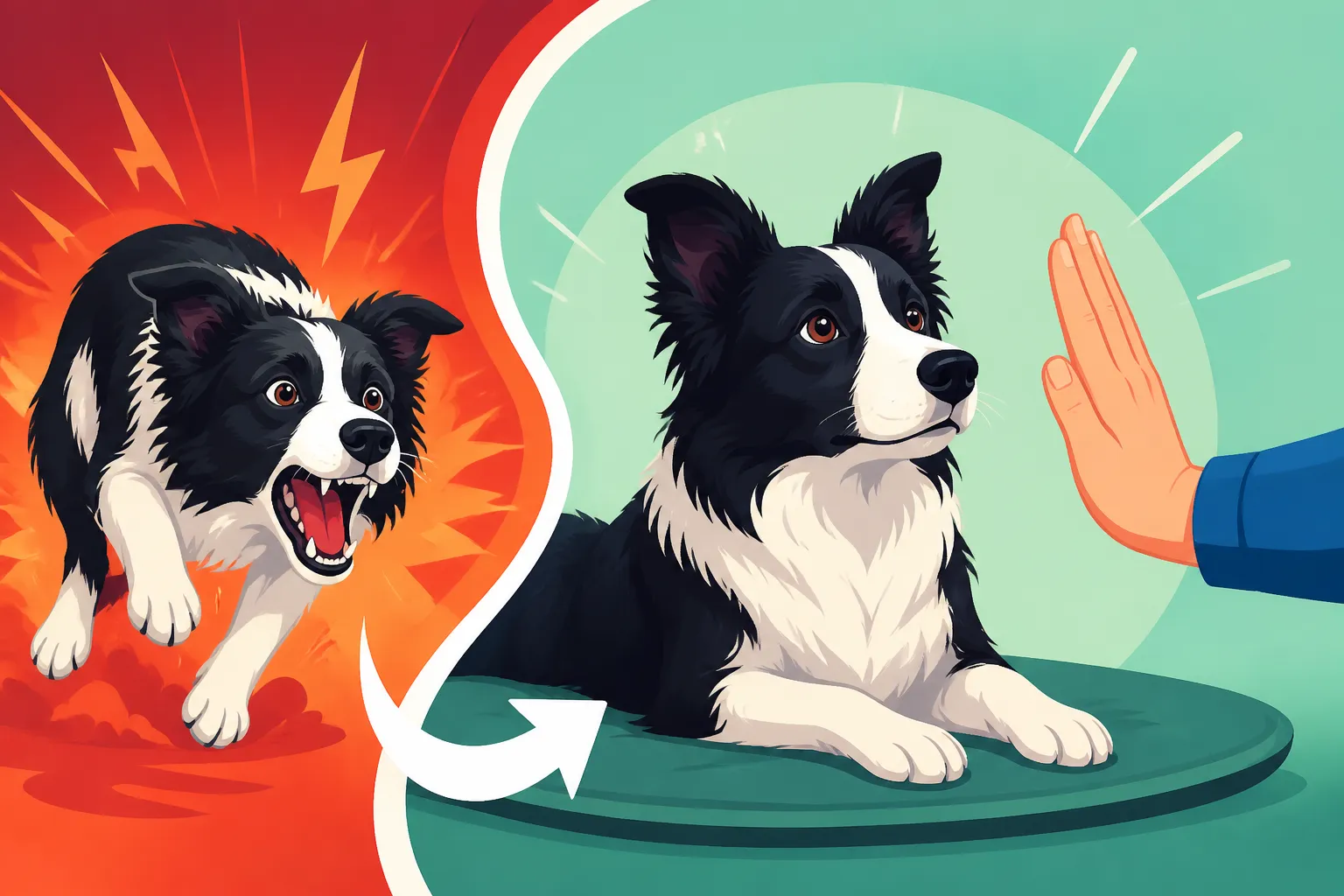
Stopping a Border Collie Before an Episode Starts
It’s truly disheartening, isn't it? One moment your Border Collie is full of life, focused, and doing what they love, and the next you see that tell-tale sign – a subtle tremor, a slight stagger, or a faraway look in their eyes – that warns you an episode is about to begin. The sheer panic that can set in, wondering if you can intervene, if you can stop it before it fully takes hold, is a heavy burden for any Border Collie owner. This guide is here to walk you through understanding the specific triggers for these concerning episodes and, more importantly, how to implement practical, proactive strategies to help your beloved dog stay calm, healthy, and on an even keel.
Understanding the Triggers for Border Collie Episodes
Border Collies are phenomenal dogs, renowned for their intelligence, drive, and intense focus. However, these very traits, when mismanaged or pushed too far, can sometimes lead to what we term "episodes." These aren't always full-blown medical emergencies, though some certainly can be, but rather moments where the dog's system is overwhelmed, leading to physical or behavioral shutdowns, or even collapse-like symptoms. It’s a frustrating reality that a dog bred for such incredible work can also be so susceptible to overstimulation.
Intense Exercise and Environmental Overload
One of the most widely recognized triggers for episodes in Border Collies, particularly a condition known as Border Collie Collapse (BCC), is prolonged, high-intensity exercise, especially in warm weather. You might think, "But my Border Collie loves to run!" And they do. But there's a fine line between healthy exertion and pushing them past their physiological limits. Picture a beautiful day at a dog park or a trial, your Border Collie happily retrieving a ball for 20 minutes straight, or weaving through an agility course with boundless energy. Suddenly, you notice a strange gait, a wobbling, or they might even stumble. This isn't just exhaustion; it's their body sending a distress signal.
It's not just physical exertion; sensory overload can be just as impactful. Imagine a bustling street fair, fireworks, or a house full of excited children and new guests. For a highly sensitive and alert breed like the Border Collie, this constant barrage of sights, sounds, and smells can be incredibly taxing. Their brains are wired to process everything, to look for patterns, to work. When there’s too much input and no clear job to focus on, that mental energy can quickly turn into anxiety and overwhelm, leading to various stress-related behaviors or even physical manifestations of that stress. It's like having a super-computer trying to run a thousand programs at once without proper cooling.
Excitement and Anxiety as Precursors
Excitement, especially unchecked excitement, can be a potent trigger. Think about the Border Collie who gets absolutely beside themselves when the leash comes out, or when they see sheep in the distance, or even just when you pull out their favorite toy for a game of fetch. This high state of arousal, while seemingly positive, floods their system with adrenaline and other stress hormones. This intense emotional state can sometimes precede a physical collapse, particularly in dogs prone to conditions like Border Collie Collapse and What Sets It Off. The transition from intense excitement to a sudden physical falter can be alarming, leaving owners utterly perplexed.
Anxiety, on the other hand, can be a more insidious, chronic trigger. A Border Collie living in an environment that doesn't meet their needs – perhaps too much alone time, insufficient mental stimulation, or constant exposure to stressors they can't control – can live in a perpetual state of low-grade anxiety. This can manifest in subtle ways, like excessive barking, destructive chewing, or obsessive behaviors such as Spinning and Tail Chasing in a Border Collie. Over time, this chronic stress can lower their threshold for coping, making them more susceptible to an acute episode when something pushes them just a little too far. It's a cumulative effect, slowly chipping away at their resilience.
Genetic Predispositions and Underlying Health Concerns
While we often focus on environmental and behavioral triggers, it’s crucial to acknowledge that some Border Collies have genetic predispositions or underlying health conditions that make them more vulnerable to episodes. Conditions like Epilepsy in a Border Collie Between One and Five can lead to seizures, which can sometimes be mistaken for other types of collapse or simply present as a sudden, disorienting event. Owners might find themselves asking, "What a Border Collie Seizure Looks Like," trying to differentiate it from a purely behavioral or exertion-induced collapse.
It's vital to rule out these medical factors. Other conditions, though less common, can also influence a dog's stability. For instance, a dog with a heart condition, even a mild one, could be more susceptible to overexertion. Furthermore, even seemingly minor issues, like an imbalance in thyroid levels, can affect a dog’s overall well-being and energy regulation, impacting "Why a Border Collie's Drive Drops With Its Thyroid." This is why regular veterinary check-ups and open communication with your vet about any observed episodes or concerns are paramount. Having a comprehensive pet insurance plan, such as one from Healthy Paws, can certainly alleviate some of the financial stress associated with investigating these underlying health concerns.
Proactive Management: Environmental and Routine Adjustments
Taking control of your Border Collie's environment and routine is arguably the most powerful tool you have in preventing episodes. It's about creating a predictable, balanced world where their inherent drives are met in a constructive way, rather than allowing them to become overwhelming. This often means making some tough choices about what activities are truly beneficial and what might be inadvertently setting your dog up for failure.
Structuring Daily Activity and Rest
Border Collies thrive on structure. A chaotic, unpredictable day is a recipe for anxiety and overstimulation. Instead, aim for a consistent daily routine that incorporates appropriate physical exercise, mental stimulation, and crucially, enforced rest. Many owners mistakenly believe that an exhausted Border Collie is a happy Border Collie. While they need significant activity, they also need to learn how to switch off. This isn't something they naturally do without guidance. An excellent internal resource on this topic is "Exercise, Work and What Actually Settles a Border Collie."
Consider dividing their physical activity into shorter, more varied bursts rather than one marathon session. For example, instead of an hour of non-stop ball retrieving, try a 20-minute walk with obedience work, followed by a 15-minute training session indoors, and then quiet time in a crate or on a mat. Regularly scheduled meals, potty breaks, and training slots help them anticipate what’s next, reducing anxiety. Integrating puzzle toys or controlled sniff walks can provide enrichment without the high impact that can trigger episodes like "Repeated Ball Retrieving and Border Collie Collapse."
Creating a Calm and Predictable Home Environment
Your home should be a sanctuary, a place where your Border Collie feels safe and can truly relax. This means minimizing unnecessary stressors. For some dogs, loud televisions, constant foot traffic, or even just seeing too much activity outside a window can be a source of chronic low-level stress. Consider using white noise machines, calming music, or even simply closing blinds during busy times of day to reduce sensory input.
It's also essential to provide your Border Collie with a designated "safe space." This might be a comfortable crate covered with a blanket, a dog bed tucked away in a quiet corner, or even a specific room where they can retreat when things get too much. Teach them that this space is for relaxation and that they won't be bothered there. This is especially important for dogs who struggle to settle, as discussed in "Settling a Border Collie on a Mat." Consistency is key here; everyone in the household needs to respect this space and your dog's need for quiet downtime.
Here's a quick reference table for managing common triggers:
| Trigger Type | Example Scenario | Prevention Strategy |
|---|---|---|
| High-Intensity Exercise | Long, unvaried fetch sessions, sustained running in heat. | Shorten intense sessions; incorporate varied activities (scent work, obedience, structured walks). Avoid peak heat. Watch for early signs of fatigue (stumbling, decreased focus). Ensure proper conditioning. Consider a cooling vest in warmer weather. |
| Sensory Overload | Busy public events, fireworks, noisy household. | Provide a quiet, designated safe space (crate, back room). Use white noise or calming music. Close blinds. Gradual, controlled exposure (desensitization) at low intensity. |
| Unchecked Excitement | Over-the-top greeting rituals, frantic pre-walk behavior. | Teach calm greetings. Use "wait" cues before desirable activities (food, walks, toys). Incorporate impulse control training. Channel excitement into a specific, controlled task before releasing for play. Consider using a long line for initial management of "Excitement as a Trigger for Border Collie Collapse." |
| Chronic Anxiety | Inconsistent routine, lack of mental stimulation, separation distress. | Establish a consistent daily schedule. Provide ample mental enrichment (puzzle toys, training, Scentwork for a Border Collie Between Trial Seasons). Address separation anxiety with professional help. Ensure adequate sleep and rest periods. |
| Compulsive Behaviors | Shadow chasing, excessive spinning, self-mutilation. | Redirect focus to appropriate toys/tasks immediately. Interrupt and re-engage with structured training. Consult a behaviorist if severe. Ensure adequate mental and physical outlets. Minimize triggers (e.g., block reflections). For dogs that cannot stop, check out "Why a Border Collie Cannot Stop on Its Own." |
Training and Mental Fortitude to Prevent Overwhelm
Training isn't just about teaching your Border Collie tricks; it's about building their resilience, teaching them how to manage their impulses, and providing them with the mental tools to navigate a complex world without becoming overwhelmed. For a breed so eager to learn, this mental engagement is just as important, if not more so, than physical exercise in preventing episodes.
Impulse Control and Relaxation Protocols
One of the cornerstones of preventing episodes is teaching impulse control. A Border Collie that can pause, think, and choose a calmer response is less likely to spiral into an overstimulated state. This involves exercises like "leave it," "stay," and waiting patiently for food or a toy. These aren't just polite manners; they're vital mental exercises that strengthen their ability to self-regulate. For example, rather than instantly throwing the ball when they bring it back, ask them to "down" and "wait" for a few seconds first. This teaches them that calm behavior gets the reward, not frantic demand.
Beyond impulse control, actively teaching your Border Collie to relax on cue is incredibly valuable. Relaxation protocols, like Karen Overall's Protocol for Relaxation, involve systematically desensitizing your dog to various stimuli while they remain in a calm, down-stay position. This isn't a quick fix but a long-term investment in their emotional regulation. It empowers them to settle in distracting environments, a skill that can literally prevent an "Excitement as a Trigger for Border Collie Collapse" episode from spiraling out of control. Think of it as teaching them a coping mechanism for when the world gets a little too much.
Appropriate Mental Stimulation
While physical activity is important, neglecting mental stimulation for a Border Collie is like asking a super-computer to sit idle all day – it's going to find something to do, and it might not be what you want! Many undesirable behaviors, and indeed some episodes, stem from a lack of appropriate mental engagement. This is where you can truly leverage their intelligence. Instead of just endless fetch, consider activities like:
- Scent Work: This is fantastic for all Border Collies, engaging their powerful noses and requiring intense focus. It’s physically low-impact but incredibly mentally tiring.
- Obedience and Trick Training: Constantly teaching new commands or complex tricks keeps their brains sharp and gives them a "job."
- Puzzle Toys and Food Dispensing Toys: These can provide engaging mental challenges, especially during quiet times or when you need to step away. Look for puzzle feeders a Border Collie cannot solve twice, ensuring they remain challenged.
- Herding-Inspired Games: If real sheep are not available, structured games like "big ball herding" can satisfy their instincts in a controlled, safe way.
The key is variety and engagement. The goal is to tire their brains without necessarily over-tiring their bodies, particularly if they are prone to collapse-like symptoms.
Monitoring and When to Seek Professional Help
Even with the best preventative measures, sometimes episodes can still occur or new behaviors might emerge. Being a vigilant observer of your Border Collie's behavior and knowing when to escalate concerns to a professional is a critical part of their long-term health and well-being.
Recognizing Early Warning Signs
The ability to "Stop a Border Collie Before an Episode Starts" hinges on recognizing the subtle changes in their behavior that act as precursors. Every dog is an individual, but common early warning signs can include:
- Subtle physical changes: A slight change in gait, a stiffness, a shake of the head, exaggerated panting, drooling, or a glazed, unfocused look in their eyes. For BCC specifically, "The Wobbling Gait a Collapsing Border Collie Shows" is a key indicator.
- Behavioral shifts: A sudden decrease in focus during a familiar task, becoming overly sensitive to touch, increased vocalization (whining, low growls), or trying to disengage from an activity they normally love.
- Compulsive behaviors: An increase in behaviors like shadow chasing, incessant spinning, or flank sucking. While some Border Collies might display these generally, an increase in their frequency or intensity often signals heightened stress or an impending overload. If you notice "The Border Collie That Will Not Break Its Stare" becoming even more fixated, it's a warning.
Keep a journal of any episodes or concerning behaviors, noting the time, duration, activity leading up to it, environmental factors (heat, noise), and how your dog recovers. This information is invaluable for your vet.
Consulting Your Veterinarian
If you observe any concerning "episodes," even if they seem minor or resolve quickly, a visit to your veterinarian is absolutely non-negotiable. It is crucial to rule out any underlying medical conditions. Your vet may recommend a thorough physical exam, blood work, and possibly even more specialized diagnostics, such as cardiac screenings or neurological evaluations. They can help differentiate between something like Border Collie Collapse and a seizure, or even a pain-related issue. "The Annual Exam a Border Collie Needs" is your first line of defense, but specific concerns warrant immediate attention.
Don't hesitate to mention specific breeds predispositions like Border Collie Collapse, or potential genetic issues if known. Your detailed observations, combined with your vet's expertise, form the best defense. Should your vet recommend extensive testing or ongoing medication, knowing you have support from a provider like Healthy Paws can provide significant peace of mind as you navigate potential costs. A good veterinary relationship is truly one of the most important aspects of responsible Border Collie ownership.
Working with a Certified Professional Dog Trainer or Behaviorist
For episodes rooted in behavioral overstimulation, anxiety, or compulsive tendencies, your vet might recommend working with a certified professional dog trainer or a veterinary behaviorist. These experts can assess your dog's specific triggers and develop a tailored behavior modification plan. They can teach you advanced techniques for impulse control, desensitization, and counter-conditioning, helping your Border Collie build coping mechanisms and reduce their reactivity to stressful stimuli.
A skilled behaviorist can also help you understand the nuances of Border Collie behavior, guiding you in how to provide appropriate outlets for their drive without pushing them into an overwhelmed state. They can offer strategies for managing challenging behaviors like "The Border Collie That Runs the Fence at Traffic," turning potential stressors into opportunities for engagement and calm. Remember, managing a Border Collie’s intense nature is an ongoing process, and having professional guidance can make all the difference in achieving a balanced, happy life for both you and your extraordinary dog.
Disclaimer
This article is intended for informational purposes only and does not constitute veterinary advice. Always consult with a qualified veterinarian for any health concerns or before making any decisions about your Border Collie's care or treatment.