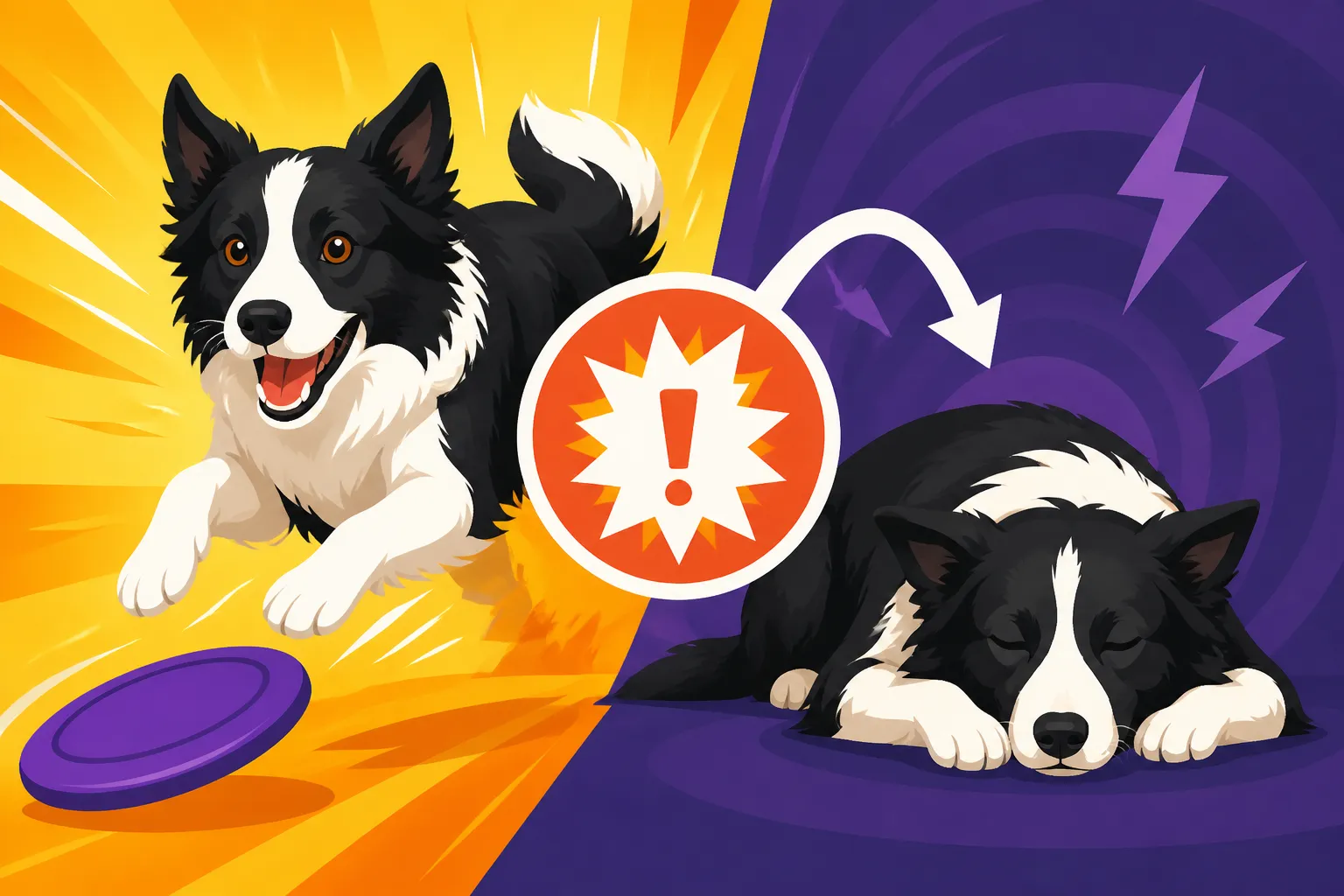
Excitement as a Trigger for Border Collie Collapse
It’s incredibly disheartening when your energetic, intelligent Border Collie, a dog seemingly built for endless activity, suddenly falters, stumbles, or even collapses after a burst of excitement or strenuous play. Many owners experience a terrifying moment of panic, wondering if their beloved companion is seriously ill, having a seizure, or worse. This guide aims to demystify Border Collie Collapse (BCC), specifically focusing on how excitement can trigger these episodes, providing you with a clearer understanding of what’s happening and how to best manage it for your dog's well-being.
Understanding Border Collie Collapse
Border Collie Collapse (BCC) is a relatively mysterious, exercise-induced neurological disorder that primarily affects Border Collies, though similar syndromes have been noted in other breeds. It’s not just a case of your dog getting tired; it’s a distinct and often alarming set of symptoms that appear during or immediately after periods of intense exercise or high arousal. Many describe it as if their dog's legs simply stop working, leading to a wobbly gait or full collapse.
What Border Collie Collapse Looks Like
The onset of BCC symptoms is typically sudden and dramatic. Picture your dog, full of gusto, tearing across the field, eyes locked on a thrown frisbee, then abruptly, something shifts. One minute they're sprinting, the next their hind legs might start to drag, they might stumble, or develop a noticeably stiff, high-stepping gait, especially in the rear. This wobbly gait a collapsing Border Collie shows can be alarming. Sometimes, it progresses rapidly to a full collapse, where the dog might lie down, unable to get up, but usually remaining fully conscious and aware of its surroundings.
Unlike a heatstroke episode, which often presents with excessive panting, bright red gums, and disorientation, dogs with BCC usually have normal body temperatures immediately after the collapse. They are typically still mentally alert, looking at you, perhaps even trying to wag their tail, despite their physical incapacitation. This can be particularly confusing for owners who are trying to figure out what went wrong. For a deeper dive, understanding What a Border Collie Collapse Episode Looks Like can provide crucial insight.
Differentiating BCC from Other Conditions
When your dog collapses, naturally, a million scenarios race through your mind. Is it a seizure? Is it heart trouble? Is it simply exhaustion or heatstroke? It’s crucial to understand the distinctions. BCC is typically triggered by specific types of exercise and excitement, and the dog often remains mentally lucid.
Let's look at a comparison:
| Feature | Border Collie Collapse (BCC) | Seizure | Heatstroke |
|---|---|---|---|
| Onset | During/after intense exercise/excitement | Often sudden, can be at rest | During/after prolonged heat exposure/strenuous activity |
| Consciousness | Fully conscious, aware, often tries to respond | Loss of consciousness, disorientation, involuntary movements | Disoriented, dazed, potentially unconscious |
| Physical Symptoms | Stiff, wobbly gait (especially hind limbs), collapse, may drag legs, normal temperature | Convulsions, paddling, drooling, urinating/defecating, rigid muscles | Excessive panting, bright red/purple gums, vomiting, diarrhea, high body temperature |
| Recovery | Usually within 5-30 minutes, full recovery without residual effects | Post-ictal phase (disorientation, temporary blindness) lasting minutes to hours | Requires immediate cooling, can be life-threatening, prolonged recovery |
| Primary Trigger | High arousal, intense, repetitive exercise | Neurological event | Overheating |
The distinction between Telling Border Collie Collapse From a Seizure is particularly important for owners. While both can be frightening, the dog's mental state and the nature of their movements are key indicators. A seizure involves uncontrolled muscle activity and a loss of awareness, whereas a dog experiencing BCC is generally still aware of its surroundings, even if it can't move properly. Also, it’s vital to understand Ruling Out Heat Before Calling It Border Collie Collapse, as heatstroke requires immediate, aggressive cooling, unlike BCC.
The Role of Excitement and High Arousal
This is where the core of our discussion lies: excitement, stress, and high arousal are powerful catalysts for Border Collie Collapse. It's not just the physical exertion, but the mental and emotional intensity that seems to flip a switch in predisposed dogs.
How Arousal Impacts the Nervous System
Border Collies are bred for intense focus, lightning-fast reactions, and an incredible drive to work. This means their nervous systems are constantly primed for high arousal. When they're working sheep, flying through an agility course, or engaged in an epic game of fetch, their sympathetic nervous system (often called the "fight or flight" system) is in overdrive. Neurotransmitters like adrenaline and noradrenaline flood their system, enhancing their speed, focus, and stamina.
In dogs prone to BCC, this heightened state of arousal, especially when combined with strenuous, repetitive exercise, seems to overload their system. Scientists are still researching the exact mechanism, but it's believed that this neurochemical storm, rather than muscle fatigue or energy depletion, is what leads to the temporary neurological dysfunction that manifests as collapse. It's almost as if their brain tells their legs to keep going, but the communication pathway temporarily breaks down due to the intense internal environment.
Real-Life Scenarios Where Excitement Triggers BCC
Many owners report specific scenarios where their dog's excitement level directly precedes a collapse.
- Intense Fetch Sessions: Picture your Border Collie, absolutely living for the ball or frisbee. They're not just running; they're launching, twisting, turning, and hitting top speeds, often accompanied by frantic barking and intense eye contact. Repeated Ball Retrieving and Border Collie Collapse is a well-known trigger. This combination of physical exertion and sky-high anticipation can quickly lead to an episode. The dog is so fixated and stimulated that they push past their physical limits in an aroused state.
- Agility Trials or Herding Competitions: The adrenaline of competition, the crowd, the novel environment, the rapid-fire commands, and the intricate movements all contribute to extreme arousal. Even a short, high-intensity run can be enough. Owners often report that Why a Border Collie Collapses Five Minutes In can be due to the sudden burst of effort combined with the mental pressure of a trial.
- Greeting Visitors or New Environments: While less common, some Border Collies with BCC can exhibit milder symptoms or even collapse during highly exciting but less physically demanding situations, such as an overly enthusiastic greeting of beloved family members or arriving at a new, stimulating location like a dog park (even before much running has occurred). The sheer mental overload from excitement can be enough.
It’s this combination of mental and physical intensity that sets Border Collies with BCC apart. Their unwavering dedication and focus, a hallmark of the breed, can ironically become their downfall in these specific situations.
Managing Excitement Triggers for Your Border Collie
The good news is that with careful management and a proactive approach, many Border Collies with BCC can still lead full, active lives. The key is to recognize and mitigate those excitement and arousal triggers.
Proactive Management Strategies
Prevention is always better than cure, especially when it comes to BCC. Understanding your dog's individual triggers and learning to manage their arousal levels is paramount.
- Structured Play and Training: Instead of free-for-all, high-intensity fetch games, introduce more structured play. Use multiple balls to prevent obsessive fixation, incorporate "send outs" or "find it" games that require mental effort and less high-speed sprinting, and build in mandatory rest periods. Teaching an "off-switch" or a "settle" command is invaluable. You want to reward calm behavior just as much as energetic work.
- Varied Exercise Routine: Diversify your Border Collie's activities. Instead of solely relying on physically exhausting activities, incorporate mental enrichment. Scent work, puzzle toys, trick training, or even just long, sniffy walks can be incredibly tiring for their brains without pushing their physical limits into the danger zone. Remember, Mental Work That Tires a Border Collie Faster is often more effective than purely physical exertion for this breed.
- Environmental Control: Be mindful of environments that consistently trigger high arousal. If your dog gets over-the-top excited at the dog park, consider a private enclosed area for play or structured group walks with calmer dogs. If trials are a trigger, explore ways to reduce pre-trial stress, such as arriving earlier to allow for decompression or working in less competitive settings initially.
During an Episode and Long-Term Care
Despite your best efforts, an episode might still occur. Knowing what to do in the moment is crucial.
- Immediate Action: If your Border Collie collapses, the first thing is to remain calm. Immediately stop all activity and guide your dog to a shaded, quiet, and cool spot. Offer water if they can drink, but do not force it. Do not attempt to force them to stand or walk. Allow them to rest. Most episodes resolve spontaneously within 5 to 30 minutes, with the dog slowly regaining coordination. This is often described as How Long a Border Collie Takes to Come Right Again.
- Monitoring and Documentation: During and after an episode, observe your dog carefully. Note the exact time of onset, the duration, specific symptoms, and what activity preceded it. Did they have a normal temperature? Were they conscious? This information is invaluable for your veterinarian. A consistent log helps identify patterns and gauge the severity and frequency of episodes.
- Veterinary Consultation and Diagnostics: If you suspect BCC, a visit to your veterinarian is essential. They can rule out other serious conditions like cardiac issues, metabolic disorders, or true neurological problems. While there isn't a single definitive test for BCC yet, a thorough physical exam, blood work, and possibly neurological evaluations can help narrow down the diagnosis. Discussing a long-term management plan with your vet, including potential diagnostic tests, is crucial, and having pet insurance from providers such as Healthy Paws can often make these decisions much easier, ensuring you're not held back by financial concerns. They might also recommend a full The Border Collie Genetic Panel and What It Screens to rule out other genetic predispositions.
- Lifestyle Adjustments for a Working Dog: For Border Collies in working or sport roles, managing BCC can feel like a devastating blow. However, many dogs can continue to work or participate in sports with modifications. This might mean shorter runs, more frequent breaks, avoiding peak heat or high-stress environments, or even altering the intensity of their work. The goal is to keep them stimulated without pushing them into collapse. For those committed to their dog's working life, Keeping a Border Collie With BCC in Work is absolutely possible with careful planning. Remember, preventing an episode by Stopping a Border Collie Before an Episode Starts is always the best approach.
- Consider Pet Insurance: The journey with a dog prone to BCC can involve numerous vet visits, diagnostic tests, and ongoing management strategies. Unexpected vet bills for emergency situations, like Emergency Costs the Night a Border Collie Collapses, can be substantial. Having a pet insurance plan, such as one from Healthy Paws, can provide significant financial relief, allowing you to focus on your dog's care without added stress. They can help cover eligible expenses for accidents, illnesses, and even some diagnostic tests, which is invaluable when dealing with a complex condition like BCC.
- Breeding Considerations: While the exact genetic markers for BCC are still under investigation, anecdotal evidence suggests that Whether Border Collie Collapse Runs in Families. If you have a dog diagnosed with BCC, it's generally recommended not to breed them to avoid passing on a predisposition to future generations.
In conclusion, encountering Border Collie Collapse, especially when triggered by the very activities your dog loves, is a scary experience. But by understanding the link between excitement and these episodes, and by implementing careful management, you can help your Border Collie navigate their world safely and joyfully.
Disclaimer
The information provided in this article is for educational and informational purposes only and does not constitute veterinary advice. Always consult with a qualified veterinarian for any health concerns or before making any decisions about your pet's health or treatment.