Cruciate and Shoulder Claims on a Border Collie Policy
One of the most heart-wrenching moments for any Border Collie owner is when your incredibly active, driven dog suddenly pulls up lame. You watch them leap and weave with such grace, day in and day out, and then one wrong move, one awkward landing, and their world—and yours—can be turned upside down. Major injuries like cruciate ligament tears or shoulder issues aren't just physically devastating for our canine athletes; they hit our wallets hard too, leaving us scrambling to understand what pet insurance will actually cover. This guide aims to demystify the process of making cruciate and shoulder claims on your Border Collie's pet insurance, offering realistic expectations and practical advice.
Understanding Common Border Collie Injuries: Cruciate Ligament Tears and Shoulder Issues
Our Border Collies are magnificent athletes, built for speed, agility, and endurance. They live for movement, whether it's gathering sheep, flying over agility jumps, or chasing a disc across a field. Unfortunately, this very athleticism, combined with their intense drive, often puts them at higher risk for certain orthopedic injuries, with cruciate ligament tears and various shoulder issues being among the most common and costly.
The Menace of Cruciate Ligament Injuries in Active Border Collies
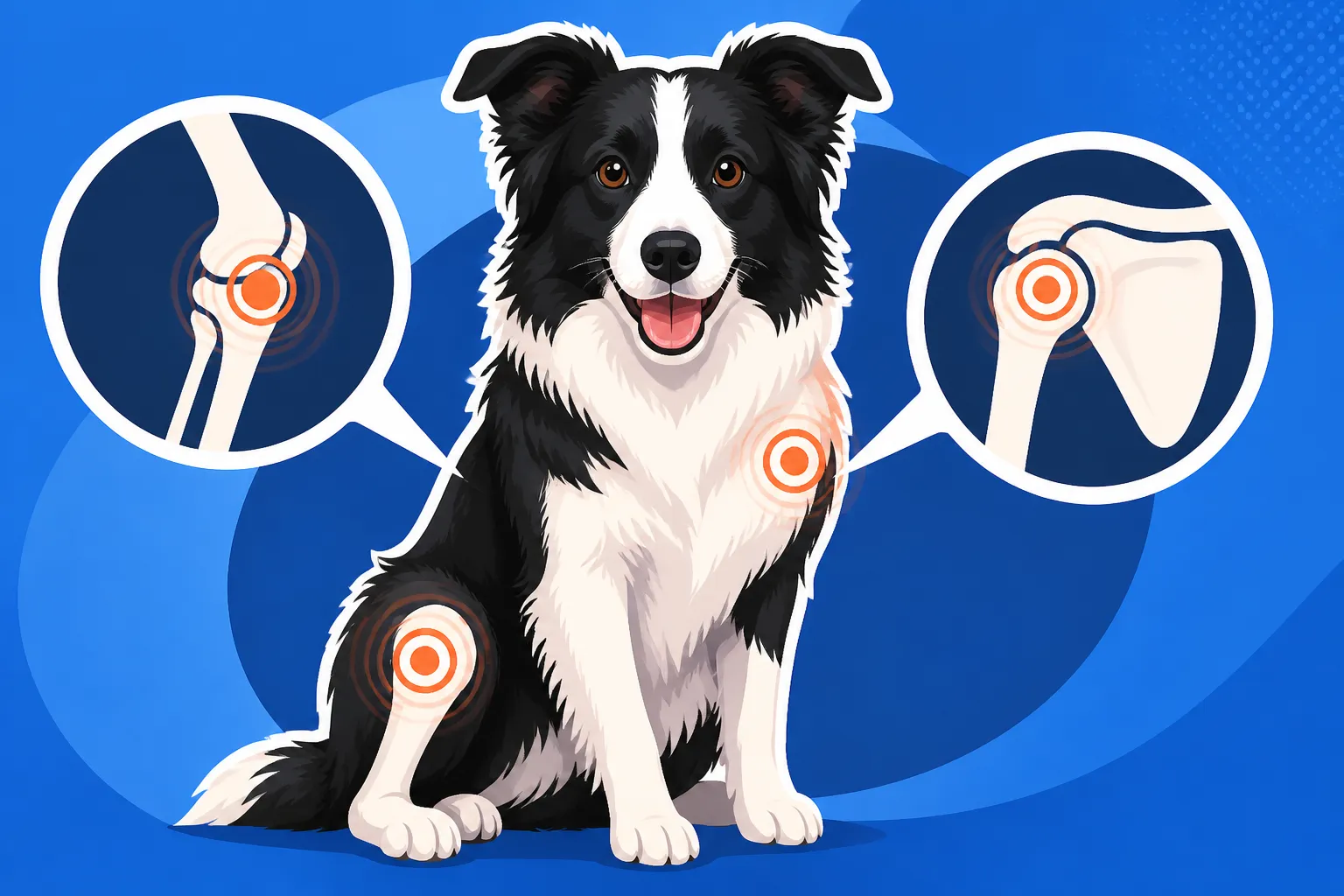
The cranial cruciate ligament (CCL) in dogs is very similar to the ACL in humans. It's a critical stabilizer in the knee joint, and when it tears, it leads to significant pain, instability, and lameness. For a Border Collie, a dog whose entire existence often revolves around fast turns, sudden stops, and explosive acceleration, a torn CCL can be a devastating blow. It's not always a dramatic event; sometimes it's a partial tear that progresses over time, or it can be a sudden, complete rupture during intense play or work. You might notice your dog skipping a step, holding a leg up, or just generally being reluctant to put weight on it. This is a common and agonizing scenario for many Border Collie owners. Many owners find themselves grappling with Cruciate Tears in a Border Collie as a sudden, unexpected crisis.
The sheer force exerted on their joints during typical Border Collie activities means these ligaments are under constant strain. Imagine a dog herding sheep, cutting left, then right, then stopping on a dime – that's immense pressure on those knees. Agility dogs, especially, put their bodies through incredible maneuvers, and while they're conditioned, accidents can and do happen. It's a cruel irony that the very activities that bring them so much joy also carry these significant risks. Early detection can sometimes lead to less invasive treatments, but often, surgery is the only path to a stable, pain-free joint for a dog that wants to return to its active life.
Decoding Shoulder Lameness: What to Watch For
Shoulder injuries in Border Collies can be a bit more elusive to diagnose than a clear-cut cruciate tear, but they are equally impactful. The shoulder joint is complex, involving many muscles, tendons, and ligaments that allow for a wide range of motion. Injuries can range from soft tissue strains, like an iliopsoas muscle strain that affects their ability to extend their hind leg, to more serious issues like osteochondritis dissecans (OCD) in younger dogs, or bicipital tenosynovitis and supraspinatus tendinopathy in mature athletes. You might observe a subtle limp that worsens after exercise, a reluctance to use a certain paw for balance, or a noticeable change in their gait.
For a Border Collie involved in sports like agility, flyball, or herding, sound shoulders are paramount. Repeated impact, twisting, and jumping can take a toll. A dog that weaves through poles in agility, for example, puts enormous stress on its front limbs. It's not uncommon for owners to notice their dog slowing on turns or struggling with certain obstacles, only to find out it's a nagging shoulder issue. These injuries can be incredibly frustrating to pinpoint because the symptoms can be vague or intermittent, often masked by a Border Collie's high pain tolerance and immense desire to please and keep working. The good news is that advancements in veterinary orthopedics offer various treatment options, from conservative management to surgical repair, depending on the specific injury. Owners with an Iliopsoas Strain and Why a Border Collie Slows on Turns will certainly relate to this complex diagnostic process.
The Financial Reality of Major Border Collie Surgeries
Let's not beat around the bush: major orthopedic surgeries for dogs are expensive. We're talking about figures that can make your jaw drop, especially when you're caught off guard. This is where the true value of pet insurance often comes into sharp focus, but even with coverage, understanding the potential costs involved for a Border Collie is crucial for financial preparedness.
The Staggering Cost of Cruciate Ligament Repair
When a Border Collie tears its cruciate ligament, the most common and effective surgical solution is often Tibial Plateau Leveling Osteotomy (TPLO) or Tibial Tuberosity Advancement (TTA). These are highly specialized procedures requiring skilled veterinary surgeons and extensive post-operative care. The cost of a single TPLO surgery can run into several thousands of dollars, easily. This figure typically includes the surgeon's fee, anesthesia, hospitalization, pain medication, and initial follow-up appointments. And here’s the kicker: if one CCL tears, there's a significant chance the other will eventually tear too, doubling your potential costs.
Beyond the surgery itself, you're looking at a lengthy recovery period involving rehabilitation, which can include physical therapy, hydrotherapy, and specialized exercises. These rehab sessions, while vital for a full recovery and successful return to activity, add substantially to the overall expense. Without pet insurance, many families find themselves in a heartbreaking position, forced to make tough decisions based on financial constraints rather than what's best for their beloved dog. It's a brutal reality that can hit you hard, particularly when you consider the sheer energy and athleticism of a Border Collie and their desire to get back to full health.
The Expense of Diagnosing and Treating Shoulder Injuries
Diagnosing shoulder lameness can be a journey in itself, often involving multiple vet visits, X-rays, and potentially more advanced imaging like MRI or CT scans. These diagnostic tools are not cheap. An MRI, for instance, can be a significant upfront cost before any treatment even begins. Once a diagnosis is made, treatment options for shoulder issues vary widely in price. A simple strain might respond to rest, anti-inflammatory medication, and a course of physical therapy, which are manageable. However, if surgery is required for something like an OCD lesion, bicipital tendon release, or rotator cuff repair, the costs can quickly rival, or even exceed, those of cruciate surgery.
Just like with CCL repair, post-operative rehabilitation is crucial for shoulder injuries. A Border Collie needs to regain full range of motion, strength, and confidence in the joint to return to its previous level of activity. These rehab programs are tailored and intensive, meaning more appointments and specialized care. The total bill for a complex shoulder injury, from diagnosis through recovery, can be immense. It's important to remember that these aren't just "vet bills"; they're investments in your Border Collie's quality of life and future mobility. Many owners prioritize Physiotherapy Costs for a Sport Border Collie as part of their long-term recovery plan.
Navigating Pet Insurance: What Cruciate and Shoulder Claims Entail
Pet insurance isn't a magic wand that makes all your financial worries disappear, but it can be a lifesaver when those big, unexpected bills arrive. Understanding how claims for major orthopedic issues like cruciate tears and shoulder injuries work is essential to maximize your benefits and avoid nasty surprises.
The Role of Deductibles and Reimbursement Rates
When it comes to pet insurance, you'll encounter two key terms: deductible and reimbursement rate. Your deductible is the amount you pay out-of-pocket before your insurance company starts covering costs. This is usually an annual amount, meaning once you meet it, the insurance will kick in for eligible claims for the rest of that policy year. Some policies offer per-incident deductibles, which reset for each new condition, so it's vital to know which type your policy has.
The reimbursement rate is the percentage of the covered costs that your insurance company will pay after your deductible has been met. Common reimbursement rates range from 70% to 90%. So, if you have an 80% reimbursement rate and a $500 deductible, and your dog has a $5,000 surgery, you'd first pay the $500 deductible, leaving $4,500. Your insurance would then reimburse you 80% of that $4,500, which is $3,600. You would still be responsible for the remaining $900 plus your deductible. This is why a higher reimbursement rate can make a substantial difference for those major surgeries. Providers like Healthy Paws often have high reimbursement rates, which can be very appealing for active breed owners.
Understanding Waiting Periods and Pre-Existing Conditions
This is where many pet owners get tripped up. Almost all pet insurance policies have waiting periods – a set amount of time after you purchase the policy before certain conditions become eligible for coverage. For orthopedic issues like cruciate ligament tears, these waiting periods can be longer, sometimes 6 to 12 months. This means if your Border Collie tears its cruciate ligament two months after you sign up for a policy with a six-month orthopedic waiting period, that claim will likely be denied. This is why getting insurance when your Border Collie is a puppy is often recommended, protecting them before issues arise. Thinking about Insuring a Border Collie Before the Seizure Window is a similar proactive approach for other common breed-specific issues.
Even more critical is the concept of pre-existing conditions. A pre-existing condition is any illness or injury that showed symptoms or was diagnosed before your policy started or during your waiting period. If your Border Collie has a history of limping on a particular leg, even if it wasn't formally diagnosed as a cruciate tear until after your policy was active, the insurance company might deem it pre-existing and deny the claim. This can be a huge source of frustration, so it's crucial to be honest and thorough when applying for insurance and to understand exactly how your chosen provider defines and handles pre-existing conditions. Many policies also have limitations or exclusions for Annual Limits and Border Collie Cruciate Surgery, so be sure to check those details.
What to Look for in a Policy When Injury is a Concern
Given the high activity levels and propensity for orthopedic issues in Border Collies, choosing the right pet insurance policy is paramount. Here are key things to scrutinize:
- Orthopedic Coverage: Ensure the policy explicitly covers conditions like cruciate ligament tears, hip and elbow dysplasia, and other musculoskeletal issues. Some policies might have specific caps or limitations on these types of claims.
- Waiting Periods: Look for the shortest possible waiting periods, especially for orthopedic conditions. Some providers, like Healthy Paws, are known for their comprehensive coverage, but still have standard waiting periods.
- Reimbursement Rate and Deductible: As discussed, a higher reimbursement rate (e.g., 80-90%) with a manageable deductible will save you more money in the long run.
- Annual vs. Per-Incident Limits: Understand if there's an annual cap on how much the policy will pay out, or if it's per condition. For a dog that might face multiple surgeries over its lifetime, an unlimited annual payout is ideal.
- Rehabilitation Coverage: Will the policy cover physical therapy, hydrotherapy, and other crucial post-surgical rehabilitation? This is a non-negotiable for a Border Collie recovering from a major injury.
- Wellness vs. Accident & Illness: Most major injury claims fall under accident & illness policies. Wellness plans typically cover routine care, not major surgeries.
- Breed-Specific Exclusions: While rare for Border Collies, always double-check for any breed-specific exclusions that might affect coverage for common ailments.
Comparison of Common Pet Insurance Policy Features for Orthopedic Claims
| Feature | Lower Cost Policy (Example) | Mid-Range Policy (Example) | Premium Policy (Example) |
|---|---|---|---|
| Deductible | Higher (e.g., $750-$1000) | Moderate (e.g., $250-$500) | Lower (e.g., $100-$250) |
| Reimbursement | Lower (e.g., 70-80%) | Moderate (e.g., 80-90%) | Higher (e.g., 90-100%) |
| Annual Limit | Capped (e.g., $5,000-$10,000) | Higher Cap (e.g., $15,000-$20,000) | Unlimited |
| Orthopedic Waiting Period | Longer (e.g., 6-12 months) | Standard (e.g., 6 months) | Shorter (e.g., 2-6 months) |
| Rehab Coverage | Limited or excluded | Often covered, sometimes capped | Comprehensive |
| Pre-existing Conditions | Strict exclusions | Standard exclusions | May offer limited flexibility |
Always read the fine print! What looks like a good deal on paper might have hidden limitations that leave you exposed when you need it most.
Submitting a Claim: A Step-by-Step Guide for Border Collie Owners
You've faced the emergency, your Border Collie has had its surgery, and now it's time to get reimbursed. The claims process can feel daunting, especially when you're already stressed about your dog's recovery. But by being organized and understanding the steps, you can make it as smooth as possible.
Gathering Documentation: Vet Records, Invoices, and Diagnostics
The key to a successful claim is thorough documentation. Pet insurance companies need evidence to process your claim, and the more complete your submission, the faster it will typically be handled.
- Veterinary Records: Always keep detailed records from every vet visit. For an injury like a cruciate tear or shoulder issue, this includes initial examination notes, referral letters to specialists, and all progress reports. These records help establish when symptoms first appeared and when a diagnosis was made, which is crucial for proving the condition isn't pre-existing.
- Itemized Invoices: This is perhaps the most important piece of documentation. You'll need itemized invoices for everything related to the injury: diagnostic tests (X-rays, MRI/CT scans), surgical fees, anesthesia, medications, hospital stays, and any rehabilitation sessions. A simple "total due" bill won't suffice; the insurer needs to see each service and its corresponding cost.
- Prescriptions and Pharmacy Receipts: If your Border Collie is on long-term medication for pain or inflammation related to the injury, keep all prescription details and receipts from the pharmacy. This includes any supplements that your vet specifically prescribed or recommended as part of the treatment plan.
- Diagnostic Reports: Beyond the invoice, obtain the actual reports for any X-rays, MRIs, or other diagnostic imaging. These reports, written by the veterinary radiologist, provide the official diagnosis and details that the insurance company will review.
It's a good habit to keep a dedicated folder, physical or digital, for your Border Collie's health records and all veterinary invoices. This way, when an unexpected event occurs, you're not scrambling to find paperwork while also caring for your injured dog. Remember, the clearer the paper trail, the easier it is for your insurance provider to process your claim efficiently.
The Claim Process: From Submission to Reimbursement
Once you have all your documentation in order, the actual submission process usually follows a few simple steps, though the specifics can vary slightly between insurance providers.
- Obtain a Claim Form: Most pet insurance companies have downloadable claim forms on their websites or within their mobile apps. Some, like Healthy Paws, offer direct online claim submissions, which can expedite the process.
- Complete the Form: Fill out your portion of the claim form completely and accurately. This includes your policy number, your Border Collie's details, and information about the injury and treatment dates.
- Veterinarian's Section: Your vet may need to complete a section of the claim form, providing their diagnosis and treatment plan. Some insurers allow your vet's office to submit medical records directly to streamline the process.
- Attach Documentation: Carefully attach all your itemized invoices, vet records, diagnostic reports, and prescription receipts. Double-check that all dates and amounts match what's on your claim form.
- Submit the Claim: Submit your claim either online, via email, fax, or postal mail, depending on your insurer's preferred method. Online portals are often the fastest way. Keep a copy of everything you submit for your records.
- Follow-Up: Processing times vary. Most companies provide a timeline (e.g., 5-10 business days). If you haven't heard back within that timeframe, don't hesitate to follow up. Many insurers offer online claim tracking, which is incredibly helpful for peace of mind.
- Reimbursement: Once your claim is approved, the reimbursement will typically be sent directly to you via check or direct deposit, based on your chosen preference.
It's a system designed to work for you, but it requires your active participation. Don't be afraid to call your insurance provider with questions; their customer service teams are there to help guide you through it. Being proactive and organized will save you a lot of headache during what is already a stressful time.
Beyond Insurance: Managing Long-Term Care and Prevention
While pet insurance is invaluable for covering the acute costs of major injuries, owning an active Border Collie with a history of orthopedic issues often means a commitment to ongoing care and proactive prevention. This extends beyond the initial surgery and into a lifetime of supporting their joint health.
Rehabilitation and Follow-Up Costs
The journey doesn't end when your Border Collie leaves the surgical suite. Rehabilitation is a critical phase, sometimes lasting for several months, and it's essential for ensuring a full and functional recovery. This can include:
- Physical Therapy: Tailored exercises to rebuild muscle strength, improve range of motion, and restore balance. These sessions are usually conducted by a certified canine rehabilitation therapist.
- Hydrotherapy: Using an underwater treadmill or swimming to provide low-impact exercise, strengthening muscles without putting stress on healing joints.
- Massage and Laser Therapy: To reduce pain, inflammation, and promote healing.
- At-Home Exercises: You'll likely be given a regimen of exercises to perform with your dog daily, ensuring continued progress.
These rehabilitation services, while incredibly beneficial, come with their own price tag. Even with insurance, you'll still be responsible for your deductible and your reimbursement percentage. Many owners find that investing in specialized equipment for home use, such as balance discs or specific harnesses, can be helpful. Resources like Chewy offer a wide range of rehabilitative aids, from support braces to joint supplements, which can add up over time. Regularly reviewing Returning a Border Collie to Agility After TPLO will help you understand the long-term commitment.
Long-term follow-up with your primary vet and potentially the orthopedic specialist is also necessary to monitor progress and catch any new issues. This might involve periodic X-rays or physical exams to assess joint health. Being vigilant and committed to their post-operative care is how you give your Border Collie the best chance at returning to a happy, active life.
Proactive Measures to Reduce Injury Risk
Prevention is always better than cure, especially with highly driven dogs like Border Collies. While some injuries are unavoidable accidents, many can be mitigated through careful management and proactive care.
- Appropriate Exercise and Conditioning: While Border Collies need a lot of exercise, it needs to be appropriate for their age and physical condition. Avoid Impact Work Before a Border Collie Turns Two, as their growth plates are still developing. Build up their fitness gradually, ensuring they have a strong core and good muscle definition to support their joints. Overtraining or sudden, intense bursts of activity without proper conditioning can lead to injuries.
- Warm-Ups and Cool-Downs: Just like human athletes, Border Collies benefit from a gentle warm-up before intense activity and a cool-down period afterward. This helps prepare their muscles and joints and reduce stiffness.
- Joint Supplements: Many Border Collie owners, particularly those with older dogs or those involved in high-impact sports, opt for joint supplements containing ingredients like glucosamine, chondroitin, and MSM. While not a cure-all, they can support joint health and potentially slow the progression of degenerative issues. Brands found at retailers like Chewy often carry a wide selection, and specialized dog food brands like Ollie also focus on nutrition that supports overall health and mobility. Researching Joint Supplements for a Border Collie Doing Agility can provide more tailored advice.
- Weight Management: Keeping your Border Collie at a lean, healthy weight is one of the most impactful things you can do to protect their joints. Every extra pound puts additional stress on their knees, hips, and shoulders.
- Proper Footing: Be mindful of the surfaces your Border Collie works and plays on. Slippery floors, uneven ground, or sudden changes in terrain can increase the risk of sprains and tears.
- Regular Veterinary Check-ups: Annual exams are crucial for catching subtle signs of lameness or discomfort that you might miss. Your vet can assess your dog's gait, palpate joints, and recommend preventative strategies.
By taking these proactive steps, you're not just hoping for the best; you're actively investing in your Border Collie's long-term health and doing everything you can to keep them sound and happy in their demanding life.
Disclaimer
This article is for general informational purposes only and does not constitute professional advice. Laws, prices and regulations vary by location and change over time. Consult a qualified professional for guidance on your specific situation.