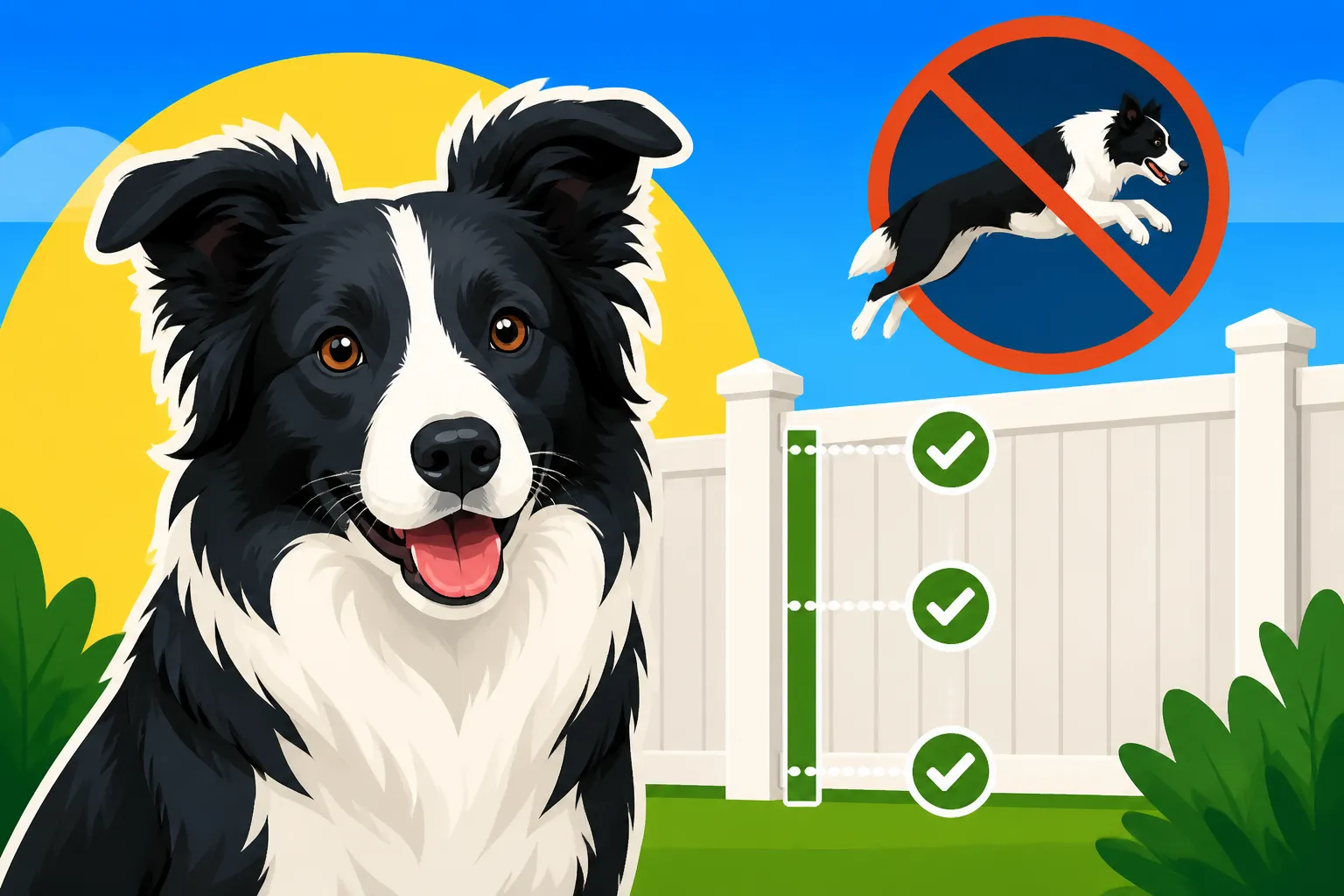
Fencing Heights a Border Collie Will Not Clear
There's a unique kind of dread that washes over a Border Collie owner when they glance up and their dog isn't where they left them – especially if that place was a seemingly secure yard. These incredibly intelligent and athletic dogs often view a standard fence not as a barrier, but as a challenge, a puzzle to solve, or just a minor inconvenience on their way to something more interesting. This guide is here to help you understand why your Border Collie might be clearing fences and, more importantly, how to build a containment system that actually keeps them safe and sound in your yard.
Understanding Your Border Collie's Jumping Prowess
Border Collies are legendary for their intelligence, agility, and boundless energy. These traits, while fantastic for herding or dog sports, can be a real headache when it comes to keeping them securely contained. They aren't just jumping for the sake of it; there's usually a powerful instinct or an unmet need driving their aerial escapades.
The Athleticism and Drive Behind the Leap
Let's be honest, a Border Collie isn't built like a bulldog. They are lean, muscular athletes, bred for endurance and explosive bursts of speed. Their heritage as working dogs on vast, open landscapes means they naturally cover a lot of ground and navigate challenging terrain. Jumping is an inherent part of their physical toolkit. They can launch themselves over obstacles with incredible grace and power, often making it look effortless. It's not just about muscle, though; it's about their intense focus and problem-solving abilities. If there's something on the other side of that fence – a squirrel, a passing jogger, or even just the idea of something to do – their drive to investigate or engage can easily override any perceived barrier. This isn't naughtiness; it's the very essence of what makes a Border Collie a Border Collie. When a dog has that much innate drive, a simple fence often feels more like a suggestion than a hard boundary.
Think about it: a Border Collie bred to manage a flock of sheep across open fields has a genetic predisposition to cover distance and overcome challenges. They're not wired for sedentary life within four walls and a small yard. This powerful instinct to move, to work, to do something, is a huge driver behind their attempts to escape. For many, a fence is simply the first hurdle in an impromptu "outrun." This relentless energy and mental acuity means that if they aren't adequately stimulated and exercised, that energy has to go somewhere. And often, that "somewhere" is over, under, or through your fence.
Factors Influencing a Border Collie's Jumping Ability
While all Border Collies possess incredible athleticism, certain factors can make one dog a more prodigious jumper than another. Their individual physical build, for starters, plays a role. A taller, longer-legged Border Collie might have a natural advantage in clearing height. Their age also matters; younger dogs, especially adolescents, often have more unbridled energy and less inhibition when it comes to testing boundaries. An older dog, even if still spry, might not have the same explosive power.
Beyond the physical, motivation is paramount. Is there a consistent trigger on the other side of the fence? Maybe it's a neighbor's dog they want to play with, or perhaps it's the thrill of chasing cars that pass by. If the reward for escaping is high enough in their eyes, they will dedicate serious effort to achieving it. Objects near the fence, like trash cans, woodpiles, or even sturdy outdoor furniture, can act as launching pads, effectively reducing the height they need to clear. Even snowdrifts in winter can provide an easy ramp over what was once a secure fence. It's not just about the fence itself, but everything surrounding it.
For instance, if your Border Collie has an intense herding drive, and there's a child on a bicycle going past the fence line, that dog's instinct to "gather" or "control" can be an overwhelming urge. They might not even register the height of the fence in that moment of high arousal. It becomes a blur as they focus entirely on the moving object. Understanding these individual motivators is crucial in assessing your current fencing challenges. A high prey drive, for example, makes a squirrel in a tree on the other side of the fence an irresistible target, no matter how high the barrier seems.
Standard Fencing Heights and Why They Often Fail Border Collies
Many dog owners, even those with large breeds, often assume a six-foot fence is the gold standard for security. For a Border Collie, that assumption can lead to a rude awakening. Their unique blend of intelligence and athleticism can render even seemingly substantial barriers ineffective.
The Illusion of a Six-Foot Fence
A standard six-foot privacy fence seems tall to most people, and for many dog breeds, it's more than sufficient. For a Border Collie, however, six feet is often merely a suggestion. Their powerful hindquarters, combined with their ability to "read" the fence for handholds or leverage, means they can often scale or leap over heights that would stop other dogs in their tracks. They might get a running start, push off the fence itself, or even use a vertical leap that would make an agility competitor proud.
It’s not uncommon to hear stories of Border Collies casually clearing a six-foot fence, sometimes even from a standstill. They might not even be jumping; they might be climbing. Picture this: your Border Collie spots a rabbit on the other side of your new six-foot cedar fence. In a flash, they're up, paws scrabbling for purchase on the vertical boards, and using their powerful back legs to propel themselves up and over. It looks impossible, but they do it because they are driven, agile, and often, surprisingly strong. The smooth surface of a fence seems like a deterrent, but a determined Border Collie can find purchase even on the smallest imperfections or simply use sheer vertical power. This is why when you're thinking about Fencing a Yard a Border Collie Cannot Leave, a six-foot fence should be considered a minimum, not a maximum, and likely needs additional features.
Common Weak Points in Fencing
Even if you install a fence that's theoretically tall enough, minor details can create major vulnerabilities. Gates are notorious weak points. If a gate isn't perfectly flush with the ground, a Border Collie might tunnel under it. If the latch is simple or poorly secured, they might figure out how to open it, especially if it's a lever handle they can nudge with their nose or paw. I've known Border Collies who could operate simple gate latches with the dexterity of a human hand, given enough observation. The same goes for corners. Loose panels or gaps where the fence meets a building can become escape routes.
And then there are the "launch pads." A picnic table, a large planter, a wheelbarrow, or even accumulated snow against the fence can significantly reduce the effective height a Border Collie needs to clear. We often forget to consider these seemingly innocuous items as part of the escape equation. Even a low-hanging tree branch can be used as a springboard. It's not just about the fence itself, but the entire perimeter and everything within jumping distance. Regularly inspect your fence line, not just for damage, but for anything your clever canine might use to gain an advantage. Remember that these dogs are constantly assessing their environment, and what you see as a convenient step stool, they see as a ladder to freedom.
Designing an Escape-Proof Yard for Your Border Collie
When you have a Border Collie, "good enough" fencing often isn't. You need to think proactively and creatively to establish a perimeter they genuinely cannot clear. This goes beyond just height and considers the full spectrum of their abilities.
The Minimum Effective Height for a Determined Jumper
For many Border Collies, particularly those with high drive and athleticism, a solid, unclimbable fence needs to be at least eight feet tall to be truly effective against a determined jumper. Yes, you read that right – eight feet. This provides a significant vertical challenge that most dogs simply cannot overcome, even with a running start. However, height alone isn't always enough.
Consider materials carefully. Chain-link fences, for example, are often easily scaled by Border Collies who can get a toe-hold in the mesh. Solid wood or vinyl fences are better because they offer no easy grip, forcing the dog to rely purely on vertical jumping power. Even then, an eight-foot solid fence is the ideal. If an eight-foot fence isn't feasible, a seven-foot fence with enhancements can be a good compromise. These enhancements, which we'll discuss next, are crucial for adding that extra layer of security that deters even the most acrobatic escape artist. Remember, this isn't about being cruel; it's about keeping your beloved companion safe from the dangers of the outside world, from traffic to getting lost.
Deterrents and Enhancements Beyond Height
Since simply building an eight-foot fence might not be practical or allowed in every area, several deterrents and enhancements can significantly boost security:
- Coyote Rollers: These are round, freely spinning bars installed along the top of a fence. When a dog attempts to push off the top of the fence or grab it to pull themselves over, the roller spins, preventing them from gaining purchase. They effectively add a psychological and physical barrier that makes clearing the fence incredibly difficult. You can often find kits for these online, or even DIY solutions using PVC pipe.
- L-Footers or Dig Guards: For the diggers and tunneling experts, an L-footer is essential. This involves burying wire mesh (like hardware cloth) or concrete horizontally along the base of the fence, extending inward into the yard for at least 1-2 feet. When the dog digs, they hit the barrier and are deterred. This is particularly important for areas where a fence isn't perfectly flush with the ground.
- Sight Barriers: A solid privacy fence prevents your Border Collie from seeing tempting triggers on the other side. If they can't see the squirrel, the jogger, or the neighborhood cat, their motivation to jump or climb is significantly reduced. Even if your primary fence is chain link, adding privacy slats or even bamboo screening can break the line of sight.
- Double Fencing: For truly persistent escape artists, some owners install a second, inner fence, creating a "runway" between the two. This makes a clear jump over the outer fence much harder and adds an extra layer of security.
- Angle Extensions: Instead of just vertical height, you can angle the top foot or two of the fence inwards at a 45-degree angle, using wire mesh. This makes it impossible for the dog to get a grip over the top and pull themselves up.
When considering materials and components, retailers like Chewy offer a range of heavy-duty outdoor equipment that can sometimes be adapted for creative fencing solutions, from kennel panels to durable ties. Exploring options like these ensures you have the right tools to fortify your perimeter.
Considering Your Border Collie's Mental and Physical Needs
No fence, no matter how high or fortified, will be completely escape-proof if your Border Collie's fundamental needs for exercise and mental stimulation are not met. A bored, under-exercised Border Collie is a determined escape artist. They need to work, whether that's herding, agility, obedience, or extensive play sessions. If you don't provide a constructive outlet for their incredible drive, they will find their own "work," and that often involves exploring beyond your property lines.
Regular, vigorous exercise is paramount. This isn't just a quick walk around the block; it means running, fetching, swimming, or engaging in dog sports. Two hours of focused activity a day is often a minimum for these dogs. Beyond physical exertion, mental stimulation is equally important. Puzzle toys, training sessions, scent work, and learning new tricks can tire their minds more effectively than hours of mindless running. You might find ideas for Mental Work That Tires a Border Collie Faster or What a Border Collie Does With Its Whole Day helpful here. A dog that is mentally and physically satisfied is far less likely to be looking for ways out of the yard. Brands like Ollie, known for their fresh dog food, often emphasize the importance of high-quality nutrition to support the energy and cognitive function of active breeds, which indirectly contributes to a more settled dog less prone to destructive or escape behaviors.
Beyond the Fence: Training and Management Strategies
While robust fencing is crucial, it's only one piece of the puzzle when managing a Border Collie. No physical barrier can replace solid training and consistent management. These dogs are intelligent enough to exploit any loophole, so a multi-pronged approach is always best.
Foundation Training for Recall and Boundaries
Even with the most secure fence, accidents can happen. A gate might be left ajar, or a delivery person might inadvertently create an escape opportunity. This is where impeccable recall and a strong understanding of boundaries become literal lifesavers. A Border Collie with a rock-solid recall is a joy, but it takes consistent training, patience, and high-value rewards. Start in a low-distraction environment and gradually increase the challenges. Practice the "come" command relentlessly, making it the most rewarding thing your dog can do. Remember, a Border Collie that has Recall on a Border Collie That Has Locked On is a rare and precious thing, and it takes dedicated work.
Beyond recall, teaching your Border Collie "place" or "stay" commands that translate to boundaries within the yard can be incredibly useful. Train them to stay a certain distance from the fence line, especially near gates or other potential weak spots. Use positive reinforcement to reward them heavily for staying within designated areas. Tools like a long line can be invaluable during this training, allowing you to practice recall and boundary work in a safe, controlled manner. For more on this, you might explore The Thirty-Foot Line a Border Collie Recall Needs. This foundational training creates a mental fence that complements your physical one.
Addressing Boredom and Drive
As discussed earlier, a bored Border Collie is a mischievous Border Collie. If they don't have enough appropriate outlets for their intelligence and energy, they will invent their own entertainment, which often includes finding ways to "work" outside your property. Ensure your Border Collie gets consistent, high-quality exercise. This means more than just letting them out into the yard; it means active engagement. Think about structured play, training sessions, and sports. For instance, Two Hours of Work a Border Collie Needs Daily is not an exaggeration for many Border Collies.
Mental stimulation is equally vital. Engage their brilliant minds with puzzle toys, scent games, and regular training sessions that teach new commands or complex sequences. Rotate toys to keep things fresh, and incorporate training into daily routines. If you find your Border Collie constantly pacing the fence line, digging, or trying to find ways out, it's a clear sign they're likely under-stimulated. You might also want to look into Why a Border Collie Cannot Stop on Its Own to understand their inherent drive and how to manage it. This proactive approach to their well-being is often the most effective "fence" of all, leading to a happier, more settled dog who isn't constantly plotting their next adventure beyond your boundaries. In unfortunate instances where a Border Collie does get injured attempting an escape, having pet insurance like that offered by Healthy Paws can provide peace of mind for unexpected veterinary costs.
Disclaimer
This article is for general informational purposes only and does not constitute professional advice. Laws, prices and regulations vary by location and change over time. Consult a qualified professional for guidance on your specific situation.