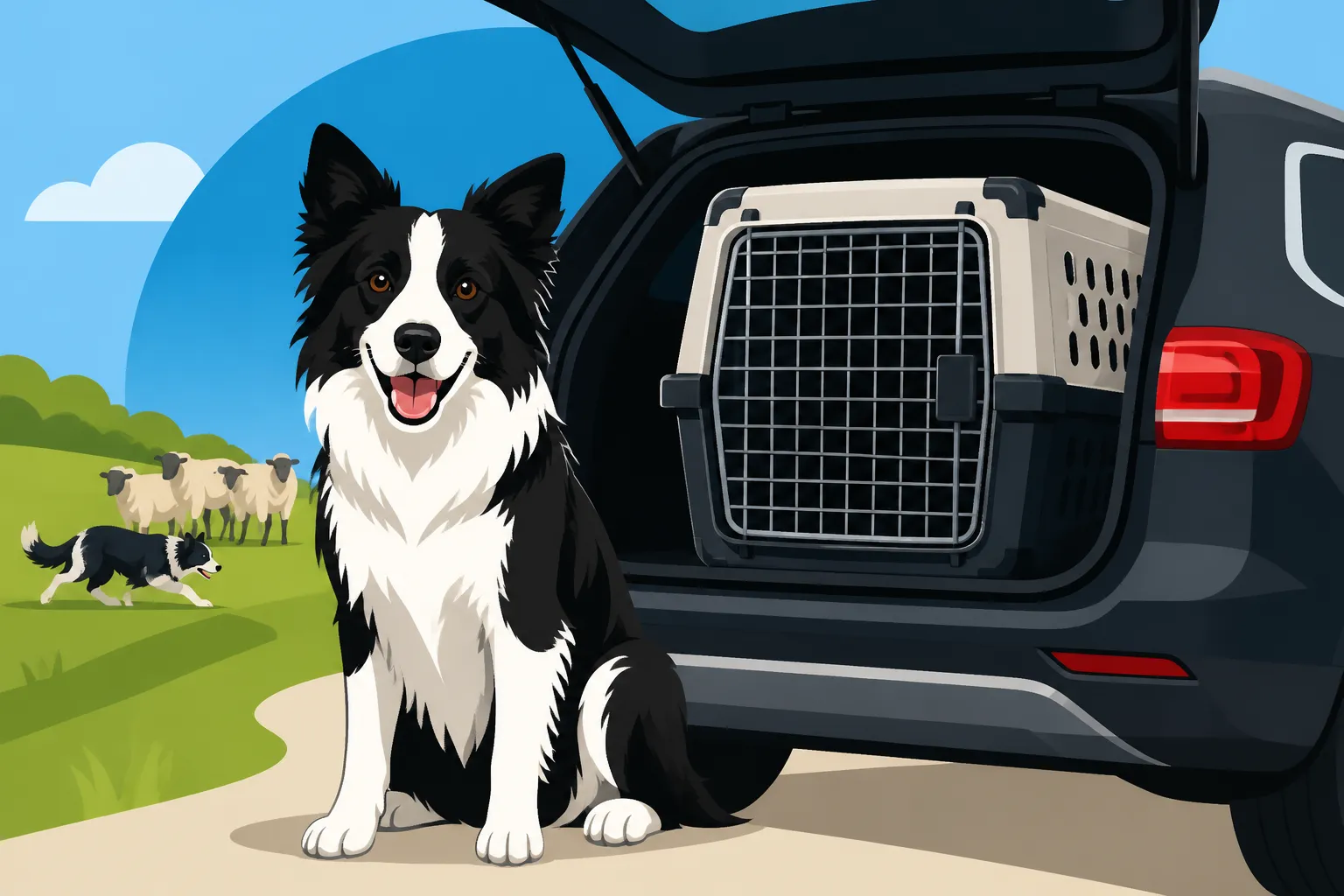
Car Crates for a Border Collie on the Trial Circuit
Bringing a high-drive Border Collie to sheepdog trials, agility competitions, or any other performance event isn't just about training; it's also about safe and stress-free travel. Many owners grapple with how to keep their dogs secure, calm, and comfortable on long journeys, especially when the destination means high excitement. This guide dives deep into choosing and optimizing car crates to make your Border Collie's trial circuit experiences as smooth and safe as possible.
Why a Specialized Car Crate is Non-Negotiable for Trial Dogs
When you’re hitting the trial circuit, your Border Collie isn’t just a passenger; they’re an athlete in transit. The stakes are higher, not just for performance, but for their safety and well-being. A standard soft-sided carrier or simply letting them roam the back seat just won't cut it. You need something built for the unique demands of a working dog's life on the road.
The Dangers of Unsecured Travel
Imagine you're on the highway, excited about the upcoming trial, and suddenly traffic grinds to a halt. A Border Collie, even a well-behaved one, becomes a projectile in a sudden stop if they're not properly secured. The force of impact, even at moderate speeds, can turn a beloved dog into a serious danger to themselves and to human occupants. This isn't scaremongering; it's a harsh reality that many owners unfortunately discover too late.
Beyond the catastrophic, there are daily dangers. An unsecured dog can distract the driver, shift abruptly, or try to jump into the front seat, leading to swerving or accidents. Even a minor fender bender can result in your dog being thrown from the vehicle, sustaining severe injuries, or bolting in a state of panic, lost in an unfamiliar area. Protecting your dog with a robust, secured crate isn't just about compliance; it's about peace of mind and preventing unthinkable tragedies. For information on other common risks, you might want to read about Sport Injuries a Border Collie Picks Up.
Providing a Safe Haven and Routine
The trial circuit, while exhilarating, can be incredibly stressful for dogs. New environments, unfamiliar people, strange dogs, and the anticipation of work all contribute to a heightened state. A sturdy, familiar car crate offers your Border Collie a consistent "home away from home," a safe and quiet retreat they can rely on. It's their personal den, a place where they know they can relax and decompress.
Establishing this routine, where the crate is synonymous with security and downtime, is crucial. It means that when you arrive at a busy trial ground, your dog isn't overwhelmed but instead has a designated space to settle before their run and cool down afterwards. This familiarity can drastically reduce anxiety, leading to a calmer, more focused dog when it's time to perform.
Managing the High-Drive Border Collie's Energy
Border Collies are renowned for their intense drive and boundless energy. This is fantastic in the field or on an agility course, but it can be a challenge in a vehicle. A well-designed car crate helps manage this inherent drive by providing a controlled environment. Before a run, it can help contain their excited anticipation, preventing them from bouncing off the walls or hyper-fixating prematurely.
After a strenuous run, especially in disciplines like herding or agility, your Border Collie might still be buzzing with adrenaline. The crate offers a necessary cool-down period, preventing them from overexerting themselves further or getting into mischief. It's a structured way to encourage them to settle, conserve energy, and recover, which is vital for multi-day trials or multiple runs. Think about how important it is to control that energy; for more on this, check out Exercise, Work and What Actually Settles a Border Collie.
Choosing the Right Car Crate: Beyond the Basics
Selecting a car crate for a trial Border Collie isn't about grabbing the first one you see. It's an investment in their safety, comfort, and performance. You need to consider materials, size, ventilation, and security features with a critical eye, prioritizing durability and functionality over aesthetics.
Material Matters: Crash-Tested vs. Standard
The material of your crate directly impacts its durability and safety. Many standard wire or plastic crates, while fine for home use or short, low-speed trips, are simply not designed to withstand the forces of a vehicle collision. These can deform, break apart, or even become dangerous themselves in an accident.
For trial circuit travel, especially with a breed as dynamic as a Border Collie, prioritizing crash-tested crates made from high-strength aluminum or reinforced steel is paramount. Brands like Ruffland, Impact Dog Crates, or Gunner Kennels are often favorites among working dog enthusiasts. These crates are engineered to absorb impact and remain intact, protecting your dog. While they represent a greater upfront cost, consider it an invaluable insurance policy for your most precious cargo. Aluminum crates are lighter and resist corrosion, while steel offers maximum strength. Ventilation is also a key factor here; ensure the design allows for ample airflow without compromising structural integrity.
| Crate Material/Type | Pros | Cons | Ideal Use for Trial Border Collies |
|---|---|---|---|
| Wire Crate | Affordable, good ventilation, collapsible | Low crash protection, can collapse on impact, sharp edges | Very short, low-speed trips; NOT recommended for trials |
| Plastic Crate | Lightweight, easy to clean, moderate price | Can crack or shatter on impact, limited ventilation, bulky | Short trips, only for mild-mannered dogs; NOT crash-safe |
| Aluminum Crate | Lightweight, strong, corrosion-resistant, good ventilation | Higher cost, can dent, less insulating than plastic | Excellent choice for regular trial travel, good crash protection |
| Steel Crate | Extremely strong, maximum crash protection | Heaviest, highest cost, can rust if not coated | Best choice for maximum safety, heavy duty use, long trips |
Size and Fit: Comfort for Long Hauls
Getting the right size crate is critical. Your Border Collie needs enough room to stand up comfortably, turn around easily, and lie down in a natural position without feeling cramped. A crate that's too small will cause discomfort, stress, and potentially musculoskeletal strain on long drives. One that's too large, however, can allow for too much movement during sudden stops, reducing the protective benefits.
Measure your dog's height, length, and width to choose an appropriate size. Then, critically, measure your vehicle's cargo space. You need a crate that fits snugly and securely in your car, SUV, or truck bed without blocking your view or being unstable. Some vehicles require specific crate shapes or designs to maximize space and ensure stability. Remember, a crate that doesn't fit securely can still become a hazard. Consider Fencing Heights a Border Collie Will Not Clear in terms of containment, but translate that secure mindset to your vehicle.
Ventilation and Temperature Control
Border Collies, with their double coats and high metabolism, are prone to overheating, especially when excited or in warmer climates. Adequate ventilation in the car crate is non-negotiable. Look for crates with ample air holes, vents, or open-bar designs that allow for cross-ventilation. On trial days, particularly in warmer weather, this becomes even more crucial.
Consider how you'll supplement ventilation: portable battery-operated fans that clip onto the crate are an absolute must-have. You can find excellent options for pet travel on sites like Chewy. These fans create crucial airflow within the crate, helping to dissipate heat. Cooling mats can also provide additional comfort. Never rely solely on open windows, as this is insufficient and can be dangerous. For more details on managing temperature, you'll find Heat Management for a Border Collie on a Trial Field very helpful.
Security Features and Ease of Use
Beyond material and size, look at the practical security and usability features. Strong, secure latches that won't accidentally open are essential. Recessed latches are preferable as they prevent snags. Many high-quality crates feature tie-down straps or anchoring points that allow you to firmly secure the crate to your vehicle's cargo anchors. This prevents the crate itself from shifting or tumbling during transit.
Consider portability and ease of cleaning. While crash-tested crates are often robust, some are designed to be lighter or have handles for easier loading and unloading at busy trial sites. Removable drain plugs or smooth, non-porous surfaces make cleaning up any accidents or muddy paws much simpler, a common occurrence when your Border Collie is working hard.
Setting Up Your Trial Circuit Crate for Success
Having the right crate is only half the battle. How you set it up in your vehicle and how you integrate it into your trial routine can make all the difference in your Border Collie's comfort, safety, and overall trial experience. It's about creating a predictable and positive environment.
Positioning and Securing the Crate in Your Vehicle
The ideal placement for a car crate is in the cargo area of an SUV, hatchback, or minivan, or securely in the bed of a truck with a topper. Wherever you place it, the goal is to minimize movement. Position the crate so it is as stable as possible, ideally against a seat back or the side of the vehicle. If there are gaps, you can use foam blocks or other cargo organizers to wedge the crate tightly in place.
Use heavy-duty tie-down straps to anchor the crate to your vehicle's factory-installed cargo hooks. This is incredibly important for preventing the crate from sliding or tipping over during sudden stops, turns, or in the event of a collision. Double-check all straps before every journey. Investing in a good quality, non-slip mat under the crate can also add an extra layer of stability, preventing it from creeping across the cargo floor.
Making the Crate a Comfortable and Familiar Space
Your Border Collie's crate should be a sanctuary, not a prison. Make it inviting with comfortable, yet durable, bedding. Choose something easy to clean and that won't shift around. Some dogs prefer a soft mat, while others might appreciate a blanket that smells like home. In warmer weather, you might opt for a cooling mat or simply a bare, easily washable surface.
Always provide access to water, especially on longer journeys or at trials. Spill-proof bowls that attach to the crate bars or offer a non-tip design are ideal. You can also freeze water in a regular bowl to create an ice block that slowly melts, providing cool water over time. Include a favorite, indestructible chew toy or puzzle toy to give your dog something positive to focus on. Pre-conditioning your Border Collie to associate the crate with positive experiences, both at home and on short, enjoyable trips, builds a strong foundation for stress-free trial travel. Consider what type of activities keep them engaged, perhaps like those mentioned in What a Border Collie Does With Its Whole Day.
Routine and Management on Trial Days
Consistency is key on the trial circuit. Develop a clear routine around crating on trial days. This might involve an early morning potty break, a small, easily digestible meal (consider options from services like Ollie that are designed for active dogs), and then crating until it's time for their warm-up or run. After their performance, immediately return them to the crate for a cool-down, a drink of water, and a chance to decompress.
Ensure regular crate breaks for pottying and stretching, especially if you're attending a multi-day event. Always monitor the temperature inside and around the crate, adjusting ventilation as needed. If you leave your dog in the crate for any period while you're attending to other trial matters, ensure they have sufficient shade, airflow, and water. Never leave them unattended in a car in warm weather, even with windows cracked, as temperatures can rise rapidly.
Common Challenges and Solutions with Crating on the Road
Even with the best equipment and intentions, issues can arise. Border Collies, with their sensitive natures and high intelligence, can sometimes develop specific anxieties or physical reactions to travel and crating. Addressing these proactively can save a lot of stress for both you and your dog.
Motion Sickness and Anxiety in the Crate
Some Border Collies experience motion sickness, turning even short drives into unpleasant experiences. Signs include excessive drooling, lethargy, vomiting, or restlessness. To combat this, start with very short, positive car rides, gradually increasing duration. Make sure the car is cool, and avoid feeding a large meal right before travel. For persistent issues, your vet might recommend anti-nausea medication.
Travel anxiety can also manifest as barking, whining, or destructive chewing in the crate. This often stems from a lack of familiarization or negative associations. Desensitize your dog by making the crate a positive place at home first. Practice short drives to fun destinations like a favorite park. Calming supplements or pheromone sprays can sometimes help. If the anxiety is severe, consult with a professional dog trainer or veterinary behaviorist; they can provide tailored strategies, potentially including mild sedatives for travel if necessary. This can be particularly frustrating, so it’s worth exploring solutions if you have a Border Collie that is like The Border Collie That Will Not Travel by Car.
Preventing Overheating and Dehydration
Overheating is one of the most dangerous risks for a Border Collie on the trial circuit. Their thick coats and high drive make them susceptible, especially in enclosed spaces or warm weather. As mentioned, portable fans are non-negotiable. Place multiple fans if possible, ensuring good cross-ventilation. Cooling mats, access to fresh water, and strategic parking in the shade are crucial.
Always have extra water readily available and offer it frequently. Consider adding electrolytes to their water on very hot days or after intense work. If you notice signs of overheating—excessive panting, bright red gums, lethargy, disorientation—act immediately. Get them to a cooler spot, wet them down with cool (not ice-cold) water, and seek veterinary attention. Dehydration can quickly become a serious problem, as detailed in Dehydration in a Border Collie After a Day's Work. Remember, pet care services like Healthy Paws can help with unexpected veterinary costs if something goes wrong.
Crate Training for the Uninitiated Trial Dog
Perhaps you've adopted an adult Border Collie or your puppy is just starting their trial journey, and they haven't been thoroughly crate trained for travel. The key is patience and positive reinforcement. Start by making the crate a comfortable "safe space" at home, encouraging them to enter willingly with treats and praise. Feed meals in the crate, and leave the door open initially.
Once they are comfortable with the crate at home, introduce it to the vehicle. Begin with short sessions in the parked car, followed by very brief drives around the block. Gradually extend the duration and distance of these trips. Never use the crate as punishment, as this will create negative associations. The goal is for your Border Collie to view their car crate as a predictable, safe, and even pleasant part of their trial routine.
Disclaimer
This article is for general informational purposes only and does not constitute professional advice. Laws, prices and regulations vary by location and change over time. Consult a qualified professional for guidance on your specific situation.