Teaching a Border Collie the Names of Its Toys
One common frustration for Border Collie owners is feeling like their incredibly smart dog isn't quite reaching its full mental potential, or that their endless energy needs an outlet beyond just physical exercise. This guide will walk you through a detailed, step-by-step process for teaching your Border Collie the names of its toys, providing a fantastic way to engage their brilliant minds and strengthen your bond.
Why Teaching Toy Names is So Valuable for Your Border Collie
Border Collies are renowned for their intelligence and insatiable desire to work. They thrive on mental challenges, and simply running around the yard, while physically tiring, often doesn't satisfy their deep-seated need to problem-solve and learn. Teaching your Border Collie the names of its toys goes far beyond a cute parlor trick; it's a powerful tool for cognitive enrichment, communication, and even behavior management.
Engaging Their Genius Minds
Let's be honest, we all know Border Collies are smart. You see it in their intense stare, their quick learning, and their ability to anticipate your next move. But sometimes, just teaching basic obedience commands, while crucial, doesn't fully tap into that incredible brainpower. Naming toys introduces a layer of abstract thought and vocabulary that truly lights up their minds. Think of it as giving them a language beyond just actions. When they learn a name, they're not just performing a retrieval; they're associating a sound with a specific object, and then discerning that object from others. This kind of discrimination and memory work is exactly the kind of "job" a Border Collie craves. It's like sending them to a specialized school just for their brains! This kind of Mental Work That Tires a Border Collie Faster is incredibly effective.
Enhancing Communication and Connection
Imagine being able to tell your dog, "Go get your rope!" and they actually bring you the rope, even when it's mixed in a pile with their squeaky ball and favorite tug. This level of communication is incredibly rewarding. It deepens the bond you share, as you're no longer just giving commands, but almost having a conversation. You're acknowledging their ability to understand and respond on a more complex level. This shared activity also builds trust and reinforces their desire to please you, because success in these games makes them feel accomplished and understood. It's a fantastic way to spend quality time together, fostering mutual respect and enjoyment.
Practical Benefits in Daily Life
Beyond the mental stimulation and bond, there are some genuinely practical benefits to teaching your Border Collie toy names. For instance, if you're ever looking for a specific toy, you can enlist your dog's help. It can be a game to help them tidy up their toy basket, too! (Though, let's be real, most Border Collies would probably rather scatter them again.) It also provides a fantastic way to redirect unwanted behaviors. If your Border Collie is getting underfoot or seems bored and on the verge of inventing trouble, you can quickly engage them in a focused "find the toy" game, channeling that energy into something productive. It's a fantastic way to work their minds, which can sometimes be even more tiring than a long walk, and helps to settle them down. This kind of structured play can even help address issues like The Border Collie That Will Not Drop the Ball by giving context to specific toy interactions.
The Step-by-Step Training Method
Teaching toy names needs a clear, consistent approach. It’s not a race, and patience is your best friend. Remember, your Border Collie is smart, but they still need you to break down the task into manageable chunks. We're going to start simple and build up, ensuring success at each stage.
Step 1: Isolation and Introduction of the First Toy
This is where we begin. Choose one, and only one, distinct toy. Let’s say it’s a bright red squeaky ball. Give this toy a unique name, like "Ball" or "Reddie" or whatever you like, just make sure it’s consistent.
For the initial introduction, you want to eliminate all other distractions. Go into a quiet room with just you, your Border Collie, and the chosen toy. Play with the toy enthusiastically, letting your dog interact with it. As they mouth it, chase it, or bring it back, consistently repeat its name: "Good Ball!", "Get the Ball!", "Where's the Ball?". Don't make it a command yet; just associate the sound with the object. Make this a short, fun session, maybe five minutes. The goal is positive association.
Repeat this over several short sessions throughout the day. When you put the toy away, say something like "Bye-bye Ball!" to mark the end of the session. The idea is to flood their senses with the name and the toy, building a strong connection. You might be surprised how quickly your Border Collie starts to pick up on this first word. They truly are quick learners, often needing How Few Repetitions a Border Collie Needs compared to other breeds.
Step 2: Introducing the "Find It" Game
Once your Border Collie seems to recognize the toy's name, meaning they show excitement or look at it when you say the name, it's time to add a simple "find it" element. Place the named toy in plain sight on the floor. Ask your Border Collie, "Where's the Ball?" or "Get the Ball!". When they approach it, touch it, or pick it up, praise them lavishly: "YES! Good Ball!" and reward them with a treat or a quick game of fetch with that specific toy.
Gradually increase the difficulty. Place the toy a little further away, or cover it slightly with a thin blanket so they have to nose it out. You can even walk a short distance away and ask them to find it, building up their confidence. The key is to make it a fun game, not a test they can fail. Keep the tone light and encouraging. If they struggle, go back to an easier step. You can use this method for a variety of objects, even teaching them The Look Back Command on a Border Collie during scent games.
Step 3: Adding a Second (and Third!) Toy
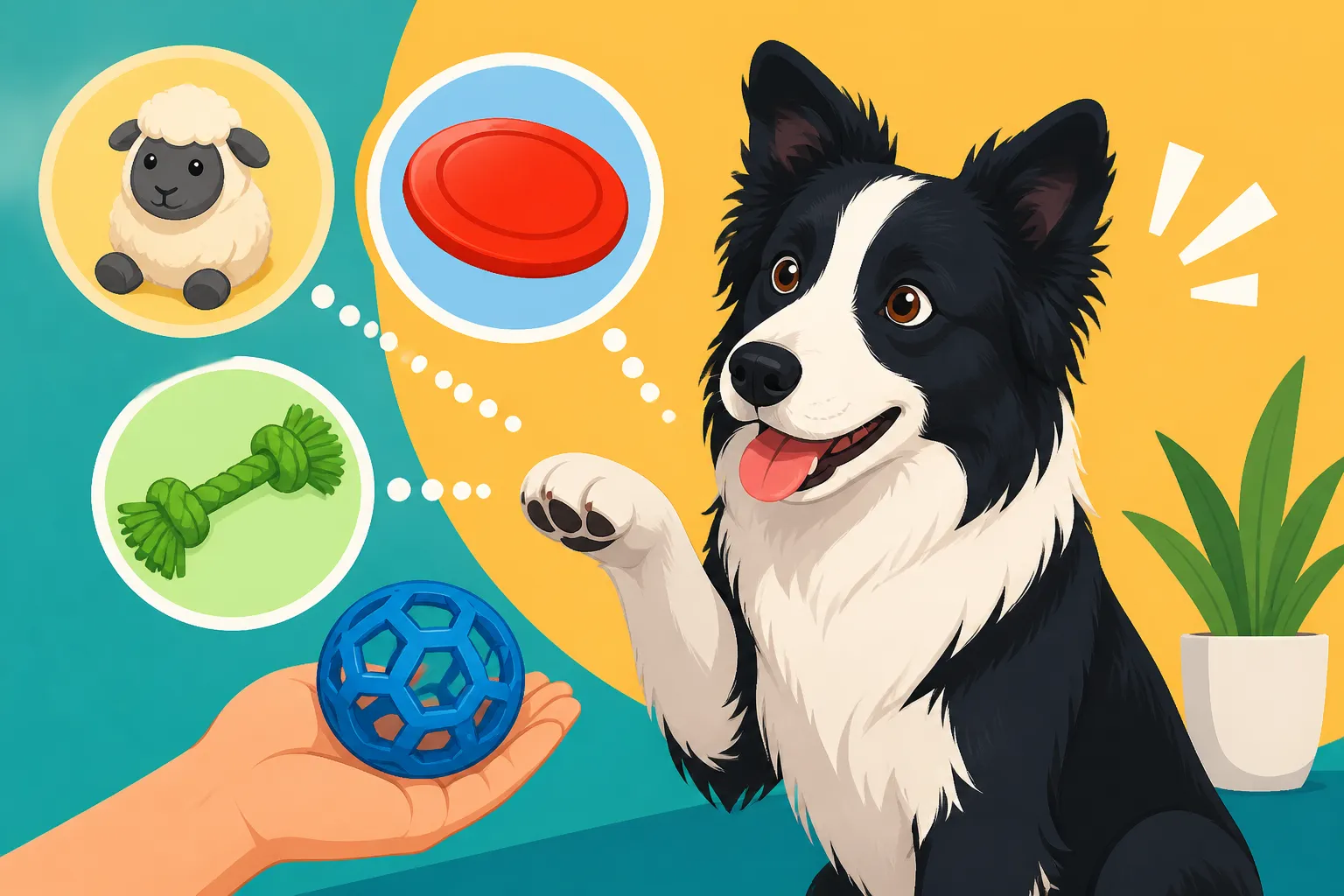
This is where the real learning begins: discrimination. Once your Border Collie is consistently retrieving the first named toy, it's time to introduce a second one. Choose a toy that looks and feels distinctly different from the first one. Let's say your first toy was the red squeaky ball, now introduce a blue rope toy, let's call it "Rope."
Crucially, only work with one new toy at a time, in isolation, until its name is established. Go back to Step 1 with the "Rope" in a separate session. Play with it, name it, create that strong association. Do not mix it with the "Ball" yet. Your Border Collie needs to firmly grasp the individual names first.
Once "Rope" is established, you can start discrimination training. Place both "Ball" and "Rope" a short distance apart in the room. Ask your Border Collie, "Get the Ball!" If they go for the ball, massive praise and reward. If they go for the rope, gently redirect them to the ball and try again. Don't scold them; they're just figuring it out. Then, ask for the "Rope." Alternate between the two, making it a game. This takes patience, but watching their brains work to differentiate is truly amazing.
Once they master two, you can slowly add a third, then a fourth, always introducing new toys in isolation first. Many working line Border Collies have the capacity to learn a vast vocabulary, as evidenced by famous dogs like Chaser, the Border Collie, who reportedly knew over a thousand proper nouns. How Many Words a Border Collie Can Learn is often much higher than people expect!
Step 4: Generalization and Increasing Difficulty
As your Border Collie's toy vocabulary grows, you can start to make the game more challenging and generalize their understanding.
- Varying Locations: Practice in different rooms, in the yard, or even in a controlled outdoor space.
- Different Objects: Introduce new toys with new names regularly.
- Hidden Toys: Hide toys in other rooms or under laundry piles, and ask your dog to "find the [toy name]." This is a fantastic scent work exercise too. You might want to get a few different types of durable toys from places like Amazon to keep things fresh.
- Combining Commands: Ask them to "get the Ball and bring it here," or "find the Rope and put it in the basket."
Keep training sessions fun, short, and positive. Always end on a successful note. The goal is to build their confidence and make learning a joyous experience. Some structured online programs, like those offered by BAXTER & Bella, can also provide guidance on expanding cognitive exercises for your dog.
Troubleshooting and Common Pitfalls
Even with the smartest Border Collie, training isn't always a straight line. You might encounter some bumps along the way. Here are a few common issues and how to navigate them with patience and understanding.
My Border Collie Doesn't Seem Interested
This is a common one, especially if your dog is used to only high-energy physical games. The key here is to make the "naming game" incredibly high-value.
- Increase the Reward: Are you using treats your Border Collie truly loves? Is your praise enthusiastic enough? Sometimes, a quick tug on the named toy (before you ask for another) or a favorite squeaky noise is more motivating than a treat. Find what makes their tail wag the most.
- Shorten Sessions: If sessions are too long, your dog might get bored or frustrated. Keep them to just a few minutes, ending before they lose interest. You want them always wanting more.
- Check the Toy: Is the toy itself engaging? Some Border Collies have clear preferences. If they're not excited by the chosen toy, they won't be excited about its name. Try a different texture or type of toy that they already love. Maybe it's not the name they're not interested in, but the object.
- Rule Out Distractions: Is the training environment truly quiet? Even a distant sound can pull a Border Collie's attention away from the task at hand. Try a different time of day or a different room.
Remember, Border Collies are incredibly sensitive to your energy. If you're bored or frustrated, they'll pick up on that too. Keep it light and fun!
Confusion Between Toy Names
If your Border Collie keeps picking up the wrong toy, it’s a sign that the discrimination step needs more work, or the initial naming wasn't quite solid enough.
- Go Back a Step: Don't be afraid to revert to training with just one toy. Solidify that first name again. Then, reintroduce the second toy, ensuring it's introduced in isolation first.
- Exaggerate Differences: When introducing a second toy, choose one that is radically different from the first. Think a soft plush versus a hard rubber ball. The more distinct, the easier it is for your dog to differentiate initially.
- Physical Cues (Temporary): In the early stages of discrimination, you can subtly point to the correct toy. This gives them a visual cue in addition to the verbal one. As they grasp the concept, gradually fade out the pointing. The goal is for them to respond solely to the verbal cue.
- Praise for Effort: Even if they pick up the wrong toy but then look at the correct one, offer gentle praise. They're thinking, and that's what we want to encourage. Don't punish mistakes; guide them to the right answer.
Lack of Focus or Over-Excitement
Border Collies can sometimes get so enthusiastic they become a whirlwind of motion, making focused training challenging.
- Start Calm: Begin training when your Border Collie is in a relatively calm state, not immediately after a high-energy play session. A short walk beforehand can help burn off some excess physical energy, leaving them more receptive to mental work.
- Use a Leash: In the initial stages, a lightweight house leash can help keep them gently focused and prevent them from wildly grabbing every toy. You're not restraining them, just guiding their attention.
- "Wait" Command: If your Border Collie knows a "wait" or "stay" command, use it before you give the toy name. This helps them calm down and listen for the specific instruction. They might be eager to please but need a moment to process the specific request. This is part of Teaching a Border Collie to Lie Down at Distance.
- One-on-One Time: Ensure you're giving them your undivided attention. Border Collies thrive on working with you, and if they feel you're distracted, their focus might wander.
Common Training Issues Table
Here's a quick reference for common challenges and solutions when teaching toy names:
| Challenge | Possible Reason | Solution |
|---|---|---|
| Disinterest in the game | Low motivation, boring toys, long sessions | High-value rewards, short fun sessions, engaging toys |
| Grabbing the wrong toy | Confusion, insufficient discrimination training | Revert to one toy, distinct toys, physical cues (fade out) |
| Over-excitement/Lack of focus | Too much energy, distracting environment | Start calm, use a leash, "wait" command, minimize distractions |
| Not retrieving the toy | Unclear reward, lack of "bring it" practice | Ensure high-value reward, practice "bring it" separately |
| Only brings favorite toy | Strong preference for one toy, not understanding names | Limit access to favorite for a bit, make other toys more exciting with play |
Advanced Toy Name Games and Challenges
Once your Border Collie is a master of their toy vocabulary, the fun doesn't have to stop! There are countless ways to build on this foundation and keep their minds sharp and engaged.
"Find the Hidden Treasure"
This is a fantastic way to combine their scenting abilities with their vocabulary. Instead of just placing toys in sight, hide them! Start easy, like under a blanket in the same room. Then progress to hiding them in different rooms, under furniture, or even burying them lightly in a designated sandpit or pile of leaves in the yard.
Give your Border Collie the command, "Go find the [toy name]!" and let them use their nose and brain to locate it. This game provides immense satisfaction for a Border Collie, tapping into their natural desire to seek and problem-solve. You can even make it a team effort: "Can you find the Bunny? Okay, now can you find the Ring?" It's a great way to provide mental enrichment, similar to Scentwork for a Border Collie Between Trial Seasons.
Sorting Games
Border Collies often enjoy organizing and categorizing, a natural extension of their herding instincts. You can set up "sorting" challenges once they know many toy names.
- "Put Away" Game: Have two distinct baskets. Name one "Basket A" and the other "Basket B" (or use colors, "Red Basket," "Blue Basket"). Place several named toys on the floor. Ask your Border Collie to "Get the
Balland put it in the Red Basket." Then, "Get theRopeand put it in the Blue Basket." This requires multi-step comprehension and fine-tunes their understanding of categories. You can find durable toy baskets on Amazon to facilitate this. - Category Sorting: Take it a step further by having baskets for "squeaky toys" and "non-squeaky toys," or "soft toys" and "hard toys." This really stretches their cognitive abilities to identify characteristics beyond just the name.
These games are excellent for Trick Training a Border Collie Indoors, providing valuable mental stimulation when outdoor work isn't possible or when you want to refine their obedience.
Introducing New Concepts and Variables
Don't limit yourself to just nouns (toy names). Your Border Collie's intelligence allows them to grasp verbs and even adjectives related to objects.
- Adjective Game: Once they know "Ball," introduce "Big Ball" and "Small Ball" (with two different sized balls). Or "Red Ball" and "Blue Ball." You'll need to train these new combinations carefully, but many Border Collies can learn to differentiate based on these descriptive words.
- Verb Commands with Toys: Combine retrieving with other actions. "Get the
BallandDrop Itin the basket." "Get theRopeandShake It." This builds on their existing obedience commands and makes the toy names more dynamic. - Chaser's Legacy: The famous Border Collie, Chaser, didn't just know toy names; she understood that "Ball" was a category (noun) and that "Toy X" was a proper noun, a specific instance of a toy. While this is advanced, you can start by having a "Toys" basket and asking your dog to "get a toy" versus "get the
Teddy," and see if they understand the difference.
These advanced games are not only fun but also a wonderful way to continue challenging your Border Collie throughout their life, keeping them mentally agile and engaged. The satisfaction you both get from these complex interactions is truly unmatched.
Disclaimer
This article is for general informational purposes only and does not constitute professional advice. Laws, prices and regulations vary by location and change over time. Consult a qualified professional for guidance on your specific situation.