A Border Collie Working the Household’s Other Animals
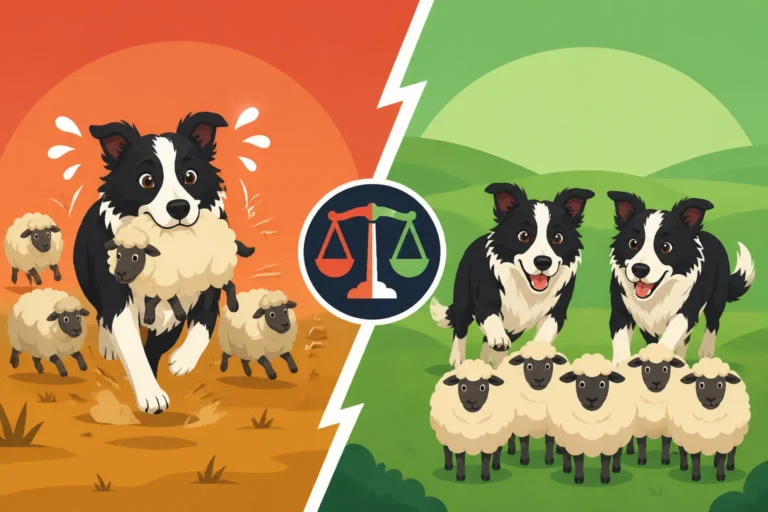
Bringing a high-drive Border Collie into a household that already includes other beloved pets can feel like trying to mix oil and water, or perhaps more accurately, like introducing a sheepdog to a flock it was never meant to manage. Many owners quickly discover that their Border Collie's powerful herding instinct doesn't magically disappear when faced with the family cat, the smaller terrier, or even the children. This guide is here to walk you through understanding, managing, and ultimately, harmonizing your Border Collie's natural inclinations with the peace and safety of your other household animals.
Understanding the Border Collie's Innate Herding Drive
It's easy to look at your Border Collie trying to "collect" the cat and think it's just being playful, but the truth runs much deeper than simple mischief. These dogs carry centuries of selective breeding in their genes, an instinctual blueprint designed for a very specific job: moving livestock. When that job isn't readily available, their powerful drive can manifest in unexpected ways, often directed at whatever moves.
The Instinctual Blueprint
To truly understand why your Border Collie acts the way it does around your other pets, you have to appreciate the profound history of the breed. Border Collies were meticulously developed in the Anglo-Scottish border region for their unparalleled ability to gather and control sheep. Every twitch, every stare, every low crouch is a remnant of generations spent perfecting the art of working stock. This isn't a learned behavior in the traditional sense; it's hardwired. The famous "Border Collie eye," that intense, unblinking gaze, is a key component of their herding style, used to control and intimidate sheep into moving. This same intense focus can be startling, and even frightening, when directed at a much smaller household pet.
When your Border Collie sees the family cat streak across the living room or your chihuahua prance through the yard, their brain often interprets it through the lens of their genetic heritage. It's not seeing a cat or a dog; it's seeing something that needs to be gathered or moved. They are, in their own minds, simply doing what they were born to do. This powerful, primal urge doesn't come with an "off" switch for domestic life, which is why simply telling them "no" often feels ineffective. They're not being disobedient; they're responding to a deeply ingrained instinct that can be incredibly difficult for them to suppress without proper guidance and redirection. For more on this, you might find The Border Collie Stare and Where It Comes From insightful.
Reading the Signs of Herding Behavior
Recognizing the subtle (and sometimes not-so-subtle) signs of incipient herding behavior is crucial for intervening before it escalates. It's not always a full-blown chase; often, it starts with much more nuanced body language that a keen owner can pick up on. Your Border Collie might drop into a low crouch, much like it would when approaching sheep, fixing its gaze intensely on the other animal. Its ears might be pricked forward, its tail low but perhaps with a slight, stiff wag, indicating high arousal and focus.
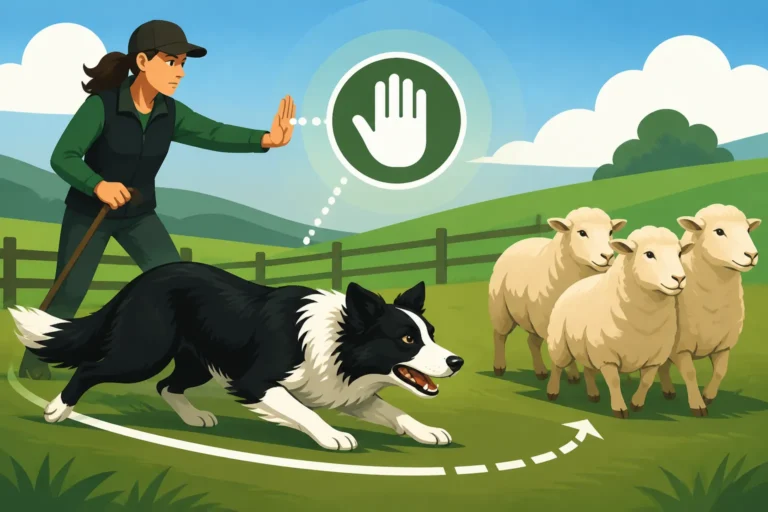
Beyond the initial "eye," you might observe circling, where your Border Collie attempts to gather the other pet by moving around them, trying to direct their movement. They might push with their nose or body, or even engage in light nipping at the heels or flanks, mimicking how they might 'grip' a stubborn sheep. This isn't aggression in the predatory sense, but rather an attempt to control and influence movement. If they are stalking the vacuum cleaner or the children in the same way they stalk your cat, it's a clear indication that their herding instinct is highly active. Understanding Why a Border Collie Crouches and Stares can provide more context to these behaviors and help you identify them early.
The Challenges of Multi-Pet Households with a Border Collie
Living with a Border Collie and other animals isn't just about managing the Border Collie; it's about managing the entire household ecosystem. The unique dynamics a Border Collie introduces can create stress for everyone involved, two-legged and four-legged alike.
Stress and Safety for Other Animals
The primary concern in a multi-pet household with a herding breed is the well-being of the other animals. For a smaller dog, a cat, or a pocket pet, being constantly "worked" by a Border Collie can be an incredibly stressful and even terrifying experience. Imagine living with a persistent, intense bodyguard who constantly tries to move you, even if you don't want to go anywhere. This persistent pressure can lead to chronic stress, anxiety, and behavioral changes in your other pets. Cats, for instance, might become withdrawn, hide more, or even develop stress-related health issues. Smaller dogs might become timid, reactive, or even aggressive towards the Border Collie out of fear.
Beyond psychological stress, there's the very real risk of physical injury. While a Border Collie's herding nips are usually intended to guide rather than harm, they can still accidentally injure a fragile smaller animal. A clumsy push or an overzealous attempt to gather can lead to tumbles, sprains, or worse. The constant chasing can also wear down older or less athletic pets, exacerbating existing health conditions. It's not uncommon for a cat to be chased up onto high shelves only to misjudge a jump, or for a small dog to be constantly running to escape, never truly relaxing in its own home. Establishing separate, safe spaces is not just a nicety; it's a necessity for the other animals' peace of mind and physical safety.
Owner Frustration and Misunderstandings
For owners, the constant vigilance required to prevent herding episodes can be utterly exhausting and deeply frustrating. You brought these animals into your home to be companions, not to be sheep and shepherd. The endless cycle of interrupting, redirecting, and trying to maintain peace can lead to feelings of guilt and inadequacy. You might blame yourself for not doing enough, or feel like you're constantly scolding your Border Collie for something that feels so natural to it. It's important to remember that this isn't a reflection of your failure as an owner; it's a testament to the powerful genetics at play.
A common misunderstanding is that the Border Collie is "just playing." While the Border Collie might appear to be having fun, the interaction is rarely reciprocal. The other animals are almost always experiencing stress, even if they aren't showing overt signs of aggression. Mistaking herding for play allows the behavior to continue, reinforcing the Border Collie's instinct and making it harder to curb in the long run. Owners might also feel isolated, unable to leave their pets unsupervised even for short periods, which can severely impact their daily lives and ability to enjoy their pets. Trying to explain these nuanced behaviors to friends or family who don't understand herding breeds can also add to the frustration, making you feel like you're constantly justifying your dog's behavior.
Management Strategies for Harmony
Creating a harmonious multi-pet home with a Border Collie requires a multi-pronged approach focused on prevention, consistent training, and providing appropriate outlets for their intense drive. It's about setting everyone up for success.
Creating Safe Zones and Supervision
The first line of defense against unwanted herding behavior in the home is effective management of the environment. This means physically preventing your Border Collie from accessing or "working" other animals when you can't actively supervise. Baby gates are your best friend here, allowing you to easily separate areas of the house. Consider setting up "cat zones" with vertical escape routes (cat trees, shelves) or gates with cat doors that the dog cannot fit through. Crates can also be invaluable, providing your Border Collie with a safe, quiet space of its own while also giving other pets a break. Many owners find that a designated "off-switch" crate setup, where the Border Collie learns to relax, is critical for household sanity.
Never leave your Border Collie unsupervised with smaller or vulnerable household animals, especially not initially. Even if interactions seem calm, a sudden movement from the other pet can trigger an instant herding response. It's far easier to prevent the behavior from starting than to interrupt it once your Border Collie has "locked on." This level of supervision requires a commitment, but it is essential for building new habits and ensuring everyone's safety. Think of it as teaching your Border Collie that other household animals are not their job. For outdoor spaces, robust fencing is crucial. Border Collies are intelligent and athletic, and will often seek out anything that moves, whether it's the neighbor's cat or a flock of birds. For more on keeping a Border Collie safely confined, you might want to look into Fencing Heights a Border Collie Will Not Clear.
Redirection and Consistent Training
Management alone isn't enough; you also need to actively teach your Border Collie what to do instead of herding. Redirection is key. When you see your Border Collie starting to eye another pet, intervene immediately with a positive, engaging alternative. This could be a high-value toy, a quick game of fetch (if fetch isn't an obsession), or a short obedience session. The goal is to break their focus on the other animal and channel their energy into an acceptable activity. Consistency is paramount: every time you redirect, you're reinforcing the idea that "that's not your job, this is."
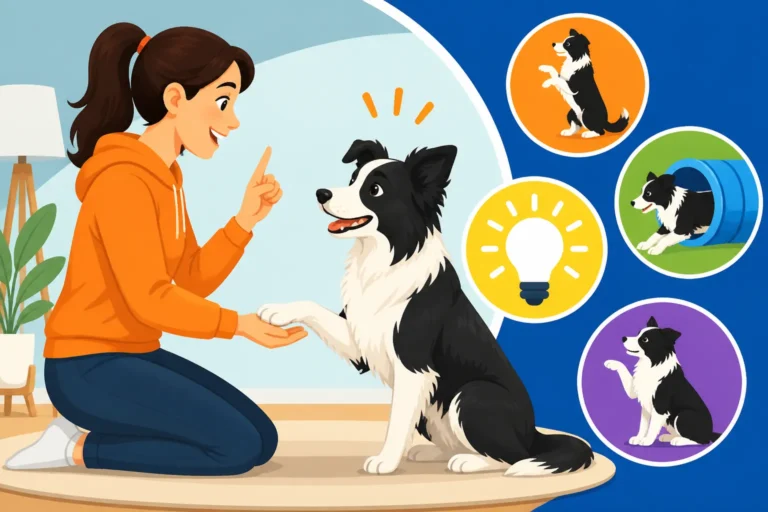
Strong obedience commands are invaluable. A rock-solid "leave it" command can be a lifesaver when your Border Collie is focusing too intently on another pet. A reliable recall, taught initially in low-distraction environments and gradually built up, allows you to call your dog away from potential herding situations. Commands like "go to your mat" or "place" can teach your Border Collie to settle calmly in a designated spot, away from other animals. A structured training program, such as those offered by BAXTER & Bella, can provide excellent resources and step-by-step guidance for building these foundational skills, ensuring your Border Collie understands what you expect in a multi-pet environment. Remember, you're not trying to extinguish their herding drive, but rather to teach them when and where it's appropriate to express it.
Providing Appropriate Outlets for Herding Drive
Because the herding instinct is so deeply ingrained, simply suppressing it isn't fair or effective in the long run. Your Border Collie needs to use its brain and body in ways that satisfy this drive. Providing appropriate, structured outlets is critical for their overall well-being and for reducing the pressure to "herd" housemates. If you have access to livestock, even occasional herding lessons with a qualified instructor can be incredibly fulfilling for a Border Collie. This allows them to engage their natural talents in a controlled, safe environment.
If livestock isn't an option, there are many dog sports and activities that can tap into similar drives. Agility, flyball, disc dog, or even advanced obedience and rally can provide an incredible mental and physical workout. Games that involve "gathering" specific objects, like teaching them to put away their toys, can also be a subtle way to fulfill their urge to collect. Large herding balls (often called jolly balls or push balls) allow them to push and move an object, simulating herding without involving other animals. Investing in a flirt pole can also be a great way to let them chase and "catch" a lure, giving them a satisfying "kill" without harming another creature. These activities, when done regularly, can significantly reduce their need to seek out other "work" within the home. For more on channeling this energy, check out Big-Ball Herding Games for a Border Collie.
Training Specific Scenarios and Breeds
While the general principles apply, specific types of household animals often require tailored strategies to ensure a peaceful coexistence with a Border Collie. Understanding these nuances can make a significant difference.
Border Collies and Cats
The dynamic between a Border Collie and a cat can be particularly challenging due to the cat's often sudden, darting movements, which are prime triggers for a herding dog. Many Border Collies view a running cat as a small, furry sheep in need of being gathered. Introduction must be slow, controlled, and always supervised. Begin with short, positive interactions, keeping the Border Collie on a leash and reinforcing calm behavior with treats. Crucially, give your cat ample vertical escape routes – cat trees, shelves, or even countertops – where they can feel safe and observe from a distance. Cats need to know they have guaranteed safe spaces the dog cannot access.
Teach your Border Collie a strong "leave it" command specifically for the cat. Reward heavily for ignoring the cat or for looking at you instead of stalking. Avoid games that encourage chasing, even if the cat seems to initiate it, as this can blur boundaries. Focus on building a routine where both animals understand their boundaries and roles. Remember that some cats will never be entirely comfortable with a high-drive herding dog, so continuous management and dedicated safe spaces will likely be a permanent part of your household dynamic. For a Border Collie, learning to redirect its intense "eye" away from the cat and onto a specific toy or task is a fundamental step. Consider using interactive puzzle toys from Amazon that demand mental effort, offering a more appropriate outlet for their focus.
Border Collies and Smaller Dogs
When it comes to smaller canine companions, the Border Collie's herding instinct often manifests as an attempt to control their movement, gather them, or even block doorways and paths. This isn't usually aggressive, but it can be incredibly intimidating and stressful for a smaller dog, leading to fear-based behaviors or even reactive aggression from the smaller dog trying to protect itself. Introductions should be managed carefully, with both dogs on leash initially in a neutral space. Observe body language closely. Any stiffening, intense staring, or low crouching from the Border Collie signals an impending herding attempt.
Training a reliable "off" or "leave it" command is critical. Interrupt any stalking or circling behavior immediately and redirect your Border Collie to a toy or a structured training exercise. Ensure the smaller dog has physical escape routes – places it can go where the Border Collie cannot follow, such as through a dog gate with a smaller opening or into a crate. Avoid allowing the Border Collie to "police" the smaller dog's movements. Structured play sessions with toys can sometimes work, but always be ready to intervene if the Border Collie starts to get too intense or tries to control the play. The goal is to teach your Border Collie that its smaller housemate is a companion, not a flock to be managed.
Border Collies and Other Livestock/Small Animals
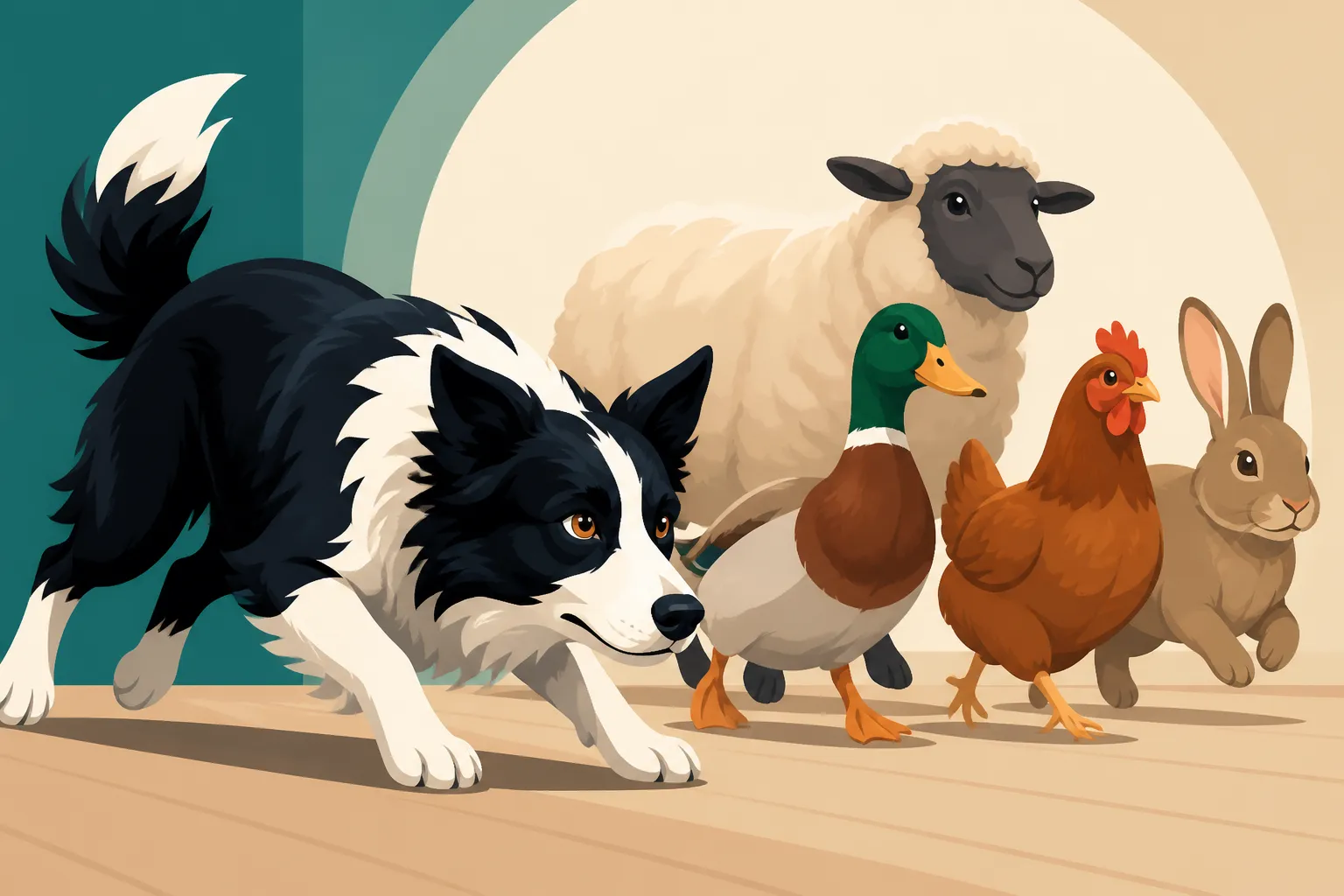
When your household includes traditional livestock like chickens, ducks, or even rabbits and guinea pigs, the challenge becomes significantly more complex and the risks much higher. A Border Collie's instinct to herd these animals is incredibly powerful, and while their intention is to gather and control, the delicate nature of small animals means even a well-meaning herding attempt can lead to severe injury or death. Secure enclosures for the prey animals are absolutely non-negotiable. Aviaries, fortified runs, and cages must be robust and escape-proof from both sides.
Supervision around these animals must be constant and meticulous. Never leave your Border Collie alone with them, even for a moment. Training should focus on teaching your Border Collie to completely ignore these animals. This means highly rewarding calm behavior, ignoring the presence of the animals, and a bomb-proof "leave it" command. If you want your Border Collie to work livestock, it should only be done under the guidance of a professional trainer in a controlled environment, not with your backyard chickens. The instinct to herd small, fast-moving creatures is so strong that for many Border Collies, coexistence with pets like rabbits or guinea pigs is simply not safe or realistic without extreme, constant management. For a deep dive into living with a particular type of small animal, you may find A Border Collie Living With Chickens useful.
Enriching Your Border Collie's Life to Reduce Herding Pressure
A bored or under-stimulated Border Collie is a recipe for disaster in a multi-pet home. When their extraordinary intelligence and boundless energy aren't channeled productively, they will find their own "work," and often that work involves herding whatever moves around the house. Addressing their fundamental needs for mental and physical engagement is perhaps the single most effective way to reduce unwanted herding of other animals.
Mental Stimulation Over Pure Physical Exercise
Many new Border Collie owners mistakenly believe that endless physical exercise is the solution to their dog's high energy. While Border Collies certainly need plenty of physical activity, mental stimulation is often the key to truly tiring out their active minds. A physically exhausted but mentally bored Border Collie will still find ways to create "work," often by fixating on and herding other household members. Instead, focus on activities that challenge their intellect and problem-solving abilities.
Scent work, such as nose work games or tracking, is incredibly mentally taxing and satisfying for a Border Collie. Teaching them complex tricks, like opening doors or putting away toys, engages their intelligence. Puzzle feeders, especially those that require multiple steps or manipulations, can keep them occupied for significant periods and provide a sense of accomplishment. You can find a vast array of challenging puzzle feeders on Amazon that are perfect for a Border Collie's sharp mind. Rotating these toys keeps the challenge fresh. Structured training sessions, even short ones throughout the day, where you teach new commands or refine existing ones, are also excellent forms of mental enrichment. For inspiration on mentally challenging activities, consider exploring Puzzle Feeders That Hold a Border Collie.
Structured Play and Exercise Routines
While mental exercise is paramount, consistent, structured physical exercise remains vital for a Border Collie. This means more than just letting them out in the yard. Border Collies thrive on purpose and routine. Design a daily schedule that includes vigorous exercise, such as long walks, runs, or dedicated play sessions where you initiate and end the game. This establishes you as the leader and provider of work, rather than letting the dog decide when and how to burn off energy.
Avoid endless, unstructured fetch sessions, which can sometimes fuel an obsessive drive rather than truly settling a Border Collie. Instead, incorporate varied activities like hiking, agility practice, or advanced obedience drills that combine physical exertion with mental engagement. Two hours of dedicated, focused activity each day is often a minimum for a working-line Border Collie, but it needs to be quality activity. Knowing Exercise, Work and What Actually Settles a Border Collie can guide you in creating effective routines that genuinely fulfill their needs. The goal is to tire their body and their mind in a balanced way, making them less inclined to create their own "work" with other pets.
Advanced Obedience and Impulse Control
A solid foundation of obedience is crucial, but for a Border Collie in a multi-pet household, you'll want to aim for advanced levels, particularly in impulse control. Commands like "stay," "wait," and "settle" need to be rock-solid, even amidst distractions. Work on these commands in increasingly stimulating environments, gradually adding the presence of your other pets at a distance. The aim is for your Border Collie to be able to remain calm and focused on you, even when another animal moves.
"Off" and "leave it" commands become vital life skills. Practice "leave it" with tempting items, then gradually introduce the presence of other pets as the "item" to be left alone. Reinforce calm, relaxed behavior around other animals heavily. This isn't about punishing the herding instinct, but rather about teaching your Border Collie that you are in charge of controlling movement, and their job is to look to you for direction. A comprehensive, force-free online training program, like the one offered by BAXTER & Bella, can be an invaluable resource for consistently teaching these advanced impulse control exercises, giving you the tools to manage your Border Collie effectively in complex household situations. A Border Collie that respects boundaries and has strong impulse control is far less likely to constantly hassle other pets.
When Professional Help is Needed
Despite your best efforts, sometimes the complexities of managing a Border Collie's strong herding drive in a multi-pet environment can feel overwhelming. It's okay to admit you need help; in fact, it's a responsible step towards ensuring the well-being of all your animals.
Recognizing When You're Out of Your Depth
There are clear indicators that it might be time to call in a professional. If the herding behavior is escalating beyond mild attempts to control and is becoming more intense, frequent, or even includes aggression towards other pets, it's a serious concern. If your other animals are showing constant signs of stress – hiding, refusing to eat, developing anxiety-related behaviors, or exhibiting fear-based aggression – their quality of life is severely compromised. Another red flag is if you feel your relationship with your Border Collie is suffering because you're constantly frustrated or stressed by their interactions with other pets.
If you've diligently applied management strategies and consistent training for several weeks or months and see no improvement, or even a worsening of the situation, don't hesitate. The longer problem behaviors persist, the more entrenched they become, and the harder they are to modify. If you're starting to feel resentment towards your Border Collie, or if you're seriously considering rehoming an animal because of the untenable situation, these are definite signs that expert intervention is required. Your goal should be a peaceful, safe home for all.
Seeking Qualified Assistance
When seeking professional help, it's crucial to find someone experienced with high-drive herding breeds like Border Collies and their unique behavioral nuances. Not all dog trainers are equipped to handle these specific challenges. Look for certified professional dog trainers (CPDT-KA) or, for more severe cases involving aggression or chronic anxiety in any of the pets, a veterinary behaviorist (DACVB). These professionals have advanced education in animal behavior and can offer tailored strategies.
A good behavior professional will conduct a thorough assessment of your household, observing the interactions between your Border Collie and other pets. They'll help you identify triggers, develop a comprehensive management plan, and teach you effective training techniques. They can also help rule out any underlying medical conditions that might be contributing to increased anxiety or reactivity in any of your pets. Don't be afraid to ask for references or inquire about their specific experience with herding breeds and multi-pet households. Investing in professional guidance can ultimately save stress, prevent accidents, and help you foster a truly harmonious home where all your animals can thrive.
| Strategy Type | Approach | Pros | Cons |
|---|---|---|---|
| Management | Physical barriers (gates, crates), separate areas, constant supervision. | Immediate reduction of unwanted interactions; provides safety and respite for other pets. | Requires consistent vigilance; doesn't address underlying drive; can feel restrictive for the Border Collie. |
| Redirection & Basic Training | Using toys, short obedience tasks to interrupt herding; strong "leave it" and "recall." | Teaches alternative behaviors; helps break fixation; builds handler-dog communication. | Needs consistency; may not be effective if drive is extremely high or training isn't solid. |
| Drive Fulfillment | Herding lessons, dog sports (agility, flyball), advanced scent work, puzzle toys. | Channels instinct productively; tires dog mentally and physically; increases overall well-being. | Requires time, effort, and often financial investment; access to specific resources (like sheep) may be limited. |
| Advanced Impulse Control | "Stay," "wait," "settle" commands; training calm behavior around distractions. | Builds self-control; creates a relaxed demeanor in the presence of other pets. | Requires advanced training commitment; takes time to build reliability. |
| Professional Intervention | Consulting a certified professional dog trainer or veterinary behaviorist. | Expert, tailored guidance; addresses complex issues; rules out medical causes; provides peace of mind. | Can be a significant financial investment; finding the right professional can take time. |
Disclaimer
This article is for general informational purposes only and does not constitute professional advice. Laws, prices and regulations vary by location and change over time. Consult a qualified professional for guidance on your specific situation.