What Strong Eye Means in a Border Collie
For many Border Collie owners, that intense, unblinking gaze is both captivating and, at times, a bit baffling. You see your dog fixated on a squirrel, a child, or even a dust motes dancing in a sunbeam, and you wonder: what is that all about? This isn't just a dog looking at something; it's "strong eye," a hallmark of the breed, and understanding it is key to navigating life with these incredibly focused dogs. This guide will delve into what strong eye truly means, its historical purpose, and how to live harmoniously with this powerful instinct in a pet home.
Decoding the Intense Gaze: What is "Strong Eye" Anyway?
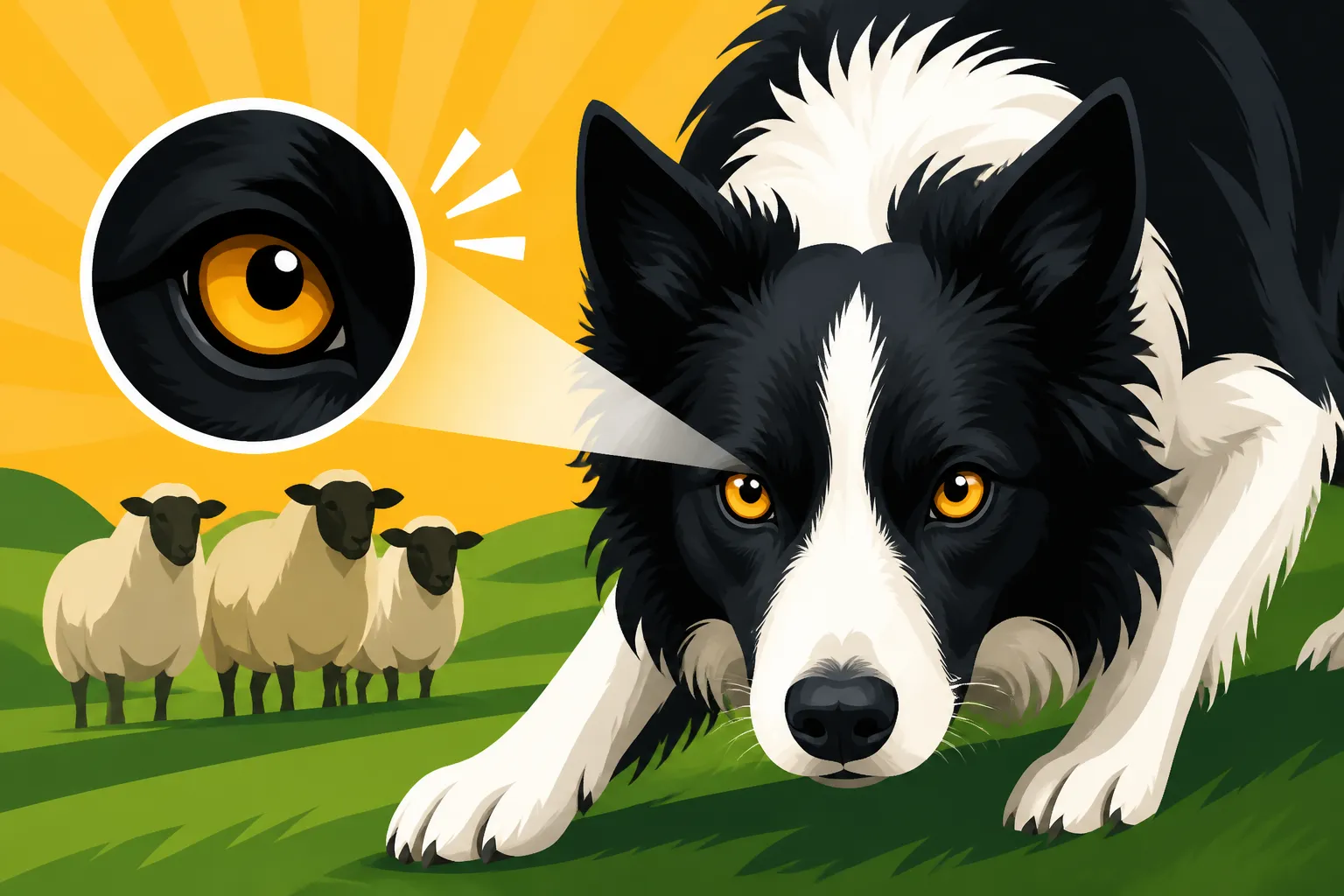
When you hear a Border Collie owner talk about "eye," they're referring to that distinctive, almost hypnotic stare their dog uses to control livestock. It's not just a casual glance; it's a deep, unwavering focus that communicates intent without a single bark or physical nudge. This stare is a fundamental tool in the Border Collie's herding repertoire, allowing them to exert immense psychological pressure on sheep or other animals. It’s their way of saying, "I'm watching you, and I control where you go."
The Physical Manifestation of the Stare
Picture this: your Border Collie drops low to the ground, often in a characteristic crouch. Their head might be slightly lowered, their body tensed, almost coiled. But it’s their eyes that truly command attention. They are fixed, unblinking, and utterly unwavering, often tracking the slightest movement with incredible precision. You can practically feel the focus radiating off them. This isn't an aggressive posture in the typical sense; it's an intensely concentrated one. It’s part of the predatory sequence – stalk, chase, grab – but for a well-bred Border Collie, the "grab" part is generally suppressed. They stop at the "stalk."
This low, stealthy approach, combined with the powerful eye, is what makes a Border Collie so effective at moving and holding stock. It’s a silent, non-confrontational form of control, using pure mental presence. For humans, it can feel a little unnerving, especially if you're not used to it, or if it's directed at something inappropriate. Sometimes, new owners even mistake it for aggression or fear, but it's typically neither; it's pure, undiluted herding instinct. You might notice your dog displaying this low, focused posture even when there are no sheep around, perhaps when watching a ball, a remote control car, or even a leaf blowing in the wind. This is your dog practicing its inherent skills.
More Than Just a Look: The Instinct Behind the Gaze
At its core, "strong eye" is an expression of the Border Collie's innate desire to gather and control. It's a primitive instinct, refined over generations, that allows them to influence the movement of other animals. Think of it as a highly sophisticated form of non-verbal communication. The dog projects its will onto the sheep, effectively "freezing" them or directing them with nothing but its gaze. This mental connection is incredibly powerful and distinguishes Border Collies from many other herding breeds, which might rely more on barking or physical presence.
This isn't a learned behavior in the sense that you teach a dog to sit or stay. While handlers certainly refine and direct "eye" through training, the fundamental capacity for it is hardwired into a Border Collie's DNA. It's why a young puppy, even with no exposure to sheep, might naturally drop into a crouch and stare intently at a moving toy or a sibling. It's a testament to the focused breeding efforts of shepherds who valued efficiency and quiet control in their working dogs. Understanding this deep-seated instinct helps us appreciate why a Border Collie can be so persistent and single-minded when something captures their "eye." It’s not stubbornness; it’s their genetic blueprint kicking in.
The Historical Roots of a Herding Masterpiece
To truly appreciate what "strong eye" means, we have to look back at the origins of the Border Collie. This breed wasn't developed for fancy looks or leisurely companionship. It was forged in the harsh, demanding landscape of the Anglo-Scottish border, where shepherds relied on their dogs to manage valuable livestock in often challenging conditions. The survival of their flocks, and often their own livelihoods, depended on the skill and efficiency of these canine partners.
How "Eye" Developed on the British Isles
For centuries, shepherds in the border regions needed a dog that could control sheep without undue force or noise. A dog that barked excessively or bit the sheep would stress the flock, leading to lost wool, injuries, or even stampedes. What they needed was a subtle, intelligent, and highly effective animal. Through selective breeding, they began to favor dogs that could influence sheep primarily through their presence and intense stare. This trait, which we now call "eye," became highly prized. Dogs like Old Hemp, born in 1893, became legendary for their calm, powerful working style that relied heavily on this hypnotic gaze. Old Hemp and Every Border Collie Alive Today
Shepherds would observe their puppies and young dogs, looking for that innate spark of "eye" – the ability to drop into a low crouch and fixate on the sheep, moving them with subtle shifts of body weight and an unwavering gaze. Dogs that possessed this strong, natural talent were bred, while those that were too pushy, too noisy, or lacked the intense focus were not. This process, spanning generations, refined the Border Collie into the master herder it is today, a dog whose primary tool of control is its powerful, silent stare. It truly highlights the ingenuity and selective pressure applied by working people seeking the most effective tools for their demanding trade.
The Role of Eye in Controlling Livestock
Imagine a scattered flock of sheep on a vast, open hillside. A Border Collie with strong eye can slowly and deliberately gather them, using its gaze to turn individual sheep or small groups, nudging them together like pieces of a puzzle. The intense stare prevents sheep from breaking away or running wildly. When the dog drops into Why a Border Collie Drops Into a Crouch, it signals to the sheep that it means business. The sheep, being prey animals, instinctively respond to this predatory-like gaze by moving away or holding still, depending on what the dog's subtle body language indicates.
The eye allows for precision and finesse. Instead of running wildly and chasing, which can exhaust both dog and sheep, the eye enables the dog to guide and maneuver the flock with minimal physical exertion. It keeps the sheep calm, conserving their energy and reducing stress. This is crucial for their welfare and for the quality of their wool and meat. A dog with insufficient eye might rely more on chasing or gripping, which is less efficient and can be detrimental to the sheep. The eye is the key to that famous Border Collie "calmness" and "control" when working stock, making them unparalleled in the sheepdog world.
Living with Strong Eye in a Non-Working Home
While "strong eye" is an invaluable asset on the farm, it can become a bewildering or even frustrating characteristic in a home environment where there are no sheep to herd. For many pet Border Collie owners, managing this intense instinct is one of their biggest challenges. It's not that the dog is being disobedient; it's simply trying to fulfill its deepest genetic programming, often in inappropriate ways.
The Pros and Cons of an Intense Companion
On the positive side, a Border Collie with strong eye often translates into incredible focus and trainability. When you engage them in a task, they can be unbelievably attentive, picking up commands and complex sequences with remarkable speed. This makes them stars in dog sports like agility, obedience, and scent work. Their desire to "eye" and control can be redirected into highly precise movements and an intense drive to work with their handler. They are dedicated partners, eager to please and driven by purpose. How Few Repetitions a Border Collie Needs to learn a new trick can be astounding.
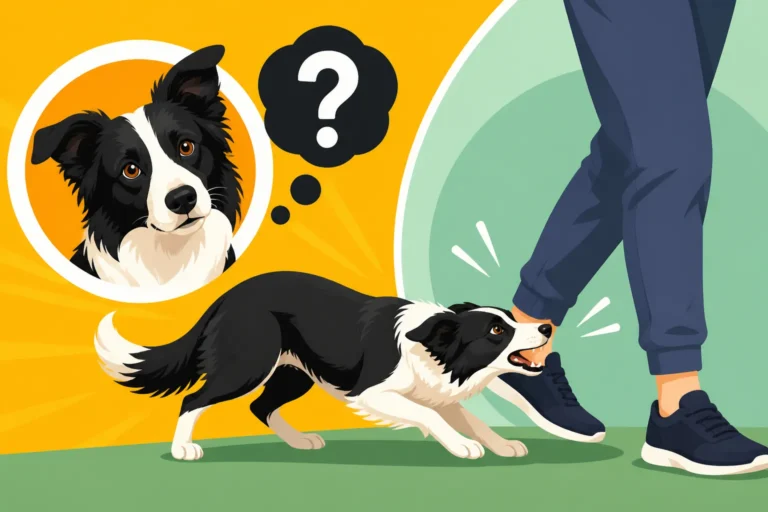
However, the downsides can be significant if not managed properly. That same intense focus can be misdirected. Your Border Collie might "eye" children running, guests moving around the house, other pets, or even inanimate objects like shadows, reflections, or the vacuum cleaner. A Border Collie That Stalks the Vacuum or circles the family at a party is simply attempting to gather and control its "flock." This can manifest as nipping at heels (a mild form of herding contact), barking at perceived "disobedient" family members, or excessive chasing. It can also lead to anxiety for the dog if they feel constantly compelled to control things they can't actually influence.
When "Eye" Becomes an Obsession
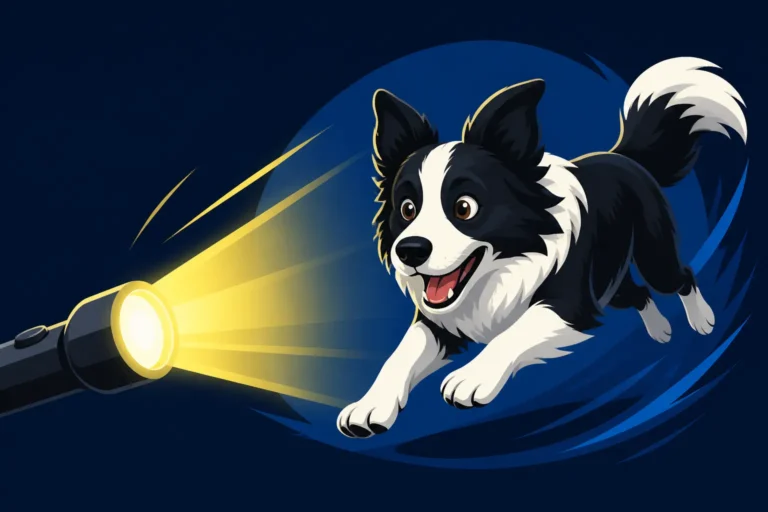
The most challenging aspect of strong eye in a pet home is when it spirals into compulsive behaviors. Without appropriate outlets or clear boundaries, a Border Collie’s inherent drive to "control" can turn inward or fixate on inappropriate targets. This is when you see dogs relentlessly chasing shadows, staring at walls for hours, or becoming obsessed with light reflections from watches or phones. Stopping a Border Collie Chasing Shadows and Light is a common struggle for owners. These behaviors are not healthy; they indicate a dog whose powerful instincts are being misdirected, leading to stress, anxiety, and repetitive actions that offer no real fulfillment.
Such fixations can severely impact a dog's quality of life. They might become hyper-vigilant, constantly scanning their environment for things to "eye," unable to relax. This isn't just quirky behavior; it can be a genuine welfare concern. Owners need to understand that this isn't malicious, but a desperate attempt by the dog to express a fundamental part of its being. Ignoring it or simply scolding the dog won't work; it requires careful management, redirection, and often, professional intervention to help the dog find healthier outlets for its intense focus. The Border Collie That Chases the Sun Off Walls illustrates just how extreme this can become.
Here’s a quick look at the facets of strong eye:
| Aspect | Working Context (Ideal) | Pet Context (Potential) |
|---|---|---|
| Purpose | Gather, direct, and control livestock quietly | Control household members, moving objects, light |
| Behavior | Low crouch, silent, unwavering gaze on stock | Stalking family, shadows, cars, other pets |
| Benefit for Dog | Fulfills instinct, purposeful work | Can lead to frustration, anxiety, obsession |
| Benefit for Owner | Efficient stock management | Highly trainable, focused in sports |
| Potential Issue | Over-eye (too much pressure), gripping | Nipping, compulsive behaviors, resource guarding |
| Management Strategy | Handler directs eye, provides clear tasks | Redirection, mental exercise, structured play |
Nurturing and Redirecting That Powerful Gaze
Living with a Border Collie's strong eye, especially without a flock of sheep, requires a thoughtful and proactive approach. It's not about suppressing the instinct entirely, but rather understanding it and channeling it into appropriate, healthy outlets that satisfy your dog's deep-seated need to work and focus.
Understanding Triggers and Setting Boundaries
The first step is to become a detective: what triggers your Border Collie's "eye" in a non-herding context? Is it children running? Squirrels in the yard? The remote control car? Reflections from your watch? Once you identify these triggers, you can start to manage the environment and your dog's response. For instance, if your dog tries to herd your children, teach the children to "freeze" rather than run when the dog starts to stare, breaking the chase sequence. Provide your dog with an immediate alternative, like a favorite toy or a quick training exercise.
It's crucial to teach an "off" command – a clear signal that the focused staring and stalking behavior needs to cease. This isn't easy and takes consistent effort. Practice it in low-distraction environments first, then gradually increase the challenge. Use positive reinforcement to reward your dog for breaking eye contact and re-engaging with you. Consistency is key here. Every time you allow the behavior to continue, you reinforce it. Setting clear boundaries isn't about being mean; it's about providing structure and clarity for a dog whose instincts can otherwise overwhelm them.
Engaging the Mind Without Fueling Fixation
The Border Collie's brain is its most powerful tool, and mental stimulation is often more exhausting and satisfying than endless physical exercise alone. Redirecting strong eye means giving that intense focus something legitimate to "work" on. This is where puzzle feeders, scent work, and structured training become your best friends. Instead of just throwing a ball repeatedly, which can often fuel the fixation rather than reduce it, engage their minds.
Consider introducing a variety of mental games. Scent work, where they have to find hidden treats or articles, taps into their natural sniffing abilities and requires deep concentration. Trick training, especially complex sequences, gives them a "job" to do with their brain. You can find a huge variety of interactive puzzle toys on platforms like Amazon that require dogs to manipulate objects to get food, forcing them to problem-solve. Puzzle Feeders That Hold a Border Collie can keep them engaged for a significant amount of time. Online training programs, such as those offered by BAXTER & Bella, can provide structured lessons and creative ideas for mental enrichment, helping you teach your Border Collie new skills and channel that powerful focus positively. The goal is to provide a sense of accomplishment and purpose, satisfying their innate drive in a constructive way. Mental Work That Tires a Border Collie Faster can genuinely transform a restless Border Collie into a content one.
Professional Guidance and Training Resources
If your Border Collie's "eye" is leading to serious behavioral issues, such as constant obsessive behaviors, nipping, or an inability to relax, don't hesitate to seek professional help. A certified professional dog trainer or a veterinary behaviorist experienced with working breeds can offer invaluable guidance. They can help you accurately assess the root cause of the behavior, identify specific triggers unique to your dog, and develop a tailored management and modification plan.
Sometimes, what appears to be strong eye misdirected might be an underlying anxiety or another behavioral issue. A professional can differentiate this and ensure you're addressing the correct problem. They can teach you advanced techniques for redirection, impulse control, and relaxation protocols. Remember, you're dealing with a highly intelligent and sensitive animal whose instincts are incredibly powerful. Getting an expert opinion isn't a sign of failure; it's a responsible and loving step toward helping your Border Collie live a happier, more balanced life. Resources like professional trainers, online courses, and behaviorists can provide the tools and support you need to harness that remarkable Border Collie brain effectively.
Disclaimer
This article is for general informational purposes only and does not constitute professional advice. Laws, prices and regulations vary by location and change over time. Consult a qualified professional for guidance on your specific situation.