Whether a Border Collie Knows to Stop in Heat
Border Collie heat exhaustion risks and early warning signs explained for owners protecting working dogs from dangerous temperatures.
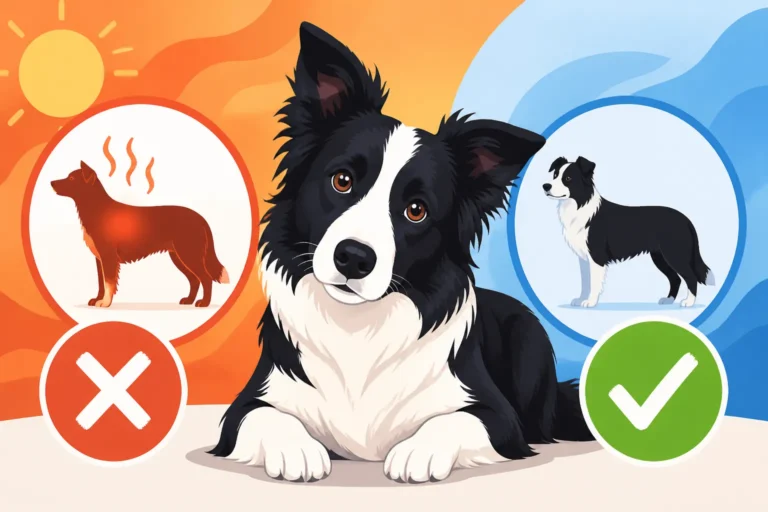
Border Collie heat exhaustion risks and early warning signs explained for owners protecting working dogs from dangerous temperatures.

Border Collie post-work panting analysis helps owners distinguish normal cooldown signs from dangerous overheating risks and warning flags.

Smooth Border Collie coat protection and functionality in rough terrain, explaining insulation and care needs for outdoor adventures.

Smooth Border Collie coats and rough coats have dense undercoats that hold water, affecting drying speed after wet adventures.

Border Collie coat length differences, including rough and smooth types, determine specific grooming requirements and shedding patterns.

Border Collie litters can include both rough and smooth puppies because the Fgf5 gene controls coat length through dominant inheritance.

Smooth Border Collie cold tolerance depends on a shorter coat providing less natural insulation against winter weather.

Smooth Border Collie grooming requirements, coat characteristics, and shedding realities for dogs with short double coats.

Smooth Border Collies have a dense undercoat and shed heavily despite having shorter, sleeker outer guard hairs.
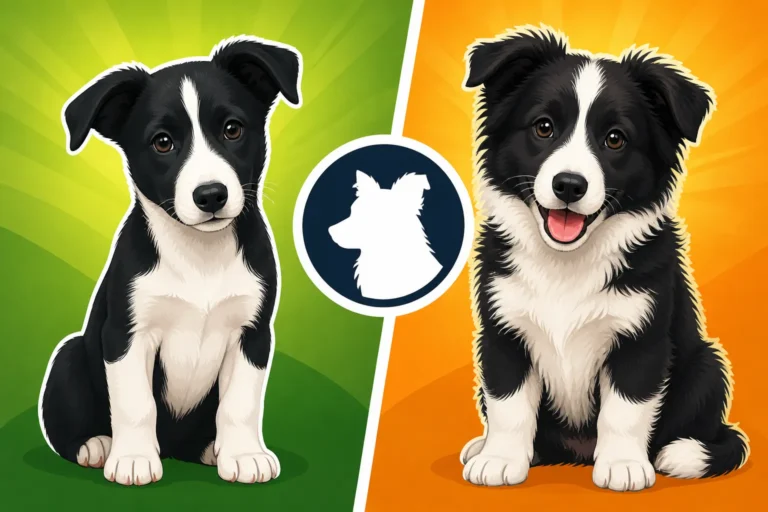
Border Collie puppy coat genetics and visual clues help owners determine if a dog will develop a smooth or rough coat for proper grooming.