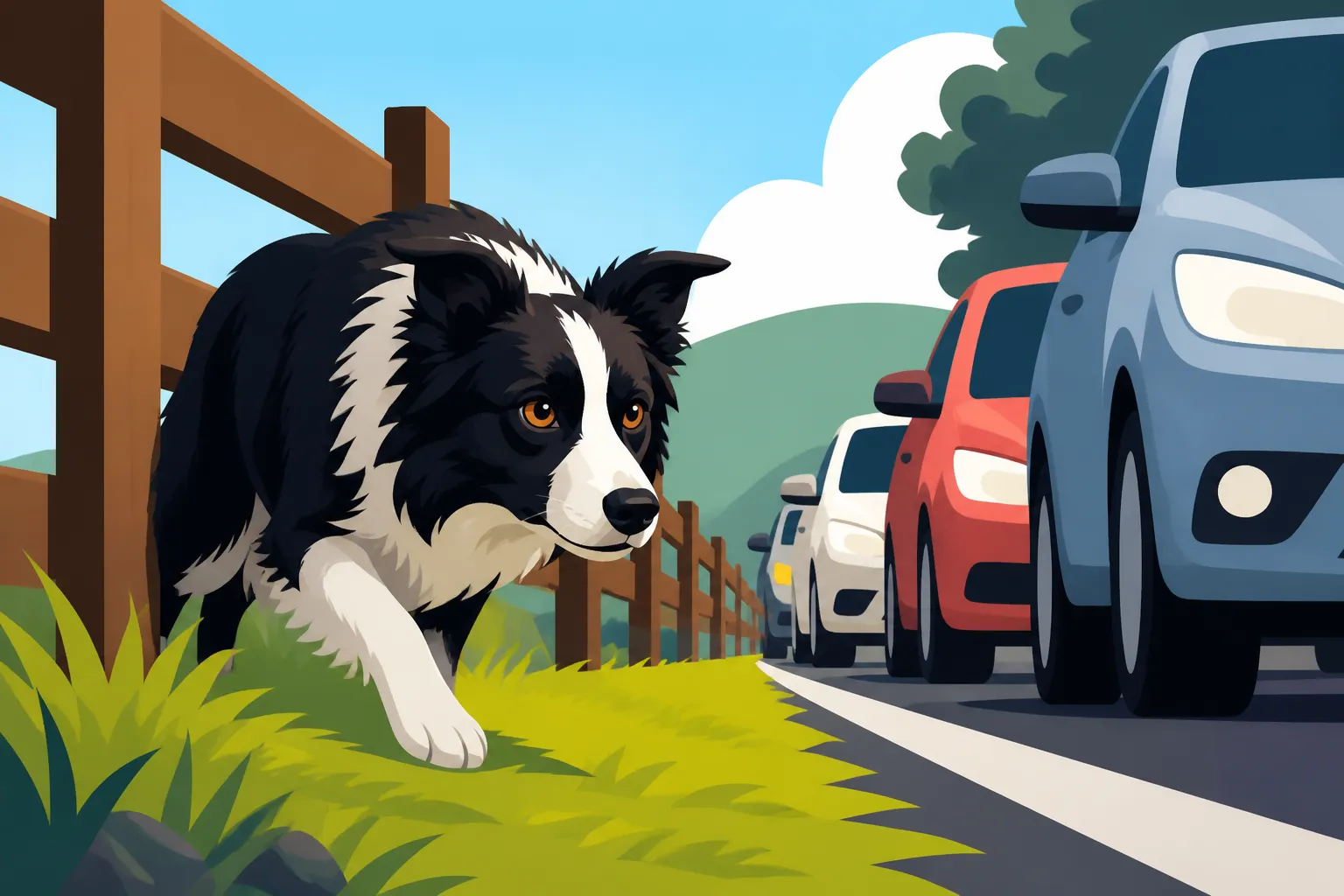
The Border Collie That Runs the Fence at Traffic
There’s almost nothing more disheartening than watching your brilliant Border Collie turn into a frantic, barking mess as soon as a car, cyclist, or even a leaf blows past your fence line. You want them to enjoy their yard, but this obsessive fence-running behavior, often accompanied by barking and lunging, feels impossible to control, not to mention dangerous. This guide will walk you through understanding why your Border Collie fixates on moving objects outside the fence, the real risks involved, and practical, empathetic strategies to help your dog find peace and safety in their own space.
Understanding the Root of the Behavior: Why Your Border Collie Chases the Fence
It's easy to feel like your Border Collie is just being "naughty" or deliberately disobedient when they launch themselves at the fence line, barking wildly at anything that moves. But this behavior is deeply rooted in their genetics and environmental factors. It's not about malice; it's about instinct and, often, unmet needs.
The Herding Instinct in Action
At its core, a Border Collie is a dog bred over centuries to control and move livestock. This drive, known as the herding instinct, is incredibly powerful. It manifests as an intense focus, a desire to gather, and a need to control movement. When there are no sheep, that instinct doesn't just disappear; it finds other outlets. Fast-moving objects like cars, bicycles, joggers, or even children playing down the street, mimic the "flight" of sheep or cattle.
Your fence acts as a boundary that frustrates this instinct. Your Border Collie is trying to "herd" the passing traffic, to stop it, to turn it, to bring it back. The fence prevents them from completing the perceived task, which creates immense frustration and often escalates the behavior. The rush of adrenaline and the momentary satisfaction of the chase, even if incomplete, can be incredibly self-rewarding, making it a very hard habit to break. It's why they seem to "lock on" with that intense The Border Collie Stare and Where It Comes From you know so well. For many Border Collies, this behavior is just a natural extension of their deeply ingrained working drive, simply misdirected.
Under-Stimulation and Boredom
While the herding instinct provides the "why," under-stimulation and boredom often fuel the "how often" and "how intensely." Border Collies are not just physically active dogs; they are profoundly intelligent and require significant mental engagement. A well-exercised body without a challenged mind can still lead to a frustrated, restless dog.
If your Border Collie spends a good portion of their day in the yard without meaningful interaction, training, or varied activities, that fence line becomes their primary source of entertainment. The passing traffic offers a constant, stimulating show. Each car is a fresh "sheep" to chase, each cyclist a new challenge. This isn't just about physical exertion; Exercise, Work and What Actually Settles a Border Collie truly encompasses mental and physical engagement. Without structured outlets for their intelligence and energy, fence running becomes a default behavior, a way for them to "work" even when there's no actual job to do. This can become a vicious cycle, as the more they practice the behavior, the stronger the habit becomes.
The Dangers of Fence Running: More Than Just Annoying
Many owners initially see fence running as just an annoyance – loud barking, a worn patch of grass, maybe a bit of a nuisance for neighbors. However, this behavior carries significant risks, both for your dog's physical health and their long-term behavioral well-being. It's crucial to understand these dangers to fully appreciate the importance of addressing the issue proactively.
Physical Risks and Injuries
The sheer intensity and repetitive nature of fence running put tremendous strain on a Border Collie's body. They often run at full speed, skid to a halt, turn sharply, and throw themselves against the fence, all while barking and lunging. This type of high-impact, uncontrolled movement can lead to a variety of injuries over time. Common issues include torn pads from skidding on rough surfaces, cuts or abrasions from scraping against the fence, and muscle strains or ligament tears in their legs, shoulders, and hips due. Imagine the stress on their joints with sudden stops and pivots every time a car goes by.
Perhaps the most terrifying risk is the potential for escape. A Border Collie desperate to "catch" the passing traffic might dig under, jump over, or even break through a weak spot in the fence. Once out, they face immediate and severe danger from the very traffic they were chasing. The risk of being hit by a car, getting lost, or causing an accident is very real. Even a seemingly sturdy fence can be compromised by a determined Border Collie over time, especially if they are consistently throwing their weight against it or digging at the base.
Escalation and Behavioral Issues
Beyond the physical dangers, allowing fence running to continue unchecked can lead to a host of escalating behavioral problems. The constant state of arousal and frustration can bleed into other areas of your dog's life, making them more generally anxious or reactive. A dog that consistently barks and lunges at the fence can become reactive to other triggers in different environments, like people, dogs, or even sudden noises on walks.
This behavior can also make your Border Collie harder to manage in other situations. If they are constantly practicing ignoring your calls or pleas when fixated on the fence, your recall can suffer, and their general obedience might decline. What starts as fence running can evolve into intense barrier frustration, aggression towards passersby (even when not chasing traffic), and an inability to settle or relax even indoors. The repeated adrenaline surges are not good for their long-term stress levels and can lead to a dog that struggles to calm down, even when the "threat" of passing traffic is gone. This is why addressing The Border Collie That Runs the Fence at Traffic specifically is so important for their overall well-being.
Strategic Management and Environmental Control
Before you even begin formal training, you need to implement management strategies that prevent your Border Collie from practicing the fence-running behavior. Every time they run the fence, they are essentially rehearsing and reinforcing the unwanted action. By controlling their environment, you stop the rehearsal and create a safer, calmer space.
Reinforcing the Boundary with Physical Barriers
One of the most immediate steps is to assess and fortify your existing fence. Border Collies are intelligent and athletic, often capable of jumping surprisingly high or digging with impressive determination. A standard four-foot chain-link fence might be barely a suggestion to a determined Border Collie. Consider increasing the height of your fence, or adding an L-footer along the bottom to prevent digging out. For persistent jumpers, a lean-in or angled extension can be installed at the top.
Sometimes, simply blocking the line of sight is enough to reduce the allure of the passing traffic. Privacy slats woven into chain-link fences, solid fence panels, or even strategically planted dense hedges can create a visual barrier. If a full fence overhaul isn't feasible, you might consider creating a "double fence" system. This involves installing a smaller, interior fence (even a temporary one) a few feet back from the main perimeter in the problem areas. This provides a buffer zone, preventing your dog from reaching the main fence line and lunging directly at passersby. Remember, if they can't see it, they are less likely to react to it.
Limiting Access and Supervised Yard Time
This might sound like a hassle, but it's perhaps the most critical management strategy: do not allow your Border Collie unsupervised access to the yard. If you know they are prone to fence running, every moment they are outside alone is an opportunity for them to practice and reinforce the behavior. Instead, take them out on a leash for potty breaks, even in your own fenced yard. This allows you to interrupt any attempts at fence running and redirect their attention immediately.
Consider restricting their access to the problem areas of the yard during peak traffic times. If the side fence is the main culprit, keep them on the other side of the yard, or only allow them out during quieter hours. For many owners, this means using a crate or designating a safe, distraction-free indoor area during times when traffic is heavy. This isn't about punishment; it's about setting your dog up for success and preventing the behavior from occurring in the first place. You are effectively teaching them that the yard is not the place for this type of intense, fixated behavior.
Creating a More Engaging Backyard Environment
A bland, unstimulating yard can turn the fence line into the most exciting feature. By enriching your backyard, you can shift your Border Collie's focus away from external triggers and onto more appropriate, rewarding activities within their safe space. Think of it as creating a "staycation" for your dog, full of interesting things to do.
Introduce a variety of appropriate toys. This isn't just about throwing out a tennis ball; think puzzle feeders, scent games, and durable chew toys. Rotate these items regularly to keep them novel and engaging. A sandbox or designated digging pit can provide an appropriate outlet for digging instincts, saving your fence line and garden beds. Provide shaded, comfortable resting spots where your Border Collie can relax and observe their surroundings without feeling the need to patrol the perimeter. Even simple things like scattering their kibble in the grass can turn mealtime into a stimulating Scentwork for a Border Collie Between Trial Seasons game, engaging their brain and nose rather than their herding eye. The goal is to make the interior of the yard far more interesting and rewarding than the outside world.
Training Interventions to Redirect the Drive
Once you have management strategies in place to prevent the behavior, it's time to teach your Border Collie what to do instead of fence running. This involves classic obedience commands, mental enrichment, and careful desensitization. The goal is to redirect that powerful Border Collie drive into appropriate, controllable behaviors.
Building a Rock-Solid Recall and "Leave It"
These two commands are absolute game-changers for a Border Collie that runs the fence. A reliable recall means you can call your dog away from the fence line or any perceived trigger before they escalate. "Leave It" teaches them to disengage from something they are fixating on. Both require consistent, positive reinforcement training.
Start training these commands in a low-distraction environment, like inside your home or a quiet, fenced area far from traffic. Use high-value treats that your Border Collie absolutely loves. For recall, practice calling their name and "come," rewarding them generously when they return. Gradually introduce mild distractions, always setting them up for success. For "Leave It," start with an object they are interested in but can easily ignore for a moment, then work up to more challenging items. Once they have a solid understanding, you can begin to practice these commands at a distance from the fence line, gradually moving closer as they succeed. Remember, your goal is for them to choose to disengage and come to you, making you more interesting than the passing car. The Emergency Word a Border Collie Must Know can be a powerful tool here – a unique word you only use for critical recalls, accompanied by the highest value reward.
Engaging in Structured Play and Mental Stimulation
As mentioned earlier, Border Collies thrive on mental and physical work. If you don't give them a job, they'll invent one, and that often involves herding inanimate objects or shadows. Structured play and mental stimulation are crucial for draining their energy and satisfying their intelligent minds in a healthy way. This goes far beyond simply throwing a ball endlessly.
Incorporate regular, short training sessions throughout the day. Teach new tricks, practice advanced obedience commands, or engage in dog sports like agility, flyball, or scent work. These activities tap into their problem-solving abilities and natural athleticism. Puzzle toys, especially those that dispense food, can keep their minds busy indoors. Even controlled games of fetch can be beneficial, but be mindful of intensity. For dogs prone to obsessive fetch, consider Weaning a Border Collie Off Endless Fetch to prevent it from becoming another compulsive behavior. Remember, a tired Border Collie, especially one that's had a good mental workout, is a much calmer and less reactive Border Collie. Consider dedicating a part of their day to specific mental challenges; Mental Work That Tires a Border Collie Faster often involves less physical exertion but is far more tiring for these dogs.
Desensitization and Counter-Conditioning
These are advanced training techniques best approached carefully, often with the guidance of a professional trainer. Desensitization means gradually exposing your Border Collie to the trigger (passing traffic) at such a low intensity that they don't react. Counter-conditioning means changing your dog's emotional response to that trigger from negative (frustration, arousal) to positive (calm, happy anticipation).
The process involves starting at a distance where your Border Collie notices the traffic but doesn't react. This might mean starting inside your house, with the blinds slightly open, or at the very back of your property. As a car passes, immediately mark the moment (with a clicker or a verbal marker like "yes!") and give a high-value treat. The goal is to create a positive association: "Car goes by = delicious treat!" Over time, you gradually decrease the distance or increase the intensity of the traffic, always staying below their reaction threshold. If your dog reacts, you've moved too quickly, and you need to go back a step. This systematic approach, slowly building their tolerance, helps your Border Collie learn that passing cars are not something to be chased or barked at, but rather a cue for good things to happen. This is part of Building a Border Collie Recall Against Moving Things in the real world.
Seeking Professional Help and Advanced Strategies
Sometimes, despite your best efforts, the fence running behavior persists or even escalates. This is not a reflection of your abilities as an owner but rather an indication that the behavior is deeply ingrained and may require expert intervention. Knowing when and how to seek professional help can make all the difference for both you and your Border Collie.
When to Consult a Professional Dog Trainer
It's time to call in the cavalry if you've been consistently applying management and training strategies for several weeks or months, and you're seeing little to no improvement, or if the behavior is getting worse. You should also seek professional help if your Border Collie's fence running is accompanied by aggression towards people or other dogs, intense anxiety, or if you feel overwhelmed and unsure how to proceed safely.
Look for a certified professional dog trainer or a veterinary behaviorist who uses positive reinforcement and force-free methods. They should have experience specifically with herding breeds and their unique drives. A good trainer will observe your dog's behavior, assess the environmental triggers, and help you develop a tailored plan. They can teach you how to read your dog's subtle body language, fine-tune your timing with rewards, and introduce more advanced techniques for desensitization and counter-conditioning. They can also provide an objective perspective and much-needed support, helping you navigate the frustrations that often come with these challenging behaviors.
Tools and Resources for Behavior Modification
Beyond direct training, there are various tools and resources that can aid in managing and modifying fence-running behavior. For management, a well-fitting, comfortable front-clip harness can give you more control during supervised yard time, especially if your dog pulls towards the fence. A The Thirty-Foot Line a Border Collie Recall Needs can be invaluable for practicing recall in a larger space while still maintaining a safety tether.
When it comes to learning and ongoing support, the internet offers a wealth of information. Online training programs can provide structured lessons and community support. Platforms like Amazon offer a wide array of books on Border Collie behavior, herding breed training, and dealing with reactivity. Educational brands like BAXTER & Bella offer online puppy and dog training programs that focus on positive reinforcement and building a strong foundation of obedience and manners, which can be adapted to specific issues like fence running. They often provide step-by-step guides and access to trainers for personalized advice. Just be sure to vet any online resource carefully, prioritizing those that align with positive, force-free training philosophies.
| Strategy Type | Description | Key Benefits | Considerations |
|---|---|---|---|
| Proactive Management | Modifying the environment to prevent the behavior from occurring. | Immediate reduction of unwanted behavior; prevents rehearsal. | Requires consistent supervision; may involve upfront costs for fence modifications. |
| Reactive Training | Teaching alternative behaviors and changing emotional responses to triggers. | Builds long-term coping mechanisms; strengthens the human-dog bond. | Requires consistent effort, patience, and precise timing; can be slow. |
| Professional Support | Engaging certified trainers or veterinary behaviorists. | Expert guidance, tailored plans, specialized techniques; objective perspective. | Financial investment; need to find a qualified, force-free professional. |
Living with a Fence-Running Border Collie: Long-Term Management
Addressing fence running in a Border Collie is rarely a quick fix. It’s a journey that requires commitment, understanding, and a willingness to adapt. The ultimate goal isn't just to stop the behavior, but to help your Border Collie live a calmer, more fulfilled life, and to strengthen the bond between you.
Consistency and Patience Are Key
This is probably the hardest pill to swallow for many owners. You might see progress one day, only for your Border Collie to have a massive relapse the next. This is normal. Behavior modification is not linear. What truly makes a difference is unwavering consistency. Every member of the household needs to be on the same page, enforcing the same rules and using the same cues. If one person lets the dog out unsupervised "just this once," it can undermine weeks of hard work.
Patience is equally vital. Your Border Collie has likely been practicing this behavior for a long time, and it's deeply ingrained. Celebrate the small victories: a car goes by, and they only give a glancing look instead of a full sprint. They come back to you when called even with a mild distraction. These moments are signs of progress, and they add up over time. Don't get discouraged by setbacks; simply return to your management and training plan with renewed determination. Remember, you're working with a highly intelligent animal whose instincts are incredibly strong, and that takes time and understanding to reshape.
Adapting Your Lifestyle for Your Border Collie
Ultimately, owning a Border Collie, especially one with strong herding instincts and specific behavioral challenges like fence running, often means adapting your lifestyle to meet their unique needs. This isn't a burden, but an opportunity to deepen your understanding and relationship with your dog. It might mean accepting that your Border Collie will never be an unsupervised "backyard dog." Perhaps it means prioritizing structured walks and training sessions over simply letting them out to "burn off energy."
This adaptation extends to ensuring they receive enough appropriate mental and physical exercise, as discussed in What a Border Collie Does With Its Whole Day. It means consciously providing outlets for their intelligent minds and intense drive. For some, this might involve enrolling in dog sports, taking up advanced obedience, or even exploring urban herding games. By embracing your Border Collie's true nature and proactively addressing their needs, you'll find that the challenges become manageable, and the rewards of a well-adjusted, happy companion are immeasurable.
Disclaimer
This article is for general informational purposes only and does not constitute professional advice. Laws, prices and regulations vary by location and change over time. Consult a qualified professional for guidance on your specific situation.