Why Running Children Set a Border Collie Working
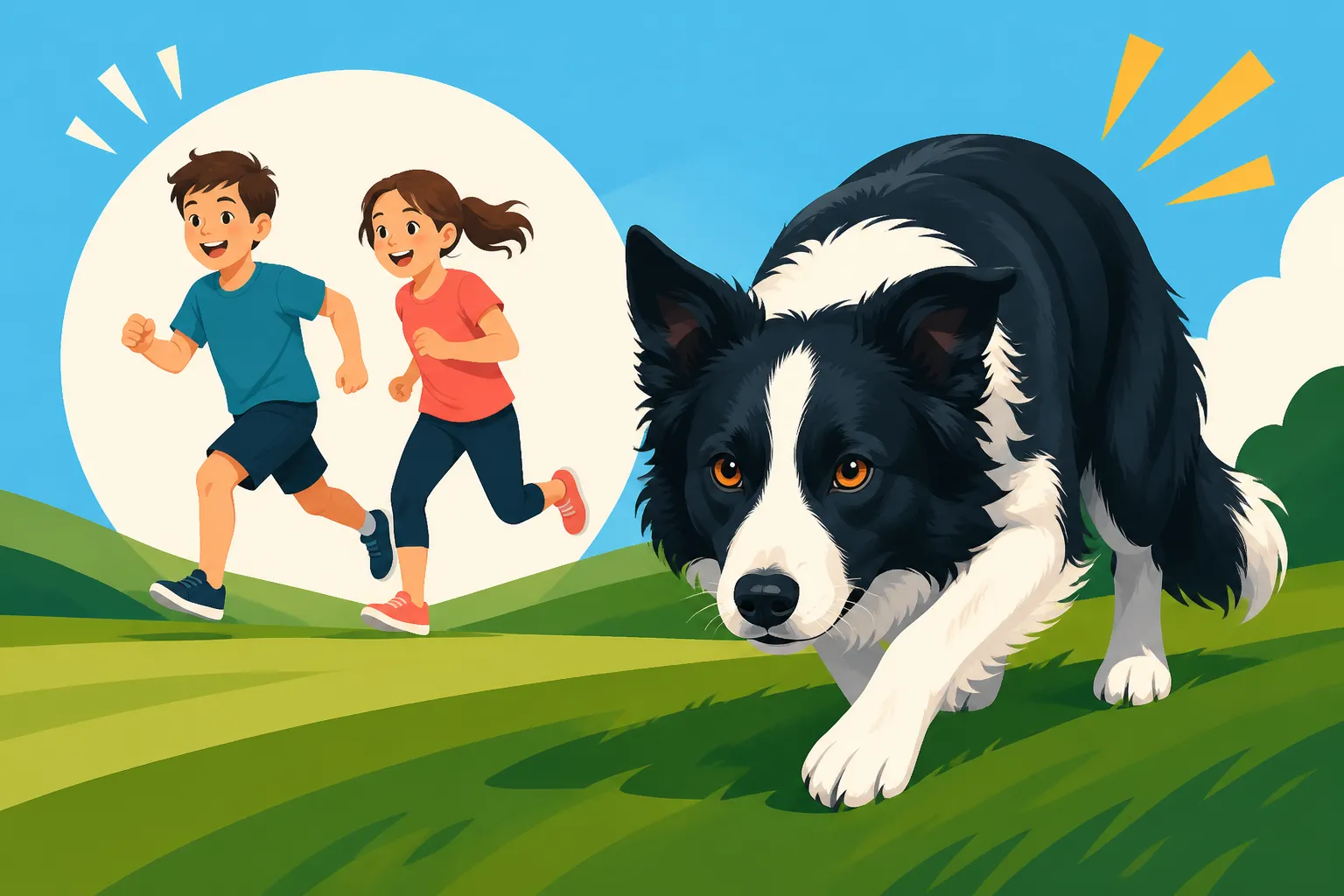
It's a scene many Border Collie owners know well: your dog is normally calm, but the moment a child starts running, that intense stare locks on, and the herding instinct kicks in. It can be startling, sometimes even frightening, when your beloved companion suddenly seems to see your child as a wayward sheep. This guide will delve into why running children trigger this powerful response in Border Collies and, more importantly, how to manage and redirect this deeply ingrained behavior safely and effectively, ensuring harmony in your home.
The Deep Roots of Border Collie Herding Instinct
To understand why a Border Collie tries to "work" a running child, we first have to appreciate the incredible, ancient instinct that defines this breed. Border Collies were selectively bred over centuries to gather and control livestock, often with minimal human intervention. This isn't just a learned behavior; it's hardwired into their very being, a complex set of natural predatory movements refined for a specific purpose.
Instinct vs. Training: The Innate Drive
Imagine generations of dogs, each chosen for their ability to read stock, move silently, and react swiftly to the slightest shift in a flock. This genetic blueprint means that even a Border Collie who has never seen a sheep still possesses these powerful drives. It's like having an internal compass constantly pointing towards movement and control. This isn't naughtiness or disobedience; it's a profound, instinctual response. When a Border Collie engages in herding, it's often operating from a place of intense focus and drive, a state of mind that can be incredibly difficult for them to switch off without guidance. They are, quite simply, doing what they were born to do.
You might have the most well-behaved Border Collie in the world, one who knows dozens of commands and has impeccable manners most of the time. But put them in a situation with fast-moving, unpredictable elements like running children, and that primal programming can override all the politeness training in an instant. It's not a fault in their character or your training, but a testament to the strength of their heritage. Understanding this fundamental truth is the first step in managing the behavior, rather than simply trying to suppress it. For more on their innate qualities, you might find What Separates a Border Collie From Every Other Herder an interesting read.
The Herding Sequence in Miniature
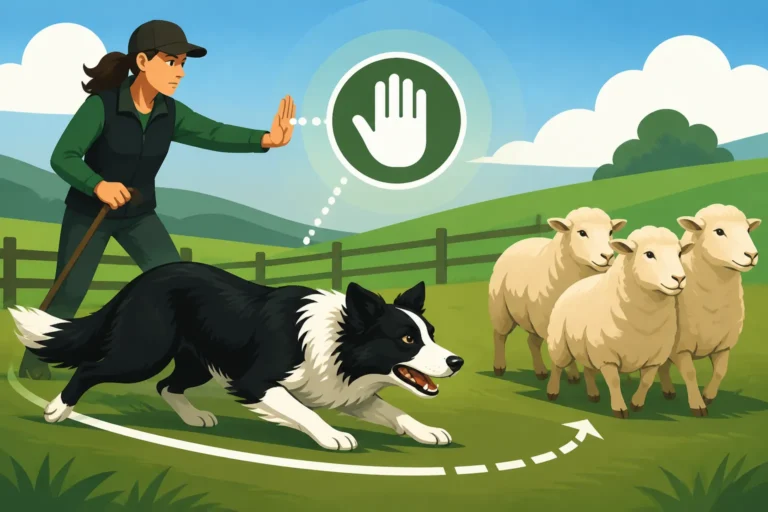
The herding sequence is a sophisticated set of actions that mimics a predator's hunt but stops short of the kill. It involves "eye," stalking, chasing, gathering, and blocking. When a child runs, their movement triggers the "chase" and "gather" components. The dog's goal is to bring the "errant sheep" (the child) back to the "flock" (the family group or perceived safe zone). They might circle, crouch, bark, or even nip at heels or legs in an attempt to turn or stop the child.
This isn't aggression in the way a dog fighting or protecting resources might be aggressive. Instead, it's a highly focused, intense, and often frustrating effort by the dog to fulfill its instinctual role. The dog isn't trying to hurt the child, but rather to control them, and in their intense focus, they may not be gentle. This can manifest as an over-enthusiastic bump, a quick nip that feels like a pinch, or even a full-body block that sends a smaller child sprawling. It's crucial for us to recognize this distinction between predatory herding behavior and true aggression so we can address it appropriately without misjudging our dogs' intentions.
Why Children's Movement Triggers the Herding Drive
It's not just running children that can trigger a Border Collie's herding instinct; anything fast and unpredictable can do it. However, children are particularly adept at creating the perfect storm of triggers. Their erratic movements, high-pitched sounds, and general unpredictability are precisely what a Border Collie's brain is wired to respond to.
Movement and the Prey Drive
The most obvious trigger is movement. A Border Collie's vision and focus are honed to detect motion, much like a hawk spotting prey. Running children provide a constantly shifting, fast-moving target that their primal brain interprets as something that needs to be brought under control. This isn't necessarily a "prey drive" in the sense of hunting to kill, but rather the initial stages of the predatory sequence – the orienting, eye, and chase components that precede actual predation.
Think about how a sheepdog works: it uses its body and presence to influence the movement of sheep. A child darting across the yard, particularly with arms flailing or making sudden changes in direction, mimics the erratic behavior of a flock animal trying to evade. The dog perceives this as an opportunity, or even a responsibility, to bring order to the chaos. This intense focus, often accompanied by The Border Collie Stare and Where It Comes From, means they are less likely to respond to your commands once they've locked onto the moving child.
Sounds and Energy
Beyond just movement, the sounds and high energy associated with children's play are also powerful stimuli. Excited squeals, laughter, and rapid footsteps create an auditory landscape that signals "activity" and "disorder" to a Border Collie. These sounds, combined with visual cues, heighten the dog's arousal and amplify its herding drive. The dog picks up on the chaotic energy, and its own energy level escalates in response.
Children's energy levels are often unpredictable and can escalate quickly, which means the triggers for your Border Collie can appear out of nowhere. One moment, they might be quietly playing, and the next, a game of tag erupts, transforming them into irresistible, moving targets. This sudden shift can overwhelm a dog's ability to maintain calm and self-control, particularly if they haven't been taught specific coping mechanisms or alternative behaviors for these situations.
Perceived Lack of Control
From a Border Collie's perspective, running children represent a distinct lack of control. Unlike working sheep where the shepherd provides commands and direction, children are completely oblivious to the dog's "job." They don't respond to the dog's body language in the way sheep would, nor do they give the dog a "stop" or "lie down" command. This absence of predictable responses and structure can be incredibly frustrating for a herding dog, compelling them to try harder to impose order.
This frustration can sometimes lead to an escalation of behavior. If the dog's initial attempts to "turn" or "gather" the child are ignored, they might resort to more physical methods like bumping, nipping, or barking more intensely. This isn't malicious, but a desperate attempt to communicate and enforce their will within their deeply ingrained drive. It highlights why direct supervision and proactive management are so critical when children and Border Collies are together, especially if those children are prone to sudden bursts of activity.
Practical Strategies for Managing Herding Behavior with Children
When your Border Collie sees your child as a walking, running, squealing sheep, it’s not just a nuisance; it can be dangerous. Managing this behavior requires a multi-faceted approach that combines environmental control, consistent training, and providing appropriate outlets for their instincts. It’s about teaching your dog what to do instead of what not to do.
Understanding the Warning Signs
Before a full-blown herding attempt kicks in, your Border Collie will often display subtle (or not-so-subtle) cues. Learning to read these signals is paramount to intervening before the situation escalates. Look for that intense "eye" – the low crouch, the focused stare, sometimes accompanied by a stiff body or a lowered head. They might start to circle the child, or even give a low "woo-woo" sound or a soft bark. Their breathing might quicken, and their pupils might dilate slightly as their arousal builds.
Recognizing these precursors allows you to act before the dog engages. This means you can call your dog away, redirect them with a toy, or calmly separate them from the children. If you wait until the dog is already running circles and nipping, it's much harder to regain their attention and control. Early intervention is key to preventing the behavior from becoming ingrained and to teaching your dog that you are in charge of managing the "flock" (i.e., the children).
Safe and Effective Interventions
When you see the warning signs, or if the herding starts, immediate, calm, and consistent intervention is crucial. Yelling or physically punishing your dog will only increase their stress and potentially damage your relationship. Instead, focus on redirection and removal. Here are some effective strategies:
- Interrupt and Redirect: As soon as you see the "eye" lock on, use a clear, calm command like "Leave it" or "Come" (if you have a rock-solid recall, which you'll definitely want to develop, see Recall on a Border Collie That Has Locked On). Lure them away with a high-value treat or a favorite toy.
- Physical Barrier: Step between your dog and the child, physically blocking the dog's path. This communicates that you are taking over the herding responsibility.
- Leash Management: Keep your dog on a leash when children are present and active. This allows you to physically prevent them from engaging in unwanted herding. A sturdy, comfortable leash is indispensable. If you need something with a bit more length for training, searching "long line dog leash" on Amazon can provide many options.
- Time Out: If the dog cannot be redirected, calmly lead them to a designated "quiet place," like their crate or a separate room, until they settle. This isn't a punishment, but a chance for them to decompress. Teaching them Teaching a Border Collie to Stay on Its Bed can be invaluable here.
Consistency is key. Every time your dog attempts to herd the children, you must intervene in the same calm, predictable manner. This teaches them that herding children is not an acceptable behavior and that you will always step in to manage the situation.
Providing Alternative Outlets for Herding Drive
You can't eliminate a Border Collie's instinct, but you can channel it into appropriate activities. Providing suitable outlets is vital for their mental and physical well-being and can significantly reduce the urge to herd children. Think about activities that mimic the chase, gather, and control aspects of herding in a safe, directed way.
- Organized Dog Sports: Agility, obedience, flyball, disc dog, or even actual herding lessons if available, are fantastic for channeling their drive. These activities provide mental stimulation and physical exercise within a structured environment.
- Flirt Poles: A flirt pole is a long stick with a lure (toy or rag) attached to a rope. It allows you to simulate chasing and catching in a controlled manner. This is excellent for burning energy and satisfying their prey drive safely.
- Fetch with Rules: While endless, unstructured fetch can sometimes exacerbate compulsive tendencies, structured fetch with clear "leave it" and "drop it" commands, and then putting the ball away, can be a good outlet. You're giving them something specific to "gather." Consider offering them Giving a Border Collie Something to Gather.
- Puzzle Toys and Scent Work: Mental work can be just as tiring as physical exercise. Puzzle toys, snuffle mats, and scent work games (like finding hidden treats) engage their problem-solving skills and focus, giving their brains a workout without the high-speed chaos. You can find many great options for "interactive dog puzzle toys" on Amazon.
These alternatives not only satisfy their instincts but also strengthen your bond, as you become the provider of acceptable and fun "work." A Border Collie that feels fulfilled in its work is less likely to invent its own (unwanted) jobs.
Preventative Training and Safe Interactions
Preventing herding behavior around children is far more effective than trying to stop it once it starts. This involves proactive training, strict management of the environment, and educating everyone involved, especially the children themselves.
Supervision and Environment Management
The most immediate and effective preventative measure is diligent supervision and careful management of your environment. This means never leaving your Border Collie unsupervised with young children, especially when children are active. Think of it as creating a safe bubble around your children that your dog cannot penetrate with herding behavior.
Consider using baby gates or secure playpens to create separate safe zones for children, particularly toddlers who are most likely to move erratically. When children are playing outside, your Border Collie might need to be on a leash, in a securely fenced area where they can't access the children, or even inside the house. This isn't about punishing the dog, but about setting them up for success by removing the opportunity for them to practice the unwanted behavior. Remember, every time they get to "herd" a child, even gently, they are reinforcing that instinctual pathway.
Teaching Impulse Control and Calmness
Training for impulse control is foundational for a Border Collie living with children. This means teaching them to resist their immediate urges and to defer to your commands. Commands like "stay," "wait," "leave it," and a solid "settle" or "place" command are invaluable. BAXTER & Bella, for example, offers online puppy training programs that emphasize these crucial foundational behaviors, which can be adapted for older dogs too.
Practice these commands daily in various environments, gradually increasing distractions. For example, start with a "stay" in a quiet room, then move to a room with some background noise, then perhaps a brief stay while a child is calmly walking nearby. The goal is for your dog to learn that even with exciting things happening, they can control their impulses and remain calm on command. This takes time, patience, and many repetitions, often utilizing Training Treats Inside a Border Collie's Ration for reinforcement.
Training for Calm Interactions
Beyond just impulse control, actively train your Border Collie for calm interactions with children. This involves positive reinforcement for appropriate behavior and teaching children how to interact safely with the dog.
- Rewarding Calmness: Actively praise and reward your Border Collie whenever they are calm and relaxed around children. If they are lying down quietly while children play nearby, toss them a treat or give them calm praise. This teaches them that calm behavior is highly rewarding.
- Structured Greetings: Teach your dog to greet children calmly, ideally by sitting or standing still, rather than jumping or circling. Practice this with calm, older children first, and always keep greetings brief and supervised.
- Educating Children: This is paramount. Teach children not to run, scream, or engage in chase games around the dog. Explain that sudden movements can make the dog want to play too roughly. Teach them to be "trees" (stand still and quiet) if the dog gets too excited, or to gently tell the dog "off" or "no" if it tries to herd them. What Children Have to Learn Around a Border Collie offers more insights on this critical aspect.
It's a two-way street: the dog learns self-control, and the children learn how to prevent triggering the dog's instincts. This integrated approach creates a safer, happier environment for everyone. Developing a Border Collie that can remain serene in the face of youthful exuberance is a long-term project, but one that is immensely rewarding for the entire family. For dogs that learn particularly fast, a challenge you might encounter, read The Border Collie That Learns Faster Than You Teach.
| Herding Trigger | Border Collie Response | Management Strategy |
|---|---|---|
| Running/Fast Movement | Stalking, chasing, circling, nipping | Leash, gates, redirect to flirt pole or structured fetch |
| High-pitched Sounds/Screams | Heightened arousal, increased focus, barking | Desensitization, quiet zone, teaching "settle" |
| Unpredictable Direction | Attempts to "gather" or "block" | Teach "leave it," "come," structured play with rules |
| Lack of Control/Response | Frustration, escalation of physical attempts | Consistent interventions, reward calm, educate children |
Disclaimer
This article is for general informational purposes only and does not constitute professional advice. Laws, prices and regulations vary by location and change over time. Consult a qualified professional for guidance on your specific situation.