Two Clear Border Collies With an Affected Litter
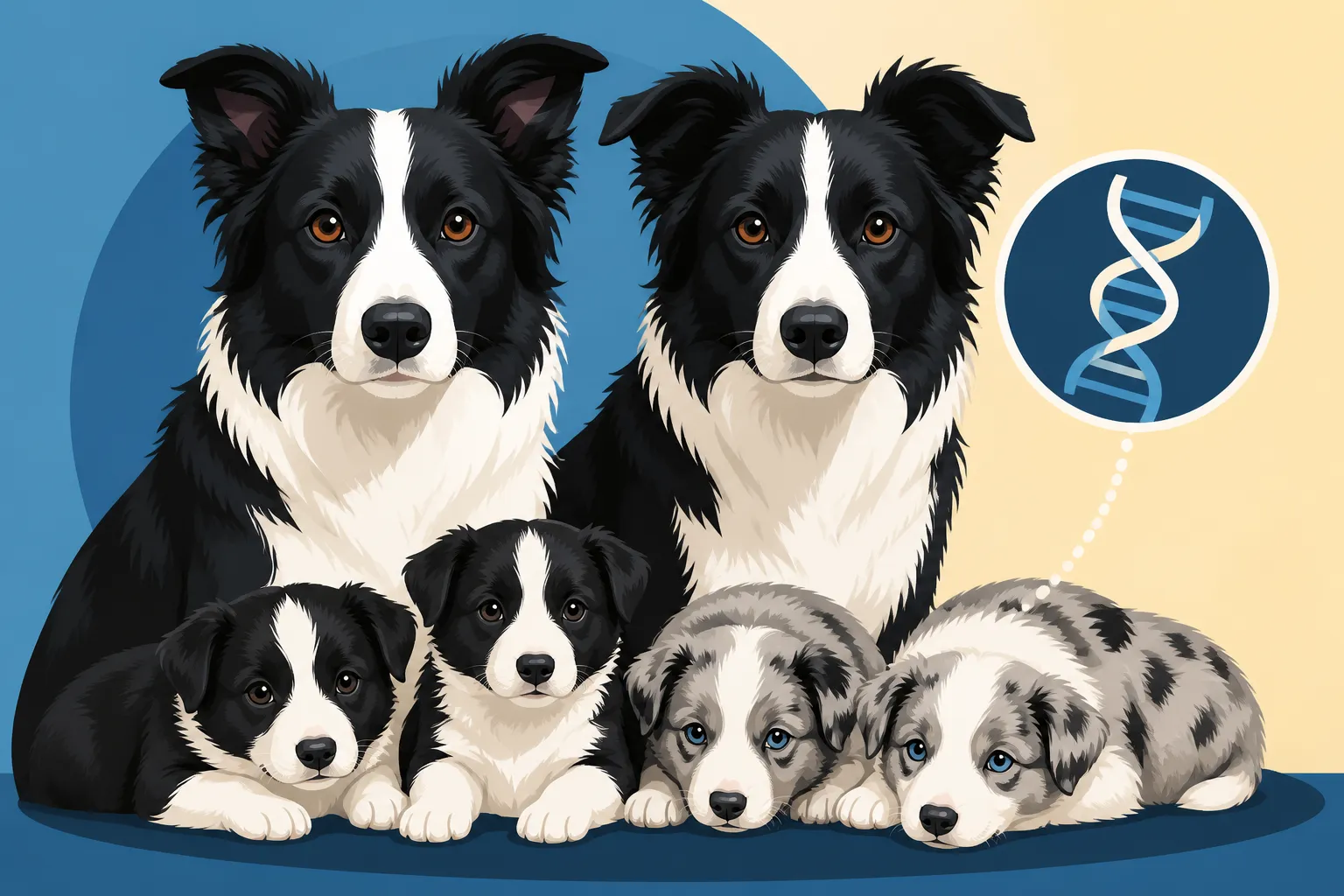
It’s a heartbreaking and incredibly confusing situation when you’ve done everything right as a responsible Border Collie owner or breeder. You've got two dogs, both seemingly healthy, vibrant, and even "clear" on their genetic tests, only to find that when bred, they produce a litter with puppies affected by a devastating genetic condition. This scenario can leave you feeling bewildered and perhaps even guilty, wondering how on earth this could happen. This guide will walk you through the complex world of recessive genetics to demystify how two outwardly healthy Border Collies can have an affected litter, equipping you with the knowledge to understand and navigate these challenges.
Understanding Recessive Genetics in Border Collies
When we talk about genetic conditions in our beloved Border Collies, it’s often a complex puzzle of inheritance. The concept of "clear" parents having "affected" puppies boils down to understanding recessive genetics, a fundamental principle that governs how many inherited diseases manifest in dogs, just as it does in humans. It's not about blame; it's about biology.
The Basics of Genes and Alleles
Every single trait your Border Collie possesses, from the color of their eyes to their incredible herding drive, is encoded in their genes. These genes are organized into pairs, with one gene in each pair inherited from the mother and one from the father. Think of it like receiving two copies of a recipe for a certain characteristic. Each specific variation of a gene is called an allele.
For many genetic conditions, there are typically two types of alleles: a dominant, healthy allele (let’s call it 'N' for normal) and a recessive, disease-causing allele (let’s call it 'n' for affected). If a dog inherits at least one 'N' allele, it will usually be healthy. The dominant allele "overshadows" the recessive one. For a dog to actually show symptoms of a recessive genetic disease, they must inherit two copies of the recessive allele – one from each parent. This is why these conditions can be so sneaky; they can hide in the genetic makeup of seemingly healthy animals for generations.
What "Clear" Really Means
When a Border Collie is tested and determined to be "clear" for a particular genetic condition, it means they do not have two copies of the disease-causing recessive allele. However, this "clear" status can be interpreted in a couple of ways, which is where the confusion often arises. A truly "clear" dog (genetically denoted as N/N) has two normal alleles and cannot pass on the disease-causing allele to its offspring. This is the ideal scenario for breeding.
However, sometimes what people perceive as "clear" might actually mean "phenotypically clear" – meaning the dog appears healthy and shows no symptoms. This doesn't always reflect their full genetic makeup. A dog could be a "carrier" (genotypically N/n), meaning they possess one normal allele and one recessive, disease-causing allele. While they themselves won't develop the condition because the normal allele is dominant, they are perfectly capable of passing that recessive allele to their puppies. This distinction between looking healthy and being genetically free of a recessive gene is absolutely critical, especially when considering breeding decisions. It’s why relying solely on visual inspection is not enough for preventing inherited diseases.
The Role of Carriers in Breeding
The existence of carrier dogs is the cornerstone of understanding how two outwardly healthy parents can produce affected offspring. Carriers are often the unsung heroes and unwitting culprits in the genetic story, playing a pivotal role in the persistence of recessive conditions within a breed.
The Carrier Status Explained
A Border Collie identified as a "carrier" for a specific recessive genetic condition (like Collie Eye Anomaly, Trapped Neutrophil Syndrome, or Neuronal Ceroid Lipofuscinosis) carries one copy of the normal gene and one copy of the mutated, disease-causing gene. Because the normal gene is dominant, the carrier dog itself will not develop the disease. They live full, healthy lives, often performing at peak levels in sports or working roles, entirely unaware they harbor a genetic secret.
However, every time a carrier dog produces offspring, there’s a 50% chance that each individual puppy will inherit that single recessive gene. This means half the litter, on average, could also become carriers. If two carriers are bred together, that's when the real risk emerges. The parents are "clear" in the sense that they are not affected, but they are both silent carriers of the problematic gene. This breeding scenario leads to the possibility of "affected" puppies. You might have seen the results on a Border Collie genetic panel listed as "Carriers, Affected and Clear on a Border Collie Panel," which refers to these different genetic statuses.
Let's take Collie Eye Anomaly (CEA) as a prime example. This condition affects the development of the eye, and while mild forms might not significantly impact vision, severe cases can lead to blindness or retinal detachment. A carrier for CEA will have perfectly normal eyes, but if paired with another carrier, the risk is very real. You can learn more about specific conditions like what TNS does to a Border Collie puppy or the age CL symptoms start in a Border Collie in related articles.
The Punnett Square: Predicting Outcomes
To truly grasp how two carriers can produce affected puppies, we turn to a simple but powerful genetic tool called the Punnett Square. This diagram helps visualize the probability of an offspring inheriting specific genotypes from its parents.
Let's use our 'N' for the normal dominant allele and 'n' for the recessive disease-causing allele.
If both parents are carriers, their genotype is Nn. Here’s how the Punnett Square breaks down the possibilities for their puppies:
| N (from Parent 1) | n (from Parent 1) | |
|---|---|---|
| N (from Parent 2) | NN (Clear) | Nn (Carrier) |
| n (from Parent 2) | Nn (Carrier) | nn (Affected) |
As you can see from this table, when two carriers (Nn x Nn) are bred, the statistical probabilities for each puppy are:
- 25% chance of being NN (Clear): Inheriting two normal genes, completely free of the condition and unable to pass it on.
- 50% chance of being Nn (Carrier): Inheriting one normal and one affected gene, just like the parents. These puppies will be outwardly healthy but can pass the gene to their offspring.
- 25% chance of being nn (Affected): Inheriting two copies of the recessive gene, one from each parent. These puppies will develop the genetic condition.
This means that for every litter produced by two carrier parents, there’s a 1 in 4 chance that any given puppy will be affected. This is why even if you only have one affected puppy in a litter, it's a strong indicator that both parents were carriers. It's not about bad luck; it's about the laws of genetic probability.
Common Border Collie Genetic Conditions and Carrier Risk
The Border Collie is a remarkable breed, but like all breeds, they are predisposed to certain inherited conditions. Understanding these specific conditions helps highlight why genetic testing and carrier awareness are so crucial. The good news is that advancements in veterinary science and genetic testing mean we can now identify many of these risks long before they ever impact a dog's health.
Collie Eye Anomaly (CEA) and Genetic Testing
Collie Eye Anomaly is arguably one of the most widely recognized inherited eye conditions in Border Collies, and it's a classic example of a recessive disorder where carriers play a significant role. CEA involves improper development of the choroid, a layer of tissue beneath the retina. The severity can range from mild "choroidal hypoplasia" (CH) which doesn't affect vision, to more severe conditions like colobomas or retinal detachment, which can lead to blindness.
The frustrating part about CEA is that a carrier Border Collie will show no signs of the disease themselves. Their eyes will appear perfectly normal, and they'll have excellent vision. Even puppies that are genetically affected with mild forms of CEA might pass a routine eye exam later in life because the visible signs can be subtle or even "go-normal" – where the choroidal changes are masked by pigment as the puppy grows. This makes it impossible to reliably identify affected individuals (let alone carriers) through visual examination alone. This is precisely why a Border Collie puppy gets an eye exam at six weeks, but often a DNA test is the definitive answer.
Fortunately, a highly reliable DNA test exists, often referred to as the NHEJ1 test for Collie Eye Anomaly. This test can definitively identify whether a Border Collie is clear (NN), a carrier (Nn), or affected (nn). For breeders, this test is an absolute must. By testing all breeding dogs, they can avoid pairing two carriers, thereby ensuring no affected puppies are produced.
Trapped Neutrophil Syndrome (TNS) and Neuronal Ceroid Lipofuscinosis (CL)
Beyond CEA, Border Collies can be carriers for other serious recessive conditions. Two notable examples are Trapped Neutrophil Syndrome (TNS) and Neuronal Ceroid Lipofuscinosis (CL). These conditions are far more debilitating than most forms of CEA and underscore the importance of comprehensive genetic screening.
Trapped Neutrophil Syndrome (TNS) is a severe immune deficiency where neutrophils (a type of white blood cell crucial for fighting infection) are produced but cannot be properly released from the bone marrow. This leaves affected puppies vulnerable to recurrent, severe infections from a very young age. Puppies with TNS typically experience chronic infections, failure to thrive, and sadly, often don't survive to adulthood, despite intensive veterinary care. It's a truly heartbreaking condition to witness. Understanding what TNS does to a Border Collie puppy emphasizes the ethical responsibility of preventing its occurrence.
Neuronal Ceroid Lipofuscinosis (CL) is a progressive neurodegenerative disorder. Affected puppies appear normal at birth, but as they grow, they begin to show neurological symptoms. These can include loss of coordination, seizures, blindness, and behavioral changes, progressively worsening over time. The age CL symptoms start in a Border Collie can vary, but typically signs begin to appear between 1 to 2 years of age. Tragically, there is no cure, and affected dogs usually have a severely reduced quality of life and lifespan. The devastating nature of conditions like CL reinforces why knowing whether a Border Collie genetic panel screens for these conditions is invaluable.
For both TNS and CL, like CEA, a dog can be a healthy carrier without ever showing symptoms. The only way to definitively identify carriers and prevent affected puppies is through DNA testing. This is why a full Border Collie DNA panel and careful breeding decisions are paramount to the health and longevity of the breed.
Responsible Breeding Practices and Prevention
Understanding the genetics is one thing; putting that knowledge into practice is another. Responsible breeding isn't just about producing beautiful or talented Border Collies; it's fundamentally about producing healthy ones. Preventing genetic diseases requires vigilance, knowledge, and ethical decision-making.
The Importance of Comprehensive Genetic Testing
The absolute cornerstone of responsible breeding for Border Collies today is comprehensive genetic testing for all breeding animals, regardless of whether they show symptoms or come from supposedly "clear" lines. It’s not enough to just eye-check a litter; you need to know the genetic status of the parents. This means moving beyond just looking at a dog and assuming its health. Genetic panels, which analyze a dog's DNA for a host of known inherited conditions, are readily available from reputable labs such as Embark, Optimal Selection, or the Canine Health Information Center (CHIC).
A comprehensive panel goes far beyond just CEA, TNS, and CL. It screens for numerous other conditions that can affect Border Collies, providing a full genetic blueprint. You can find out what a full Border Collie DNA panel covers, but generally, it includes tests for many conditions unique to the breed, as well as those common to many dog breeds. By conducting these tests, breeders gain invaluable insight into the genetic risks their dogs carry. This information allows them to make informed decisions that actively reduce the incidence of genetic diseases in future generations. Asking a Border Collie breeder for test results should be a non-negotiable part of your puppy search, as it demonstrates their commitment to health.
Making Informed Breeding Decisions
Once a breeder has the genetic test results, they are empowered to make truly informed breeding decisions. The goal is simple: never breed two carriers for the same recessive condition together.
- Clear (NN) x Clear (NN): This is the safest pairing, guaranteeing all puppies will be clear (NN) and free of the specific condition.
- Clear (NN) x Carrier (Nn): This pairing will produce no affected puppies. Statistically, 50% of the puppies will be clear (NN) and 50% will be carriers (Nn). This allows a breeder to safely use a valuable carrier dog in a breeding program, provided they only ever breed them to clear mates and ensure all offspring are tested before being bred themselves.
- Clear (NN) x Affected (nn): This pairing will produce no affected puppies, but all puppies will be carriers (Nn). This is generally discouraged unless the affected dog has exceptional traits that are deemed irreplaceable, and rigorous testing and placement of all offspring as non-breeding pets are guaranteed.
- Carrier (Nn) x Carrier (Nn): This is the pairing to avoid. As discussed with the Punnett Square, this combination carries a 25% risk of producing affected (nn) puppies with each breeding.
Responsible breeders meticulously track these results. They understand that while a carrier dog is healthy, their genetic contribution must be managed thoughtfully to prevent the pain and suffering of affected puppies. This kind of careful planning not only safeguards individual litters but also contributes to the long-term health and vitality of the entire Border Collie breed.
Supporting Affected Puppies and Owners
Despite the best efforts, occasionally, an affected puppy might still arise, perhaps from an unknown carrier pairing or a newly discovered mutation. When this happens, the priority shifts to supporting the puppy and its family. Finding out your beloved Border Collie puppy has a serious genetic condition can be devastating, emotionally and financially.
For owners facing this difficult reality, it's crucial to work closely with a veterinarian experienced in canine genetics and the specific condition affecting your dog. They can help you understand the prognosis, available treatments (if any), and how to best manage your dog’s quality of life. For conditions like TNS, managing infections might be a lifelong battle. For CL, supportive care and managing symptoms are key. While we love our dogs unconditionally, these situations can be profoundly challenging.
This is where the financial aspect of pet care becomes critically important. Unexpected vet bills for a genetically affected puppy can be astronomical. Having pet insurance, like a comprehensive plan from Healthy Paws, can offer a significant lifeline, covering a large percentage of diagnostic tests, treatments, and ongoing care for unforeseen illnesses and accidents. While pre-existing conditions are typically not covered, if you enroll your puppy early, before any signs or diagnosis of a genetic condition, a good policy can provide immense peace of mind. Thinking about the long-term, it's about providing the best possible care, even if it means focusing on making their remaining time as comfortable and joyful as possible, learning strategies for caring for a Border Collie past its working years, even if those years are cut short. Remember, even with an affected diagnosis, these puppies deserve all the love and care in the world.
Disclaimer
The information provided in this article is for educational purposes only and should not be considered a substitute for professional veterinary advice. Always consult with a qualified veterinarian or a certified canine genetic counselor regarding any health concerns or breeding decisions for your Border Collie.