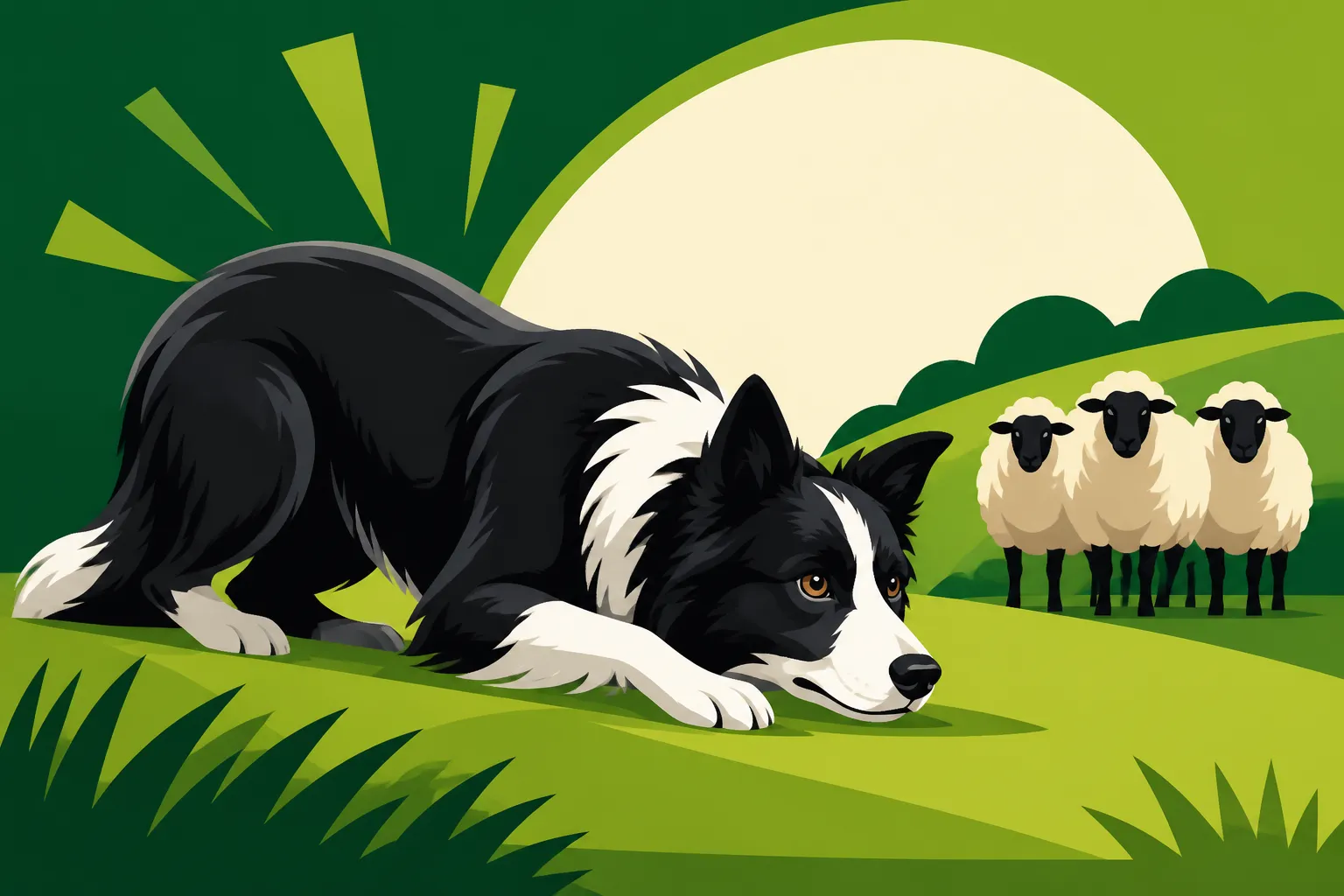
Why a Border Collie Drops Into a Crouch
If you've ever spent time with a Border Collie, particularly one with a keen eye for work or even just a tennis ball, you've undoubtedly seen it: that distinctive drop, the low crouch, sometimes almost a belly crawl. It's a hallmark of the breed, a posture of intense focus that can be both captivating and, frankly, a little confusing if you don't know its origins. This guide aims to demystify that iconic Border Collie crouch, explaining why they do it, what it means, and how it translates from the sheep pasture to your living room.
The Instinctual Roots of the Border Collie Crouch
To truly understand why a Border Collie drops into that characteristic crouch, we have to look back at generations of careful breeding and the very purpose for which these incredible dogs were developed. It's not just a cute quirk; it's a deeply ingrained instinct that traces back to their working heritage.
Echoes of the Ancestral Wolf
Think about a predator stalking its prey. What does it do? It lowers its body, moves slowly, deliberately, almost imperceptibly. This stealthy approach minimizes visibility, reduces sound, and prepares the body for an explosive burst of speed. While our modern Border Collies aren't typically hunting wild game, that ancient predatory sequence is hardwired into their DNA. The crouch is a direct echo of that silent, strategic approach. It allows them to become less threatening to the sheep, giving the illusion of a slower, less direct movement, which paradoxically helps them control the flock more effectively. It's a psychological tool as much as a physical one, designed to exert influence without brute force or chasing.
On the open fields, a high-strung dog running straight at sheep would scatter them in every direction, creating chaos. Instead, the crouch allows the Border Collie to glide, to shift its weight, and to appear almost snake-like, a subtle pressure that guides rather than frightens. It's fascinating to watch this primal behavior manifest in a dog that might never see a sheep in its life, but will apply the exact same calculated movements to a rolling soccer ball or a squirrel darting across the park.
The Herding Eye and Body Language
The crouch is almost always accompanied by what Border Collie enthusiasts call "the eye" – an intense, unwavering stare. When a Border Collie drops into that low position, their body language becomes incredibly compressed and focused. Their head is often lowered, their tail might be tucked slightly or held low, and their muscles are tensed, ready for action. This entire posture, from nose to tail, is designed to communicate one thing to the sheep: I am watching you. I am in control.
This body language is a silent conversation between dog and flock. The low profile, combined with the penetrating gaze, puts pressure on the sheep, encouraging them to move away from the dog. It's a way of using their presence, rather than their bark or their teeth, to guide livestock. The crouch maximizes the visual impact of their stare, making it seem even more formidable and focused. It creates a picture of calm intensity, a poised readiness that dictates movement. Understanding The Border Collie Stare and Where It Comes From is crucial to grasping the full power of this posture.
What Strong Eye Means in a Border Collie
"Strong eye" is a term you'll hear a lot when discussing Border Collies, and it's intrinsically linked to the crouch. It refers to a dog's ability to fixate on livestock with an intense, steady gaze, using that visual pressure to influence the animals' movement. A Border Collie with strong eye will often drop low, almost melting into the ground, and hold that position, using its stare to "grip" the sheep. This doesn't mean the dog is aggressive; it means it's deeply engaged and attempting to control the situation through sheer mental force.
When a Border Collie has strong eye, the crouch helps them maintain that unblinking focus without appearing overtly aggressive or startling the stock. It's a nuanced form of intimidation that allows the dog to hold the sheep in place or move them gently, precisely where the handler wants them to go. This level of focus is what allows these dogs to work sheep for hours, making minute adjustments with just a subtle shift of their body weight or the angle of their head. Without the ability to hold this intense, low posture, their effectiveness on the working field would be significantly diminished. This is why you'll see a Border Collie with What Strong Eye Means in a Border Collie often drop low to hold its flock.
The Purpose and Function of the Crouch in Modern Life
While the crouch is deeply rooted in herding, its practical applications extend far beyond the sheep pasture. In our homes and in various dog sports, this innate behavior serves several important functions for a Border Collie, showcasing their incredible athleticism and mental acumen.
Maneuvering and Agility
Physically, the crouch lowers a Border Collie's center of gravity dramatically. This low stance is a tremendous asset for rapid changes in direction, sudden stops, and quick bursts of acceleration. Imagine a dog running full tilt, then needing to pivot on a dime to head off a breakaway sheep or make a tight turn around an agility cone. Being low to the ground allows for maximum leverage and stability, reducing the risk of slipping or losing balance. It's like a coiled spring, ready to release its energy in any direction with precision.
This exceptional maneuverability is why Border Collies excel in dog sports like agility, flyball, and disc dog. That crouch isn't just for show; it's a strategic physical advantage that enables them to respond to their handler's commands with lightning speed and accuracy. They can flatten out, skim the ground, and then explode into motion, making them incredibly dynamic and efficient athletes. This physical advantage helps explain Iliopsoas Strain and Why a Border Collie Slows on Turns if they are not conditioned properly.
Communication and Control
Beyond physical advantages, the crouch is also a powerful form of communication. To other dogs, people, or even inanimate objects, it signals intense focus, readiness, and intent. When a Border Collie drops into a crouch and stares, it’s not just observing; it’s making a statement. It might be: "I'm about to move this thing," or "I'm waiting for your next command," or even "I am claiming this space/object."
In a herding context, it’s a clear message to the sheep to move. In a household, it might be a subtle cue to a child to stop running, or a declaration of ownership over a favorite toy. Understanding this non-verbal communication is key to interpreting your Border Collie's behavior. If they crouch and stare at you, they might be trying to initiate play, anticipating a command, or even attempting to "herd" you towards something they want. It’s part of how they interact with their world, asserting their presence and influence.
Concentration and Focus
For a Border Collie, dropping into a crouch seems to act as a mental anchor. The physical act of lowering their body helps them to intensely focus their mind on the task at hand, blocking out extraneous distractions. It’s almost a meditative state for them, allowing them to channel their incredible intelligence and drive into a single point of concentration. This is particularly evident when they are working stock; every fiber of their being is dedicated to the sheep.
This focused state isn't limited to herding. You’ll see the same intense concentration when a Border Collie is learning a new trick, performing in obedience, or even trying to figure out a complex puzzle toy. The crouch helps them to engage their brain fully, making them highly efficient learners and problem-solvers. It's part of why they can pick up commands so quickly, sometimes with How Few Repetitions a Border Collie Needs. This profound capacity for concentration is one of the many reasons why the breed is often called the smartest.
When the Crouch Appears Beyond the Field
It's one thing to see the crouch on a sheep farm, but quite another to witness it in your living room. Border Collies, true to their nature, will often apply their herding instincts, complete with the crouch and stare, to situations that have absolutely nothing to do with sheep. This can be amusing, frustrating, or even concerning, depending on the context.
A Border Collie That Stalks the Vacuum
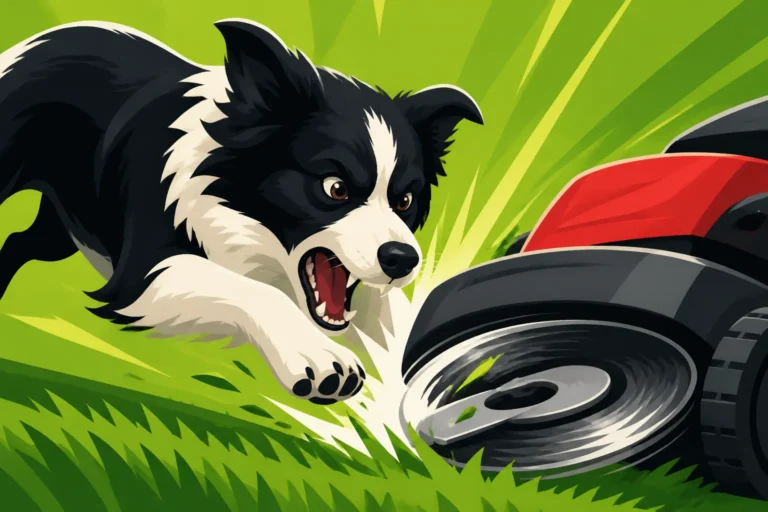
Ah, the dreaded vacuum cleaner! For many Border Collies, this noisy, moving beast is simply a large, unpredictable sheep that must be controlled. You might see your dog drop into a low crouch, eyes locked on the vacuum, head down, almost as if preparing to gather it into a corner. They might even try to flank it, circle it, or block its path. It's a classic example of their herding instinct kicking in where it's not exactly needed.
This isn't aggression; it's an innate drive to control moving objects. To your Border Collie, the vacuum is a chaotic entity that needs to be "put in its place." Understanding that A Border Collie That Stalks the Vacuum is acting on instinct, rather than malice, can help you manage the behavior. You can try to desensitize them, give them a job to do in another room, or simply acknowledge that some things are just too tempting for their inner shepherd.
A Border Collie Circling Children in the Yard
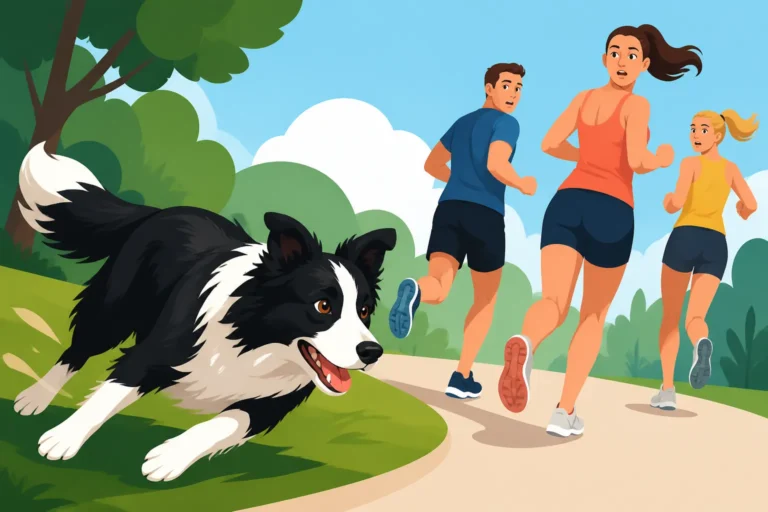
One of the most common challenges for Border Collie owners, especially those with young families, is when the dog starts to "herd" children. Kids running, playing, and making excited noises can trigger that strong herding instinct. Your Border Collie might drop into a crouch, circle the children, or even nip gently at their heels or clothing to try and gather them. This is not the dog being mean or dangerous; it's them doing what they are hardwired to do.
It's essential to manage this behavior carefully, as even gentle herding can be upsetting or potentially injurious to a child. Consistent training, clear boundaries, and teaching children how to interact appropriately with the dog are vital. Supervised interactions and redirection to appropriate toys or activities are key. This is why discussing A Border Collie Circling Children in the Yard is so important for families.
Redirecting a Border Collie's Eye Onto a Toy
The good news is that this intense focus, the "eye," and the accompanying crouch can be redirected towards appropriate outlets. Instead of letting your Border Collie stalk the vacuum or herd the kids, you can channel that energy into structured play with toys. Fetch, frisbee, or even "find it" games can be incredibly satisfying for them.
Using a specific toy – perhaps a favorite ball or a sturdy tug toy – and encouraging the crouch-and-stalk behavior towards that item can give them an acceptable way to express their instincts. When your dog drops into the crouch for their toy, you can reward that focus with praise or by throwing the toy. Brands like Kong or even a simple rope from Amazon can be excellent tools for channeling this energy into positive engagement. You can even find specialized interactive toys from companies like BAXTER & Bella that encourage problem-solving and focus, giving their brain a workout too. Redirecting a Border Collie's Eye Onto a Toy is a fantastic strategy for managing their innate drive.
Managing and Understanding the Crouch in Training
The Border Collie's natural crouch is a powerful tool, both for them and for their handlers. Learning to interpret it, harness it, and sometimes temper it, is a crucial part of living and working successfully with these intelligent dogs.
Harnessing the Crouch for Work
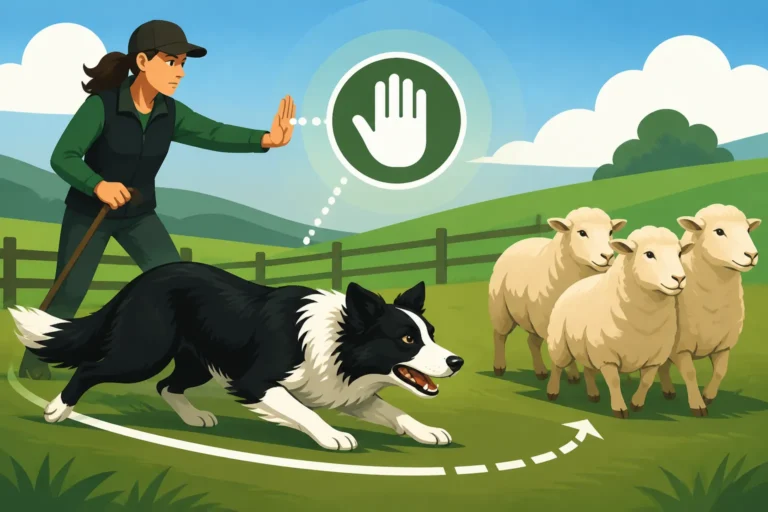
For those who engage in actual herding or competitive dog sports, the crouch is a highly valued asset. In sheepdog trials, handlers actively encourage the crouch as it signifies focus, control, and a strategic approach to moving stock. A dog that can maintain a low profile while working demonstrates finesse and a deep understanding of its job. Commands like "lie down" or "stay" at a distance are often performed from a low crouch, showcasing the dog's ability to remain still and exert control without direct proximity. Teaching a Border Collie to Lie Down at Distance is a foundational command that often utilizes this natural posture.
In agility, the low, powerful stance before a jump or a weave pole sequence allows for incredible explosive power and tight turns. Trainers often look for dogs that naturally adopt this position because it means they are mentally engaged and physically prepared to execute complex maneuvers. It's about taking an innate behavior and shaping it into a refined, precise action that enhances their performance.
Addressing Unwanted Crouching Behaviors
While natural, the crouch can sometimes manifest in undesirable ways. A Border Collie that obsessively stalks shadows, reflects, or even other household pets with that intense, low posture can develop compulsive behaviors. This might be The Border Collie That Will Not Break Its Stare on things that aren't livestock, leading to anxiety or repetitive actions. In these cases, it's important to intervene and redirect.
One strategy is to avoid encouraging games that heighten this fixation, such as laser pointers, which can lead to light-chasing obsessions. Instead, focus on structured play with tangible toys that the dog can "catch" and retrieve. Offering alternative activities that engage their mind and body, like scent work or puzzle toys (many great ones can be found on Amazon), can help channel their drive more productively. If the behavior becomes truly compulsive or causes significant stress for the dog, professional guidance from a certified dog behaviorist is highly recommended.
Recognizing Stress Versus Instinct
It's vital to differentiate between a healthy, instinctual crouch and one that might signal stress or fear. A Border Collie crouching low with tense muscles, tucked tail, and an intense stare towards its handler, or showing signs of discomfort (like lip licking, yawning, or averted eyes), might be feeling overwhelmed or anxious. This isn't the proud, working crouch; it's a defensive or appeasement posture.
For example, a Border Collie might crouch low and try to disappear when confronted with a new, intimidating situation, like a loud noise or an unfamiliar person. Understanding the subtle cues in their body language – beyond just the crouch – is essential. A truly focused, working crouch will typically appear confident and purposeful, even if it's directed at something inappropriate like the family cat. A fearful crouch will often include other signs of anxiety. Paying close attention to the context and other behavioral indicators will help you discern whether your Border Collie is working its instincts or struggling with a stressful situation.
| Crouch Scenario | Underlying Drive/Emotion | Typical Body Language Cues (beyond the crouch) | Recommended Response |
|---|---|---|---|
| Herding Sheep | Herding Instinct, Control | Intense, unwavering "eye," still body, ears alert, tail low but relaxed, subtle shifts in weight. | Allow them to work if trained; provide clear commands. For non-working dogs, observe and appreciate the natural behavior from a distance. |
| Stalking a Ball/Toy | Play Drive, Prey Drive | Intense focus, slightly wiggly rear, ears forward, often a brief "shake" or head cock before pouncing, tail might wag low. | Encourage appropriate play; use as a training reward. Ensure toys are safe and durable, like those from Amazon. |
| Herding Children/Pets | Herding Instinct | Similar to sheep herding but might include nips, blocks, or circling. Can escalate if ignored. | Immediate redirection. Provide a "job" or a high-value chew toy from BAXTER & Bella. Separate dog and children if necessary. Implement management strategies and consistent training. |
| Stalking the Vacuum/Shadows | Herding Instinct, Obsession | Intense, unblinking stare, sometimes repetitive movements (spinning, snapping), ears fixed, body low. | Redirect with a more appropriate toy or activity. Avoid encouraging light-chasing games. If compulsive, consult a professional. |
| Fear/Anxiety in New Situations | Fear, Appeasement | Body pulled back, tucked tail, averted eyes, lip licking, excessive yawning, panting, trembling, sometimes trying to hide. | Remove from the stressful situation. Do not force interaction. Provide a safe space. Work on positive associations and desensitization in a controlled environment. Consult a vet or behaviorist. |
| Anticipating a Command/Work | Focus, Readiness | Alert eyes on handler, body poised, sometimes a slight head tilt, ears forward, tail might give a small, hopeful wag. | Deliver the command clearly. Reward successful execution. This is a highly desirable state of engagement. |
This article is for general informational purposes only and does not constitute professional advice. Laws, prices and regulations vary by location and change over time. Consult a qualified professional for guidance on your specific situation.