Old Hemp and Every Border Collie Alive Today
For anyone who has ever marvelled at the intelligence and skill of a Border Collie, there's a good chance you've felt a connection to a legacy stretching back over a century. Many struggle to grasp just how deeply intertwined the entire modern Border Collie breed is with one specific dog, a dog whose influence reshaped what we consider a working sheepdog. This guide delves into the remarkable story of Old Hemp and explores how this single, extraordinary animal became the foundational sire for every Border Collie alive today, shaping their instincts, intelligence, and even their iconic "eye."
The Genesis of a Legend: Old Hemp's Humble Beginnings
Before the term "Border Collie" was even coined, the hills and valleys of the Anglo-Scottish border region were home to a diverse array of shepherd's dogs, loosely referred to as "collies." These dogs were invaluable tools for managing livestock across vast, often unforgiving terrain, but their working styles varied wildly. Some were strong-headed, prone to gripping, while others lacked the intensity needed to control a stubborn flock. It was into this landscape that Old Hemp was born, a dog whose unique blend of traits would set him apart and redefine the ideal working dog.
Born in Northumberland, a Game Changer Arrives
Old Hemp entered the world in 1893, specifically in the Northumberland region of England, a stone's throw from the Scottish border. His sire was a quiet, strong dog named Adam, and his dam was a tri-color bitch named Meg, known for her keen "eye" – that intense, fixed stare Border Collies use to control sheep. This combination, perhaps through sheer luck or a fortunate genetic roll of the dice, produced something truly special. At just over a year old, Hemp began to show his prodigious talent, astounding his owner, Adam Telfer, and local shepherds alike. He wasn't just good; he was revolutionary.
Imagine the scene: shepherds gathering on a windswept hillside, their dogs working the sheep. Some dogs are frantic, others too soft, but then comes a young dog, Old Hemp, moving with an unprecedented calm and precision. His approach was unlike anything seen before. He didn't rush or bark excessively, traits common in many collies of the era. Instead, he moved with an almost hypnotic stillness, using his "eye" and subtle body language to influence the flock. This quiet authority was a revelation, making him incredibly efficient and effective, a true partner rather than just a driver of sheep.
The Border Country That Produced the Border Collie
The border country itself played a crucial role in shaping the breed that would eventually bear its name. This region, characterized by its challenging topography, harsh weather, and the need for independent decision-making from dogs, demanded a particular kind of intelligence and resilience. Shepherds needed dogs that could work far from the handler, navigate complex terrain, and bring sheep down from the fells without constant direction. The Border Country That Produced the Border Collie was a crucible, forging dogs like Old Hemp who could meet these demanding requirements.
The prevailing methods of working sheep involved dogs that could be quite rough or overly excited. They often relied on barking and physical presence to move the flock, which could stress the sheep and make handling more difficult. Old Hemp's emergence challenged these norms, demonstrating that a calm, authoritative presence, combined with intelligent maneuvering, was far superior. His style quickly gained admirers, not just for its effectiveness, but for its elegance.
A Revolutionary Working Style: The "Eye" and Calm Control
Old Hemp's distinguishing characteristic was his entirely novel approach to herding. He wasn't the first dog to use "eye," but he perfected it, combining it with an innate understanding of sheep movement and a remarkable degree of self-control. This combination transformed how sheep were worked and what qualities shepherds sought in their dogs.
How Old Hemp Worked Differently From Other Dogs
Prior to Old Hemp, many collies employed a more confrontational style. They might rush the sheep, bark loudly, or even grip (nip) them to get them moving. While effective in some situations, this often led to stressed sheep, flighty behavior, and a more chaotic working environment. Old Hemp, however, introduced a new paradigm. He moved low to the ground, with a deep, focused stare – the legendary "Border Collie eye." This intense gaze was enough to exert authority over the sheep, moving them without needing to resort to harshness.
His ability to apply pressure subtly and release it when needed was unparalleled. He understood the flight zone of the sheep instinctively, knowing just how close to approach to initiate movement, and when to back off to prevent panic. This made for much smoother, more efficient handling, reducing stress on the livestock and making the shepherd's job significantly easier. Other dogs might get the job done, but Old Hemp did it with a quiet mastery that captivated all who witnessed it.
The Calm, Intense Stare That Became a Hallmark
The "eye" that Old Hemp possessed and transmitted to his descendants is arguably the most defining characteristic of the Border Collie breed. It's not just a look; it's a deep-seated instinct to control through mental presence rather than overt physical force. This intense focus allows a Border Collie to manipulate the movement of a flock from a distance, anticipating their reactions and guiding them almost telepathically. The Eye That Sets a Border Collie Apart is a direct inheritance from Old Hemp.
Shepherds quickly realized the immense value of this trait. A dog that could move sheep with minimal fuss meant less wear and tear on the animals, easier sorting, and more precise control in difficult situations. This quiet intensity also made Old Hemp remarkably biddable and responsive to his handler, a quality that would become highly prized in the evolving breed. He wasn't just a worker; he was an intelligent collaborator.
Teaching the Next Generation: How Old Hemp's Style Became the Standard
Old Hemp's genius wasn't just his ability; it was his consistency. He won no trials, largely because trials as we know them today were still in their infancy, but his work in the field was legendary. Shepherds would often bring their own dogs to Adam Telfer to observe Hemp at work, hoping some of his magic would rub off. But more importantly, Hemp’s offspring inherited his remarkable traits, propagating his working style through the growing population of working collies.
His calm demeanor and powerful "eye" became the benchmark for what a good sheepdog should be. Handlers no longer just wanted a dog that could push sheep; they wanted a dog that could read them, anticipate them, and control them with intelligent precision. This shift in desired traits, directly attributable to Old Hemp, laid the groundwork for the modern Border Collie. How Old Hemp's Style Became the Standard is a testament to his profound influence.
The Prolific Sire: Old Hemp's Unparalleled Genetic Impact
Old Hemp wasn't just an exceptional worker; he was an incredibly successful sire. His unique combination of traits, combined with his owner's willingness to breed him, led to an astonishing number of progeny. It's this widespread genetic contribution that cemented his place as the father of the modern Border Collie.
The Two Hundred Pups Old Hemp Sired
Over his lifetime, Old Hemp is estimated to have sired over 200 pups. In the late 19th and early 20th centuries, this was an extraordinary number, especially for a working dog whose primary purpose wasn't breeding for show. His owner, Adam Telfer, a pragmatic and astute shepherd, recognized Hemp's value not just in the field but in perpetuating desirable working traits. Shepherds from across the region sought to breed their bitches to Hemp, eager to infuse his unparalleled talent into their own lines.
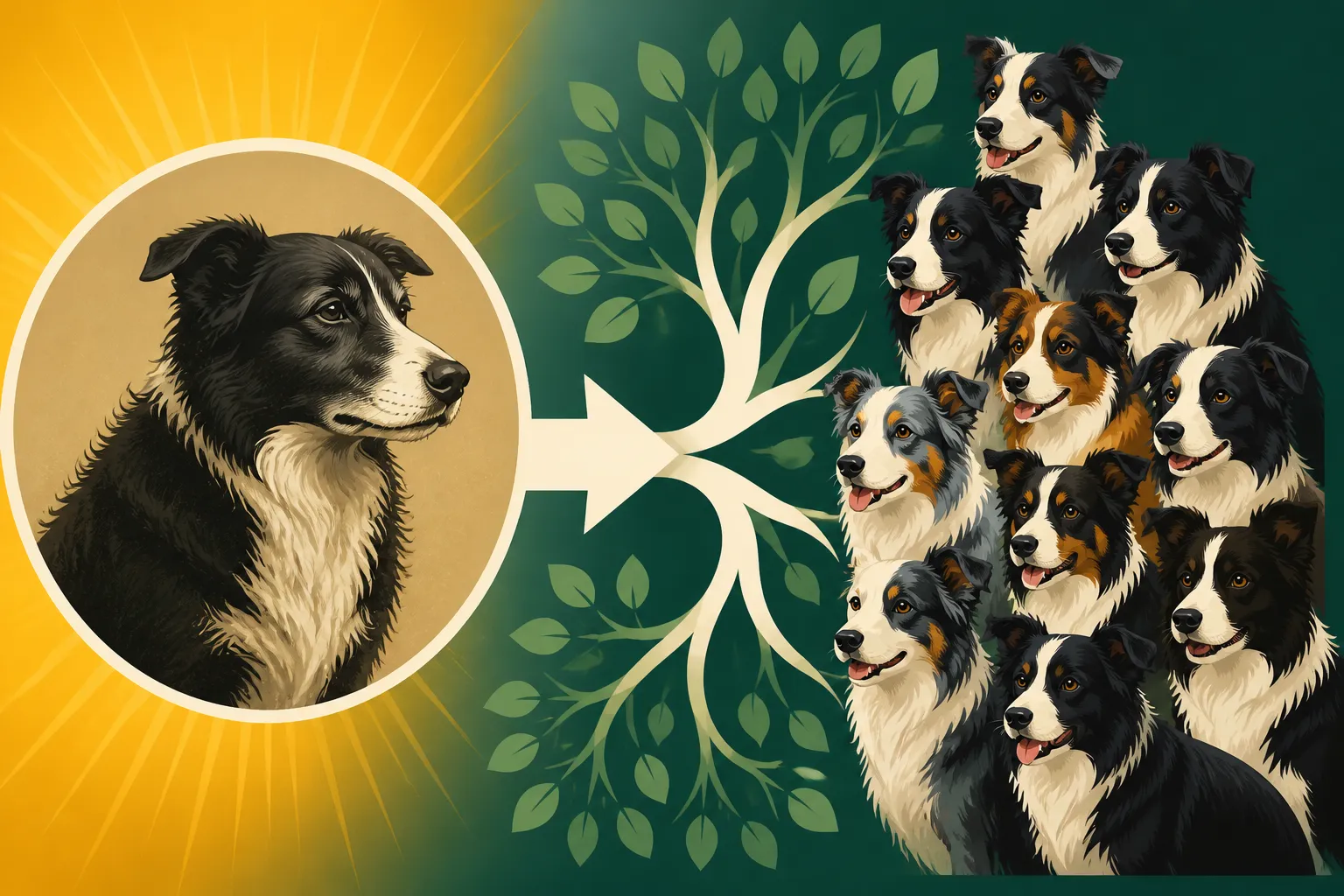
This prolific breeding meant that his genes quickly became widespread throughout the working collie population. Each of those 200-plus pups carried a piece of Old Hemp's legacy, passing on his calm "eye" and intelligent working style to subsequent generations. This exponential spread of his genetic material is a key reason why nearly every Border Collie alive today can trace its lineage back to this single, remarkable dog. You can explore The Two Hundred Pups Old Hemp Sired to understand the scale of his impact.
Whether Every Border Collie Traces to Old Hemp
While it's a bold claim, the consensus among breed historians and geneticists is that virtually every Border Collie today can indeed trace its ancestry back to Old Hemp. His influence was so pervasive, so deeply embedded in the foundational stock of the breed, that it's almost impossible to find a purebred Border Collie pedigree that doesn't include him somewhere. He wasn't just an influential dog; he was the foundational pillar.
This isn't to say he was the only good dog, but his particular combination of calm intensity and biddability was so overwhelmingly successful that breeders actively sought to incorporate his lines. Other excellent working collies existed, of course, but their genetic contributions were often overshadowed or absorbed into the dominant lineage established by Old Hemp. His genes created a bottleneck, a point of origin from which the vast majority of the breed flowed.
Genetic Bottleneck and the Breed's Foundation
The concept of a "genetic bottleneck" perfectly describes Old Hemp's role. He wasn't the first herding dog, nor the last, but his genetic blueprint proved so superior for the task of herding that it became overwhelmingly favored. This meant that dogs not descended from Hemp, or those lacking his distinct working style, gradually became less common within the breeding pool for serious working stock. The breed effectively converged on his traits.
This bottleneck is a powerful testament to the selective pressures of working sheep. Utility trumped all other considerations, and Old Hemp provided the most efficient and effective utility seen at the time. His impact is why Border Collies are so consistently brilliant at their intended job, a legacy directly inherited from their common ancestor.
From Collie to Border Collie: Naming a New Breed
The emergence of Old Hemp and his distinct progeny highlighted a need for clearer classification. The generic term "collie" was too broad, encompassing many types of working and non-working dogs. As the unique characteristics of these Anglo-Scottish border sheepdogs became more pronounced and desirable, the movement to formally recognize them as a distinct breed began.
The International Sheep Dog Society, Founded 1906
The formalization of the breed gained significant momentum with the establishment of the International Sheep Dog Society (ISDS) in 1906. This organization was founded with a clear mission: to promote and regulate the working sheepdog, primarily through sheepdog trials. These trials provided a standardized platform to assess a dog's working ability, ensuring that breeding decisions were based on actual performance, not just appearance. The International Sheep Dog Society, Founded 1906 was a pivotal moment in the history of the Border Collie.
The ISDS was crucial because it provided a formal registry based on proven working talent. Unlike kennel clubs that often prioritized appearance and conformation, the ISDS focused solely on what the dog could do. This emphasis on working ability ensured that Old Hemp's legacy—his working style and intelligence—remained paramount in the development of the breed. Handlers could see the success of dogs descended from Hemp in trials, further solidifying his influence.
James Reid and the Name Border Collie in 1915
It was James Reid, the secretary of the ISDS, who is credited with formally coining the term "Border Collie" in 1915. He did so to distinguish the distinct working sheepdogs originating from the Anglo-Scottish border region from other collie breeds, such as the Rough Collie (or "Scotch Collie," as it was often called then) which were increasingly bred for show rather than work. This naming provided a clear identity for the dogs whose lineage was so heavily influenced by Old Hemp.
The name "Border Collie" was a nod to their geographical origin and their specific purpose. It recognized that these dogs were a unique strain of collie, refined over generations in the demanding border country, culminating in the working style exemplified by Old Hemp. This formal nomenclature helped to solidify their identity and differentiate them in the public mind and within the emerging dog registries.
Why the ISDS Was Founded in 1906
The ISDS was founded out of a very practical need: to preserve and improve the working sheepdog. Prior to its establishment, there was no consistent way to track breeding lines based on working merit, nor a standardized competition to truly test and compare dogs. Without such a framework, the qualities deemed essential for a top-tier sheepdog could easily be diluted by breeding for less critical traits. Why the ISDS Was Founded in 1906 highlights the seriousness with which shepherds viewed their canine partners.
The founders understood that the future of their livelihood depended on the quality of their dogs. The ISDS set about creating a registry that would record pedigrees of proven working dogs and establish trials that would rigorously test their herding instincts, biddability, and intelligence. This system effectively enshrined Old Hemp's working philosophy into the very fabric of the breed, ensuring that his valuable traits would continue to be sought after and preserved.
Old Hemp's Enduring Legacy in Modern Working Lines
Even today, well over a century after his birth, Old Hemp's legacy is palpably present in every working Border Collie. His influence extends beyond mere genetics; it's evident in the standards, the training philosophies, and the very expectations we have of these incredible dogs.
The ISDS Number Old Hemp Was Given
While Old Hemp died before the ISDS registry was fully established and formalized with individual registration numbers, his significant impact was recognized retrospectively. The ISDS carefully tracked the pedigrees of his descendants, ensuring that his influence was never lost. Although he might not have had a formal "number" in the way later dogs did, his genetic presence is effectively documented through the countless registered dogs that trace back to him.
The fact that the ISDS pedigree database is so meticulously maintained allows handlers and breeders to delve deep into the history of their dogs, often finding Old Hemp within a few generations. This dedication to lineage and working merit stands in stark contrast to many other breed registries, underscoring the Border Collie's unwavering connection to its working roots and its foundational sire.
How Old Hemp's Characteristics Are Still Valued
The traits that made Old Hemp legendary—his calm "eye," his intuitive understanding of sheep, his biddability, and his quiet authority—remain the gold standard for working Border Collies today. When a handler describes a dog as having "good eye" or being "naturally steady," they are, in essence, describing qualities directly inherited and refined from Old Hemp. These aren't just arbitrary preferences; they are traits proven over generations to be the most effective for herding.
In sheepdog trials around the world, judges still look for dogs that work with a similar intelligence and control. A dog that rushes, barks excessively, or lacks the ability to move sheep calmly and efficiently will not succeed at the highest levels. This constant reinforcement of Old Hemp's ideal working style through competition ensures that his genetic and behavioral legacy continues to shape the breed. What Shepherds on the Border Needed From a Dog is still what modern handlers seek.
Reading Trial Wins on a Border Collie Pedigree
For serious working Border Collie enthusiasts, a pedigree isn't just a list of names; it's a map of working talent. The presence of trial winners, champions, and dogs with proven working ability in a dog's lineage is highly prized. Because Old Hemp was the progenitor of this working style, his descendants have consistently excelled in trials, leading to a direct correlation between his lines and competitive success.
When you look at a pedigree from a top working kennel, you are often seeing generations of dogs bred for the very qualities Old Hemp embodied. The names of famous trial dogs are intrinsically linked to the genetic stream that flows from him. This dedication to tracking working achievements, often found on sites like Chewy for pet supplies, shows the depth of commitment to selecting dogs that can truly perform their historical role.
Connecting the Past to the Present: The Traits We See Today
The deep roots of Old Hemp's genetics manifest in more than just working prowess. They influence the physical characteristics, temperament, and health profiles we see in Border Collies today, making the breed remarkably consistent in many ways.
Physical Characteristics Tracing Back to Ancestors
While Border Collies are renowned for their working ability rather than a strict conformation standard like some other breeds, there are still physical traits commonly associated with the breed that can be linked back to its early progenitors, including Old Hemp. Many working Border Collies maintain a medium build, agile frame, and intelligent expression—traits that were practical for life on the border fells. Their distinctive coat types, whether rough or smooth, were also present in the early collie population.
The focus on function meant that physical attributes supporting endurance, speed, and agility were favored. You won't find extreme features that hinder work; instead, you'll see a balanced, athletic dog. This functional purity, driven by generations of selecting for working ability, meant that Old Hemp's well-adapted physicality contributed to the template for the breed.
Temperament and Drive: The Unmistakable Border Collie Personality
The intense drive, intelligence, and eagerness to work that define the Border Collie temperament are direct echoes of Old Hemp. His calm but incredibly focused nature set the standard for the breed's mental makeup. Modern Border Collies inherit that intrinsic desire to herd, to problem-solve, and to be engaged in a meaningful task. This isn't just training; it's deeply ingrained instinct.
Owners often marvel at their Border Collie's ability to learn quickly, sometimes almost anticipating commands. This mental acuity, combined with their incredible energy and desire for a job, makes them both immensely rewarding and incredibly challenging to own. Understanding What Border Collie Intelligence Actually Measures often means appreciating this inherited drive to work and interact with their environment in a purposeful way.
Border Collies in the Modern World: Beyond Sheep
While Old Hemp's legacy is firmly rooted in sheep work, the traits he passed on have made Border Collies excel in a myriad of modern disciplines. Their intelligence, agility, and biddability make them superstars in dog sports like agility, flyball, obedience, and scent work. They are also highly sought after as search and rescue dogs, therapy dogs, and assistance dogs. The underlying drive to work and learn, originally honed for the sheep pasture, adapts beautifully to these new challenges.
However, this adaptability comes with a caveat: a Border Collie bred with Old Hemp's drive needs an outlet for that energy and intelligence. A lifetime supply of toys from a store like Chewy might keep them entertained for a bit, but without mental and physical engagement, these dogs can quickly develop behavioral issues. Their modern roles are a testament to the versatility of their inherited traits, but also a reminder of their fundamental needs.
Considerations for Border Collie Owners in the Modern Age
Understanding Old Hemp's legacy isn't just a historical curiosity; it's a crucial piece of information for anyone who owns or is considering owning a Border Collie today. It informs expectations, guides training, and emphasizes the importance of providing an appropriate lifestyle for these remarkable dogs.
The Border Collie Genetic Panel and What It Screens
While Old Hemp's genes were overwhelmingly beneficial, the concentration of genetic material from a limited founder population can sometimes lead to the propagation of certain genetic predispositions. Modern science allows us to screen for some of these. Today, responsible breeders utilize genetic panels to test for various conditions that can affect Border Collies, such as Collie Eye Anomaly (CEA), Trapped Neutrophil Syndrome (TNS), and Neuronal Ceroid Lipofuscinosis (NCL). The Border Collie Genetic Panel and What It Screens is a critical tool for maintaining breed health.
These tests help ensure that undesirable traits, even if rare, don't accidentally become more prevalent. It’s a way of ensuring that while we benefit from Old Hemp’s incredible gifts, we also remain vigilant about the potential downsides of a narrow genetic base, preventing the spread of diseases that could diminish the breed’s health and longevity.
Why Working Breeders Fought AKC Recognition
The profound difference between a working dog registry (like the ISDS) and a conformation-focused kennel club (like the AKC) illuminates the core values instilled by Old Hemp's legacy. When the American Kennel Club (AKC) moved to recognize the Border Collie as a breed in the 1990s, many traditional working breeders vehemently opposed it. Their fear was that focusing on appearance would dilute the working ability for which the breed was originally developed. Why Working Breeders Fought AKC Recognition underscores this fundamental concern.
Their concern was rooted in the knowledge that prioritizing show ring aesthetics often leads to a decline in working instinct and drive. They worried that dogs would be bred for coat color or ear set, rather than for the calm eye, biddability, and herding prowess that were Old Hemp's hallmarks. This resistance was a direct act of preservation, ensuring that the breed's heritage as a working dog remained its primary definition.
The Kind of Home a Border Collie Settles In
Knowing that your Border Collie carries the genetic blueprint of Old Hemp means understanding their fundamental needs. These are not dogs content with a couple of short walks around the block and an afternoon nap. They require significant mental and physical engagement, a "job" to do, whether that's herding sheep, competing in agility, or solving complex puzzle toys. Providing a stimulating environment is paramount for their well-being.
A Border Collie in a home where its intellectual and physical needs are neglected can quickly become destructive, anxious, or develop obsessive behaviors. They need dedicated owners who are ready to invest time in training, exercise, and mental enrichment every single day. The same drive that makes them exceptional on the farm, or in the trial ring, can make them a handful in an unprepared household. Consider sourcing durable, engaging toys from somewhere like Chewy to keep their active minds occupied. The Kind of Home a Border Collie Settles In is a crucial piece of research for prospective owners.
Beyond the Field: The Border Collie's Global Reach
Old Hemp’s influence wasn't confined to the British Isles. His descendants, carrying his distinctive working style, traveled across continents, establishing the Border Collie as the premier sheepdog worldwide and expanding their roles far beyond the pasture.
How the Border Collie Reached Australia and New Zealand
The global spread of the Border Collie, driven by the effectiveness of their working style, saw them exported to sheep-farming nations across the world. Australia and New Zealand, with their vast sheep stations and burgeoning wool industries, quickly recognized the superior abilities of these dogs. It wasn't long before Old Hemp's progeny were making their mark on Southern Hemisphere flocks. British shepherds, seeking new opportunities, often took their prized working dogs with them, and the Border Collie proved itself indispensable in these new landscapes.
The demanding conditions of Australian and New Zealand sheep runs, often involving thousands of sheep over immense distances, only further solidified the Border Collie's reputation. Their stamina, intelligence, and intuitive herding skills, inherited from their foundational ancestors, were perfectly suited to these large-scale operations.
The Border Collie in Sheepdog Trials Around the World
Today, sheepdog trials are held globally, from Europe and North America to Australia, New Zealand, and beyond. In every single one of these competitions, the Border Collie is the dominant breed. Their consistency in winning, their ability to execute complex maneuvers, and their deep understanding of sheep behavior are unparalleled. This worldwide success is a direct testament to the foundational traits established by Old Hemp and meticulously preserved by organizations like the ISDS. The Border Collie in Sheepdog Trials showcases their global dominance.
These trials, while competitive, also serve as a vital mechanism for selecting breeding stock. Dogs that excel at trials are highly sought after as sires and dams, ensuring that the traits of intelligence, biddability, and working 'eye' continue to be passed down through the generations, reinforcing the genetic legacy of Old Hemp.
What the ABCA Requires of a Border Collie
In North America, the American Border Collie Association (ABCA) serves a similar function to the ISDS, focusing on preserving the working integrity of the breed. Their registration requirements emphasize working ability and verifiable pedigrees, often tracing back through ISDS lines to Old Hemp. The ABCA actively resists the commodification of the breed based purely on appearance, reinforcing the idea that a Border Collie's worth is in its ability to work. What the ABCA Requires of a Border Collie reflects this commitment.
This emphasis means that an ABCA-registered Border Collie is almost certainly descended from generations of proven working dogs, carrying the same instincts and genetic predispositions that made Old Hemp famous. It's a testament to the enduring power of his legacy that these standards are still so fiercely guarded by those who understand the breed's true purpose.
Here's a look at some key milestones related to Old Hemp and the Border Collie breed:
| Event | Year | Significance |
|---|---|---|
| Old Hemp Born | 1893 | Progenitor of the modern Border Collie breed |
| International Sheep Dog Society (ISDS) Founded | 1906 | Established to preserve and promote working sheepdogs |
| "Border Collie" Term Coined | 1915 | James Reid formally names the distinct working collie |
| Old Hemp's Influence Confirmed | ~Early 1900s | His progeny consistently excelled, setting breed standard |
| AKC Recognition (controversial) | 1995 | Sparked debate over preserving working vs. show lines |
Continuing the Legacy: Responsible Breeding and Ownership
The story of Old Hemp is a powerful reminder that breeds are not static entities; they are living legacies shaped by selection and purpose. For the Border Collie, that purpose has always been herding. Responsible breeding today means continuing to prioritize health, temperament, and working ability, ensuring that the intelligence and drive inherited from Old Hemp are channeled constructively. This means seeking out reputable breeders who health test their stock, provide excellent early socialization for puppies, and are honest about the commitment required to own one of these dogs.
For prospective owners, it means doing your homework, understanding the breed's profound needs, and being prepared to provide an enriching life that honors their working heritage. A Border Collie isn't just a pet; it's a piece of living history, a direct descendant of a legend whose quiet, intense stare changed the world of working dogs forever. Whether you're buying their favorite food or a new tug toy, remember the historical depth behind their drive as you browse stores like Chewy.
Disclaimer
This article is for general informational purposes only and does not constitute professional advice. Laws, prices and regulations vary by location and change over time. Consult a qualified professional for guidance on your specific situation.