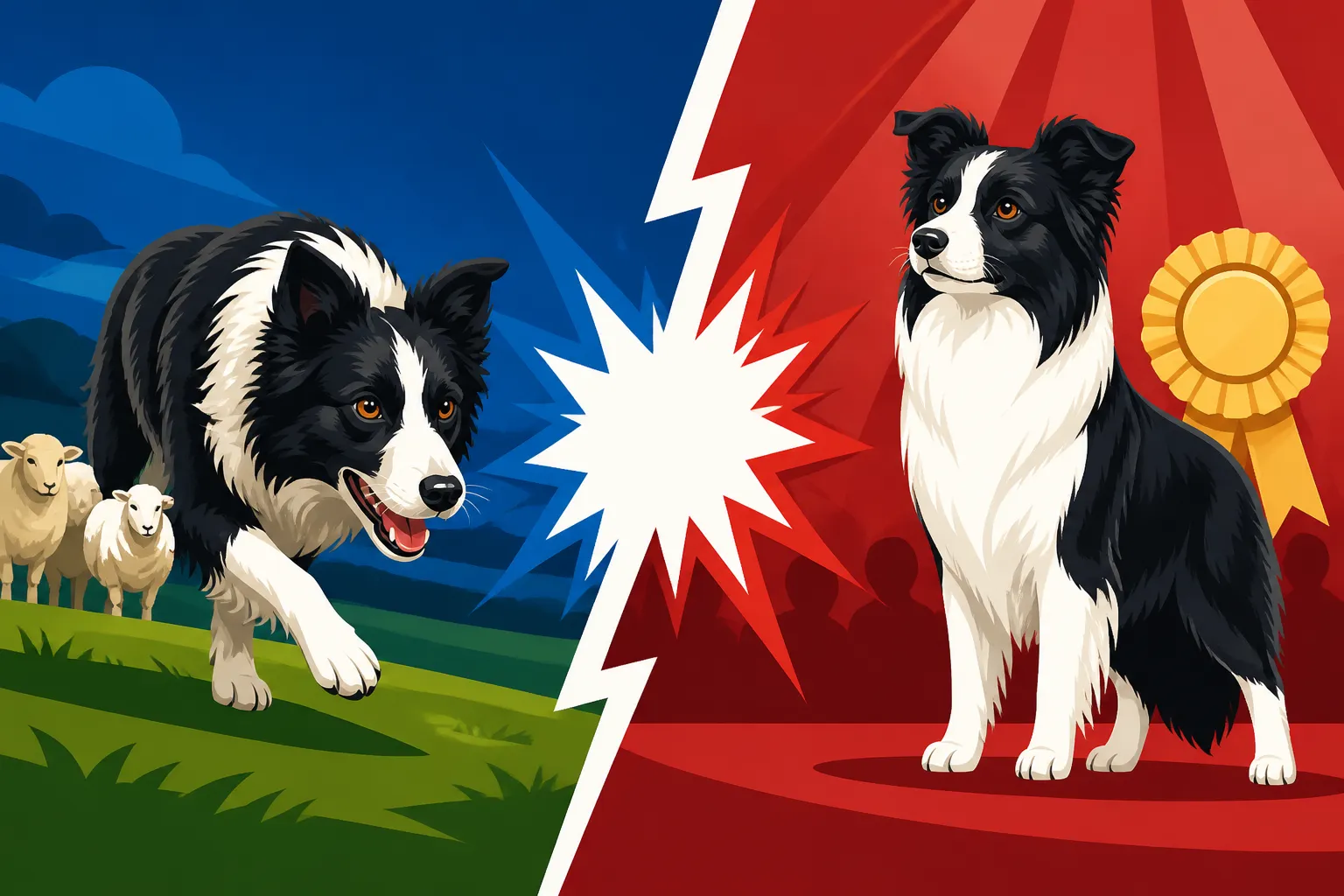
Whether a Working Border Collie Would Win in the Ring
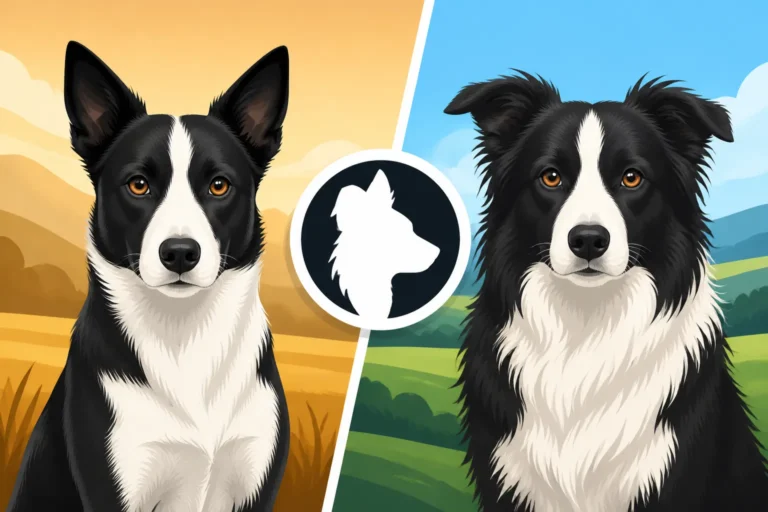
Oh, the age-old question that sparks many a lively debate in Border Collie circles: can that gritty, mud-splattered working dog, fresh off a triumph in the sheepdog trials, actually stride into a fancy conformation ring and walk away with a blue ribbon? It’s a fascinating thought, isn't it? Many of us who adore this breed, whether for their unparalleled intelligence and drive in the field or their striking beauty and athleticism in sports, often wonder about the vast differences between the dogs bred for work and those bred for the show ring. The truth is, while they share a common ancestor, the path each lineage has taken has created two distinct types, each excelling in its own domain. This guide will delve deep into why a working Border Collie, despite all its incredible qualities, is highly unlikely to achieve a win in a modern conformation show, and vice versa.
The Fundamental Divergence: Working vs. Show Border Collies
It’s easy to look at a Border Collie and assume all of them are essentially the same. After all, they’re all that incredibly intelligent, often black-and-white, intense-eyed breed we know and love. But the reality is far more nuanced. Over the last century, and particularly since the breed's recognition by various kennel clubs, a significant divergence has occurred, shaping dogs for entirely different purposes.
The Historical Purpose of the Working Border Collie
Imagine the windswept hills of the Anglo-Scottish border, where this breed first truly coalesced. The Border Collie was, and remains, a tool for a specific job: gathering and moving livestock with precision, intelligence, and a deep understanding of the shepherd's commands. Every trait, from its intense "eye" to its low, fluid gait and tireless stamina, was selectively bred for functionality. A working breeder isn't looking for a perfect tail set or a particular shade of merle; they're looking for a dog that can read sheep, anticipate their movements, and respond instinctively and accurately to a whistle or a whisper, often at great distances.
For a true working Border Collie, pedigree is less about lineage on paper and more about demonstrated ability. Handlers will often travel great distances to see a dog work, evaluating its "try" – its inherent desire to herd – its natural intelligence, and its biddability. A dog that can clear a large pasture of sheep efficiently and calmly is a prized asset, regardless of whether its ears stand perfectly erect or have the desired amount of feathering. Their form is a direct result of their function; every physical attribute serves to make them a better, more efficient herding dog. Old Hemp and Every Border Collie Alive Today is a fascinating read about the foundational dog of the breed and his influence on working lines.
The Evolution of the Show Ring Standard
When the Border Collie gained recognition by various kennel clubs, like the American Kennel Club (AKC) in 1995, a new path opened for the breed: the conformation show ring. Unlike the working world, where success is measured by performance, the show ring judges a dog against a written "breed standard." This standard describes the ideal physical appearance, structure, and sometimes temperament of the breed. It dictates everything from head shape, ear set, coat texture, and color to angulation, tail carriage, and gait.
For show breeders, the goal is to produce dogs that conform as closely as possible to this written standard. This often means prioritizing aesthetics and structural symmetry that may or may not directly correlate with herding ability. While the breed standard often pays homage to the breed's working origins by mentioning an "athletic build" or "alert expression," the emphasis in judging is on visual perfection and adherence to specific physical descriptors. The focus shifts from what the dog does to what the dog looks like. This is why Why Working Breeders Fought AKC Recognition is a critical piece of the Border Collie story.
Judging Criteria: What Defines a "Win" in Each World?
The very definition of "winning" is radically different in the working arena compared to the show ring. It's like comparing a professional athlete to a supermodel; both are highly skilled and beautiful in their own right, but their criteria for success are poles apart.
Priorities in the Sheepdog Trial Arena
In a sheepdog trial, a win isn't about looking pretty; it's about control, efficiency, and partnership. Points are awarded (or deducted) based on how well the dog and handler work together to move a small flock of sheep through a prescribed course. This involves complex maneuvers like the outrun (sending the dog out to gather the sheep), the lift (taking control of the sheep), the fetch (bringing them to the handler), and then guiding them through gates, a drive, and finally, often a shed or a pen.
The judges, usually experienced sheepdog handlers themselves, are looking for a dog that exhibits natural herding instinct, calm authority over the sheep, intelligence to problem-solve, and responsiveness to commands. They want to see a dog that can manage a difficult sheep or navigate challenging terrain without unnecessary aggression or losing control. A flawless "outrun" or a quiet "shed" can earn high points. A dog that barks excessively, nips without purpose, or simply doesn't understand the task, regardless of how structurally perfect it may be, will not win. What Happens at a Sheepdog Trial With a Border Collie offers a fantastic overview of this world.
The Aesthetics of the Conformation Ring
The conformation ring is a beauty pageant where dogs are evaluated against a detailed blueprint of the ideal Border Collie. Judges assess the dog's structure, gait, coat, color, and overall balance. They want to see a dog that moves effortlessly, with correct angulation, a level topline, and a tail carried in a specific manner. The head must be proportionate, the eyes almond-shaped and expressive, and the ears set just so. Every element is scrutinized to see how well it matches the breed standard's description.
Dogs are stacked (posed) to highlight their best features, and they move around the ring at different paces to demonstrate their gait. Temperament is also a factor, but it's typically about composure and friendliness, not intense herding drive. A dog that is shy, overly boisterous, or displays any aggression will be penalized. Winning in this environment means embodying the look that the breed standard describes, regardless of whether that dog could ever gather a flock of sheep. The AKC Standard Says a Border Collie Is further explains the specific aesthetic ideals.
Physical Attributes: Form Follows Function (or Fashion)
The physical differences between a working Border Collie and a show-bred one can be quite striking to an experienced eye. While both are undeniably Border Collies, the demands of their respective "careers" have subtly, and sometimes not-so-subtly, altered their builds.
The Working Dog's Functional Build
A working Border Collie's body is built for endurance, agility, and power over long hours and varied terrain. They tend to be leaner, often carrying less coat, especially the smooth-coated variety, for practicality in all weather. Their musculature is honed for bursts of speed, sudden stops, tight turns, and sustained trotting. Their bone structure is robust but not heavy, designed to withstand the rigors of a physically demanding job.
Consider the rough and tumble of working livestock: navigating uneven fields, jumping fences, lying prone in mud or snow, and constantly shifting their weight. Their feet are typically compact and well-padded for traction and durability. Their eyes are usually set for a broad field of vision, crucial for spotting wayward sheep. There's a raw, athletic grace to a working dog, born purely out of necessity. They are built for performance, not for presentation. You might find a working dog with a longer back or a slightly different angulation than what a show judge prefers, but if it helps them move a flock, it's a desirable trait in their world.
| Feature | Working Border Collie | Show Border Collie |
|---|---|---|
| Primary Goal | Herding livestock efficiently | Conforming to a written aesthetic standard |
| Build | Lean, athletic, functional, built for endurance | More substantial, balanced, refined for appearance |
| Coat | Varies, often moderate to smooth for practicality | Often longer, denser, and groomed for presentation |
| Temperament | Intense "eye," high drive, quick problem-solver | Alert, friendly, composed, stable for public interaction |
| Gait | Low, stealthy, fluid, covering ground quickly | Graceful, powerful, demonstrating correct structure |
| Judgment | Based on herding ability and responsiveness | Based on physical adherence to breed standard |
| Training | Focus on herding commands and stock sense | Focus on ring presence, stacking, and gaiting |
The Show Dog's Refined Appearance
Show Border Collies, while still athletic, often have a more substantial build, carrying more bone and coat to meet the aesthetic demands of the ring. Their coats are typically rough-coated, dense, and well-feathered, requiring significant grooming to maintain their pristine appearance. The goal is a visually striking dog that is symmetrical and perfectly proportioned according to the standard.
They might have a broader skull, a more pronounced stop, or specific ear sets (often semi-pricked) that are deemed ideal. Their gait is expected to be powerful and ground-covering, but also elegant and balanced, demonstrating proper angulation and reach that judges look for. While a show dog can have herding instinct, it's not the primary criterion for success in the ring. The focus is on the "ideal" look, often leading to a slightly heavier, more "finished" appearance than their working counterparts. The show breeder aims for beauty and correctness as defined by the standard, where every curve and angle has a prescribed ideal. Border Collie Colors and Coat Types highlights the variety, some of which are more favored in the show ring.
Temperament and Drive: Different Minds for Different Jobs
Beyond the physical differences, the most profound distinction often lies in the mental make-up and inherent drives of these two types of Border Collies. It's about what motivates them and how they channel their incredible intelligence.
The Intense Focus of a Working Border Collie
A working Border Collie possesses an almost obsessive focus on its work. Their "eye" – that intense, unwavering stare – is legendary and a crucial tool for controlling sheep. They are problem-solvers, quick thinkers, and possess an innate understanding of livestock behavior. This intensity, while invaluable in the field, can be overwhelming in a pet home without an outlet. They are constantly looking for a job, for something to manage, to control.
Their drive is relentless, a deep-seated desire to herd that can manifest in various ways if not properly channeled. They need complex mental stimulation and physical activity that truly engages their minds. This isn't just about running around the yard; it's about learning, responding, and making decisions. A working Border Collie thrives on purpose, on being an integral part of a team with its handler. This drive is what makes them exceptional at their job, but it also means they need an owner who truly understands and can meet these profound needs. Exercise, Work and What Actually Settles a Border Collie explains this concept in detail.
The Composed Demeanor of a Show Border Collie
While a show-bred Border Collie is still intelligent and active, their temperament is typically selected for traits that make them successful in a different kind of environment. They need to be outgoing, confident, and amenable to being handled by strangers (the judge). They must be able to stand patiently, gait gracefully, and tolerate the hustle and bustle of a dog show. While they certainly have energy and enjoy activities, the intense, often hyper-focused "eye" of their working cousins might be considered a disadvantage, as it could make them appear aloof or overly intense in a setting that values a more genial presentation.
Show breeders often select for dogs with a calmer "off-switch," dogs that can relax when not performing. They are bred to be beautiful companions first and foremost, often excelling in canine sports like obedience and agility, but perhaps without the raw, unadulterated herding instinct that defines the working lines. Their drive is often directed towards pleasing their handler and performing tasks for praise, rather than the intrinsic reward of managing stock. They need mental engagement, but perhaps not the same level of incessant, obsessive focus on a single task.
The Real-World Overlap (or Lack Thereof)
So, can the two worlds ever truly meet? Could a dog from one lineage cross over and succeed in the other? It's the rare exception, not the rule. The genetic pools have been diverging for too long, with different traits being prioritized.
Can a Working Dog Look Like a Show Dog?
It's entirely possible for a working Border Collie to possess many aesthetically pleasing traits. Many working dogs are stunning in their own right, with balanced proportions and beautiful coats. However, it's highly improbable that one would perfectly conform to every single detail of a modern show standard. The specific nuances of head shape, ear set, angulation, and coat density that judges look for have been meticulously developed in show lines, often to a degree that is simply not a priority, or even sometimes a hindrance, in a working dog.
For example, a working dog might have a slightly straighter front assembly or a less exaggerated bend of stifle than preferred in the show ring, simply because those traits make it more efficient for running and turning quickly on uneven ground. The coat of a working dog, while beautiful, might not have the "furnishings" or length demanded by the show ring, as too much coat can collect burrs or mud in the field. So, while a working dog might be handsome, achieving the exacting standards of conformation is a different ball game.
Can a Show Dog Work Like a Working Dog?
This is perhaps the more common question, and the answer is generally "no," at least not to the high standard expected in competitive sheepdog trials. While many show-bred Border Collies have some degree of herding instinct (it's in their DNA, after all!), the intensity, natural intelligence, and specialized behaviors that make a champion working dog have often been diluted or redirected in show lines.
A show dog might enjoy an occasional herding lesson or participate in a herding instinct test, and some might even be quite proficient for a casual hobby. However, the deep "stock sense" – the innate ability to read and control sheep, the unyielding desire to stay with the flock, the ability to solve complex problems on the fly – is typically not present to the same degree. They may lack the "power" or the "eye" required to move stubborn sheep, or they might become easily frustrated or bored if the task isn't immediately rewarding. The selective breeding for appearance and a more generalized companion temperament means that the finely tuned herding machine of the working lines is largely absent. What a Border Collie Does With Its Whole Day will tell you a lot about the expectations for their activity levels.
Navigating the Choice: What's Right for You?
Understanding these differences is crucial for anyone considering adding a Border Collie to their life. It’s not about one type being "better" than the other, but about selecting the right dog for your lifestyle and expectations.
Considerations for Prospective Owners
If you're thinking about getting a Border Collie, you absolutely must consider their background. Do you want a dog for serious herding work, competitive dog sports, or a family companion?
- For Performance Homes (Herding, High-Level Agility, Obedience): If your dream is to compete in sheepdog trials or push the limits in high-octane dog sports, a working-line Border Collie is likely your best bet. These dogs come with the genetic predisposition and intense drive to excel. Be prepared for a significant commitment to training and exercise. You might even find performance-specific food options at a place like Chewy that cater to their high energy needs. Look for breeders who actively trial their dogs or whose dogs have proven working pedigrees. You'll want to ask about The Border Collie Genetic Panel and What It Screens to ensure health.
- For Active Companion Homes: If you're looking for an intelligent, active, and engaging companion who will enjoy long hikes, learning tricks, and perhaps dabbling in dog sports without the pressure of extreme competition, a show-line Border Collie might be a wonderful fit. They still require ample mental and physical stimulation, but their temperament might be a bit more adaptable to a typical family environment. Breeders of show lines will focus on health clearances and sound temperaments, aiming for a beautiful and biddable dog.
- A Word of Caution: Never choose a working-line Border Collie if you are not prepared for their intense drive and need for a job. Placing such a dog in a home without an outlet for its instincts is a recipe for frustration for both dog and owner, often leading to behavioral issues like obsessive behaviors, chasing, or destructive tendencies. This is why Why People Choose a Border Collie and Then Struggle is such an important article for new owners.
Appreciating Both Sides of the Breed
Ultimately, both working and show Border Collies are magnificent animals. They each embody different facets of a truly extraordinary breed. The working dog is a testament to centuries of partnership between man and dog, a living, breathing example of intelligent design for a specific task. The show dog, on the other hand, represents the commitment to preserving the physical beauty and elegant structure that also defines the breed, albeit through a different lens.
Neither type is inherently superior; they simply fulfill different roles. The key for a prospective owner is to understand these distinctions and make an informed choice that aligns with their lifestyle and ability to meet the profound needs of this intelligent and driven breed. The love and dedication poured into both lines produce incredible dogs that bring joy and purpose to their owners, whether they're gathering sheep in a vast field or strutting confidently in a show ring.
Disclaimer
This article is for general informational purposes only and does not constitute professional advice. Laws, prices and regulations vary by location and change over time. Consult a qualified professional for guidance on your specific situation.