Black and White and the Other Border Collie Colors
It’s easy to think of a Border Collie, and the image that immediately pops into your head is a striking black and white dog, eyes fixed, ready to work. It's the classic, iconic look, and for good reason! But for anyone who’s spent time around this incredible breed, you know that while black and white might be the poster child, the world of Border Collie colors is actually far richer and more diverse than many people realize. From deep reds to subtle dilutes, and even complex merle patterns, understanding these variations isn't just fun; it can also tell you a lot about genetics and responsible breeding. This guide will take you on a journey through the full spectrum of Border Collie coats, unraveling the beauty and science behind each hue and pattern.
The Iconic Black and White Border Collie
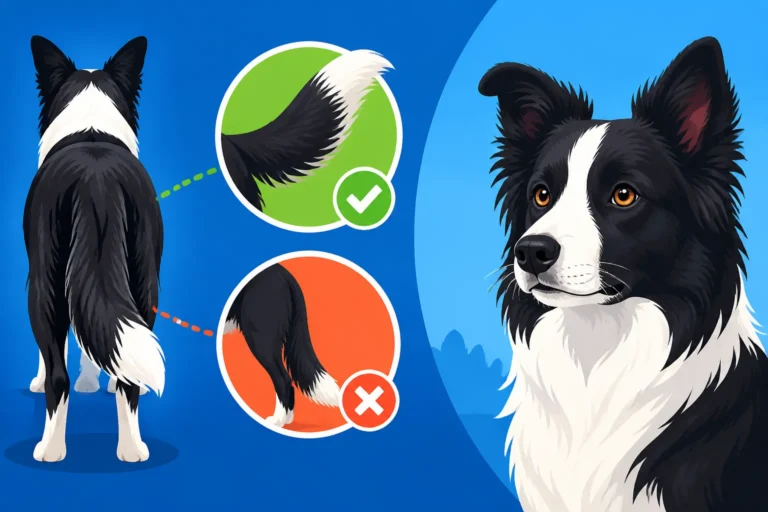
Let's be honest, when most people picture a Border Collie, they envision that classic black and white coat. It's so deeply ingrained in our perception of the breed, largely thanks to its prominence in working lines and media portrayals. There's a certain timeless elegance to it, a stark contrast that highlights their alert expression and athletic build. But even within this seemingly simple pairing, there’s a surprising amount of variation to explore.
Why Black and White Reigns Supreme
The prevalence of black and white Border Collies isn't just a matter of tradition; it's also a testament to the breed's origins. For generations, working sheepdog breeders prioritized working ability above all else, and while coat color wasn't a primary selection criterion, black and white dogs often emerged as dominant due to genetic factors and perhaps, to a degree, handler preference for dogs easily visible against green pastures or white sheep. This color combination became synonymous with the breed's intelligence, drive, and tireless work ethic. When you see a black and white Border Collie, you're looking at a living piece of history, a direct link to the dogs that built the breed's legendary reputation. They just look like a Border Collie should, don't they? It’s a powerful visual shorthand for everything we love about these dogs.
Variations in White Markings
While the base colors are black and white, the distribution of that white can vary dramatically, giving each dog a unique appearance. You'll see everything from dogs that are almost entirely black with just a white blaze, chest, and tip of the tail (often called "Irish marked") to dogs with extensive white patterning, sometimes making them look almost white with black patches. Some dogs have a prominent white collar, a beautiful symmetrical marking that enhances their classic appeal. Others might have only a small dash of white on their chest or paws. It’s also common to see what's often referred to as "split faces," where the white blaze extends up through one eye or ear, creating a distinctive look. These variations in white markings are entirely normal and part of the breed's charm; they don't impact the dog's health or working ability. When you're looking for gear, you might find some of the best collars to highlight a classic black and white coat on Chewy, designed to stand out against their sleek fur. You might even hear breeders discuss how much white a dog has, sometimes referring to it as "too much white" for conformation showing, but for working and pet homes, it's just another beautiful variant.
Beyond Black and White: Solid Colors and Bi-Colors
While black and white might be the default image, Border Collies come in a remarkable array of other base colors, often paired with white markings, but sometimes appearing in solid forms too. These colors are just as stunning and can add an extra layer of individuality to an already unique dog. It’s always a delight to see the full spectrum when you’re out at a trial or even just walking in the park.
Beautiful Blue and White
Blue and white Border Collies are absolutely striking. When we talk about "blue" in dogs, we're not talking about a vibrant sky blue, but rather a dilute black. This means the black pigment is softened, appearing as a gorgeous charcoal grey, often with a hint of steely blue in certain lights. Paired with white markings, a blue and white Border Collie has a very sophisticated and gentle look. The depth of the blue can vary, from a pale silver-grey to a rich, dark slate. Genetically, this color is caused by the dilution gene (d/d), which essentially "waters down" the black pigment. These dogs are perfectly healthy, and their captivating color is simply a genetic variation. Seeing one often makes people do a double-take, as they're less common than their black and white counterparts but no less beautiful.
Rich Red and White (Australian Red)
Red and white Border Collies are another stunning color variant, often affectionately referred to as "Australian Red" or "Red Tri" if they have tan points. This isn't the same as the merle red, but a rich, warm brown that can range from a light golden fawn to a deep, lustrous liver or chocolate. This color is caused by the recessive "e" gene (e/e), which prevents the production of black pigment, allowing only red/brown pigments to be expressed. The effect is a dog that looks almost like a classic black and white, but with all the black replaced by a beautiful, rich red. The intensity of the red can be quite varied, and it's particularly eye-catching when combined with bright white markings. If you've ever wondered Whether a Red Border Collie Is Rare, they're certainly less common than black and white, but they're not nearly as rare as some might think and are gaining popularity for their unique appeal. Their coats can really shine with the right nutrition, and you can find a wide range of specialized food options on Chewy to support coat health.
Sable and Saddleback Border Collies
Sable is a particularly interesting color pattern. It involves a mix of black-tipped hairs over a lighter base, usually red or tan. The result is a coat that can appear quite dark as a puppy, often lightening as the dog matures. The tips of the hairs retain black pigment, while the roots are lighter. This gives the coat a shaded, dynamic look, sometimes described as a "wolf-grey" or a "smoky" appearance. Sable and Saddleback Border Collies often confuse people because their color changes so much from puppyhood to adulthood.
Saddleback, sometimes called "creeping tan" or "black and tan with creeping tan," is another unique pattern. Here, the tan points typically seen on a black and tan dog begin to spread as the dog ages, eventually covering much of the body, leaving a "saddle" of black on the back. It’s a very distinctive look that evolves over time. These patterns showcase the incredible complexity of canine coat genetics.
The Striking Lilac and Slate
Beyond blue, there are even more dilute colors that appear in Border Collies, namely lilac and slate. What Makes a Border Collie Lilac or Slate is essentially a double dilution. Lilac is the dilute form of chocolate/red, meaning a dog that would normally be chocolate becomes a beautiful, warm, dusky grey-brown, almost a lavender hue in some lights. It’s a truly exquisite and relatively rare color. Slate, on the other hand, is a dilute blue, which means it’s a dilute black that has been further diluted. The effect is a lighter, softer grey than a typical blue, often with a pearly sheen. These dilute colors occur when a dog inherits the dilution gene (d/d) in combination with other color genes (b/b for chocolate, or just a/a for black). They are perfectly healthy dogs, simply showcasing a more nuanced palette in the Border Collie genetic tapestry.
The Fascinating Merle Pattern
The merle gene is responsible for some of the most visually stunning and widely recognized Border Collie coat patterns, but it also carries important responsibilities for breeders due to potential health implications when improperly managed. Understanding merle goes beyond just appreciating its beauty; it's about being a responsible owner and knowing what to look for.
What is Merle and How Does it Appear?
Merle is a pattern that causes random patches of diluted pigment and solid pigment in the coat. Think of it like splashes of paint. The most common merle patterns in Border Collies are "blue merle" and "red merle."
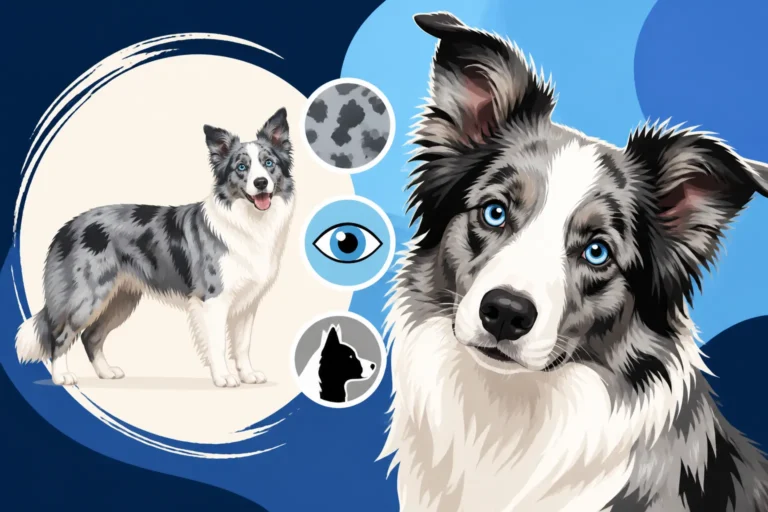
A blue merle Border Collie has patches of black, grey, and white, often with blue or grey eyes, and can be quite captivating. The base color is typically black, which is then diluted in irregular patches, resulting in shades of grey, blue, and black appearing randomly across the coat, interspersed with white markings.
A red merle Border Collie will have patches of red, lighter red/cream, and white. Here, the base color is red/chocolate, and the merle gene dilutes these red patches in the same variegated manner.
The merle gene is dominant, meaning only one copy of the gene is needed for the dog to express the merle pattern. This single copy creates the beautiful patchwork effect we admire. However, this gene doesn't just affect coat color; it can also affect eye color and skin pigment. This is why you often see merle dogs with stunning Eye Color in a Border Collie, including blue eyes or even heterochromia (one blue eye, one brown eye). These patterns truly stand out, and the varied colors make them look incredibly unique.
Health Considerations with Merle
While visually stunning, the merle gene comes with significant health considerations, particularly when it comes to "double merle" dogs. A double merle dog inherits two copies of the merle gene (M/M), one from each parent. This often results in a predominantly white coat and, more critically, can lead to severe health issues. Double merles frequently suffer from auditory and ocular defects, including deafness, blindness, or various eye abnormalities such as microphthalmia (abnormally small eyes) or colobomas (missing tissue in the eye structures). The white fur around their ears and eyes is often indicative of underlying developmental problems in those areas.
This is why responsible breeders are incredibly careful not to breed two merle dogs together. It is a critical ethical decision to ensure the health and well-being of the puppies. If you're considering a merle Border Collie, always ask the breeder about the parentage and Whether Two Merle Border Collies Should Be Bred. A reputable breeder will never intentionally produce double merles and will be transparent about the genetic testing they perform. Ensuring that your dog comes from parents who are both clear of such problematic pairings is essential for avoiding preventable health problems down the line. When choosing toys or training equipment, considering a dog's potential sensory needs (like for a visually or hearing-impaired dog) is important, and resources like Chewy can offer adaptive products.
Blue Eyes and Merle Coats
One of the most enchanting features often associated with merle Border Collies, and sometimes other dilute colors, is the presence of blue eyes. It's a striking contrast against their varied coats, giving them an almost ethereal gaze. This distinct eye color is directly linked to the merle gene's effect on pigment. The merle gene dilutes not just the coat, but also the pigment in the iris of the eye, leading to partial or complete blue coloration.
It’s not uncommon for a merle Border Collie to have two blue eyes, or even one blue eye and one brown eye (a condition called heterochromia). Sometimes, you'll even see a "partially" blue eye, where only a segment of the iris is blue, creating a mesmerizing marbled effect. This can be quite beautiful and adds to the unique appearance of each dog. However, it’s important to remember that while blue eyes can be beautiful, they are a byproduct of the merle gene, which means they come with the same cautions about breeding as mentioned above. For dogs with a lot of white on their head or face, especially if it extends over their eyes, this can also sometimes result in blue eyes without the merle gene being present, but it's less common. Why Some Border Collies Have One Blue Eye is usually attributed to the incomplete expression of these pigment genes, leading to fascinating and beautiful results.
Tri-Color and Other Complex Patterns
As if the range of solid and bi-colors weren't enough, Border Collies also present with stunning tri-color patterns and other intricate markings that add even more depth to their already diverse appearances. These combinations often bring together multiple genetic expressions, resulting in truly unique individuals.
The Classic Tri-Color Combination
The tri-color Border Collie is a beloved variant that adds another layer of color to the traditional black and white or blue and white. A tri-color dog essentially has two base colors plus tan points. The most common and widely recognized is black, white, and tan. These dogs have a predominantly black and white coat, but with distinct tan markings typically found on their eyebrows, cheeks, inside their ears, on their legs, and under their tail. These tan points provide a beautiful warmth and depth to their appearance, creating a classic, well-defined look.
You can also find blue, white, and tan tri-colors, where the black is diluted to blue, giving them a softer grey-blue coat with white and tan points. Similarly, red, white, and tan tri-colors exist, where the red is the dominant color, complemented by white markings and the characteristic tan points. The presence of these tan points is determined by a specific gene (the 'at' allele at the Agouti locus), and it's a recessive trait, meaning the dog must inherit a copy from both parents to express it. Tri-colors are incredibly popular and showcase a delightful blend of colors, embodying the Border Collie's versatility not just in work, but in aesthetics too.
Brindle and Dilute Patterns
Beyond the standard colors, Border Collies can also carry genes for brindle or further dilution. Brindle is a pattern of stripes, often described as "tiger stripes," typically appearing over a red or tan base. Imagine a red Border Collie with darker, usually black or blue, stripes running through its coat. This is a rarer pattern in Border Collies compared to some other breeds, but it does occur and creates a very distinctive and attractive look. The brindle gene (Kbr allele at the K-locus) is dominant over solid color but recessive to solid black.
As for dilute patterns, we've already touched on blue (dilute black) and lilac (dilute chocolate/red). These are caused by the recessive "d" gene (d/d). This gene essentially "lightens" any black or chocolate pigment in the dog's coat, creating softer, muted versions of the standard colors. For example, a dog that would genetically be black will appear blue if it has two copies of the dilute gene. A dog that would genetically be chocolate will appear lilac. These genetic nuances contribute to the incredible variety we see in the breed, proving that Border Collies are anything but monochromatic.
Ticking and Speckling
Ticking and speckling are fascinating patterns that occur within the white areas of a Border Collie's coat, adding another layer of detail and individuality. Ticking refers to small, distinct spots or flecks of color that appear in the white fur, making it look as though paint has been lightly sprinkled. Speckling is a similar, but often finer, dusting of colored hairs. These spots typically correspond to the dog's primary coat color. So, a black and white Border Collie might have black ticking on its white legs and muzzle, while a red and white dog might have red ticking.
This pattern isn't present at birth; puppies are born with clear white markings, and the ticking gradually appears as they mature, usually becoming more prominent over the first year of life. The gene responsible for ticking (the 'T' locus) is dominant, meaning only one copy is needed for a dog to display this characteristic. Many working Border Collies exhibit ticking, as it's a common trait within the breed. It adds a wonderful depth and texture to their white areas, making each dog even more unique. It's truly a testament to the subtle beauty that can be found in the details of a Border Collie's coat.
Understanding Coat Genetics and Ethical Breeding
Delving into Border Collie colors isn't just about admiring their beauty; it's also an entryway into understanding canine genetics and the crucial role ethical breeding plays in maintaining the health and integrity of the breed. For anyone passionate about Border Collies, a basic grasp of these principles is incredibly valuable.
Basic Genetic Principles for Coat Color
At its core, a Border Collie's coat color and pattern are determined by a combination of genes working together, passed down from their parents. Think of it like a recipe with many ingredients and instructions. Different gene loci (locations on the chromosome) control different aspects of color.
- B Locus (Black/Brown): This gene determines whether the dog has black pigment (dominant B) or brown/chocolate pigment (recessive b). So, a B/B or B/b dog will have black pigment, while a b/b dog will be chocolate/red.
- E Locus (Extension): This gene controls whether black pigment is expressed across the entire body or only in certain areas. An E/E or E/e dog will express black pigment, while an e/e dog will be a clear red or yellow, where all black pigment is suppressed, leaving only red/yellow.
- A Locus (Agouti): This complex gene determines patterns like solid (dominant A), sable (Ay), tri-color (at), and recessive black (a). This is where those tan points come from for tri-colors.
- D Locus (Dilution): The 'D' gene controls pigment intensity. A D/D or D/d dog has full pigment, while a d/d dog will have diluted pigment, turning black to blue, and chocolate to lilac.
- M Locus (Merle): The 'M' gene creates the merle pattern. One copy (M/m) gives the classic merle. Two copies (M/M) lead to double merle, with associated health risks.
- S Locus (White Spotting): This gene dictates the amount and placement of white markings on the dog, from minimal white to Irish spotting or piebald.
These are just a few of the main players, but you can see how the combinations can create an almost endless palette! Understanding these basics helps us appreciate the diversity and also reinforces why breeders run genetic tests. What a Full Border Collie DNA Panel Covers includes many of these gene loci, providing invaluable information for mating decisions.
The Importance of Health Over Aesthetics
While it's completely natural to be drawn to a particular color or pattern, especially something unique like a merle or a lilac, it is absolutely paramount that health and temperament always take precedence over aesthetic appeal in breeding. Responsible Border Collie breeders understand this deeply. They prioritize breeding healthy, stable dogs that conform to the breed's working standard, rather than chasing rare or trendy colors. The focus is on producing dogs free from genetic health conditions and with the incredible working drive and biddable temperament that Border Collies are known for.
An ethical breeder will conduct extensive health testing on their breeding stock for common Border Collie ailments like hip and elbow dysplasia, eye anomalies (Collie Eye Anomaly in a Border Collie Puppy), and various genetic diseases. They'll also avoid problematic pairings, such as breeding two merle dogs, to prevent devastating health issues in puppies. For instance, reputable breeders will openly share results from tests for conditions like Trapped Neutrophil Syndrome in Border Collie Litters or The Border Collie Genetic Panel and What It Screens. When Asking a Border Collie Breeder for Test Results, they should be eager to provide them and explain their breeding philosophy, emphasizing health, temperament, and working ability over mere coat color. A breeder focused solely on "rare" colors without proper health clearances is a red flag.
Avoiding "Designer" Color Fads
In recent years, there's been a growing trend in some dog breeds to intentionally breed for "designer" or "rare" colors, often commanding exorbitant prices. While Border Collies naturally come in a wide range of beautiful colors, it's crucial for prospective owners to be wary of breeders who market their puppies primarily on the basis of unusual color rather than health, temperament, and working ability. Terms like "platinum merle" or "isabella" might sound exotic, but they often refer to combinations of dilute genes that are already part of the breed's genetic makeup, sometimes with added, potentially unhealthy, genetic combinations.
The danger here is that focusing solely on color can lead to neglecting vital health screenings and compromising the breed's overall genetic soundness. Some unscrupulous breeders might even introduce genes from other breeds to achieve a specific color, which is detrimental to the Border Collie breed standard and its unique characteristics. Always prioritize breeders who are transparent about their dogs' lineage, provide comprehensive health clearances, and can demonstrate a deep understanding of Border Collie genetics, focusing on the whole dog rather than just its coat. Whether your Border Collie is black and white or a striking blue merle, their health, intelligence, and companionship are what truly matter. And for keeping any Border Collie healthy and happy, finding the right nutrition and supplements can be easy with trusted online retailers like Chewy.
Here’s a quick overview of some Border Collie colors and patterns:
| Color/Pattern | Description | Genetic Basis (Simplified) | Common Perception | Health Notes (General) |
|---|---|---|---|---|
| Black and White | Classic, solid black patches with white markings (chest, blaze, feet). | Dominant black (B), no dilution (D), various white (S). | The iconic, most recognized Border Collie look. | Generally no color-specific health issues. |
| Blue and White | Dilute black, appearing as a charcoal grey with white markings. | Black (B), dilute (d/d), various white (S). | Striking and less common than black/white, sophisticated look. | Generally no color-specific health issues. |
| Red and White | Rich liver/chocolate brown with white markings. | Recessive red (e/e). | Often called "Australian Red," warm and eye-catching. | Generally no color-specific health issues. |
| Sable | Black-tipped hairs over a lighter base (tan/red), often darkening. | Sable gene (Ay). | Can change significantly from puppy to adult, "wolf-like" shading. | Generally no color-specific health issues. |
| Tri-Color | Black, white, and distinct tan points on face, legs, and tail. | Black (B), tri-color (at), various white (S). | A beloved, classic variant, adds depth. | Generally no color-specific health issues. |
| Blue Merle | Patches of black, grey, and white, often with blue eyes. | Black (B), merle (M/m), various white (S). | Highly distinctive and beautiful, often with unique eye colors. | Breeding two merles (M/M) can lead to severe health issues (blindness, deafness). |
| Red Merle | Patches of red, lighter red/cream, and white. | Red (e/e), merle (M/m), various white (S). | Striking variation of merle, equally unique in appearance. | Breeding two merles (M/M) can lead to severe health issues (blindness, deafness). |
| Lilac and White | Dilute chocolate, a dusky grey-brown or lavender with white markings. | Chocolate (b/b), dilute (d/d), various white (S). | Rare and highly prized for its unique, soft hue. | Generally no color-specific health issues. |
| Ticking/Speckling | Small spots or flecks of color within white areas, develops over time. | Ticking gene (T). | Adds detail and uniqueness to white markings, common in working lines. | Generally no color-specific health issues. |
Disclaimer
This article is for general informational purposes only and does not constitute professional advice. Laws, prices and regulations vary by location and change over time. Consult a qualified professional for guidance on your specific situation.