How Long a Border Collie Trial Run Lasts
A Border Collie’s sheepdog trial run is usually measured in minutes, but the exact time depends on the course, class, and organizer. If you’re planning to enter, spectate, or prepare a young dog, that uncertainty can make it hard to know what to expect. This guide explains typical run lengths, what happens during a run, and how to help your dog stay comfortable.
How long a Border Collie sheepdog trial run lasts
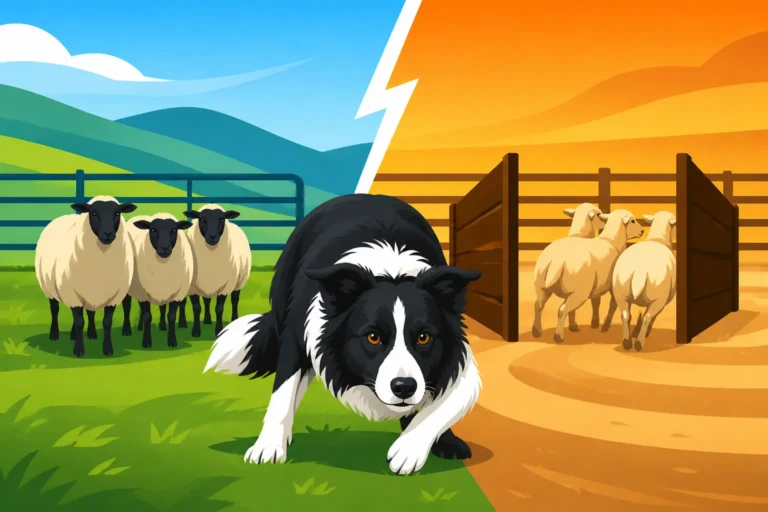
For a traditional sheepdog trial, a Border Collie’s run commonly lasts about 10 to 15 minutes. That is a useful general expectation, not a guaranteed time limit: organizers set the rules for each event, and the course and class can change how long a run takes.
A dog may finish sooner if the work goes smoothly, or run out of time before completing every task. The length of the run is not a simple measure of how fast the dog moves. It also reflects how far the sheep need to travel, how well they respond, and how calmly the dog and handler work together.
Typical time by trial format
The event schedule or trial secretary is the best place to check the time limit for a particular competition. Different formats can feel quite different, even when they all involve a Border Collie working sheep.
| Trial format | What to expect | Why the run length varies |
|---|---|---|
| Traditional field course | Often around 10 to 15 minutes | Distance, course layout, stock behavior, and the tasks included |
| Novice or nursery class | May have a shorter or simpler course | The course is designed for developing dogs and handlers |
| Arena or indoor event | Often more compact and may move quickly | The space and task sequence differ from an open-field course |
| Demonstration or exhibition | Set by the event organizer | The handler may adjust the work for the audience and available time |
At a traditional trial, a course may include an outrun, lift, fetch, drive, and a shedding or penning task. Some events include every stage; others use a shorter course or different sequence. For a fuller look at what spectators may see, read What Happens at a Sheepdog Trial With a Border Collie and The Border Collie in Sheepdog Trials.
The posted limit is not always the actual run time
A time limit is the maximum time available, not a promise that every dog will work for that long. If a dog completes the course efficiently, the handler may finish before the limit. If the sheep are difficult to move, a gate is missed, or the team cannot complete a task, the run may end when time expires.
For example, imagine a dog that makes a wide, controlled outrun and brings the sheep steadily to the handler. If the drive and final tasks also go smoothly, the team might finish well before the clock runs out. Another dog on the same course may need extra time because the sheep drift away from the line or hesitate at an obstacle.
The course’s official limit matters, but so does the character of the stock and the field. A flock that is settled and responsive can make a run feel very different from sheep that are eager to split or reluctant to move. That unpredictability is part of what makes trialing engaging—and why two runs on the same course may not take the same amount of time.
What takes place during a trial run
A sheepdog run is a sequence of connected jobs, not a sprint around the field. The Border Collie needs to move sheep in a useful direction while responding to the handler’s cues. The handler is usually positioned at a set point and directs the dog with voice, whistle, or both.
Understanding the stages can make the clock easier to interpret. A stretch of apparent stillness might be the dog holding sheep in place, while a slow approach may be deliberate work rather than hesitation.
Outrun, lift, and fetch
The run often begins with the outrun. The dog travels away from the handler in a wide arc to reach the sheep without pushing them straight back too soon. The shape and control of that approach matter: arriving too fast or too close can scatter the flock, while a balanced approach helps the dog gather them.
The lift is the moment the dog begins moving the sheep from their starting position. A good lift is controlled and purposeful, rather than a sudden rush that sends the flock running in several directions. The handler’s instructions help the dog adjust its position and pressure.
During the fetch, the dog brings the sheep toward the handler, often along a marked line and through gates. Each stage can take a different amount of time depending on the distance, the sheep’s response, and the dog’s experience. To explore the opening part of the course in more detail, see The Outrun a Border Collie Runs at a Trial and What Judges Score on a Border Collie's Lift.
Drive, shedding, and penning
After the sheep reach the handler, many traditional courses ask the dog to drive them away along a route, often through additional gates. This is a different challenge from the fetch. The handler is no longer simply receiving the sheep; the team must guide them in another direction while keeping the flock together and moving through the course.
Some formats include shedding, in which the dog separates particular sheep from the flock under the handler’s direction. A pen may also be part of the course: the dog helps move the sheep into an enclosure, while the handler may need to manage a gate or position. These tasks require patience and careful positioning, not just speed.
The late stages can take a surprising amount of time if sheep resist separating or entering the pen. A handler may choose to keep working carefully rather than rush and lose control. The details differ from trial to trial, so a particular run may omit one or more of these tasks. For more on the finish, read The Shed and Pen at the End of a Border Collie's Run.
Why one Border Collie’s run may be shorter or longer
Run time is affected by more than the dog’s fitness or pace. The course, the sheep, the handler’s choices, and the dog’s training all shape what happens. A slower run is not automatically a poor run, just as a quick run is not automatically the best one.
Course design, sheep, and handling
A longer course naturally creates more distance to cover. Gate placement and the order of tasks can add difficulty, while a compact layout may let the team complete the work more quickly. The organizer’s rules also determine which tasks are required and how much time is available.
Sheep are living animals, not movable course markers. They may bunch together, split apart, stop, or drift off the intended line. A Border Collie has to adjust to those responses, and the handler must decide how much pressure to apply. Pressing too hard may make the sheep run; holding back too much may leave them standing.
The handler’s experience matters as well. Clear, timely signals can help the dog correct its position before a small problem becomes a large delay. Someone new to trialing may need a moment to decide which command to give, while a seasoned handler may anticipate the sheep’s movement. That learning process is normal. Whether a Pet Border Collie Could Ever Trial is a helpful related read if you’re wondering how a household dog might begin.
Class level and the dog’s experience
A novice or nursery course is generally intended to give developing teams a suitable challenge, though the precise setup depends on the event. Young dogs may be learning to work at a distance, stay responsive to the handler, and avoid rushing the stock. A more experienced dog may be asked to complete a fuller or more demanding course.
A young dog should not be judged by whether it completes a run as quickly as an established trial dog. Early outings are about learning the environment, listening around livestock, and developing steady work. The dog’s age, confidence, and training history all matter. For more on the path into competition, see The Nursery Class a Young Border Collie Starts In.
A trial run also differs from a practice session. At an event, the dog may encounter unfamiliar sheep, a new field, a crowd, whistles, and a handler who feels extra pressure. Even a capable dog may need time to settle into the setting. Those factors can affect the flow of the run without telling you everything about the dog’s potential.
Preparing your Border Collie for a trial day
It helps to plan for more than the few minutes your dog may spend on course. Trial days can involve waiting, travel, changing weather, and long periods when the dog needs to rest. A calm setup makes it easier for your Border Collie to be ready when its turn comes.
Check the event rules and plan the day
Before travelling, check the event’s schedule, class rules, course details, and any instructions for dogs and handlers. Confirm the time limit rather than relying on what happened at another trial. If you are entering for the first time, ask the organizer what to bring and where dogs should wait between runs.
Allow time for arrival, check-in, and settling your dog before the run. A dog that has spent hours in a noisy parking area or has been repeatedly excited by nearby activity may be less able to focus. Bring water, a secure lead, waste bags, and whatever familiar equipment your dog needs to rest comfortably.
Some handlers use a travel crate or other secure resting space, while others arrange a quiet area beside their vehicle. If you are assembling a practical packing list, browsing general dog travel supplies at Chewy may help you remember basics such as a portable bowl or cleanup bags. The essential point is to choose familiar, safe equipment that suits your dog and the event’s rules.
Rest, water, and sensible pacing
A Border Collie may be keen to work long after it would be sensible to stop. Don’t use enthusiasm alone as a guide to how much activity the dog can handle. Give your dog a chance to rest in shade when weather and event conditions allow, and offer access to fresh water. The advice in Shade and Rest Between a Border Collie's Runs applies especially on busy days when waiting around can be tiring in its own way.
Avoid turning the hours before a run into a constant cycle of fetch, warm-up games, and excitement. A brief, familiar routine may help your dog prepare, but repeated high-intensity activity can leave it unsettled or tired before it reaches the course. If you want to plan food and timing around activity, Feeding a Border Collie Before and After Work covers related considerations.
A well-stocked travel kit can make the day less stressful for you, too. Some handlers keep spare water containers, towels, and a familiar mat in the vehicle; Chewy can be one place to look for everyday pet travel items if you need to replace something. Keep the dog’s setup secure and comfortable, and never leave a dog unattended in a vehicle when temperatures could become unsafe.
Keep expectations realistic
Your first goal may be simply to arrive, let your dog settle, and complete a calm start. A run that ends early can still give you useful information: perhaps your dog was distracted by the crowd, needed more practice at a gate, or found the sheep more challenging than those at home.
After the run, write down what you observed while the details are fresh. Note the course format, approximate time, what went well, where the dog needed help, and how it behaved afterward. This is more useful than judging the day by the clock alone. If you are preparing another event, a simple checklist and a few familiar supplies—many of which are available from retailers such as Chewy—can help keep the logistics from taking over your attention.
Most importantly, follow the event organizer’s instructions and work with a qualified herding instructor when you’re developing a dog for stock work. Trialing should be a structured activity, not an invitation to put an unprepared dog onto sheep. The run may last only a short part of the day, but good preparation, safe handling, and thoughtful recovery matter before and after the clock starts.
Disclaimer
This article is for general informational purposes only and does not constitute professional advice. Laws, prices and regulations vary by location and change over time. Consult a qualified professional for guidance on your specific situation.