Who Trained Chaser the Border Collie
Chaser the Border Collie became famous for learning the names of more than a thousand objects, but her achievement was not a spontaneous trick. Psychology professor John W. Pilley trained her through years of patient, playful practice, with support from his family and academic collaborators. Here’s who taught Chaser, how the training worked, and what her story does—and does not—show about canine intelligence.
Who trained Chaser the Border Collie
John W. Pilley was Chaser’s trainer
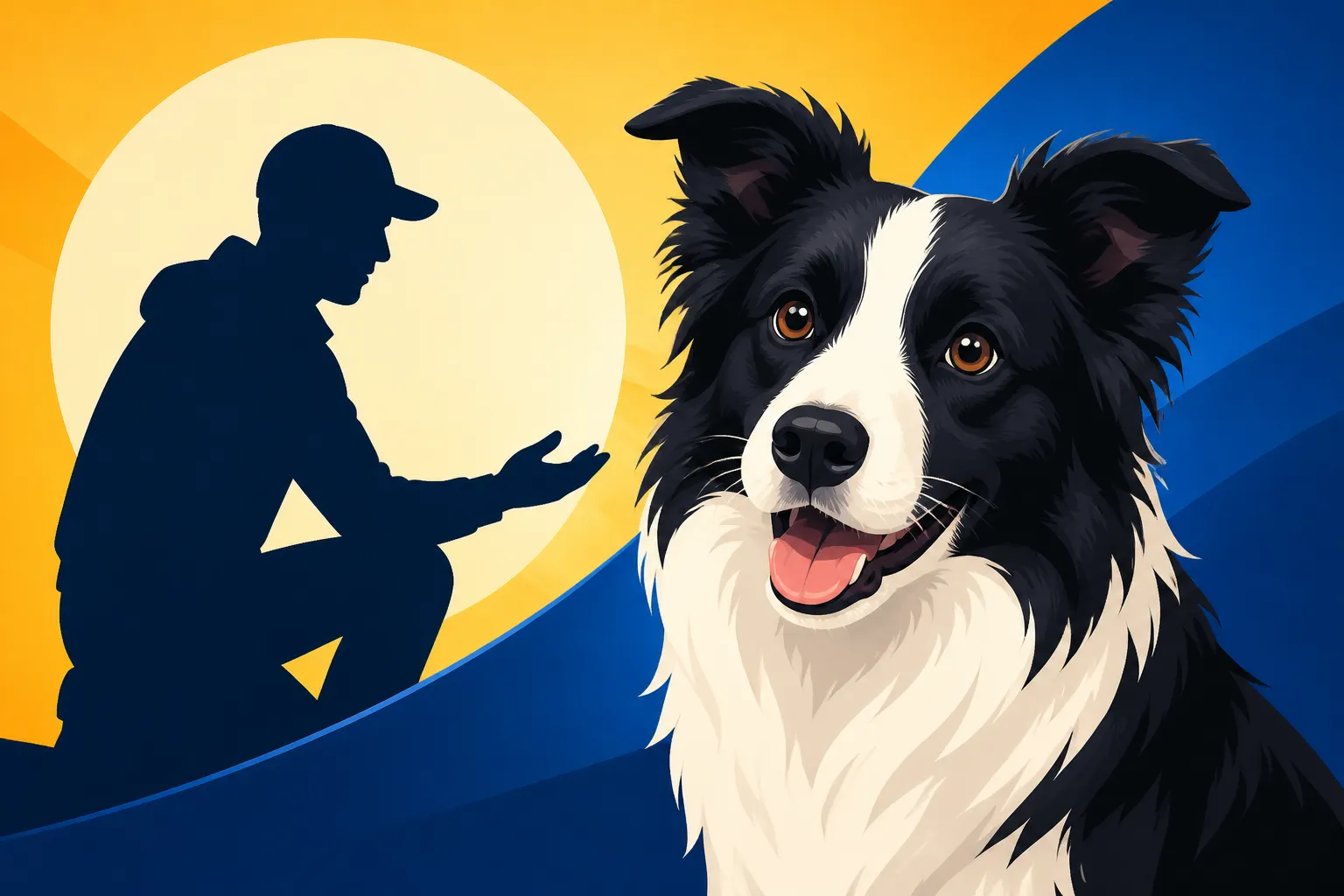
Chaser was trained by John W. Pilley, a psychology professor at Wofford College in South Carolina. He brought her home as a puppy and made learning object names part of their daily life. The work was systematic, but it grew out of an ordinary relationship between a dog and the person who spent time playing with her.
Pilley’s training was not a matter of showing Chaser a toy once and expecting her to remember its name. He repeatedly paired a spoken label with a particular object, then asked her to find that object among others. Over time, he built up a large set of named toys and used games to help her practice distinguishing one from another.
His approach drew on ideas from psychology and language development. Rather than treating every response as proof that Chaser understood language exactly as a person does, Pilley set up structured tests to investigate what she had learned. That distinction matters: Chaser’s results were remarkable, but the claims about them still need to be described carefully.
Family and research collaborators supported the work
Chaser lived with Pilley and his family, so her learning took place in a home environment, not a laboratory alone. His wife, Sally, was part of the family context around Chaser, while academic collaborator Alliston K. Reid worked with Pilley on research about her abilities. Pilley was the person who developed and carried out Chaser’s training; Reid’s role was as a research collaborator, not as the primary trainer.
This mix of home life and research helped make Chaser’s story compelling. She was a companion dog who played games with her person, but those games were also organized carefully enough to examine what she could recognize and remember. Her training had a clear purpose: to see whether a dog could learn many object labels and use them reliably in different tasks.
Chaser’s story also sits within the wider question of what Border Collies are especially good at. They are attentive, responsive dogs bred for demanding work with people, but intelligence alone doesn’t explain an individual dog’s abilities. For more background, see Why the Border Collie Is Called the Smartest Breed and What Border Collie Intelligence Actually Measures.
How Pilley taught Chaser object names
Repetition turned play into a learning routine
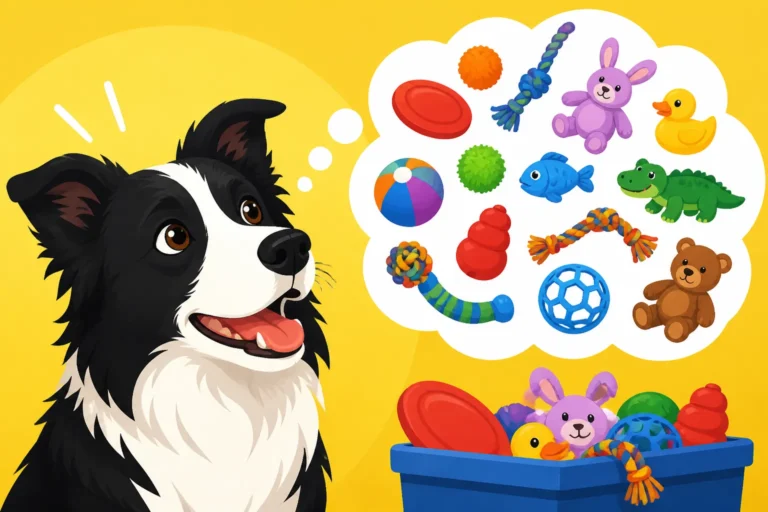
Pilley used toys and other objects as learning materials. He would present an object while saying its name, then repeat that pairing during play. Once Chaser had practiced a label, Pilley could ask her to retrieve the named object from a group. The game gave her a reason to listen closely and a clear way to show what she had learned.
The scale of the work was unusual. Chaser learned the names of 1,022 objects, including toys that had individual labels. That number is often the headline, but it reflects cumulative teaching and testing, not a single burst of memorization. Each new name had to be introduced, practiced, and checked against other familiar objects.
The objects themselves did not need to be magical or complicated. A family trying a small version of the game could start with two familiar toys that look different and have easy-to-say names. If you’re selecting new toys from a retailer such as Chewy, the important feature for a label game is that the objects are safe, distinct, and easy for your dog to tell apart—not that they come from a particular brand.
Practice tested whether Chaser knew more than a routine
A dog can learn a sequence without understanding the individual parts. For example, if a person always says the same phrase before tossing the same ball, the dog may respond to the whole routine rather than to the ball’s name. Pilley’s work tried to reduce that ambiguity by asking Chaser to choose among multiple objects and by varying the way familiar labels were used.
Chaser was also tested on whether she could learn a new object name by exclusion. In simple terms, if she knew the labels for the objects already in front of her and encountered one unfamiliar object with a new word, could she infer that the new word referred to the unfamiliar object? Researchers use tests like this to explore how an animal might connect a word to an item without being taught every pairing in exactly the same way.
These tests made the story more meaningful than a parlor trick. They offered evidence that Chaser could use learned labels to select objects in particular settings. But they do not mean that every dog will learn thousands of names, or that Chaser understood words with the full complexity people do. A careful account of the work leaves room for both admiration and scientific caution.
What Chaser’s research showed about canine learning
Chaser learned labels and categories
Chaser’s best-known accomplishment was recognizing the names of individual objects. The research also explored whether she could sort objects into broader categories, such as distinguishing a type of object from the specific name of one toy. That matters because knowing “this is a ball” is different from knowing that one particular ball has its own individual name.
The distinction helps explain why people sometimes overstate what Chaser did. She did not simply demonstrate human-style language. Her performance showed that a dog, given extensive training and careful practice, could learn a large vocabulary of object labels and respond to those labels in structured tasks. That is impressive without needing to claim that her experience of language was identical to a child’s.
Pilley also explored whether Chaser could respond to combinations of words, including instructions that joined an action with an object. These tasks asked whether she could use familiar information in a new arrangement, rather than simply repeat a memorized action whenever she heard one familiar cue. The results added to the discussion of how dogs interpret words, gestures, and routines.
Her achievement depended on more than breed
Chaser’s Border Collie background was relevant, but it was not the whole explanation. Border Collies are often highly engaged with people and quick to notice cues, which can make training rewarding. Still, individual temperament, early experience, motivation, the trainer’s consistency, and the amount of practice all play a role. It would be misleading to assume that every Border Collie has Chaser’s capacity or that a dog who learns fewer labels is less intelligent.
Pilley’s relationship with Chaser mattered too. The training was built around interaction and reinforcement, not pressure or punishment. Chaser had repeated opportunities to succeed, and the games gave her a reason to participate. That kind of partnership is one reason her story resonates with owners who recognize the bright, watchful Border Collie who seems to be waiting for the next task.
People who want to understand the breed beyond its reputation for cleverness may also enjoy What a Border Collie Reads in a Handler's Body and What a Border Collie Takes Out of Your Week. Chaser’s story is inspiring, but it doesn’t erase the day-to-day needs of a dog who thrives on engagement, rest, and clear boundaries.
What dog owners can take from Chaser’s story
Try a small, low-pressure name game
You do not need a thousand toys or hours of daily drills to make learning enjoyable. Start with two familiar objects that are different in shape or texture. Say the name of one, let your dog investigate it, and reward interest or a correct choice. Keep early sessions short enough that your dog remains eager rather than frustrated.
A simple progression might look like this:
- Choose two safe, distinct objects your dog already enjoys.
- Use one short, consistent name for each object.
- Practice presenting one object at a time before asking for a choice.
- Put both objects down and ask for one by name.
- Reward a correct selection with praise, a treat, or a brief game.
- Stop while your dog is still engaged, and try again later.
If your dog guesses, gets distracted, or chooses the wrong item, make the next attempt easier. Move the objects farther apart, reduce competing distractions, or return to practicing one label at a time. The goal is to build a clear association, not to catch your dog out.
A few well-chosen household objects may be plenty. If you shop for toys through Chewy or another pet retailer, select items that are durable enough for your dog’s play style and easy to distinguish from one another. Avoid turning the exercise into a test of endurance; relaxed, successful repetitions are more useful than an overly long session.
Keep expectations realistic and training humane
Chaser’s story can make ordinary training feel underwhelming. A dog who learns the names of two toys has not failed to reach some hidden potential; she has learned something useful with her person. Dogs vary in what motivates them, how quickly they learn, and how well they respond in a busy room. Even one dog may perform differently at home, in the yard, or around visitors.
It’s also wise to separate a dog’s response to a word from the full meaning a person might attach to it. Dogs may use a mixture of spoken cues, hand movements, routines, tone of voice, and context. Paying attention to those cues is not a flaw in learning. It is part of the way dogs communicate with people.
If you’re choosing toys to support training, Chewy is one place owners may look, but the specific object matters less than using it safely and consistently. And when a dog is more interested in sniffing, resting, or playing a different game, that is useful information—not stubbornness that needs to be overcome. For more on how to channel a Border Collie’s enthusiasm, see Mental Work That Tires a Border Collie Faster and Teaching a Border Collie the Names of Its Toys.
The lasting lesson is the relationship
Chaser became famous because of a striking number, but the more practical lesson is how much can grow from attentive, repeated interaction. Pilley made learning part of play, watched how Chaser responded, and built on what she already knew. That model is accessible even if the scale of Chaser’s vocabulary is not.
A dog’s enrichment does not have to look like an academic study. It can be a short search game, a new cue taught with patience, or a familiar toy offered in a different way. If you use products from Chewy or any other retailer, treat them as tools for shared activity, not a shortcut to a particular result.
Chaser’s achievements deserve recognition, and so does the care that went into teaching her. Her story shows what patient training can reveal about a dog’s learning, while reminding us that a strong bond is not measured by the number of words a dog can recognize.
Disclaimer
This article is for general informational purposes only and does not constitute professional advice. Laws, prices and regulations vary by location and change over time. Consult a qualified professional for guidance on your specific situation.