Pad Damage on a Border Collie Working Stubble
There’s nothing quite like the sight of a Border Collie working a field, but for those of us who live with these incredible dogs, the joy can quickly turn to worry when that field is full of sharp, abrasive stubble. We’ve all been there, watching our dog power through the aftermath of a harvest, only to find them limping, tender-footed, or even bleeding after a long session. It's heartbreaking to see their enthusiasm overshadowed by pain. This comprehensive guide is here to walk you through understanding why stubble is such a menace to Border Collie paws, how to prevent those nasty injuries, and what to do when your loyal companion inevitably runs into trouble.
Understanding the Unique Challenges of Stubble Fields for Border Collie Pads
Working dogs like our Border Collies are bred for resilience, but even the toughest paws have their limits, especially when confronted with the unforgiving landscape left behind after a harvest. Stubble fields present a unique set of hazards that can quickly turn a productive work session into a trip to the vet.
The Nature of Stubble and Its Impact
When a farmer harvests a crop, whether it’s corn, wheat, or soybeans, what's left behind is a field of cut stalks. This residue, commonly known as stubble, might look innocuous from a distance, but up close, it's a minefield of potential injury. Each stubble stalk is essentially a rigid, sharp point or a jagged edge, much like tiny, dull knives sticking out of the ground. When the field is dry, these stalks become even harder and more unyielding, turning an already abrasive surface into something akin to coarse sandpaper studded with needles.
Imagine running barefoot across a field of broken toothpicks – that's a bit what it feels like for our dogs. The continuous friction, combined with sudden impacts and twists, can quickly wear down the protective outer layers of their paw pads. Different crops leave different types of stubble; corn stubble, for instance, tends to be thicker and more rigid, presenting a greater risk of puncture, while wheat or soybean stubble can be just as sharp and cause extensive abrasions. The sheer volume of these sharp points makes it almost impossible for a dog to avoid contact, no matter how carefully they place their feet.
Why Border Collie Pads Are Particularly Vulnerable
While all dogs can suffer from pad injuries, Border Collies face an elevated risk due to their inherent working style and intense physical demands. These dogs aren't just trotting politely through a field; they are usually moving at high speeds, making lightning-fast turns, stopping on a dime, and pushing off with incredible force. This constant, high-impact motion means their paw pads are constantly grinding against, puncturing, and absorbing impact from the unforgiving stubble.
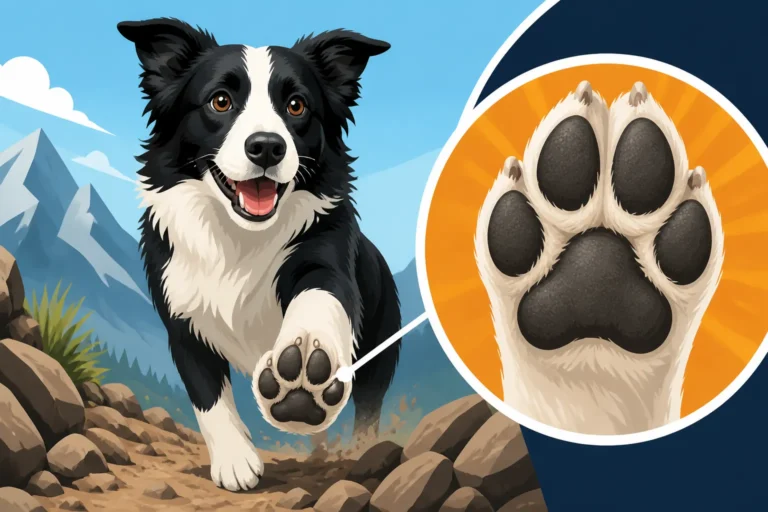
A Border Collie's legendary drive means they often ignore discomfort in favor of the task at hand. They'll run themselves ragged, pushing past what might be warning signs of pain in another dog, only for you to discover the damage once they finally slow down. Their pads, while naturally thick and tough, are not impervious. The rapid acceleration and deceleration, the sharp pivots required to turn stock, and the sheer mileage they cover in a session translate into immense stress on their delicate paw architecture. Unlike softer terrains, stubble offers no cushioning, forcing the pads to bear the full brunt of every movement. This is why it’s so important to focus on building up their pad toughness gradually, and understand the limits of even the most conditioned paw. If you're looking for ways to prepare your dog for rough terrain, you might find some good ideas in Toughening a Border Collie's Pads for Rough Ground.
Common Types of Pad Damage from Stubble
The types of injuries a Border Collie can sustain from working on stubble fields are varied, ranging from superficial scrapes to deep, painful wounds that can sideline them for weeks. Recognizing these different forms of damage is the first step in providing appropriate care.
Abrasions, Cuts, and Punctures
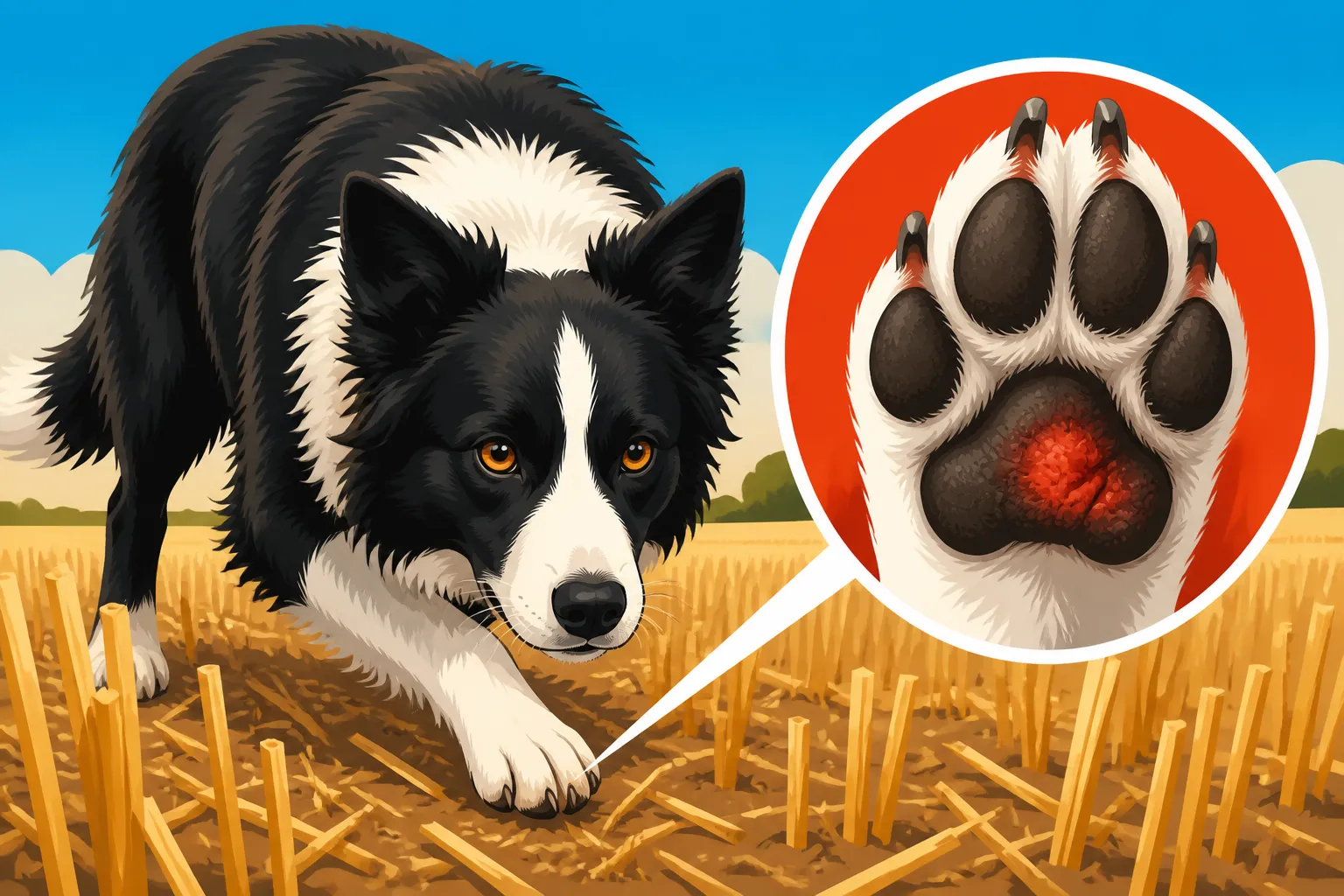
These are perhaps the most common and immediately visible forms of stubble-related pad injury. Abrasions are essentially friction burns or scrapes, where the top layers of the paw pad are worn away by continuous rubbing against the rough, sharp stubble. They might look red, raw, and tender, much like a severe carpet burn on human skin. While often not deep, they are incredibly painful due to the exposed nerve endings.
More serious are cuts and punctures. Sharp stubble stalks, particularly from corn or tougher crop residues, can slice into the pad, creating linear cuts. These can range from shallow nicks to deep lacerations that bleed profusely and may require sutures. Punctures are equally insidious; a rigid stalk can penetrate the pad, leaving a small, often inconspicuous hole on the surface, but potentially causing significant damage to the underlying tissue. These small holes can also trap debris, like bits of the stalk itself, leading to infection if not thoroughly cleaned. Sometimes, these deep punctures can be hard to spot until swelling or lameness becomes pronounced.
Blisters, Cracks, and Dryness
Beyond direct trauma, the relentless friction and harsh conditions of stubble fields can lead to other painful pad issues. Blisters form when repetitive rubbing causes the outer layers of the skin to separate, filling with fluid. These are incredibly painful, especially if they rupture, leaving a raw, open wound susceptible to infection. Imagine the pain of a blister on your own foot, and then picture your dog trying to run on it.
Stubble, particularly in dry environments, also has a dehydrating effect on paw pads. The constant abrasion strips away natural oils and moisture, leading to dryness and cracking. These cracks can start as minor fissures but can deepen over time, becoming incredibly painful and often bleeding. Deep cracks can be very slow to heal, as the act of walking re-opens them. Dry, cracked pads are not only uncomfortable but also lose some of their natural shock-absorbing capabilities, making them more prone to further injury. These issues can quickly lead to your dog being off their feet, and it's essential to address them swiftly.
Inflammation and Bruising
Sometimes, the damage isn't a visible cut or crack, but rather internal trauma from constant impact. Prolonged work on hard, uneven stubble can lead to significant inflammation within the pad tissues. This might manifest as swelling, warmth to the touch, and a general tenderness when you examine the paw. The inflammation is the body’s response to microscopic damage, and it can cause considerable discomfort and lameness, even without an open wound.
Bruising is another common, yet often unseen, injury. The constant pressure and impact against hard stubble can rupture tiny blood vessels beneath the surface of the pad, leading to internal bleeding and bruising. While you might not see a purple bruise as clearly as you would on human skin, the affected area will be tender, and your dog might exhibit a reluctance to put weight on the paw. Both inflammation and bruising can be quite debilitating, causing your Border Collie to slow down or outright refuse to work, which is unusual for their driven nature. If you notice your dog starting to favor a paw or showing a subtle limp that comes and goes, especially after working, it's worth investigating. You might also want to read The Limp That Shows Up After a Border Collie Works for more insights into this specific issue.
Proactive Prevention Strategies on the Farm and Field
The best treatment for pad damage is always prevention. For Border Collies working on stubble, a proactive approach is absolutely essential to keep their paws healthy and their spirits high.
Conditioning and Gradual Exposure
Just like an athlete trains for a marathon, a Border Collie's paws need conditioning for the rigors of stubble fields. You can't expect a dog whose pads are accustomed to soft grass to suddenly handle sharp stubble without consequence. The key is gradual exposure and consistent conditioning over time, not just before a big trial or a busy work season. Start by introducing your dog to slightly rougher, but not overly abrasive, terrain for short periods. Gradually increase the duration and intensity of work on more challenging surfaces.
This process builds up the natural toughness and thickness of their paw pads. Think of it like building calluses on your own hands. Throughout the year, even during off-seasons, ensure your dog has opportunities to walk and run on various textures of ground – gravel, dirt, and short grass – to maintain pad resilience. Avoid long, intense sessions on stubble, especially if your dog hasn't worked on such ground for a while. A well-conditioned paw is far less likely to suffer severe injuries than one that is soft and unaccustomed to harsh terrain.
Protective Footwear: Boots and Balms
Sometimes, conditioning isn't enough, or the terrain is simply too challenging. This is where protective gear comes into play. Dog boots are an excellent option for protecting paws from stubble, especially during long working days or when pads are already sensitive. However, not all boots are created equal, and finding a good fit is crucial. Boots need to be snug enough to stay on but not so tight that they restrict blood flow or cause rubbing. It often takes some trial and error, and getting your dog used to wearing them around the house before heading out into the field is key. You can find a wide variety of durable dog boots on platforms like Chewy or Amazon, designed for working dogs and rough terrain.
Pad balms and waxes also offer a layer of protection and essential moisture. Applied regularly, these products can help create a protective barrier against abrasions and environmental factors, while also keeping the pads supple and preventing cracks. Look for natural, non-toxic formulations that can be absorbed without leaving a greasy residue. Applying a good pad balm before and after working on stubble can make a significant difference in maintaining paw health. For more on this, check out Whether Boots Work on a Border Collie.
Field Management and Smart Work Practices
Even with the best conditioning and protective gear, smart management of work sessions in stubble fields is paramount. Whenever possible, consider the conditions of the field. Is the stubble freshly cut and extremely sharp? Has there been recent rain that might have softened the ground and the stubble slightly? Working on stubble after a light rain can sometimes reduce the abrasiveness of the stalks.
Varying the terrain you work on is also a wise strategy. Don't exclusively work your Border Collie on stubble day after day. Integrate sessions on softer ground or pasture to give their pads a break and allow for recovery. During a long work day, schedule regular breaks to allow your dog to rest and for you to quickly inspect their paws. Don’t wait until the end of the day when injuries might be more advanced. Short, focused sessions on stubble are often preferable to marathon runs that push paws to their breaking point. Being mindful of these practices can significantly reduce the risk of injury. Every handler should make a habit of Checking a Border Collie Over After Field Work, especially after working difficult ground.
First Aid and Ongoing Care for Damaged Pads
Despite our best efforts, injuries can still happen. Knowing how to provide immediate first aid and subsequent ongoing care is vital to ensure your Border Collie recovers quickly and completely.
Immediate Assessment and Cleaning
The moment you suspect a pad injury, whether your dog is limping, licking their paw excessively, or you see visible blood, stop work immediately. It's crucial not to push them further. Gently but thoroughly examine the paw. Look for cuts, punctures, redness, swelling, or any foreign objects lodged in the pad.
If you find a wound, the first step is always to clean it. Use warm water and a mild, dog-safe antiseptic solution. If possible, flush the wound to remove any dirt, debris, or small pieces of stubble that might be embedded. Tweezers can be used carefully to extract any larger, visible fragments. If the cut is deep, bleeding heavily, or you suspect a foreign object is deeply lodged, do not try to handle it yourself – a trip to the veterinarian is warranted. Signs of infection, such as pus, excessive swelling, severe redness, or a foul odor, also require immediate veterinary attention.
Bandaging and Protection During Healing
Once the wound is clean, it's often best to bandage it to protect it from further contamination and allow it to heal. Start with a non-stick sterile pad directly over the wound. Then, use a layer of gauze or soft padding, making sure to separate the toes to prevent moisture buildup. Finally, apply a self-adhering wrap (like VetWrap) firmly but not too tightly. You should always be able to slip two fingers under the top edge of the bandage. Change the bandage daily, or more frequently if it gets wet or dirty, to keep the wound clean and monitor healing progress.
During the healing process, it's crucial to prevent your Border Collie from licking or chewing at the bandage or the wound itself. An Elizabethan collar (cone) or a soft recovery collar might be necessary to deter them. Keep your dog's activity restricted to short leash walks on soft surfaces to minimize pressure on the injured paw. Ensure they have a clean, comfortable place to rest.
| Injury Type | Symptoms | Immediate Action |
|---|---|---|
| Abrasions | Red, raw, tender, superficial scrapes | Clean with mild antiseptic, apply a thin layer of antibiotic ointment, light bandage/boot for protection. |
| Cuts/Lacerations | Bleeding, visible separation of skin, deep or shallow | Clean thoroughly, apply direct pressure to stop bleeding. If deep or gaping, see a vet for stitches. |
| Punctures | Small, deep hole, sometimes little bleeding | Clean thoroughly, express gently to check for embedded debris. Monitor for infection. Vet if deep or swollen. |
| Blisters | Fluid-filled bubble, tender | Keep clean, do not pop. If it breaks, treat as an open wound. Protect with soft bandage. |
| Cracks | Fissures in pad, sometimes bleeding, painful | Clean, apply moisturizing balm. For deep cracks, light bandage and rest. |
| Bruising/Swelling | Lameness, tenderness, heat in pad, no open wound | Rest, cold compress (if tolerated). Monitor for worsening. Vet if severe or prolonged lameness. |
Long-Term Recovery and Re-Entry to Work
Healing a paw pad injury takes time, and patience is key. Rushing your Border Collie back to work too soon will almost certainly lead to re-injury or chronic problems. Depending on the severity of the wound, it could take several weeks for the pad to fully toughen up again. Gradually reintroduce activity, starting with short walks on soft ground and slowly increasing duration and intensity.
Throughout the recovery period, continue to inspect the paw daily. Look for any signs of lingering tenderness, swelling, or changes in the pad's texture. A good, balanced diet rich in protein and essential fatty acids can support tissue repair and overall health. You might even consider high-quality performance foods available from brands like Ollie or Chewy that are formulated for active dogs, ensuring they get the nutrients needed for optimal recovery. Remember, the goal is not just to heal the wound, but to restore the pad's full strength and resilience before returning to demanding work. It’s all part of The Weekly Once-Over a Working Border Collie Gets. For dogs in full work, it’s worth thinking about Feeding a Border Collie on a Performance Diet.
Differentiating Pad Damage from Other Foot Issues
Sometimes, a limp or paw licking isn't always a straightforward stubble injury. The foot is a complex structure, and other issues can present with similar symptoms, making it important to know the difference for proper treatment.
Grass Seeds and Foreign Objects
While stubble itself is a foreign object, other things can get lodged in a Border Collie's paw, especially one working in varied terrain. Grass seeds are notorious culprits. These barbed seeds can burrow into the skin between toes or even into the pad itself, creating tiny, painful tracts that can become infected. Symptoms might include persistent licking, swelling between the toes, a small draining wound, or lameness. Unlike a stubble cut, a grass seed often leaves no immediate visible injury on the surface, but the underlying irritation is significant.
Other foreign objects, like thorns, splinters, or even small pieces of glass or metal, can also cause acute pain and lameness. The challenge is that these can be very difficult to spot, especially if they have broken off beneath the surface. A thorough inspection, sometimes requiring clipping the fur around the paw and gently probing, is necessary to rule out these hidden dangers. If you suspect a deeply embedded object, a vet visit is crucial for safe removal and to prevent further infection. This is a common concern, and Grass Seeds in a Border Collie's Feet offers more detailed information.
Nail Issues and Toe Injuries
Not all paw problems stem from the pads themselves. The nails and toes are also vulnerable to injury, especially in active Border Collies. Overly long nails can catch on rough ground, tearing or breaking, which is incredibly painful and can lead to bleeding. They can also cause discomfort by pushing up into the nail bed, affecting gait. Similarly, dewclaws (if present) are particularly prone to getting snagged and tearing. Regular nail trimming is a simple preventive measure against these kinds of injuries. For guidance, consider How Often a Border Collie's Nails Need Cutting.
Toe injuries, such as sprains, fractures, or bruising, can also cause lameness. A sudden twist or impact can bruise a toe joint or even fracture one of the small bones. These injuries might not show visible external signs beyond swelling, but your dog will be in pain and reluctant to bear weight. Differentiating between a pad injury and a toe injury often requires careful palpation of each individual toe and joint, and sometimes an X-ray by your veterinarian. You can also gain more insights from Toe and Pad Injuries on a Working Border Collie.
Allergic Reactions and Skin Conditions
While less common than traumatic injuries, allergic reactions or other skin conditions can also affect a Border Collie's paws, mimicking some symptoms of pad damage. Environmental allergies (to pollen, grass, dust mites) or food allergies can manifest as itchy, red, and inflamed paws. This can lead to excessive licking and chewing, which in turn can cause secondary infections, raw spots, and even thickening of the paw pads over time.
Contact dermatitis, a reaction to something the paw has come into direct contact with (like certain chemicals, fertilizers, or even plant material), can also cause redness, itching, and irritation. Differentiating these from stubble trauma involves observing other symptoms – is the dog licking other parts of its body? Are there other signs of allergies? The pain from a physical injury is usually acute and localized, whereas allergic itching can be more pervasive and chronic. If you suspect allergies, your vet can help identify the cause and recommend appropriate treatment, which might involve dietary changes or medication. For more on this, check out Allergies in a Border Collie.
Disclaimer
This article is for general informational purposes only and does not constitute professional advice. Laws, prices and regulations vary by location and change over time. Consult a qualified professional for guidance on your specific situation.