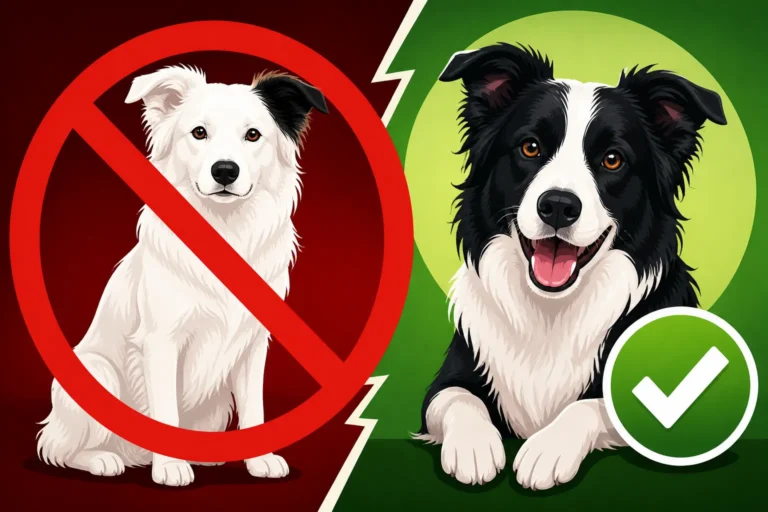
The ABCA and Its Working Registry
Bringing a Border Collie into your life can be an incredibly rewarding experience, but for many prospective owners, the alphabet soup of different registries and their conflicting philosophies can feel like a confusing maze. When you start researching, you quickly encounter acronyms like ABCA and AKC, and it’s easy to get lost in the details, wondering which one truly represents the historical essence and working integrity of this remarkable breed. This guide aims to demystify the American Border Collie Association (ABCA) and its working registry, explaining its purpose, its requirements, and why it holds such significance for those dedicated to preserving the Border Collie's natural abilities.
Understanding the American Border Collie Association (ABCA)
The American Border Collie Association (ABCA) isn't just another dog registry; it's a living testament to a profound philosophy about what a Border Collie is and should be. For its founders and members, the Border Collie is first and foremost a working stock dog, defined by its intelligence, its intense herding instinct, and its ability to gather and control livestock. The ABCA was established to protect these inherent working characteristics, ensuring that the breed's future generations continue to possess the drive, biddability, and physical soundness necessary for demanding work in the field.
More Than Just a Name: The ABCA's Core Philosophy
At its heart, the ABCA's philosophy revolves around preserving the functional integrity of the Border Collie. They believe that a Border Collie's value lies not in its appearance conforming to a static standard, but in its dynamic ability to perform its historical job. This means focusing on proven working ability over cosmetic traits. When you register a dog with the ABCA, you're not just getting a piece of paper; you're acknowledging a lineage of dogs bred for their intelligence, trainability, and deep-seated instinct to work sheep. This emphasis ensures that the core traits that make a Border Collie exceptional – its "eye," its drive, its agility – are not diluted or lost in pursuit of arbitrary show ring aesthetics.
This dedication to working ability permeates every aspect of the ABCA. From their registration criteria to the events they sanction, the focus remains steadfastly on the dog's capacity to be an effective partner in the field. It’s a culture where performance truly matters, and where a dog’s reputation is built on its demonstrated skill, rather than its conformation to a written standard. Breeders who adhere to the ABCA ethos are typically striving to produce dogs that excel on stock, dogs that are a pleasure to work with, and dogs that embody the historical purpose of the breed.
The Historical Roots of the ABCA's Formation
The formation of the ABCA in 1987 was a direct response to growing concerns within the working Border Collie community. For decades, the Border Collie had been admired and developed solely for its working prowess, largely overseen by organizations like the International Sheep Dog Society (ISDS) in the UK, which had established itself as the premier registry for working Border Collies globally. When the American Kennel Club (AKC) began making moves toward full breed recognition for the Border Collie, many working handlers and breeders saw this as a significant threat to the breed's working future. They feared that entry into the conformation show ring would inevitably lead to a divergence from working lines, prioritizing appearance over ability.
The working community worried that once dogs were bred for specific looks rather than herding aptitude, the intense drive and instinct that define a Border Collie would be compromised. This wasn't a hypothetical fear; they had seen it happen with other herding breeds whose working abilities declined after widespread conformation recognition. The ABCA was thus founded by a group of passionate working Border Collie owners and breeders who wanted to safeguard the breed's heritage in North America. They wanted a registry that explicitly championed the working dog and would act as a bulwark against what they perceived as the detrimental influence of conformation showing. Their goal was to create a sanctuary where the working Border Collie could thrive, untainted by pressures to conform to a show standard. You can learn more about this broader context by reading The Working and Show Split in Border Collies.
The ABCA vs. Other Registries: A Key Distinction
When people talk about dog registries, they often default to thinking of the American Kennel Club (AKC). However, the ABCA operates on fundamentally different principles. The AKC primarily registers purebred dogs based on conformation to a breed standard and participation in various dog sports, including herding. While they do offer herding titles, their overarching structure emphasizes physical appearance as much, if not more, than working ability. This is the crux of the "split" that led to the ABCA's creation.
The ABCA, by contrast, states unequivocally that it is a working registry. It focuses on maintaining detailed pedigrees of Border Collies proven to be capable of herding livestock. It's not about what the dog looks like on a table, but what it does in the field. This distinction is critical for anyone seeking a true working Border Collie, or even a highly driven companion from proven working lines. The ABCA doesn't have a breed "standard" for physical appearance; instead, its standard is functional: the ability to work stock. This core difference is precisely Why Working Breeders Fought AKC Recognition and why many continue to view ABCA registration as the gold standard for authentic Border Collies.
The Working Registry: What Makes it Different?
The term "working registry" isn't just a label; it’s a commitment. For the ABCA, it means that every aspect of their registration process and their mission is geared towards ensuring the Border Collie remains true to its roots as a livestock-moving machine. This isn't about exclusive clubs or snobbery; it's about a deep-seated respect for the breed's historical purpose and an understanding that losing that purpose would fundamentally alter the Border Collie itself.
The 'Working' Ethos: Prioritizing Instinct and Ability
The ABCA’s "working" ethos means that a dog’s innate herding instinct and demonstrable ability on livestock are paramount. It’s not enough for a dog to look like a Border Collie; it must act like one. This means having the "eye"—that intense, focused stare that mesmerizes sheep—the desire to gather and control stock, and the intelligence to learn complex commands and make independent decisions in dynamic working situations. These traits are cultivated through generations of careful breeding, with an eye towards performance. A dog from strong working lines will often show an instinct to herd from a very young age, even if it's just trying to gather the family cat or the kids in the backyard.
This focus stands in stark contrast to registries that might prioritize markings, ear set, or coat length. While a healthy, well-conformed dog is important for endurance and longevity in the field, these physical traits are secondary to the burning desire to work. The ABCA believes that when you breed solely for appearance, you invariably lose the working drive, because those traits are not necessarily linked. The best way to ensure a dog retains its herding instinct is to breed from dogs that demonstrate exceptional instinct and ability on stock themselves. This commitment to the working ethos helps maintain the breed's legendary intelligence and biddability. For more on what makes them unique, see What Separates a Border Collie From Every Other Herder.
How a Border Collie Earns ABCA Registration
Earning ABCA registration isn't just a matter of having parents of the right breed; it's about proving a working pedigree. For puppies, the simplest route is to be born from two ABCA-registered parents. If both sire and dam are already in the ABCA studbook, their litter can be registered, and each puppy will receive its own registration papers. This assumes the breeder has followed all the necessary steps for litter registration, which includes confirming the parentage and submitting the required forms and fees.
However, the ABCA also allows for the registration of adult Border Collies whose parents may not have been ABCA-registered, or whose lineage might be partially unknown, provided the dog can prove its working ability. This "registration on merit" clause is a crucial aspect of the ABCA's commitment to the working dog. It means that if a dog can demonstrate legitimate herding ability, typically through participation in sanctioned trials or by providing verified documentation of its working prowess, it can be admitted to the registry. This ensures that valuable working genetics are not lost simply because of a paperwork anomaly in prior generations. It's a pragmatic approach that values actual talent over pure paper pedigree when necessary. Read more about this at How Border Collies Are Registered on Merit.
The Importance of Verified Working Pedigrees
For breeders and serious handlers, a verified working pedigree is gold. It’s more than just a list of names; it’s a roadmap of proven working talent. When you look at an ABCA pedigree, you're seeing generations of dogs that have demonstrated their ability on stock, often with trial results, titles, and field placements listed alongside their names. This information allows breeders to make informed decisions about pairings, aiming to combine lines that complement each other and produce puppies with strong herding instincts and sound temperaments. You can find essential supplies for herding dogs, like sturdy leashes and bowls for on-the-go, from reputable places like Chewy.
This emphasis on verifiable working lines also provides transparency for prospective puppy buyers. If you’re looking for a dog to work sheep or participate in other demanding dog sports, knowing that its ancestors excelled in these areas gives you a much higher probability of success. It indicates a history of selective breeding for traits like trainability, stamina, and intelligence, which are essential not only for a working dog but also for a well-adjusted, active companion. Without this verification, a "Border Collie" could simply be a dog that looks the part but lacks the inherent drive and talent for which the breed is renowned. For a deep dive into the information you should expect from a breeder, look at Which DNA Tests a Border Collie Breeder Should Have Run.
The Benefits of ABCA Registration for Owners and Breeders
Choosing to register with the ABCA offers a distinct set of advantages, particularly for those who prioritize the Border Collie's working heritage and functional excellence. It's not just about compliance; it's about alignment with a community that shares your values for the breed. These benefits extend from the highest echelons of competitive herding to the everyday life of a dedicated Border Collie owner.
Ensuring the Preservation of Working Traits
The primary benefit of ABCA registration, for both breeders and owners, is the assurance that the breed’s fundamental working traits are being actively preserved. By focusing exclusively on working ability for registration and breeding stock, the ABCA helps prevent the dilution of the qualities that make a Border Collie a Border Collie. This means future generations will continue to possess the intense "eye," the keen intelligence, the natural gathering instinct, and the incredible athleticism that are hallmarks of the breed. Without such a focus, these invaluable traits could slowly fade, leading to dogs that are Border Collies in name and appearance only.
This commitment to working traits translates directly into the kind of dog you get. An ABCA-registered Border Collie is more likely to have a strong innate desire to work, making it highly trainable and often excelling in various dog sports beyond herding, such as agility, obedience, and flyball. Even if you don't plan to work stock, these inherent traits contribute to a highly engaged and intelligent companion who thrives on mental and physical challenges. This preservation efforts ensures the Border Collie remains distinct and capable, true to its historical purpose.
Connecting with a Community of Like-Minded Enthusiasts
One of the often-understated benefits of ABCA registration is gaining access to a vibrant, supportive community. The ABCA fosters a network of breeders, handlers, and enthusiasts who share a common passion for the working Border Collie. This community is a priceless resource, offering opportunities to learn, share knowledge, and connect with people who truly understand the unique demands and joys of owning such a dog. Whether you're a seasoned trialist or a new owner looking for guidance, being part of this network can provide invaluable support.
This community often hosts clinics, training events, and informal gatherings, creating a rich environment for learning and growth. Members are typically happy to share advice on everything from training techniques for herding commands like Come Bye and Away to Me on a Border Collie to nutrition for active dogs. You’ll find mentorship, friendships, and a sense of belonging with people who appreciate the Border Collie for its true essence. It’s a group united by the dog’s working ability, rather than superficial distinctions.
Guiding Puppy Buyers to Responsible Breeders
For prospective puppy buyers, the ABCA registry serves as a crucial guide to finding responsible breeders who prioritize health, temperament, and working ability. When you seek an ABCA-registered puppy, you are inherently narrowing your search to breeders who adhere to the association's principles. This typically means they are breeding with a clear purpose: to produce healthy, mentally sound, and instinctively driven working dogs. These breeders are generally more knowledgeable about their lines, their dogs' working capabilities, and the health clearances important for the breed.
A responsible ABCA breeder will be transparent about their dogs' pedigrees, health testing results, and working achievements. They will ask you many questions to ensure their puppies go to suitable homes, and they will likely offer ongoing support. This level of diligence helps steer buyers away from less reputable sources and increases the likelihood of acquiring a well-bred Border Collie that will thrive in an appropriate environment. This peace of mind is incredibly valuable when making a long-term commitment to a highly intelligent and active breed. To understand typical costs, see What a Border Collie Puppy Costs From a Working Breeder.
Navigating the Registration Process and Its Requirements
Understanding the specific requirements for ABCA registration is key, whether you’re a breeder registering an entire litter or an individual looking to register an adult dog. The process is designed to uphold the integrity of the working registry, ensuring that only true Border Collies with documented or proven working lineage are admitted.
Registering a Puppy from ABCA-Registered Parents
The most straightforward path to ABCA registration is for a puppy born to two parents who are already fully registered with the ABCA. This is considered the standard process for breeders. Once the litter is born, the breeder submits a "Litter Application" to the ABCA. This application requires detailed information about both the sire and dam, including their ABCA registration numbers, and a complete list of all puppies in the litter, specifying their sex and color. This process confirms the parentage and ensures that the puppies' lineage is accurately recorded.
Upon approval of the litter application, individual registration certificates are issued for each puppy. These certificates serve as proof of the puppy's ABCA lineage and are typically provided to the new owners when they take their puppy home. It's crucial for buyers to ensure they receive these official papers, as they are the foundation for any future breeding or competitive endeavors with that dog. This streamlined process encourages breeders to use already established and proven working lines within the ABCA framework.
Requirements for Adult Dogs with Unregistered Parents
What if you have a Border Collie whose parents aren't ABCA-registered, or perhaps a dog with an unknown background, but it clearly demonstrates strong working ability? This is where the ABCA's "registration on merit" comes into play, a vital aspect of their philosophy. To register an adult dog without full ABCA parentage, you typically need to provide substantial evidence of its working ability. This might include earning working titles from recognized herding organizations, providing testimonials from experienced stock dog handlers, or participating in ABCA-sanctioned events where the dog's aptitude can be observed and verified.
The ABCA will also require pedigree information to the best of your ability, even if it's incomplete, to help establish the dog's likely Border Collie heritage. Photographs of the dog are often requested to confirm breed type, and in some cases, a DNA test might be needed to confirm parentage if a partial pedigree is presented. This option ensures that genuinely talented working Border Collies, even those from less documented backgrounds, can be included in the registry, preserving valuable genetics for future generations. It reinforces that actual working talent is paramount. This is distinct from most breed registries, and it's what differentiates the ABCA from, say, the AKC, which generally requires a full, registered pedigree.
Understanding the ABCA's Litter Registration Rules
Beyond simply having registered parents, ABCA litter registration involves adherence to specific rules designed to promote responsible breeding and maintain the breed's health and integrity. Breeders are expected to ensure that both the sire and dam are of sound health, good temperament, and possess verifiable working ability. While the ABCA doesn't have explicit health testing requirements for registration in the same way some other organizations might, responsible breeders within the ABCA community are highly encouraged to perform health clearances for common Border Collie issues such as hip and elbow dysplasia, eye anomalies, and genetic conditions.
The ABCA also emphasizes ethical breeding practices. They generally do not condone breeding practices that could be detrimental to the breed's health or working ability. For example, some color pairings, like merle-to-merle, which can lead to serious health issues, are discouraged, though the ABCA's focus remains on performance, not aesthetic prohibitions. This also impacts Litter Registration Costs for a Border Collie Breeder, which will cover the administrative work of processing these applications and providing the documentation that breeders and owners need. The overall aim is to encourage thoughtful breeding decisions that produce healthy, capable, and well-adjusted Border Collies.
Challenges and Criticisms Faced by the ABCA
Despite its clear mission and dedicated following, the ABCA is not without its challenges and criticisms. As with any organization striving to maintain a specific standard for a breed, debates and differing viewpoints naturally arise, particularly concerning the balance between tradition, health, and broader public perception.
The Debate Around Conformation and Aesthetics
The most significant and long-standing debate surrounding the ABCA is its staunch opposition to conformation showing and any emphasis on aesthetics. While this is the very foundation of their existence—protecting the working dog from what they see as the corrupting influence of the show ring—it sometimes leads to misunderstandings from those outside the working community. Critics sometimes argue that by completely disregarding conformation standards, the ABCA might inadvertently overlook structural faults that could impact a dog's longevity or soundness, even if that dog is a brilliant worker. A dog needs to be physically sound to perform demanding work for years.
However, the ABCA's counter-argument is that working demands themselves create a natural selection for sound structure. A dog with poor conformation simply wouldn't be able to excel in the rigorous environment of herding trials or farm work over time. They believe that breeding for function inherently produces appropriate form. This philosophical divide is deep-seated, as detailed in Why the ABCA Objects to Conformation Showing, and it remains a core differentiator between the ABCA and other kennel clubs that embrace both working and conformation aspects of a breed.
Balancing Purity of Lines with Genetic Diversity
Another challenge facing the ABCA, and indeed any purebred registry, is the ongoing task of balancing the preservation of specific working lines with the need to maintain sufficient genetic diversity. While focusing on proven working pedigrees ensures the continuity of desired traits, an overly closed gene pool can potentially lead to an increased risk of inherited health problems. Breeders must be vigilant in health testing and making informed choices to avoid concentrating undesirable genes, even within highly talented working lines.
The ABCA's "registration on merit" clause helps to mitigate this to some extent by allowing valuable dogs from less documented backgrounds to enter the gene pool, thereby introducing new genetic material. However, the overall emphasis on tightly controlled working lines means breeders must be exceptionally diligent about understanding health screening results and utilizing tools like genetic testing to ensure the health and vigor of their breeding stock. Products available from places like Chewy can help support a Border Collie's overall health and well-being, but nothing replaces responsible breeding.
Perceptions from the Non-Working Dog Community
For individuals unfamiliar with the nuances of dog registries, the ABCA's singular focus on working ability can sometimes be misinterpreted. Some outside the working community might view the ABCA as being overly exclusive or even elitist, particularly if they are seeking a Border Collie primarily as a pet or for non-herding sports. They might not understand why a registry would actively distance itself from conformation shows, which are often seen as the mainstream way to evaluate purebred dogs.
This perception can make it harder for the ABCA to communicate its core message to a broader audience, which might then gravitate towards more widely recognized registries. However, for those who take the time to understand the ABCA's history and mission, its dedication to the working Border Collie is seen not as exclusivity, but as a vital act of preservation. The ABCA is concerned with producing true Border Collies for those who value the breed's original purpose, whether that manifests in a competitive trial dog or an intensely engaged family companion.
Beyond Registration: The ABCA's Role in Border Collie Culture
The ABCA's influence extends far beyond merely issuing registration papers. It plays a foundational role in shaping the culture of the working Border Collie in North America, acting as a steward for the breed's heritage and a beacon for ethical practices. It's about nurturing a community and preserving a way of life, not just managing a database.
Promoting Ethical Breeding and Stewardship
A significant aspect of the ABCA's role is its promotion of ethical breeding and responsible stewardship within the Border Collie community. While the ABCA doesn't enforce strict breeding contracts like some organizations, its guidelines and the ethos of its membership strongly encourage health testing, sound breeding choices, and proper care for all dogs. Breeders within the ABCA are expected to prioritize the health, temperament, and working ability of their dogs, striving to produce well-adjusted puppies that will be successful in their intended roles.
This also means fostering a deep understanding of the breed's unique needs. ABCA breeders are typically excellent resources for new owners, providing guidance on everything from training to nutrition. They understand that a Border Collie from working lines needs substantial mental and physical engagement, and they strive to educate prospective owners on the commitment required. This proactive approach to education and mentorship is a critical component of ensuring the Border Collie thrives.
Supporting Herding Trials and Education
The ABCA is a central pillar in the world of competitive sheepdog trials in North America. It sanctions trials, maintains records, and helps to foster an environment where handlers and their dogs can test and refine their skills. These trials are not just competitions; they are crucial events for evaluating breeding stock, demonstrating the effectiveness of training methods, and preserving the art of working livestock. Observing What Happens at a Sheepdog Trial With a Border Collie reveals the complex and skillful dance between handler, dog, and sheep that the ABCA aims to champion.
Beyond trials, the ABCA also actively supports educational initiatives. This includes hosting training clinics, sponsoring seminars, and providing resources for new handlers interested in learning the ropes of herding. This dedication to education ensures that the knowledge and skills required to train and work a Border Collie effectively are passed down to new generations, safeguarding the future of the working dog. Many members also volunteer their time to mentor newcomers, reflecting the collaborative spirit that defines the working Border Collie community.
The ABCA's Vision for the Future of the Breed
The ABCA's vision for the future of the Border Collie is rooted in continuity: to ensure that the breed remains, first and foremost, a supreme working stock dog. This means continuing to advocate for breeding based on ability, promoting responsible ownership, and supporting the events and education that keep the working heritage alive. They aim to be the uncompromising guardian of the Border Collie's unique functional characteristics, ensuring that this intelligent, driven, and capable breed continues to be available for those who value its true purpose.
Their commitment means a future where the Border Collie is understood not just as a high-energy pet, but as a dog designed for a specific, demanding job. It's a vision where the legacy of dogs like Old Hemp, the foundation sire of the modern Border Collie, continues to influence breeding decisions, prioritizing the traits that make these dogs unparalleled partners in the field. This long-term dedication ensures that the distinctive traits and instincts of the Border Collie will be preserved for many generations to come, enriching the lives of both dogs and their human companions.
Disclaimer
This article is for general informational purposes only and does not constitute professional advice. Laws, prices and regulations vary by location and change over time. Consult a qualified professional for guidance on your specific situation.