What Separates a Border Collie From Every Other Herder
Many aspiring dog owners dream of bringing home a clever, energetic herding dog, but it’s crucial to understand that not all herders are cut from the same cloth. There’s a profound difference between a Border Collie and other herding breeds, a distinction rooted deeply in history, instinct, and a unique way of interacting with the world. This comprehensive guide will explore the specific traits, working styles, and innate characteristics that truly set the Border Collie apart, offering you insight into their unparalleled capabilities and intense needs.
The Unmistakable "Eye": More Than Just a Stare
When you talk about Border Collies, one of the first things that comes up is "the eye." It's not just a cute look or a curious glance; it's a powerful tool, an intrinsic part of their herding prowess that utterly distinguishes them from most other breeds. This intense, almost hypnotic gaze is the very foundation of their working method, allowing them to exert control over livestock without a single bark or nip.
The Border Collie Stare and Where It Comes From
"The eye" is that deep, penetrating stare a Border Collie uses to influence stock. It's an almost predatory crouch, a focused intent that tells a sheep exactly what the dog wants it to do, without laying a tooth on it. This unique technique dates back to dogs like Old Hemp, Born in Northumberland in 1893, whose calm, powerful working style revolutionized herding and laid the genetic blueprint for nearly every Border Collie alive today. It's a method of psychological pressure, an unspoken communication that relies on the dog's sheer presence and determination, making them incredibly effective at moving even stubborn animals.
This intense gaze is more than just a visual cue; it's a deep-seated instinct. While many dogs stare, the Border Collie's "eye" is a finely tuned instrument, part of a modified predatory sequence where the chase and kill instincts are inhibited, leaving only the stalk and gather. It allows them to maintain control from a distance, directing a flock with subtle shifts in body weight and eye contact, creating an invisible force field around the sheep. This ancient, innate ability is a testament to centuries of selective breeding for a very specific, highly refined herding style.
For an owner, understanding "the eye" is critical. It explains why a Border Collie might stalk a toddler, an elderly person, or even a vacuum cleaner with the same intensity it would use for sheep. It's not aggression; it's instinct. They are attempting to gather and control, and without proper redirection, this powerful tool can be applied inappropriately to anything that moves. Recognizing this drive helps owners channel it into constructive outlets rather than becoming frustrated by what seems like odd behavior.
Working Style Versus Other Herding Breeds
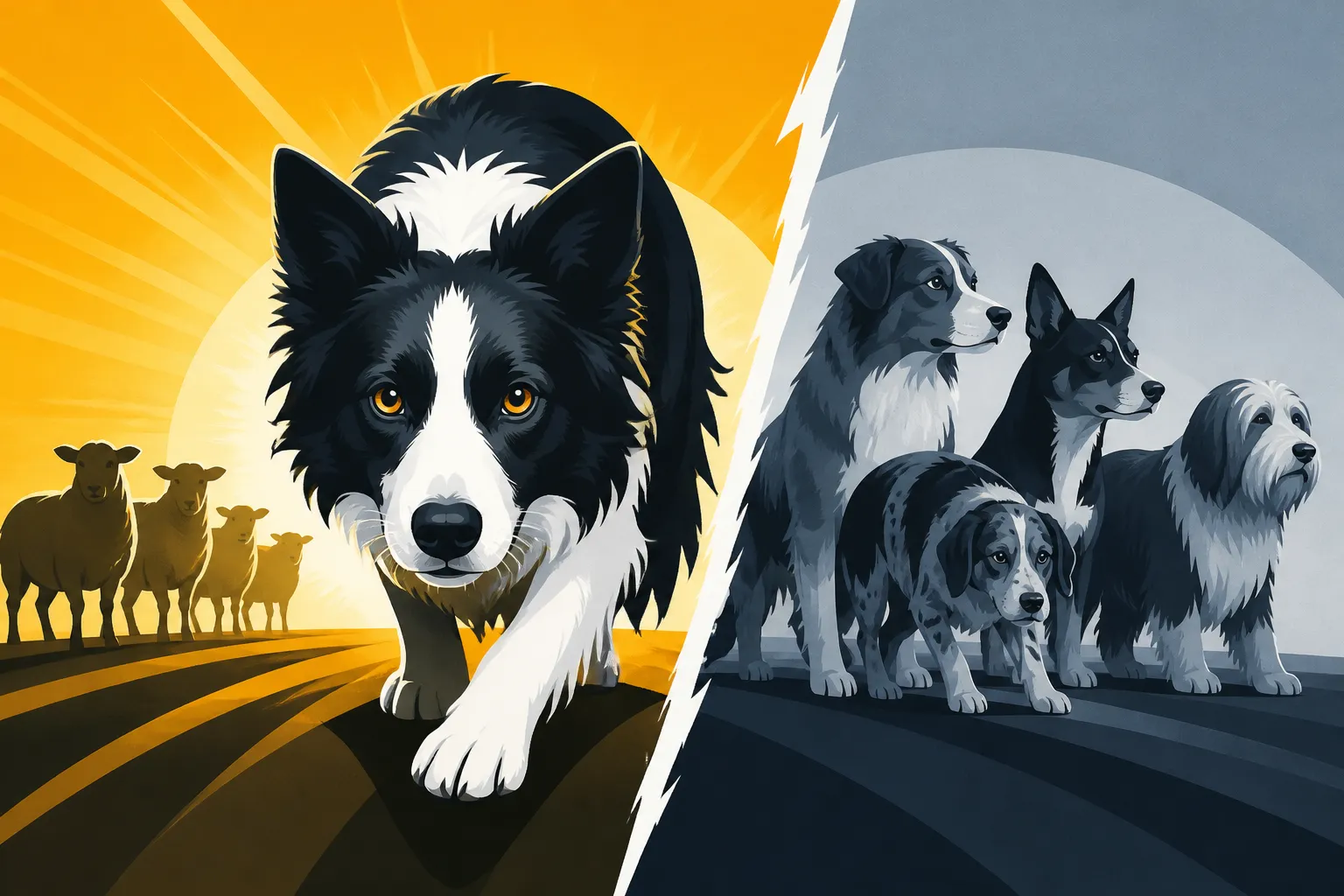
The Border Collie's herding style is fundamentally different from many other well-known herding breeds. Consider the Australian Shepherd, which often works closer to stock, using more barking, nipping, and physical presence to move animals. German Shepherds, while sometimes used for herding, are often "heading dogs" or protective guardians, using intimidation and body blocking more overtly. Then there are the smaller breeds like the Corgi, traditionally "heelers," nipping at the heels of cattle to drive them forward. The Border Collie, by contrast, typically works further off stock, using subtlety, flanking movements, and the psychological pressure of "the eye" to gather and move animals with precision.
This distinction is crucial because it speaks to the core purpose for which each breed was developed. Border Collies were bred in the rugged borderlands of Scotland and England to gather scattered sheep over vast, often wild terrain. Their job was to bring the sheep to the shepherd, often over long distances and out of sight. This required immense independence, problem-solving abilities, and the capacity to control stock with minimal physical force, relying instead on their intelligence and silent command. Other breeds, designed for different types of stock or terrain, developed alternative methods that suited their specific tasks.
Moreover, the Border Collie's gathering instinct means they are often driven to bring things together and to their handler. This manifests in seemingly endearing ways, like trying to round up family members into one room, but it also underlies their incredible effectiveness on a trial field, where the goal is often to bring a flock from a distant point directly to the handler's feet. This inherent drive for collection and control, executed with such precision and minimal fuss, is a hallmark of the breed and a major reason why What Separates a Border Collie From Every Other Herder is such an important question.
Herding for Purpose Versus Play
For a Border Collie, herding is rarely just a game; it's often a deep-seated, intrinsic need that drives their very being. While a Golden Retriever might enjoy a game of fetch as a fun diversion, for many Border Collies, activities that tap into their herding drive are a fundamental fulfillment. There's a profound satisfaction they derive from engaging in tasks that allow them to utilize their natural instincts, whether it's on a working farm or in a structured dog sport environment. This isn't just about physical activity; it's about mental and emotional contentment.
When this powerful instinct isn't given a constructive outlet, a Border Collie will inevitably find its own "job," which can lead to a host of challenging behaviors. This might involve A Border Collie Circling Children in the Yard, trying to "herd" passing cars, or fixating on moving shadows and reflections. These behaviors aren't malicious; they are simply the manifestation of an unfulfilled genetic imperative. The dog isn't trying to be naughty; it's trying to be a Border Collie, using the tools it was born with on whatever targets are available.
Therefore, providing a Border Collie with an appropriate outlet for its drive is paramount to its well-being and to a harmonious household. This might be actual stock work, if available, or a highly structured dog sport like agility, obedience, or flyball, where their intelligence and athleticism can be channeled. Even advanced trick training or scent work can provide a mental "job" that helps satisfy their need for purpose. Without this, owners often find themselves struggling with a dog that is perpetually "on," anxious, or destructive, simply because its core identity is not being addressed.
An Unparalleled Intellect: Brainpower Beyond Commands
It's common knowledge that Border Collies are smart, often topping lists of canine intelligence. But their intellect goes far beyond simply learning commands quickly. It's a complex cognitive ability that involves problem-solving, abstract thought, and an astonishing capacity for understanding human language and intent. This kind of brainpower is what truly elevates them above many other breeds.
Why the Border Collie Is Called the Smartest Breed
The reputation of the Border Collie as the "smartest breed" isn't just anecdotal; it's often backed by studies and real-world examples. They consistently rank at the top in intelligence assessments, demonstrating not only a rapid ability to learn new commands but also a remarkable capacity for understanding concepts and generalizing knowledge. This isn't just about rote memorization; it's about genuine cognitive flexibility. For instance, dogs like Chaser, the Border Collie With the Largest Vocabulary, have demonstrated an ability to learn hundreds, even thousands, of distinct object names, and even understand basic grammatical structures, putting them on a different plane than most other breeds.
Their intelligence is often characterized by a keen observational ability and a knack for anticipating their handler's next move. They don't just wait for a command; they often seem to predict it, or even understand the desired outcome before the instruction is fully given. This manifests in their ability to learn new tasks in an astonishingly short number of repetitions. How Few Repetitions a Border Collie Needs is often cited by trainers, with many Border Collies grasping complex concepts after just one or two trials, a speed that can be both exhilarating and challenging for an owner.
This profound intelligence means they are constantly processing information, analyzing their environment, and trying to understand their role within it. They thrive on mental challenges and derive immense satisfaction from learning and solving problems. This is a far cry from a dog that simply wants to please; a Border Collie often wants to understand and master the task. This makes them incredible partners for complex work, but it also means their minds need constant engagement to prevent boredom and the development of undesirable self-made "jobs."
Problem-Solving Abilities and Adaptability
A Border Collie doesn't just execute commands; it thinks about the task at hand. This breed possesses an exceptional ability to problem-solve independently, often without explicit instruction. For example, on a sheep farm, a Border Collie might figure out the best route to gather a dispersed flock or how to cleverly outmaneuver a particularly stubborn ewe, adapting its strategy on the fly. This isn't just obedience; it's applied intelligence, seeing the bigger picture and making autonomous decisions to achieve the objective. This independent thinking is crucial in their original role, where they might be working far from the shepherd, relying on their own judgment.
This adaptability and problem-solving prowess are equally evident in dog sports. In agility, a Border Collie can often adjust its path to take a jump or tunnel correctly even if the handler makes a slight error, demonstrating an understanding of the course rather than just following mechanical cues. In scent work, they can develop incredibly sophisticated search patterns, figuring out the most efficient way to locate a hidden scent. This cognitive flexibility means they can excel at a vast array of disciplines, constantly learning and refining their approach.
However, this high level of intelligence can be a double-edged sword. A bored Border Collie, lacking appropriate mental stimulation, will often use its prodigious brainpower to invent its own puzzles and solutions – which might involve figuring out how to open doors, raid the pantry, or even escape a seemingly secure yard. Owners often find themselves outwitted by their clever companions if they don't stay one step ahead. It’s a constant intellectual dance that requires an owner who is equally engaged and creative in providing consistent, challenging mental outlets.
The Need for Mental Engagement and Its Consequences
For a Border Collie, physical exercise, while important, is simply not enough. Their mental faculties demand just as much, if not more, stimulation. Ignoring this need is one of the most common pitfalls for new Border Collie owners. Mental Work That Tires a Border Collie Faster than endless physical activity is a truth many discover too late. A tired body but an under-stimulated mind often leads to a dog that is still restless, anxious, and prone to developing problematic behaviors.
Without consistent mental challenges, a Border Collie's innate drive and intelligence can manifest in obsessive-compulsive behaviors. This includes notorious issues like Stopping a Border Collie Chasing Shadows and Light, incessant spinning, tail chasing, or even repetitive barking at seemingly nothing. These behaviors aren't just quirks; they are often a sign of a deeply unfulfilled dog, attempting to create order or stimulation in an environment that isn't providing it. They are trying to "work" something, anything, to satisfy their internal drive.
To truly satisfy a Border Collie, owners must commit to a varied and engaging regimen of mental enrichment. This means daily training sessions, puzzle toys (which can be found readily at retailers like Chewy), scent games, learning new tricks, or participation in dog sports. The goal is not just to tire them out, but to engage their intellect, allowing them to solve problems and learn new skills. A Border Collie whose mind is engaged is a far happier, more settled companion than one left to its own devices, no matter how much physical exercise it receives.
Built for Endurance: Athleticism and Drive
The Border Collie's physical conformation is not for show; it is a finely tuned machine built for function. Every aspect of their physical being, from their balanced build to their coat type, speaks to their heritage as a tireless working dog, capable of sustained effort over challenging terrain.
The Athletic Build a Border Collie Standard Describes
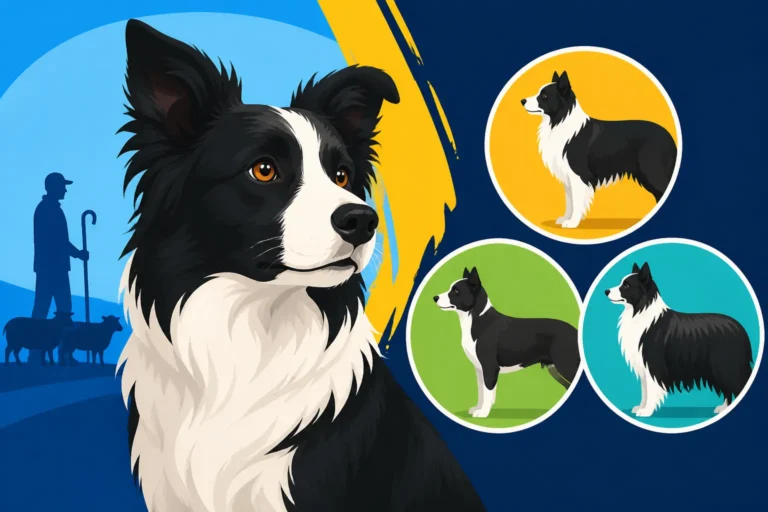
If you look at The Athletic Build a Border Collie Standard Describes, you'll notice an emphasis on balance, agility, and medium size. They are typically between 18 and 22 inches at the shoulder and weigh 30 to 55 pounds, built for speed and endurance without being overly heavy. Their musculature is lean and powerful, allowing for explosive bursts of speed, quick turns, and steady, tireless trotting. There's less emphasis on extreme angulation or heavy bone, which might look impressive in a show ring but would hinder their ability to navigate rough terrain or work for hours on end. Instead, the focus is on a sound, functional structure that supports their athletic demands.
This functional build is starkly different from many show-line dogs, even within other herding breeds, where aesthetic standards might prioritize a certain "look" that isn't always conducive to hard work. A working Border Collie's body is a testament to natural selection and selective breeding for performance: deep chest for lung capacity, strong loin for powerful propulsion, and well-angled shoulders and hindquarters for efficient movement. They need to be able to jump over obstacles, crouch low to the ground, and change direction at a moment's notice, all while maintaining their focus.
Understanding their physical design helps owners appreciate the immense physical demands of the breed. This isn't a dog designed for a leisurely stroll around the block. Their bodies are primed for intense activity, and neglecting this need can lead to frustration for both dog and owner. Proper nutrition and conditioning are vital to support this athletic frame, ensuring they stay lean and fit enough to perform the tasks they were bred for.
Endurance and Agility in Work
The Border Collie's capacity for endurance is legendary. A true working Border Collie can cover dozens of miles in a single day, gathering sheep over vast and varied terrain, from rocky hillsides to open pastures. They possess an almost tireless energy, maintaining focus and speed for hours without complaint. This incredible stamina is coupled with astonishing agility, allowing them to navigate uneven ground, jump fences, and weave through a flock with effortless grace. Their ability to accelerate from a standstill to full speed and stop on a dime is critical for controlling livestock, allowing them to anticipate and react instantly to the movements of the herd.
This combination of endurance and agility makes them unparalleled in their original role and highly successful in dog sports. In agility, they often seem to float over obstacles, twisting and turning with incredible precision. In flyball, their speed and drive are unmatched. But it's important to remember that this high level of athleticism isn't something that can be ignored. A Border Collie isn't just capable of intense physical activity; it needs it to be a happy, well-adjusted dog. Two Hours of Work a Border Collie Needs Daily is often cited as a minimum for these active dogs, and even that can be an underestimate depending on the individual.
Without adequate outlets for their physical capabilities, Border Collies can become restless, destructive, or even develop neurotic behaviors. Imagine an Olympic athlete forced to sit on the couch all day; the frustration would be immense. Similarly, a Border Collie needs to run, jump, and expend its physical energy in a structured way. This isn't just about walks; it's about vigorous, challenging activity that engages both their body and their mind.
Health Considerations for an Active Life
Given their intensely athletic nature, Border Collies, like many active breeds, are predisposed to certain health issues related to their lifestyle. Sport Injuries a Border Collie Picks Up are a common concern for dogs involved in high-impact activities like agility or herding. These can include sprains, strains, ligament tears (like cruciate tears), and shoulder injuries. Their fast, agile movements, coupled with sudden stops and turns, put significant stress on their joints and soft tissues. Regular veterinary check-ups and preventative care are essential.
Joint health, particularly Hip Dysplasia in a Border Collie That Runs All Day and elbow dysplasia, is another important consideration. While responsible breeders screen for these conditions, the constant impact and twisting movements associated with intense activity can exacerbate any underlying genetic predispositions. Owners must be vigilant about proper conditioning, gradual increases in activity levels for young dogs, and maintaining a lean body weight to minimize joint stress.
Furthermore, Border Collies' high drive can sometimes lead them to push past their physical limits, especially in warmer weather. Heat Stroke in a Border Collie That Kept Working is a serious, life-threatening risk. Their intense focus means they may not self-regulate their activity, making it the owner's responsibility to provide adequate water, shade, and enforced rest breaks. Conditions like Border Collie Collapse and What Sets It Off, a genetic exercise-induced collapse, also highlight the need for careful monitoring and understanding of the breed's unique physical responses to exertion. Awareness and proactive management of these health considerations are vital for maintaining a working Border Collie's long-term well-being.
The "On-Switch" Mentality: All In, All the Time
One of the most defining characteristics of a Border Collie is their intense, almost unwavering focus when engaged in a task. This "on-switch" mentality means that when they are working, they are all in, a trait that is invaluable in the field but can be a significant challenge in a pet home.
The Intense Focus and Concentration
When a Border Collie is engaged in a task—whether it's herding sheep, navigating an agility course, or searching for a hidden scent—their focus is absolute. It's an intensity that can seem almost otherworldly. Everything else fades away: distractions, other dogs, even their handler's casual chatter. This single-mindedness allows them to execute complex tasks with incredible precision and determination, often for extended periods. They literally become one with their work, a testament to centuries of breeding for an animal that lives and breathes its job.
This deep concentration is what makes them so successful in high-stakes environments like sheepdog trials. They learn to ignore the crowd, the weather, and the pressure of competition, keeping their "eye" firmly on the sheep and the subtle commands of their handler. This level of sustained focus is not typically seen in many other breeds, which might be more easily distracted by environmental stimuli or more prone to breaking concentration due to excitement or fatigue. It’s part of what gives them their distinctive intense expression during work.
However, in a pet home, this extreme focus can be misinterpreted or mismanaged. A Border Collie might become so fixated on a ball, a laser pointer, or a child running that it becomes oblivious to everything else, potentially leading to nipping or incessant barking. Owners need to understand that this isn't disobedience; it's a manifestation of their innate drive. Learning to manage and redirect this intensity, and to teach an "off-switch," is paramount to preventing it from becoming a problem.
The Need for a Job: Purpose-Driven Lives
A Border Collie is not content to simply exist; it needs a purpose. This is perhaps the most fundamental difference between them and many other breeds. While a Labrador might be perfectly happy with daily walks, a good meal, and plenty of cuddles, a Border Collie often needs a defined role, a reason for being. This isn't just about providing physical exercise; it's about fulfilling their deep-seated psychological need to contribute, to work, and to use their incredible intelligence and drive. Without a clear "job," they often become anxious, destructive, or develop a range of undesirable coping mechanisms.
This "job" doesn't necessarily have to be herding sheep. It can be competitive dog sports like agility, obedience, or flyball, where they can channel their energy and intellect into structured tasks. It could also be engaging in advanced trick training, scent work, or even becoming a therapy dog or service dog for specific tasks. The key is that the activity must be challenging, consistent, and provide a sense of accomplishment. What a Border Collie Does With Its Whole Day ideally involves a balance of mentally and physically stimulating activities, not just idle time.
When this core need for purpose is unmet, a Border Collie often invents its own "jobs," which are rarely desirable for human companions. This can manifest as obsessive behaviors like shadow chasing, incessant barking, destructive chewing, or trying to herd family members, other pets, or even inanimate objects. These behaviors are not signs of a "bad" dog, but rather a bored, frustrated dog crying out for mental and physical fulfillment. Understanding this fundamental drive is crucial for any prospective owner.
How a Border Collie Settles and What It Means
While Border Collies are renowned for their high energy and intense drive, an equally important, though often overlooked, aspect of their temperament is the ability to settle down. This "off-switch" is critical for a well-adjusted Border Collie, but it is rarely innate; it almost always needs to be carefully taught and reinforced from a young age. Getting a Border Collie Puppy to Rest on Cue is a vital early lesson, as these dogs can easily become overstimulated and struggle to regulate their own arousal levels. Without this skill, a Border Collie can remain mentally "on" even when physically tired, leading to a state of perpetual restlessness.
Learning to settle means the dog can relax calmly in the house, on a mat, or in their crate, even when there's activity around them. It's the difference between a dog that is quietly observing and one that is constantly pacing, whining, or seeking attention. For working dogs, this ability to switch off between runs or tasks is crucial for conserving energy and mental clarity. For pet dogs, it's essential for creating a harmonious home environment, preventing them from being a perpetual whirlwind of motion and demand. Owners often find that providing a quiet, secure space, like a comfortable crate (perhaps with a plush bed from Chewy), can greatly assist in teaching this important skill.
Many new Border Collie owners mistakenly believe that exhausting their dog physically will automatically lead to a calm, settled companion. While physical exercise is necessary, it often leaves the Border Collie physically tired but still mentally wired. True settling requires teaching the dog how to relax, reinforcing calm behaviors, and providing mental enrichment that satisfies their drive without ramping up their arousal. Without this deliberate training, owners might find themselves with a dog that, even after a long hike, is still pacing, panting, and ready for more, unable to find peace within itself.
A History of Purpose: Selective Breeding and Legacy
The Border Collie's distinct characteristics are not accidental; they are the direct result of centuries of meticulous selective breeding, driven by the uncompromising demands of the shepherd's field. This history has forged a breed where function reigns supreme, creating a profound legacy that continues to shape every Border Collie today.
Old Hemp and Every Border Collie Alive Today
The story of the modern Border Collie cannot be told without acknowledging the profound influence of Old Hemp, Born in Northumberland in 1893. This remarkable dog, an unrecognized genius of his time, possessed a calm, yet intensely powerful working style that was revolutionary. Unlike other dogs of his era who might bark or use aggressive nips to move sheep, Hemp used his silent, intense "eye" and a low, deliberate crouch to guide flocks with unparalleled efficiency. His temperament was gentle, yet his control over stock was absolute.
Hemp's working style quickly gained recognition, and his services as a sire were highly sought after. He went on to sire an estimated 200 puppies, spreading his genetic blueprint far and wide. His progeny consistently exhibited his superior herding abilities, and his particular style of working became the gold standard for what a sheepdog should be. Essentially, if you own a Border Collie today, it is almost certain to trace its lineage back to Old Hemp. This concentration of a single dog's genes underscores how critically important his unique abilities were to the formation of the breed.
This historical context is vital for understanding the modern Border Collie. His legacy explains the breed's intrinsic "eye," their intelligent working style, and their deep-seated drive. It highlights that the breed was founded not on aesthetics, but on unparalleled working ability. For owners, this means recognizing that the traits that make a Border Collie a formidable working partner are hard-wired, and understanding this origin story helps to embrace and manage these powerful instincts in contemporary settings.
The Working Standard Versus Appearance
The very essence of the Border Collie, including How the Border Collie Got Its Name, is rooted in its working prowess rather than its physical appearance. The International Sheep Dog Society (ISDS), founded in 1906, was established specifically to preserve and promote the working ability of the breed, emphasizing trials that tested herding skills above all else. For decades, registration with the ISDS depended solely on a dog's proven ability to work stock effectively, not on its pedigree or conformation to a visual standard. This meant that dogs of varying looks, as long as they could work, were considered Border Collies.
This philosophy created a stark contrast with many kennel club standards, which typically prioritize specific physical traits like coat color, ear set, and body conformation. While other breeds might have strict guidelines on what constitutes a "perfect" example, the working Border Collie standard has always been about fitness for purpose. This fundamental difference is Why Working Breeders Fought AKC Recognition when the American Kennel Club decided to recognize the breed for conformation showing in 1995. Many traditional working breeders feared that prioritizing appearance would dilute the breed's essential working instincts and health.
The consequence of this unwavering focus on working ability is a breed with immense genetic diversity in terms of looks, but remarkable consistency in terms of drive, intelligence, and herding instinct. While you can find Border Collies in a multitude of colors and coat types, their underlying capacity to work remains the defining characteristic. This historical commitment to function over form is a key factor in What Separates a Border Collie From Every Other Herder, resulting in a dog whose very being is defined by its job.
Divergence Between Working and Show Lines
The recognition of the Border Collie by major kennel clubs, like the AKC, led to a significant "split" within the breed, creating distinct working lines and show lines. The Working and Show Split in Border Collies is a phenomenon where dogs are selectively bred for different purposes, leading to noticeable differences in temperament, drive, and even physical build. Working lines continue to be bred primarily for their herding ability, with breeders focusing on traits like "eye," biddability, stamina, and resilience in the field. These dogs are typically lighter, more agile, and possess an almost insatiable drive to work.
Show lines, by contrast, are bred to conform to a breed standard that emphasizes specific physical aesthetics, such as coat length, color, ear set, and overall conformation. While these dogs may retain some herding instinct, their drive and intensity are often lower than their working counterparts, making them potentially more suitable for pet homes that cannot meet the extreme demands of a working dog. Whether a Working Border Collie Would Win in the Ring is often a resounding no, because the qualities that make a dog excel in the field (e.g., intense focus, lean build) are not always the same as those valued in a conformation show.
This divergence means that prospective owners need to be very clear about the type of Border Collie they are seeking. A show-bred Border Collie might still be highly intelligent and active, but a working-bred Border Collie will likely possess a far more intense drive and a relentless need for a "job." Understanding these differences is crucial for matching the right dog to the right home, ensuring that the owner's lifestyle can truly accommodate the inherent needs of their chosen companion. Failing to recognize this split can lead to significant behavioral challenges and an unhappy dog.
Beyond the Farm: Adapting the Border Collie's Drive
While traditionally farm dogs, Border Collies have found their way into many different environments. Successfully integrating a Border Collie into a modern household, especially one without livestock, requires a deep understanding of their innate drives and a commitment to adapting their needs to new contexts.
Living With a Border Collie in an Apartment
The idea of Living With a Border Collie in an Apartment might sound like a recipe for disaster to some, conjuring images of a dog tearing apart furniture or barking incessantly. However, it is challenging but absolutely possible with a dedicated, proactive owner. The key is to understand that acreage alone does not satisfy a Border Collie; it's the quality and intensity of their exercise and mental engagement that truly matters, not just the size of the yard. An apartment-dwelling Border Collie will need an owner who is committed to providing immense amounts of structured activity outside the home every single day.
This means far more than a quick walk around the block. It entails vigorous physical exercise, such as long runs, bikejoring (running alongside a bike), or extended games of fetch in a secure area. Crucially, it also demands substantial mental stimulation, including daily training sessions, puzzle feeders, and engaging in dog sports. Without access to a large yard for self-exercise, the owner becomes the primary source of stimulation, requiring significant time and effort. You might find a wide variety of puzzle toys and durable tugs on Chewy to keep your apartment-dwelling Border Collie's mind engaged indoors.
Furthermore, teaching a Border Collie to have an "off-switch" and to settle calmly indoors is paramount for apartment living. They must learn that inside the home is a place for rest and quiet, not constant activity. This requires consistent training from puppyhood, establishing routines, and providing a comfortable, safe space like a crate for downtime. While demanding, a well-managed apartment Border Collie can be a calm and well-adjusted companion, proving that the breed's needs are more about fulfilling their purpose than simply having open space.
Family Dynamics and Other Animals
Introducing a Border Collie into a family, especially one with young children, requires careful consideration and proactive management due to their inherent herding instincts. While many Border Collies are gentle and loving family members, their drive to gather and control can easily manifest as A Border Collie Circling Children in the Yard, nipping at heels, or blocking doorways. These behaviors are not malicious; they are simply the dog attempting to "herd" its tiny, fast-moving flock. Children, particularly toddlers, often move in erratic ways that can trigger this instinct, making careful supervision and education for both dog and child absolutely essential.
Similarly, living with other animals can present unique challenges. A Border Collie that herds the cat A Border Collie That Herds the Cat or tries to control other household dogs is a common scenario. Their intense "eye" and desire to organize can be a source of stress for less assertive pets. While early socialization is critical, it's important for owners to understand that the herding instinct is powerful and may always be present. Management strategies, such as separate playtimes, crate training, and dedicated mental enrichment for the Border Collie, are often necessary to maintain peace in a multi-pet household.
Successful integration requires teaching appropriate boundaries and redirecting undesirable herding behaviors onto suitable outlets. This means teaching children how to interact calmly and respectfully with the dog, and teaching the dog that human family members and other pets are not "sheep" to be managed. With clear rules, consistent training, and ample opportunities to fulfill their instincts constructively, Border Collies can indeed be wonderful, loyal family companions, forming strong bonds with all members of the household.
Channeling Drive into Sport and Companion Roles
For Border Collies living off the farm, channeling their immense drive and intelligence into structured activities is not just an option; it's often a necessity for their overall well-being. This breed excels in a wide array of dog sports, providing perfect outlets for their physical prowess and mental acuity. Activities like agility, flyball, disc dog, competitive obedience, rally obedience, and scent work are all incredibly popular choices. Choosing a Sport for a Border Collie should be done with careful consideration of both the dog's individual preferences and the owner's commitment level.
In these sports, Border Collies don't just participate; they often dominate. Their speed, agility, and biddability make them natural athletes, while their problem-solving intelligence allows them to master complex sequences and perform with remarkable precision. The collaborative nature of these sports also deepens the bond between dog and handler, providing a shared purpose and fostering a sense of accomplishment for both. For example, a dog learning a new agility course, or mastering complex scent discrimination, provides the mental "job" that is so crucial for the breed. You can find high-quality training gear, from leashes and harnesses to interactive toys for sport preparation, readily available at retailers like Chewy.
Beyond competitive sports, many Border Collies thrive in roles such as search and rescue, therapy work, or even as highly trained companion animals who enjoy advanced trick training and obedience work. The key across all these roles is that the dog is given a task, a goal, and the opportunity to use its remarkable brain and body. A Border Collie that is engaged and challenged is a happy Border Collie, a true partner in whatever endeavor you choose to pursue together, showcasing the incredible adaptability of a breed originally designed for the fields of the Scottish Borders.
Disclaimer
This article is for general informational purposes only and does not constitute professional advice. Laws, prices and regulations vary by location and change over time. Consult a qualified professional for guidance on your specific situation.