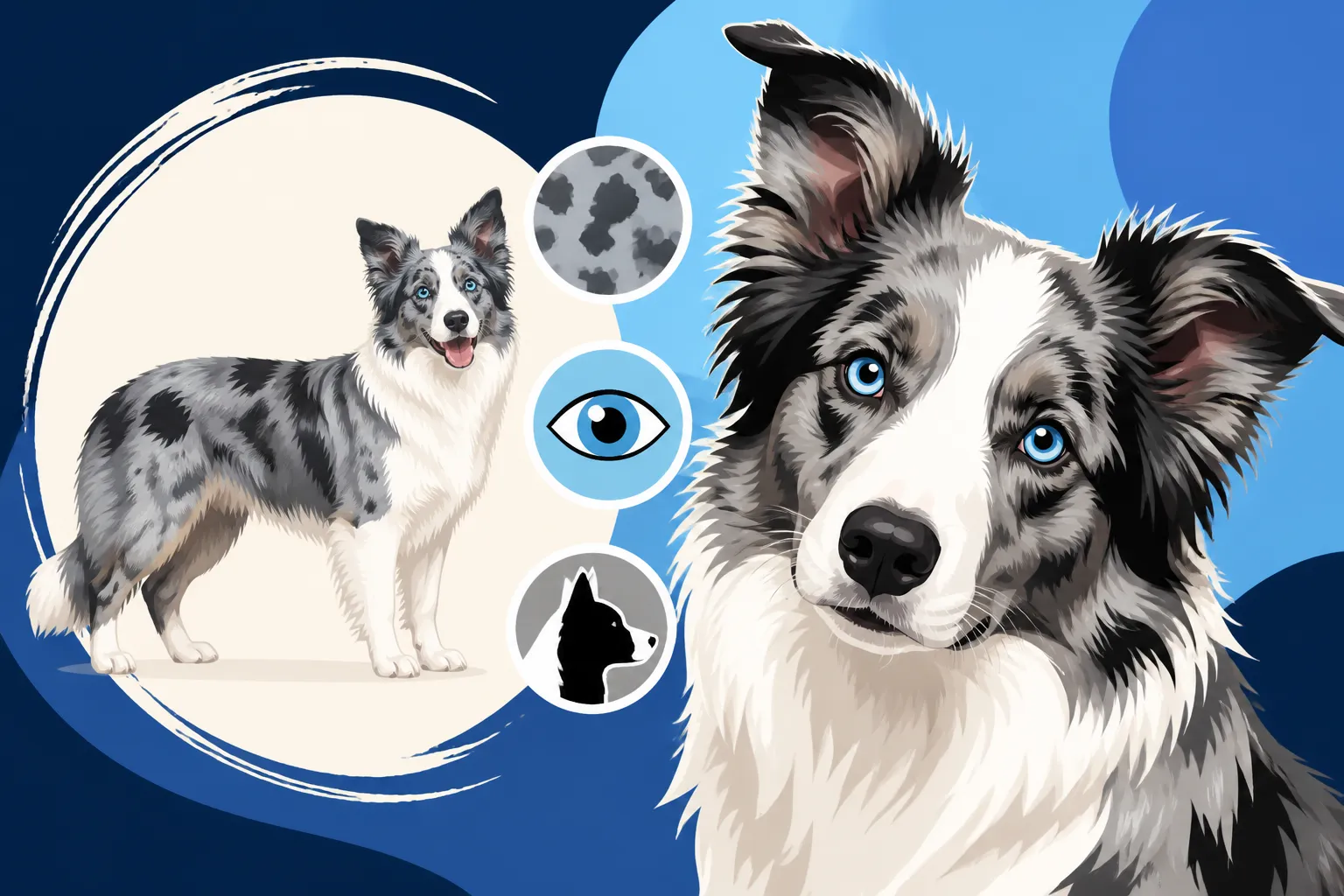
Merle Border Collies and What It Means
It's truly understandable that the striking patterns of a merle Border Collie can capture anyone's heart at first glance. These dogs are undeniably beautiful, but beneath that captivating coat lies a genetic reality that every prospective owner and current caregiver needs to grasp. This guide aims to pull back the curtain on the merle gene, explaining its complexities, distinguishing between single and double merle, and detailing the crucial health considerations that come with this unique coloration.
What Exactly Is the Merle Gene in Border Collies?
The merle gene is often misunderstood as merely a color, but it’s far more intricate than that. It's a genetic modifier that dilutes certain sections of the dog's base coat color, creating those distinctive patches and swirls we all recognize. For Border Collies, who already come in such a dazzling array of colors and patterns, merle adds another layer of visual complexity, but also a layer of significant responsibility for breeders and owners.
The Genetics Behind the Pattern
At a fundamental level, the merle gene, often denoted as 'M' (for merle) or 'm' (for non-merle), is an incompletely dominant gene. This means that even one copy of the gene can produce the merle pattern. When a dog inherits one copy of the merle gene (Mm), it results in what we typically refer to as a "single merle." The gene works by randomly diluting the eumelanin pigment (black and liver/brown) in the dog's coat, leading to irregular patches of lighter color against a darker, solid base. This isn't just about appearance; it’s about a specific genetic pathway influencing pigment distribution.
The length of the merle gene, specifically the poly-A tail, can also influence how much dilution occurs, leading to variations like "cryptic merle" where the pattern is barely visible, or "diluted merle" where the entire coat is a lighter shade. It's a fascinating, if sometimes tricky, piece of canine genetics that dictates so much more than just a pretty coat. Understanding these genetic nuances is the first step in appreciating why responsible breeding of merle Border Collies is so absolutely vital.
How Merle Presents Visually
When you see a merle Border Collie, what you're actually seeing is the beautiful, patchy dilution across their coat. A "blue merle" Border Collie, for instance, has a black base coat that's been diluted to various shades of grey, interspersed with patches of solid black. Similarly, a "red merle" (also sometimes called liver merle) will have a liver or brown base coat with lighter tan or cream patches. You might also encounter slate merle (on a blue base) or even sable merle, where the merle pattern acts on a sable base coat, creating a more subtle, often dappled appearance.
Beyond the coat, the merle gene can profoundly affect eye and nose pigmentation. It's why many merle Border Collies have those mesmerizing blue eyes, or even heterochromia (one blue eye, one brown), or marbled eyes with flecks of blue within a darker iris. Their noses can sometimes have unpigmented (pink) areas, especially in lighter-colored merles or double merles. While visually stunning, these unpigmented areas, particularly in the eyes and ears, are direct indicators of the gene's influence, and sometimes, the potential for significant health issues. It's important to remember that while a beautiful pattern, it's also a marker for genetic traits that need careful consideration. Merle Border Collies and What It Means is a topic that comes up so often in breed discussions.
Understanding Single Merle and Double Merle
The distinction between a single merle and a double merle Border Collie is perhaps the most critical piece of information for anyone interested in this striking coat pattern. While both carry the merle gene, the difference in how many copies they possess leads to drastically different health outcomes and ethical considerations. It’s not just a matter of semantics; it’s a matter of life-long health and well-being for the dog.
The Impact of a Single Merle Gene (Mm)
A single merle Border Collie inherits one copy of the merle gene (M) from one parent and one non-merle gene (m) from the other parent. Genetically, they are Mm. These dogs typically exhibit the classic, beautiful merle pattern without the severe health complications often associated with merle. Their vision and hearing are usually normal, and they live full, healthy lives, just like any other Border Collie with a solid or bi-color coat. However, it is paramount to understand that these dogs are carriers of the merle gene.
This means that if a single merle dog (Mm) is bred to another single merle dog (Mm), there's a 25% chance in each pregnancy that a puppy will inherit two copies of the merle gene (MM), becoming a "double merle." This is why responsible breeders go to great lengths to ensure a single merle is only bred to a non-merle dog (mm). The visual appeal of a merle coat shouldn't overshadow the genetic responsibility that comes with it. You'll often see these beautiful dogs in agility or herding trials, demonstrating their incredible athleticism and intelligence, provided they come from ethical breeding.
The Serious Risks of Double Merle (MM)
Double merle Border Collies, sometimes tragically referred to as "lethal whites" though this term is now considered outdated and inaccurate, inherit two copies of the merle gene (MM), one from each parent. This is almost always the result of a merle-to-merle breeding, which is considered highly unethical due to the devastating health consequences. These dogs often have coats that are predominantly white, with minimal or very diluted merle patches, making them look stunningly pale, but that striking appearance hides a heavy price.
The excess of white is a direct result of the extreme dilution caused by two merle genes, which also impacts the development of vital sensory organs. Double merles are at an extremely high risk for severe vision and hearing impairments. This can range from partial deafness or blindness to complete bilateral deafness and microphthalmia (abnormally small eyes), or even anophthalmia (missing eyes). The inner ear and the structures of the eye are heavily reliant on pigment development, and the double merle gene disrupts this process. Caring for a double merle Border Collie often requires extraordinary dedication and significant resources, highlighting why these breedings must be avoided at all costs. It's a heartbreaking reality that could be entirely preventable through careful breeding practices. Deafness in Merle Border Collies is a profound challenge many owners face.
| Trait/Condition | Single Merle (Mm) | Double Merle (MM) |
|---|---|---|
| Coat Pattern | Distinctive diluted patches, clear base color | Often predominantly white, minimal/faded pattern |
| Eye Color | Can have blue eyes, heterochromia (one blue, one brown) | Often light blue eyes, lack of pigment, sometimes pink rimmed |
| Vision Issues | Typically normal, rare mild issues (e.g., minor colobomas) | High risk: microphthalmia (small eyes), colobomas, retinal detachment, blindness |
| Hearing Issues | Typically normal, rare mild issues | High risk: unilateral (one ear) or bilateral (both ears) deafness |
| Nose/Skin Pigmentation | Normal pigmentation, dark nose/lips | Often patchy pink skin, unpigmented (pink) nose/lips |
| Breeding Advice | Should only be bred with a non-merle (mm) dog | Should absolutely never be bred due to genetic risks and associated health problems |
Recognizing Health Concerns in Merle Border Collies
While a single merle Border Collie is typically healthy, the merle gene itself carries the potential for specific health issues, especially when two copies are present. It's not just about the beauty of their coat; it's about understanding the internal mechanisms that can be impacted. Being aware of these potential problems is crucial for early detection and providing the best care for your dog.
Ocular Issues Associated with Merle
The merle gene's impact on pigmentation extends directly to the eyes, and this is where some of the most profound health concerns arise, particularly in double merle dogs. One of the most common issues is microphthalmia, where one or both eyes are abnormally small. This can range from subtly reduced size to eyes that are barely visible. Along with this, colobomas are frequently seen – these are "holes" or defects in parts of the eye structure, such as the iris or retina. A pup with Collie Eye Anomaly in a Border Collie Puppy might have these types of defects, and the merle gene can certainly exacerbate them.
These ocular defects can lead to varying degrees of vision loss, from mild impairment in certain light conditions to complete blindness. Some dogs might experience retinal detachment, which is incredibly painful and leads to irreversible blindness. It’s heartbreaking to see a dog struggle with vision, and it requires significant adjustments to their environment and training. Regular eye exams by a veterinary ophthalmologist are absolutely essential for merle puppies, as early detection can help you prepare for and manage any challenges. Even a The Mildly Affected Border Collie That Sees Normally might have underlying issues that need monitoring, so don't skip those vet visits.
Auditory Challenges in Merle Dogs
Another significant health concern linked to the merle gene is deafness. This condition is far more prevalent in double merle dogs, but can occasionally affect single merles as well, particularly those with a lot of white on their head and around their ears. The lack of pigment in the inner ear, a side effect of the merle gene's dilution effect, is the primary cause. This can result in unilateral deafness (deafness in one ear) or, more severely, bilateral deafness (deafness in both ears).
Detecting deafness in a puppy can be challenging, but it’s crucial for their development and training. The brainstem auditory evoked response (BAER) test is the definitive way to diagnose hearing loss in dogs. This specialized test measures the electrical activity in the brain in response to auditory stimuli. If you suspect your merle Border Collie might have a hearing impairment, discussing BAER testing with your vet is vital. Early identification allows you to adapt your training methods, perhaps relying more on hand signals and vibrations, which can still allow a deaf Border Collie to lead a very full and happy life. Deafness in a Border Collie doesn't mean the end of the world for these intelligent dogs, but it does mean a different approach to communication.
Other Potential Health Considerations
While ocular and auditory issues are the most well-documented and severe concerns associated with the merle gene, other, less common, health problems have been anecdotally reported or are under ongoing research. Some double merle dogs may have increased instances of skin sensitivities or a more delicate skin texture due to reduced pigmentation, making them more prone to sunburn or certain dermatological conditions.
There have also been discussions, though not always scientifically confirmed, about potential links to reproductive issues or a generalized weaker immune system in some double merles. While these are not as frequently observed or as severely impactful as the sensory impairments, they are part of the broader conversation about the overall health and vitality of double merle dogs. It underscores why understanding the full spectrum of the merle gene's influence is so important for the welfare of the breed. Ultimately, a dog's health extends beyond just its immediate senses, and genetic factors can sometimes have wider-reaching, subtle effects.
Ethical Breeding Practices for Merle Border Collies
The beauty of the merle coat is undeniable, but the potential for severe health issues means that ethical breeding is not just a recommendation; it's an imperative. Anyone involved in breeding Border Collies, or anyone looking to buy a merle puppy, must understand the responsibilities that come with this genetic trait. Poor breeding decisions can lead to a lifetime of challenges for a dog and heartbreak for its owners.
Why Avoiding Merle-to-Merle Breedings Is Crucial
The most fundamental rule in ethical merle breeding is to never breed two merle dogs together. This means avoiding breeding two single merles (Mm x Mm), as this pairing creates the high probability of producing double merle (MM) puppies. As discussed, these double merle dogs are overwhelmingly likely to suffer from significant, often debilitating, sensory impairments like blindness and deafness. It’s a gamble with a living, feeling creature's well-being, and one that responsible breeders refuse to take.
The consequences of merle-to-merle breeding extend beyond the individual puppy's suffering. It places an immense burden on the owners, who may face extensive veterinary bills, require specialized training, and adjust their entire lifestyle to accommodate a dog with severe disabilities. It also impacts the reputation of the breed and can fill rescues with dogs whose complex needs might be overwhelming for the average adopter. Ethical breeding prioritizes the health and temperament of the puppies above all else, including the desire for a specific aesthetic.
Genetic Testing and Responsible Choices
Thankfully, modern veterinary science provides the tools to prevent accidental double merle breedings. DNA testing for the merle gene (M/m) is readily available and relatively inexpensive. Every Border Collie intended for breeding, especially if they carry the merle pattern or come from merle lines, should be tested to confirm their merle status. The Border Collie Genetic Panel and What It Screens would include this test. A breeder can then make informed decisions, ensuring that a merle dog (Mm) is only ever bred to a non-merle dog (mm).
This careful genetic screening is a cornerstone of responsible breeding. It allows breeders to produce beautiful, healthy merle Border Collies without risking the welfare of any puppy. When Asking a Border Collie Breeder for Test Results, you should expect full transparency regarding merle status and other genetic health clearances. Reputable breeders are proud to share their dogs' Carriers, Affected and Clear on a Border Collie Panel results, demonstrating their commitment to producing sound, healthy puppies. This also helps ensure the long-term health of the Border Collie breed as a whole. Knowing What the CEA Test Costs for a Border Collie might also factor into a breeder's comprehensive health screening.
Living with a Merle Border Collie: Care and Considerations
Bringing any Border Collie into your home is a commitment, but bringing a merle Border Collie, especially one with potential sensory impairments, requires an extra layer of thought, patience, and adaptation. These dogs are incredibly resilient and can thrive in loving homes, but their owners must be prepared to meet their unique needs.
Supporting a Sight or Hearing-Impaired Dog
If your merle Border Collie has vision or hearing impairments, your approach to daily life and training will need to be adjusted. For a deaf dog, relying on visual cues and hand signals is essential. Many owners successfully teach a wide array of commands using signs, and tactile cues (like a gentle tap on the shoulder for "come") can be very effective. Vibrating collars can also be excellent training tools, providing a silent "recall" signal. For toys and other supplies, you might find specialized products on sites like Chewy that are designed for deaf dogs, like vibrating balls or highly visible retrieve toys.
For a blind dog, maintaining a consistent environment is key. Avoid rearranging furniture frequently, and block off any dangerous areas. Verbal cues become incredibly important, as does using scent markers to help them navigate. Non-slip rugs, gates, and even "halo" devices can help prevent bumps and injuries. Enrichment toys that engage other senses, like puzzle toys filled with treats or scented items, can keep their brilliant minds active. Regardless of the challenge, these dogs can be wonderful companions with the right support and understanding.
Finding Resources and Community
You are not alone in navigating the journey of owning a merle Border Collie, particularly one with special needs. There are numerous online communities, forums, and support groups dedicated to owners of deaf or blind dogs, or those with other special needs. These communities offer invaluable advice, shared experiences, and emotional support. Connecting with other owners can provide practical tips, recommendations for trainers, and simply a space to feel understood.
Your veterinarian will also be your most important partner. Seek out vets who are experienced with special needs dogs, or consider consulting with specialists in ophthalmology or audiology. They can offer tailored medical advice, management strategies, and recommendations for supportive therapies. For general pet supplies, including specific diets, grooming tools, or even training aids for your unique needs, convenient online retailers such as Chewy offer a vast selection that can be delivered right to your door, making life a little easier. Continuous learning and seeking out expert advice will empower you to provide the best possible quality of life for your merle Border Collie, allowing them to truly shine.
Disclaimer
This article is for general informational purposes only and does not constitute professional advice. Laws, prices and regulations vary by location and change over time. Consult a qualified professional for guidance on your specific situation.