How the Border Collie Reached Australia and New Zealand
It's truly fascinating to think about how some of our most beloved dog breeds, especially those with deep historical roots in one specific corner of the world, ended up thriving thousands of miles away. Many of us know the Border Collie as originating from the Anglo-Scottish borders, a testament to centuries of sheep herding tradition. But how did these incredibly intelligent and driven dogs make their way to the expansive sheep country of Australia and New Zealand? It wasn't just a simple boat ride; it was a journey intertwined with the very development of these nations and the vital role working dogs played. This guide will explore the historical currents and practicalities that brought the Border Collie to prominence in the Antipodes.
The Journey from the Borders: Early Immigration and the Canine Companions
When we talk about the Border Collie finding its way to Australia and New Zealand, we're really talking about a long and often arduous journey that mirrored the human migration from Europe. These weren't planned breed export schemes at first, but rather the natural movement of people taking their essential tools and companions with them.
European Settlement and the Need for Working Dogs
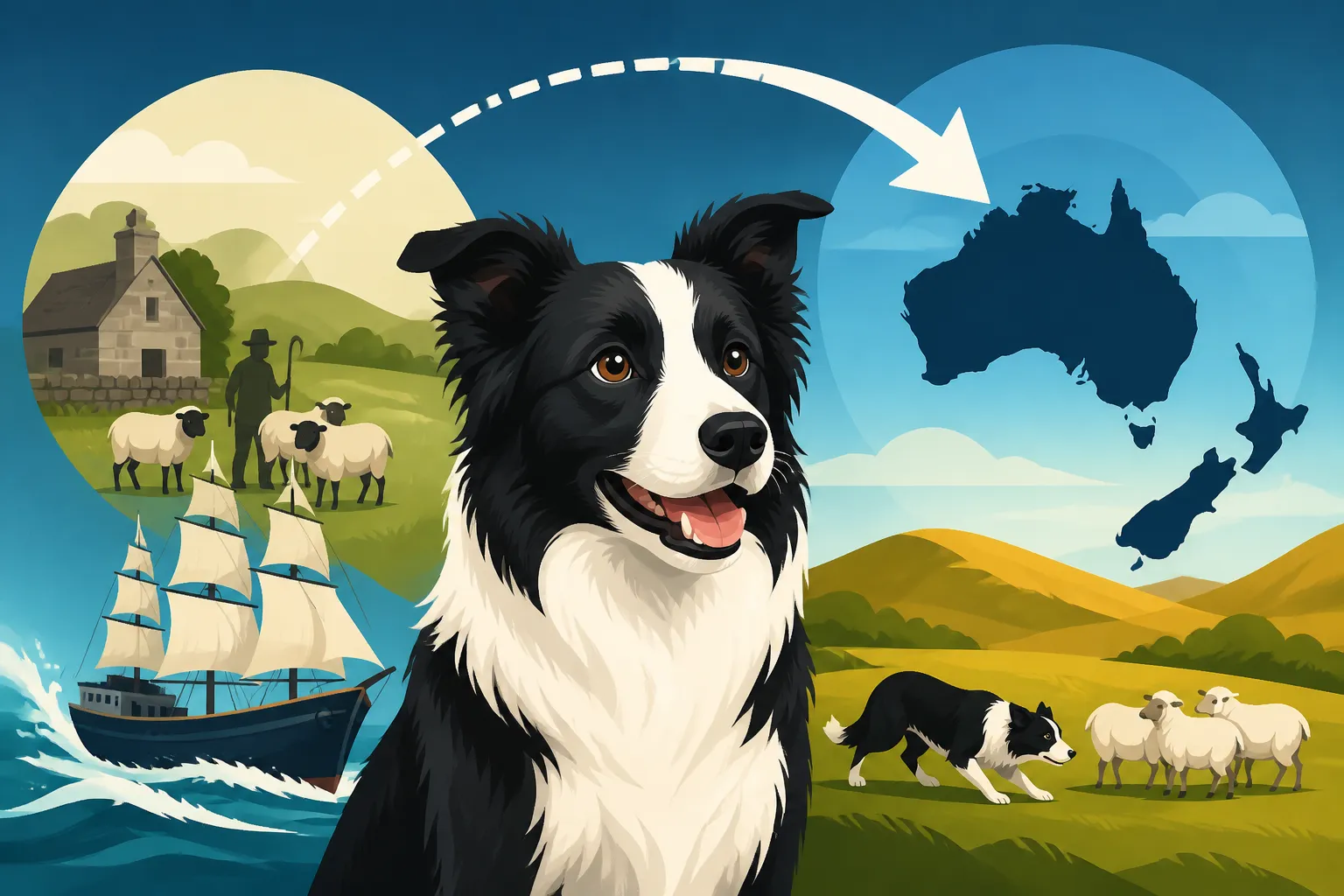
The story begins with the early European settlers, primarily from Great Britain, who began colonizing Australia in the late 18th century and New Zealand in the early 19th century. These new lands, with their vast open spaces and burgeoning pastoral industries, desperately needed efficient ways to manage large flocks of sheep. The sheer scale of the land made traditional manual herding virtually impossible. Imagine trying to muster thousands of sheep across miles of rugged terrain with just a few people – it was a monumental task without canine assistance. This created an immediate and profound demand for highly skilled herding dogs.
Many of these early settlers came from rural backgrounds, often from Scotland, England, and Wales, where sheep farming was a way of life and the concept of a working "collie" dog was deeply ingrained. They understood the irreplaceable value of a dog that could control livestock, a partner that could do the work of several men. So, when they packed their belongings for the long voyage to the other side of the world, their working dogs, or at least the descendants of working dogs, were often among their most prized possessions. These were dogs selected not for their looks, but purely for their ability to work sheep, their "eye" and their intelligence being paramount.
The Ancestors of the Border Collie: Early Herding Breeds
It's important to remember that the "Border Collie" as a formally recognized breed with a distinct name and registry didn't exist in its current form when the first working dogs arrived in Australia and New Zealand. What arrived were various types of "collie dogs," "sheepdogs," or "shepherd's dogs" from the British Isles. These were the ancestors of what we now know as the Border Collie, embodying many of the traits we recognize today: intense stare, powerful herding instinct, and incredible agility. The Anglo-Scottish Border and the First Collies tells us more about these early beginnings.
These dogs were incredibly diverse in appearance, but they shared a common purpose and a genetic lineage rooted in the herding dogs of the Scottish borders and northern England. They were often referred to simply as "collies" or "working collies," and their value was measured entirely by their performance on stock. Settlers would bring these dogs, or puppies from proven working lines, knowing that their success in establishing farms and stations in the new territories would largely depend on these four-legged partners. Without them, managing the vast herds on the sprawling Australian plains or the rugged New Zealand hills would have been an insurmountable challenge.
The Long Voyage: Transporting Dogs Across the World
Getting these dogs from the British Isles to Australia or New Zealand was no small feat. The journey by sailing ship in the 19th century was long, often taking several months. Conditions for both humans and animals were rudimentary, at best. Dogs would have been kept in crates or confined spaces below deck, enduring rough seas, often inadequate food and water, and the constant threat of disease.
Only the hardiest animals would have survived such a journey. It speaks volumes about the dedication of these settlers and the perceived value of these dogs that they were willing to undertake such a perilous transport. Each successful arrival meant a continuation of valuable working bloodlines, and often, immediate deployment to the demanding task of herding. Imagine a working dog, after months at sea, being put to work on thousands of sheep in an entirely new landscape – it truly highlights the resilience and adaptability of these animals. New arrivals often needed specific supplies, and today, reputable online retailers like Chewy provide a vast array of quality foods and supplements that would have been a dream for those early settlers trying to keep their dogs healthy.
Cultivating the Breed: Establishing the Border Collie Down Under
Once these early working collies arrived, they quickly proved their worth. The environment of Australia and New Zealand, with their unique challenges, further shaped the development and refinement of these dogs into the Border Collie we know today.
The Rise of Sheep Farming and Dog Trials
The 19th century saw a massive expansion of sheep farming in both Australia and New Zealand. Australia's merino wool industry became world-renowned, requiring efficient management of millions of sheep across enormous stations. Similarly, New Zealand's mountainous terrain and abundant pastureland lent itself perfectly to sheep farming. This burgeoning industry amplified the demand for superior working dogs.
It wasn't long before organized sheepdog trials began to emerge, first in the British Isles, and then mirroring that development in Australia and New Zealand. These trials weren't just competitions; they were crucial events for evaluating, proving, and ultimately refining the working abilities of these dogs. Handlers could see which dogs had the best "eye," the most natural herding instinct, the ability to read sheep, and the intelligence to take complex commands. The Border Collie in Sheepdog Trials delves into the competitive aspect of this breed's history. These trials became the crucible in which the modern Border Collie was forged, selecting for the traits that made them unparalleled on the farm.
Identifying and Promoting the "True" Working Collie
As various types of collie dogs became popular, there was a growing desire among working sheepdog enthusiasts and breeders to preserve the integrity of the true working dog. They wanted to differentiate their highly skilled, intelligent herding dogs from those bred purely for pet homes or conformation shows, which often prioritized appearance over working ability. This distinction was particularly important in the British Isles, but its implications resonated globally.
In Australia and New Zealand, this focus on working ability was paramount. Breeders actively sought to import dogs from proven working lines in the UK, often dogs that had excelled in trials or were known for their exceptional progeny on working farms. The emphasis was always on performance, on the dog's ability to gather, drive, and pen sheep with precision and minimal fuss. This selective breeding for working prowess ensured that the dogs developing in Australia and New Zealand maintained the high standards of their forebears.
Key Figures and Early Breeding Programs
While specific individuals often get credited for certain lines or advancements, the development of the Border Collie in Australia and New Zealand was largely a collective effort by countless dedicated farmers and handlers. They were the ones who carefully selected their breeding stock, often travelling long distances to find a sire or dam with the right genetics for working livestock.
However, certain dogs and handlers did achieve legendary status, their influence spreading far and wide through their progeny. These were the dogs that could handle the vast expanses of the outback or the steep hillsides of the high country, quietly and efficiently managing stock. Their offspring were highly sought after, helping to establish the dominant working lines that persist today. These early breeding programs, driven by practical necessity and a deep appreciation for the dogs' abilities, laid the foundation for the Border Collie's strong presence in the region. Even today, responsible breeders continue to invest in the health and well-being of their animals, often sourcing supplies from trusted places like Chewy to ensure optimal nutrition for their breeding stock and puppies.
Registries and Recognition: Solidifying the Breed's Presence
The informal tradition of selecting dogs based purely on their working ability eventually gave way to more structured methods of breed recognition and registration, a process that firmly established the Border Collie's identity in Australia and New Zealand.
The Influence of the ISDS
The International Sheep Dog Society (ISDS), founded in 1906 in the UK, played a critical role in formalizing the Border Collie as a breed based on working ability rather than appearance. The ISDS set the standard for what a working sheepdog should be, and its registration system tracked the lineage of dogs proven in the field. This had a profound impact on Border Collie development worldwide. The International Sheep Dog Society, Founded 1906 covers its formation in detail.
For breeders in Australia and New Zealand, ISDS registration became a gold standard. Importing dogs with ISDS papers meant bringing in proven bloodlines, animals whose ancestry could be traced back to dogs known for their exceptional herding skills. This facilitated the exchange of top-quality working dogs between the British Isles and the Antipodes, further solidifying the breed's genetic pool and ensuring that the best working traits were perpetuated. The ISDS philosophy, prioritizing working ability above all else, deeply influenced the direction of Border Collie breeding in both countries.
Local Registries and Breed Standards
While the ISDS provided an international framework, local registries and organizations also emerged in Australia and New Zealand to manage and promote the Border Collie. These groups often worked in conjunction with or drew inspiration from the ISDS, tailoring their efforts to the specific needs and contexts of their respective countries. They established their own rules for registration, sometimes including criteria for working ability tests or lineage from ISDS-registered dogs.
The concept of a "breed standard" for working dogs remained focused on function. Unlike kennel clubs that often define standards by physical appearance down to the smallest detail, working dog organizations emphasized traits like intelligence, biddability, stamina, "eye," and natural herding instinct. The goal was always to produce a dog capable of exceptional work, rather than one that merely looked a certain way. This pragmatic approach ensured the Border Collie in Australia and New Zealand remained true to its working heritage.
Here's a simplified comparison of the general timeline for Border Collie development:
| Aspect | British Isles (Origin) | Australia & New Zealand (Adoption/Development) |
|---|---|---|
| Initial Arrival of Dogs | Indigenous herding types | Late 18th – early 19th Century (with settlers) |
| Formal Breed Naming | 1915 (James Reid) | Gradually adopted through ISDS influence |
| Primary Selection Criteria | Working ability (historical) | Working ability (from day one) |
| Major Registry Influence | ISDS (1906 onwards) | Heavily influenced by ISDS (from early 20th C.) |
| Purpose | Herding sheep on varied terrain | Herding vast flocks on large stations, rugged land |
The Working Dog Ethos Endures
Even as the Border Collie became more widely known and appreciated beyond the farm, the core ethos of being a working dog remained central to its identity in Australia and New Zealand. While some dogs certainly found their way into pet homes, the breed's reputation was built on its unparalleled ability to work. This distinction between working lines and conformation lines, or even pet lines, is a continuous topic of discussion among enthusiasts. The Working and Show Split in Border Collies is an insightful read on this phenomenon.
Many breeders in these countries continue to fiercely protect the working integrity of their Border Collies, prioritizing trials, working stock, and temperament suitable for demanding tasks. They understand that the intelligence and drive that make a Border Collie such an extraordinary companion also stem directly from its working heritage. This commitment ensures that the Border Collie's ability to excel in the field remains a defining characteristic Down Under.
The Modern Border Collie in Australia and New Zealand
Today, the Border Collie is an iconic and deeply respected breed throughout Australia and New Zealand, cherished for its working prowess, intelligence, and companionship.
Continued Dominance in Working Circles
To this day, the Border Collie remains the quintessential working dog for sheep and cattle farmers across Australia and New Zealand. Visit any major sheep station in the Australian outback or a high-country farm in New Zealand, and you'll find Border Collies at the heart of the operation. Their ability to cover vast distances, handle stubborn stock, and respond to intricate commands makes them indispensable. They are partners, not just pets, and their contributions are essential to the agricultural economies of both nations.
Sheepdog trials continue to be popular, drawing large crowds and showcasing the incredible skill and partnership between handler and dog. These events are a celebration of the breed's heritage and a vital way to identify and propagate the best working lines. Young dogs are often bred from champions, continuing the cycle of excellence. The demand for well-bred, started, or fully trained Border Collie sheepdogs remains high, reflecting their ongoing value in practical agricultural settings. You can often find specialized equipment for working dogs, from durable leashes to robust food bowls, at pet suppliers like Chewy, catering to the needs of these active animals.
Border Collies as Beloved Companions
Beyond the farm, Border Collies have also found a significant place in Australian and New Zealand homes as beloved family pets and successful participants in various dog sports. Their intelligence and eagerness to please make them highly trainable for obedience, agility, flyball, and even disc dog competitions. They excel at these activities, often dominating national and international events.
However, owning a Border Collie in a pet home requires a deep understanding of their needs. Their intense drive and high intelligence mean they need more than just a walk around the block. They require mental stimulation and physical exercise to thrive, or they can quickly become bored, destructive, or develop problematic behaviors. This isn't a breed for the faint of heart or the sedentary lifestyle, even when they're not working sheep. People are often surprised by the sheer amount of engagement these dogs need.
Preserving the Legacy
The story of the Border Collie in Australia and New Zealand is a testament to selective breeding driven by necessity and a profound respect for working ability. From the earliest days of settlement, these dogs were seen as vital partners, and that legacy continues to this day. Efforts are ongoing to preserve the working characteristics of the breed, ensuring that future generations of Border Collies in these countries continue to embody the intelligence, drive, and herding instinct that first brought their ancestors from the British Isles.
Whether they are commanding a flock of sheep on a sprawling station or dazzling crowds in an agility arena, the Border Collie Down Under carries with it the history of a remarkable journey and an enduring purpose. Their global presence today, extending far beyond their origins in the Scottish borders, is a true measure of their exceptional qualities and the human-canine bond forged through shared work and companionship.
Disclaimer
This article is for general informational purposes only and does not constitute professional advice. Laws, prices and regulations vary by location and change over time. Consult a qualified professional for guidance on your specific situation.